Project at a Glance
Floors Affected
Years of Building History
Phases: Abatement + Rebuild
Full Reconstruction Completed
Executive Summary
When a bathroom pipe failure caused catastrophic water damage to a 1949-era home in Dunham, PA, the project quickly escalated far beyond standard water mitigation. Harrisburg Restoration was called to manage a complex, multi-phase recovery that included mold remediation, professional abatement, full structural demolition, and complete reconstruction — all within a property whose age and pre-modern construction introduced unique challenges at every stage.
The scope of this project illustrates exactly why historic and aging residential properties in the Scranton area demand a restoration partner with the expertise, equipment, and credentials to handle hazardous materials, compromised electrical systems, and full rebuilds — not just drying equipment.
“A pipe failure in a 1949 home didn’t just mean water damage — it meant abatement, mold remediation, electrical replacement, and a complete rebuild from the studs out.”
Why Fast Response Matters
Water Damage Progression in Historic Homes
Understanding the Incident
The Source: Bathroom Pipe Failure
The water loss originated from a broken pipe in the bathroom of a residential home built in 1949, located in Dunham, PA — a community served by Harrisburg Restoration’s Scranton-area operations. The failure allowed water to migrate into surrounding wall cavities, floors, and the structure below, compounding quickly given the age and construction style of the building.
Homes built in this era were typically constructed with wood lath and plaster walls rather than modern drywall. This material is highly absorbent and provides ideal conditions for sustained moisture retention — and, critically, for hidden mold growth within wall cavities where it cannot be detected visually until significant colonization has occurred.
A 1949 Home: Why Age Changes Everything
Properties built before 1980 frequently contain materials that require professional abatement before any demolition or reconstruction work can safely proceed. In this case, the age of the structure meant that work could not begin in earnest until a thorough abatement assessment was completed and the remediation of hazardous materials was carried out according to EPA and OSHA guidelines.
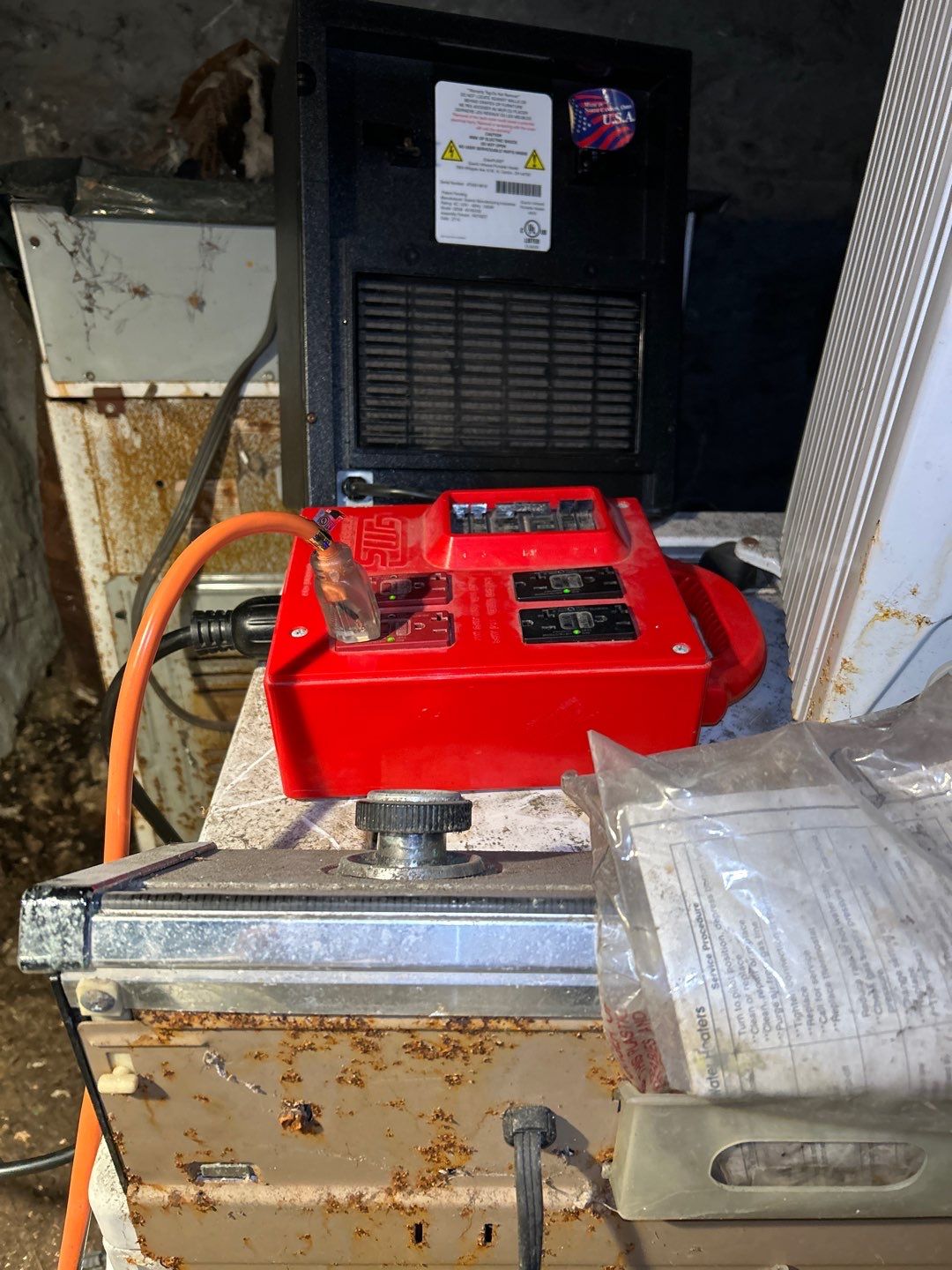
Simultaneously, the water intrusion had compromised the home’s electrical system to the point where a power distribution box had to be deployed by the restoration team to safely power equipment throughout the building — a necessity that underscores the complexity this type of loss introduces beyond standard water extraction and drying.
Key Complicating Factors
Age of Structure: Built in 1949 — pre-modern construction with wood lath and plaster walls requiring abatement protocols before demolition.
Mold in Wall Cavities: Water intrusion from the pipe break allowed mold to colonize hidden inside structural cavities, requiring certified mold remediation.
Electrical Compromise: Existing electrical system was damaged by the water loss, requiring a power distribution box to safely operate restoration equipment.
Full Reconstruction Required: Damage was so extensive that complete demolition down to the structural framing and a full rebuild was the only viable path to restoration.
Property Assessment and Scope of Damage
Basement Level: Foundation and Electrical Assessment
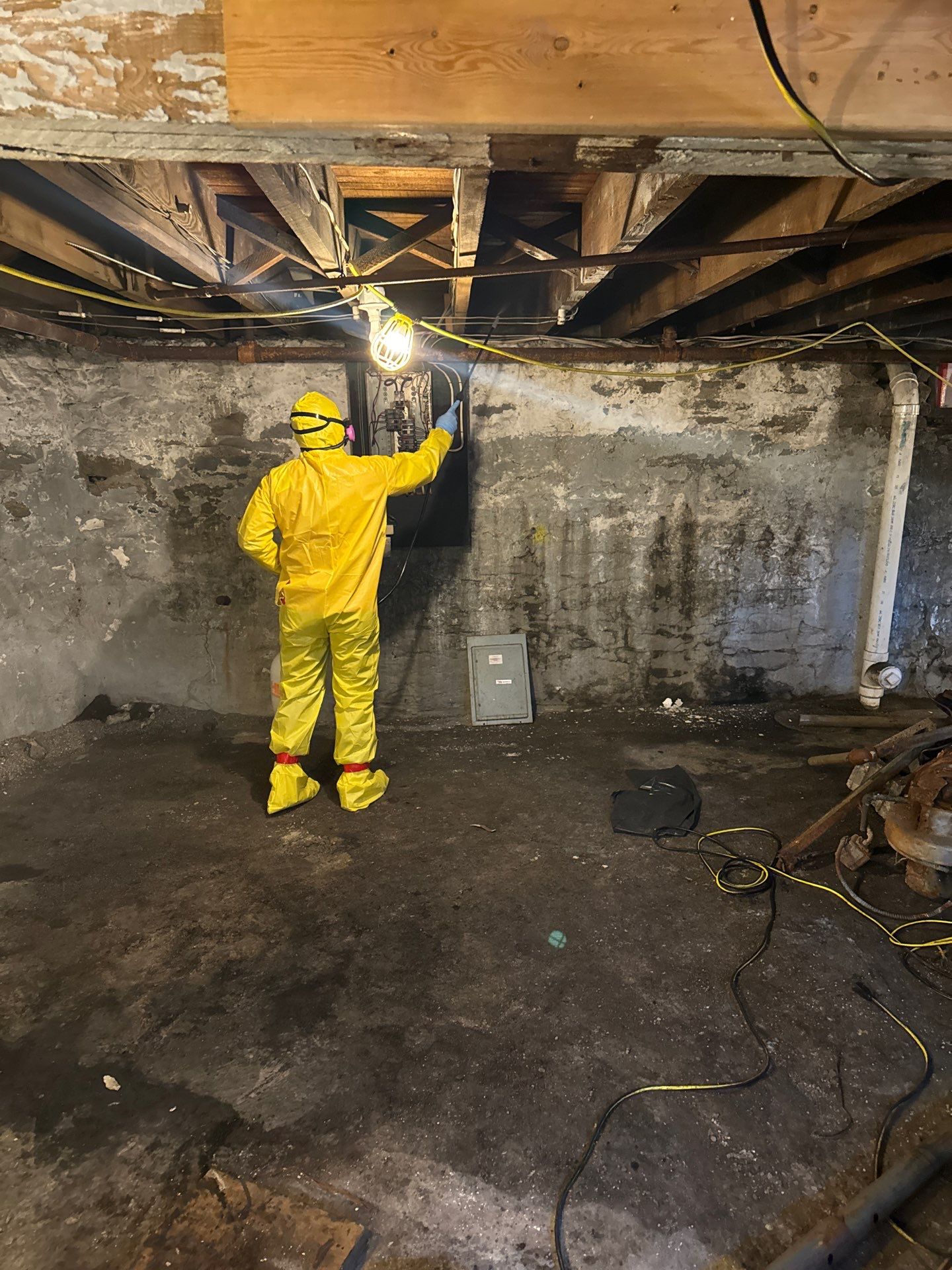
The basement presented one of the most critical safety challenges of the project. A certified technician in full personal protective equipment — including a Tyvek hazmat suit, respirator, and protective boot covers — conducted a detailed assessment of the stone foundation walls and the compromised electrical panel. This level of PPE was required given the presence of hazardous materials, standing moisture, and the age of the structure’s existing wiring. The electrical panel in the basement had sustained water damage, and restoring safe power to the structure required the deployment of an external power distribution unit before any drying equipment could be safely operated.
Main Floor: Structural Demolition Zone
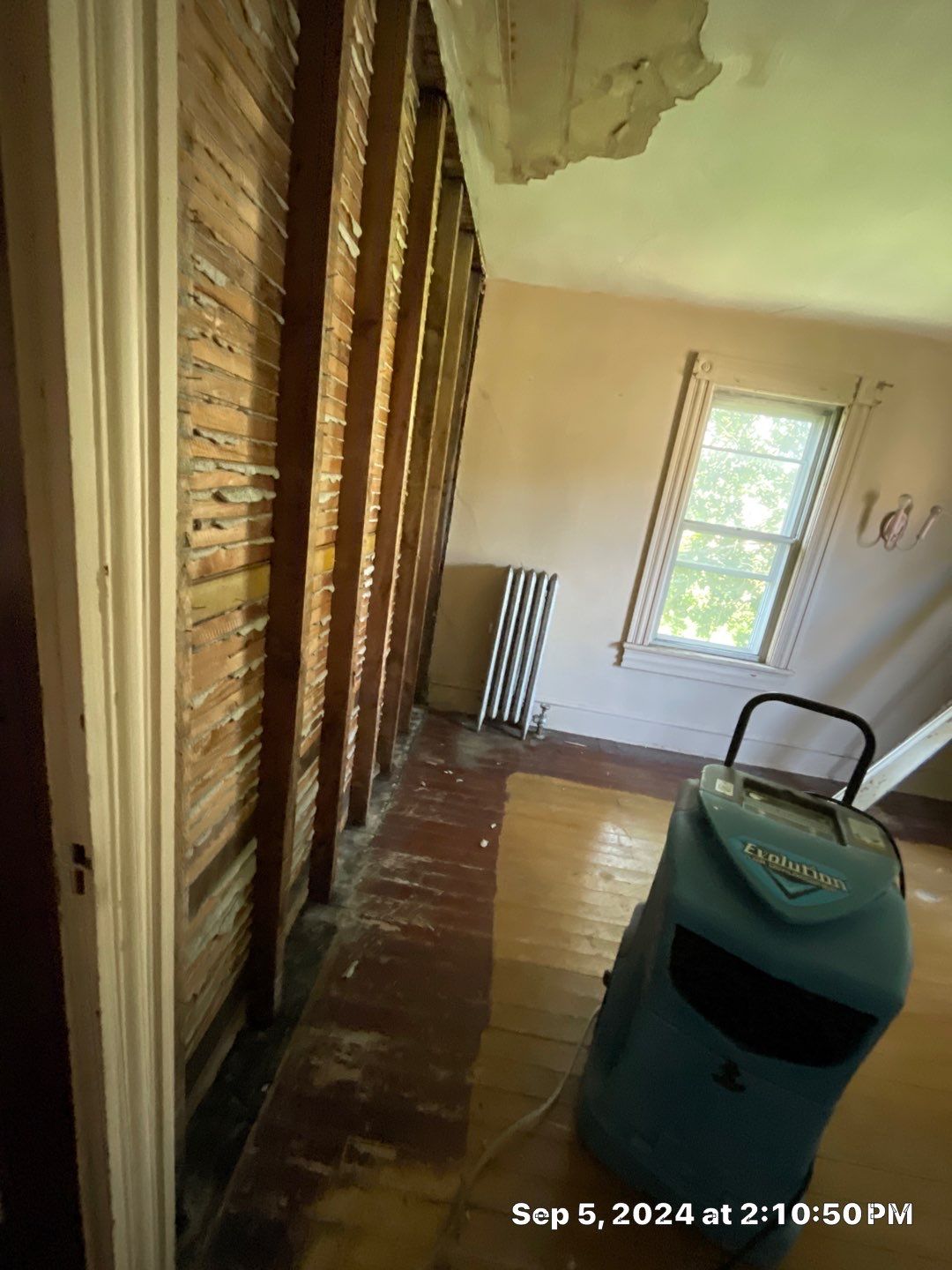
The main floor of the residence bore the most significant structural damage. Plaster walls had been stripped to expose the original wood lath skeleton — horizontal strips of narrow timber nailed to the studs that served as the substrate for plaster in pre-drywall construction. Ceiling plaster had begun to delaminate and fall, and the wood plank flooring showed evidence of sustained moisture saturation. The Evolution series extraction unit was deployed on this level to address active moisture in the flooring system.
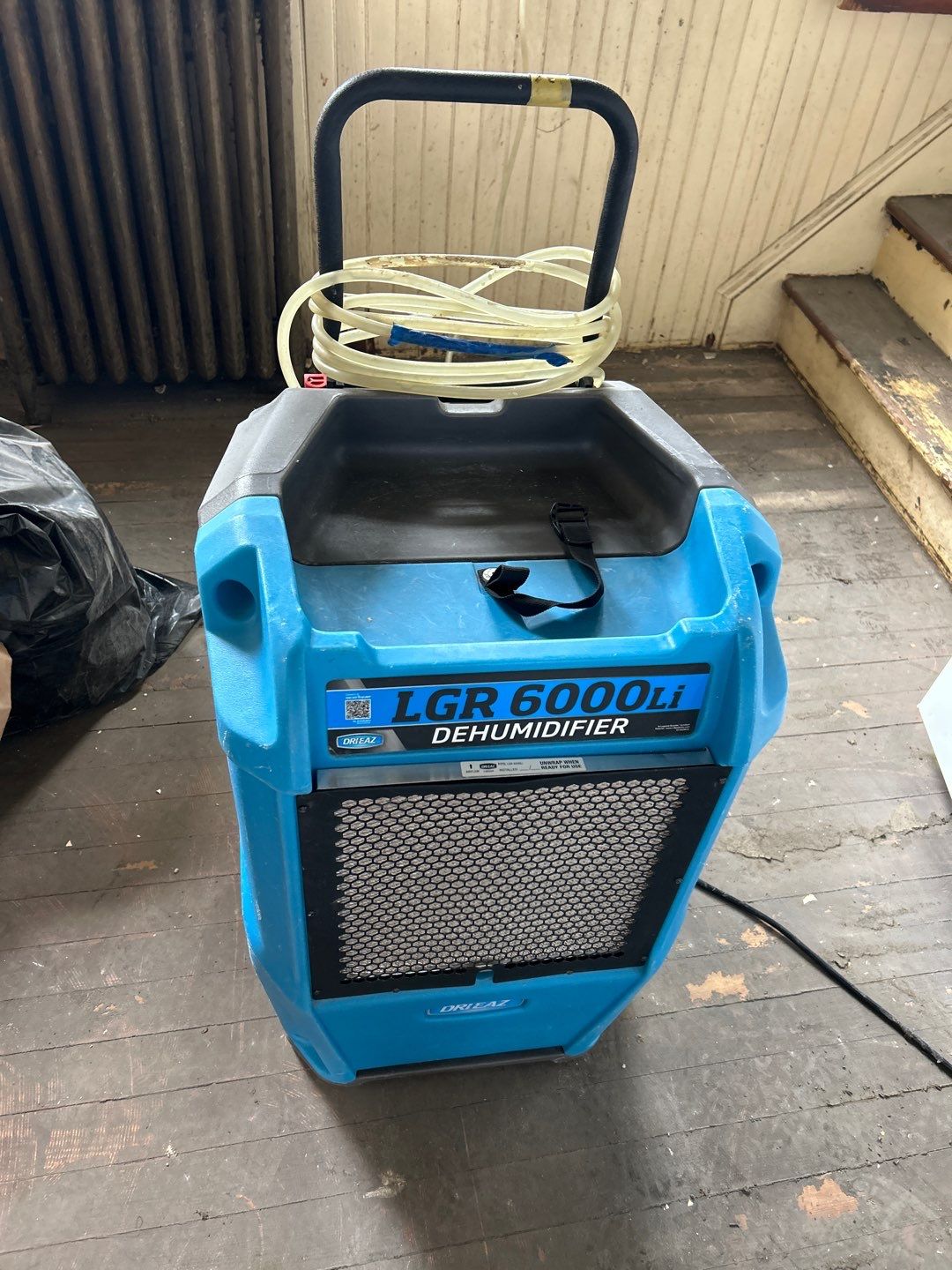
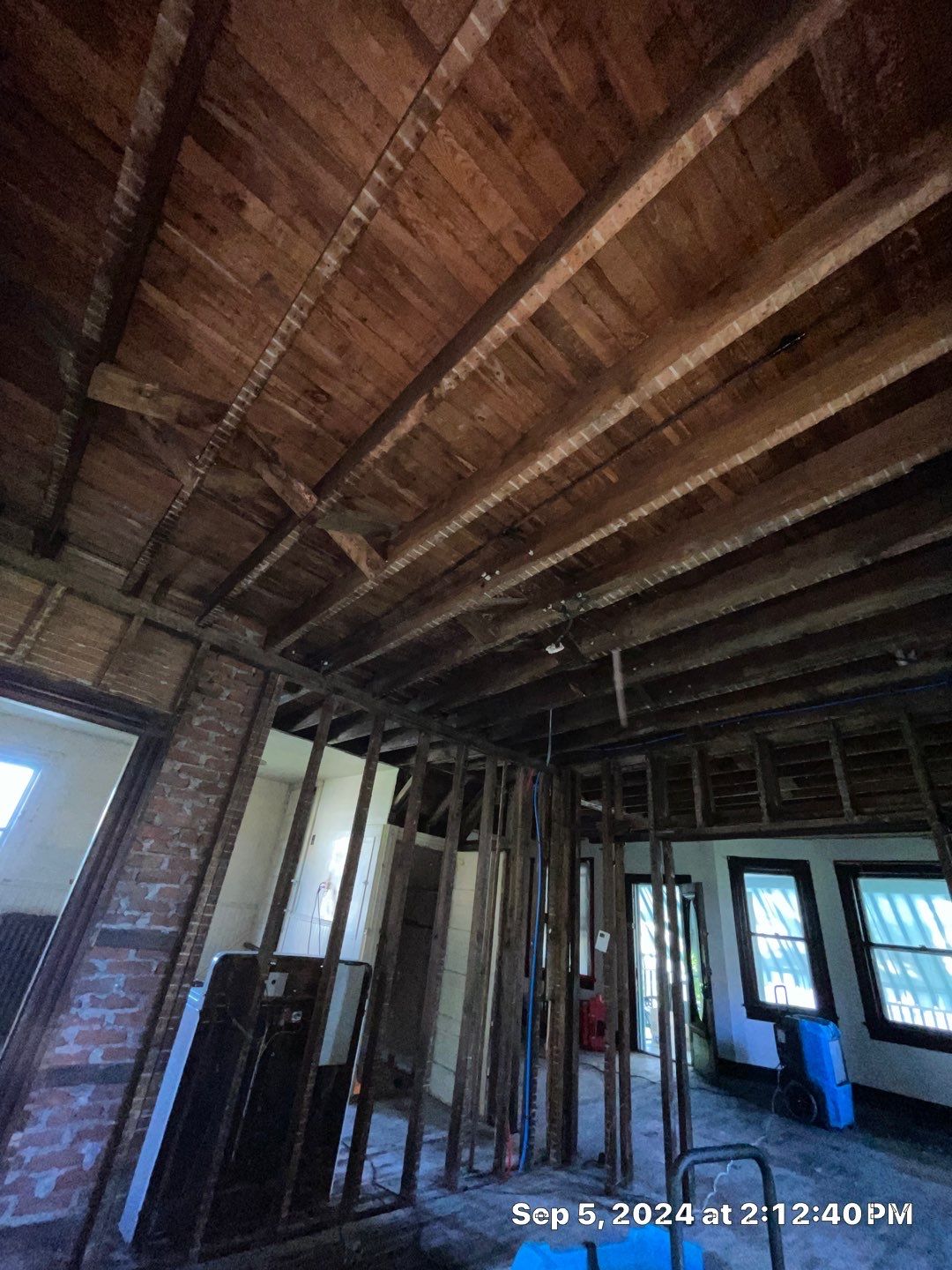
A full view of the main floor’s structural system — exposed floor joists above, open brick exterior walls, and stripped stud framing throughout — documented the complete demolition required before any reconstruction could begin. A Dri-Eaz LGR 6000Li dehumidifier was positioned within the gutted space to begin aggressive drying of the structural framing prior to rebuild.
Upper Floor: Bedrooms and Staircase
The upper floor contained multiple bedrooms that were affected by both the water loss and the abatement and demolition activities required on lower levels. These rooms progressed through the full project lifecycle — from initial damage assessment through complete reconstruction, fresh drywall, painting, and final flooring installation. The central staircase connecting the upper and lower floors of the home was also documented as part of the scope, showing the characteristic narrow, steep configuration common in homes of this era.
Equipment Deployment Analysis
Given the complexity of this loss — spanning abatement, remediation, demolition, and drying phases — the equipment deployed had to address both immediate safety concerns and structural drying needs simultaneously.
⚡ Power Distribution Box
The existing residential electrical system sustained water damage during the loss and was deemed unsafe for use without intervention. A portable power distribution unit was deployed to provide safe, reliable electrical supply throughout the structure — enabling drying equipment, lighting, and tools to operate while the home’s electrical system awaited proper assessment and repair. This is a critical capability for complex losses in older homes where infrastructure failure accompanies the water damage itself.
Electrical system damaged by water loss
Safe power distribution to all equipment
Required before any drying equipment could operate
OSHA-compliant power management
💧 Dri-Eaz LGR 6000Li Dehumidifier
The Dri-Eaz LGR 6000Li is a commercial-grade low-grain refrigerant dehumidifier built specifically for demanding restoration environments. Deployed within the gutted main floor framing cavity, this unit provides high-capacity moisture extraction from structural wood, which is critical to achieving dry standard readings before reconstruction materials can be introduced. Without verified dryness in the framing, new drywall and finishes would trap residual moisture and re-introduce conditions for mold growth.
Dri-Eaz LGR 6000Li
Low-Grain Refrigerant (LGR)
Up to 130 pints/day
Gutted main floor structural framing
🌀 Evolution Extraction Unit
The Evolution series unit visible in the hallway served double duty — addressing residual surface moisture in the original hardwood plank flooring and saturated areas along the corridor. In heavily water-affected older homes, the combination of extraction and dehumidification is essential to reducing drying time and preventing secondary damage to subfloor assemblies that may be hiding moisture beneath finished surfaces.
Main floor hallway and transition areas
Surface moisture extraction and drying
Original hardwood plank flooring
Active mitigation prior to demolition
Abatement and Mold Remediation: The Hidden Complexity
Why Abatement Was Required
Homes constructed before 1980 may contain building materials that were standard practice at the time but are now recognized as hazardous — including asbestos-containing materials in flooring, insulation, pipe wrap, ceiling tiles, and plaster compounds. Before any demolition could safely proceed in this 1949-era structure, a certified abatement assessment was conducted and all identified hazardous materials were removed and disposed of according to federal and state regulations.
This is not a step that can be skipped or rushed. Improper disturbance of hazardous materials during demolition creates airborne contamination risks for occupants, neighbors, and workers. Harrisburg Restoration’s team worked through the abatement process systematically before any structural demolition began.
Mold Remediation Inside the Wall Cavities
One of the most significant findings during the assessment phase was active mold growth within the wall cavities — the hidden spaces between interior plaster surfaces and exterior structural framing. In older lath-and-plaster construction, these cavities are particularly vulnerable because the materials provide an ideal environment for mold colonization: organic substrate, sustained moisture, and limited airflow.
Mold remediation in this context required the physical removal of all contaminated materials, treatment of affected structural members, and verification that mold counts within the structure met safe standards before any new materials were installed. This work was performed with full PPE protocols, containment barriers, and negative air pressure to prevent cross-contamination to unaffected areas of the home.
“Mold discovered inside the wall cavities meant that simply drying the structure was not sufficient — every contaminated cavity had to be opened, treated, and verified before reconstruction could begin.”
Why Certified Remediation Matters
Mold remediation performed without proper credentials and containment protocols risks spreading contamination rather than eliminating it. Disturbing mold colonies without negative air pressure and HEPA filtration releases spores into the air column, potentially spreading contamination to previously unaffected rooms. Harrisburg Restoration’s certified remediation process ensured that the scope of mold contamination was contained, treated, and independently verifiable before any reconstruction phase began.
Harrisburg Restoration’s Full-Scope Recovery Process
Restoration Timeline and Methodology
The recovery of this property followed a carefully sequenced multi-phase methodology. Skipping or compressing any phase would have jeopardized the integrity of subsequent work — particularly the reconstruction phase, which could not proceed until both abatement clearance and dry standard readings were achieved throughout the structural framing.
Project Data and Analytics
Project Phase Complexity
Required
Required
Required
All 3 Floors
Full-Service vs. Mitigation-Only Response
A single full-service restoration partner eliminates coordination gaps, reduces project timelines, and protects property owners from falling between specialty contractor scopes.
Common Water Loss Causes in Northeastern PA Homes
34%
22%
19%
15%
10%
Full Reconstruction: From Bare Framing to Move-In Ready
Why Complete Demolition Was the Right Decision
When water damage in an older home reaches the point where abatement is required, mold has colonized wall cavities, and multiple structural systems have been compromised, partial remediation is rarely sufficient. The presence of historical construction materials — particularly lath and plaster, original pine framing, and older electrical wiring — means that retaining compromised elements creates ongoing risk of moisture reactivation, mold recurrence, and code compliance issues.
In this project, full demolition to the structural framing was the only approach that allowed the team to verify complete mold clearance, achieve structural dry standard throughout, and rebuild to current code standards — giving the homeowner a property that is not just restored, but genuinely improved in its long-term structural integrity.
The Reconstruction Process
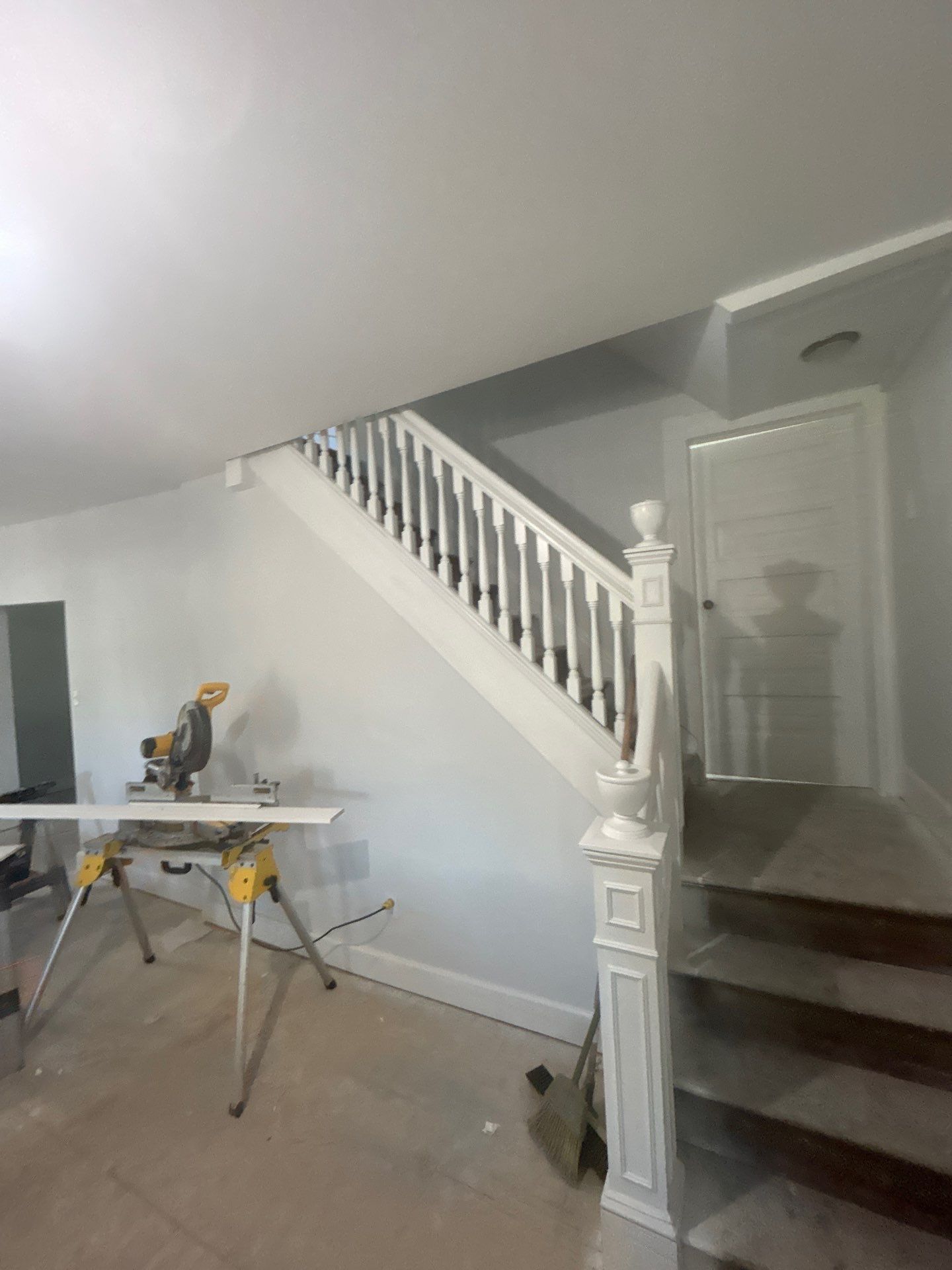
With verified dry standard readings and mold clearance documentation in place, reconstruction proceeded floor by floor. New drywall was installed throughout affected areas, with careful attention to maintaining the architectural character of the original home — including the preservation of the ornate main staircase balustrade and newel post, which were refinished as part of the reconstruction. Fresh primer and paint were applied throughout, and finish carpentry was completed to restore trim profiles appropriate to the home’s age and character.
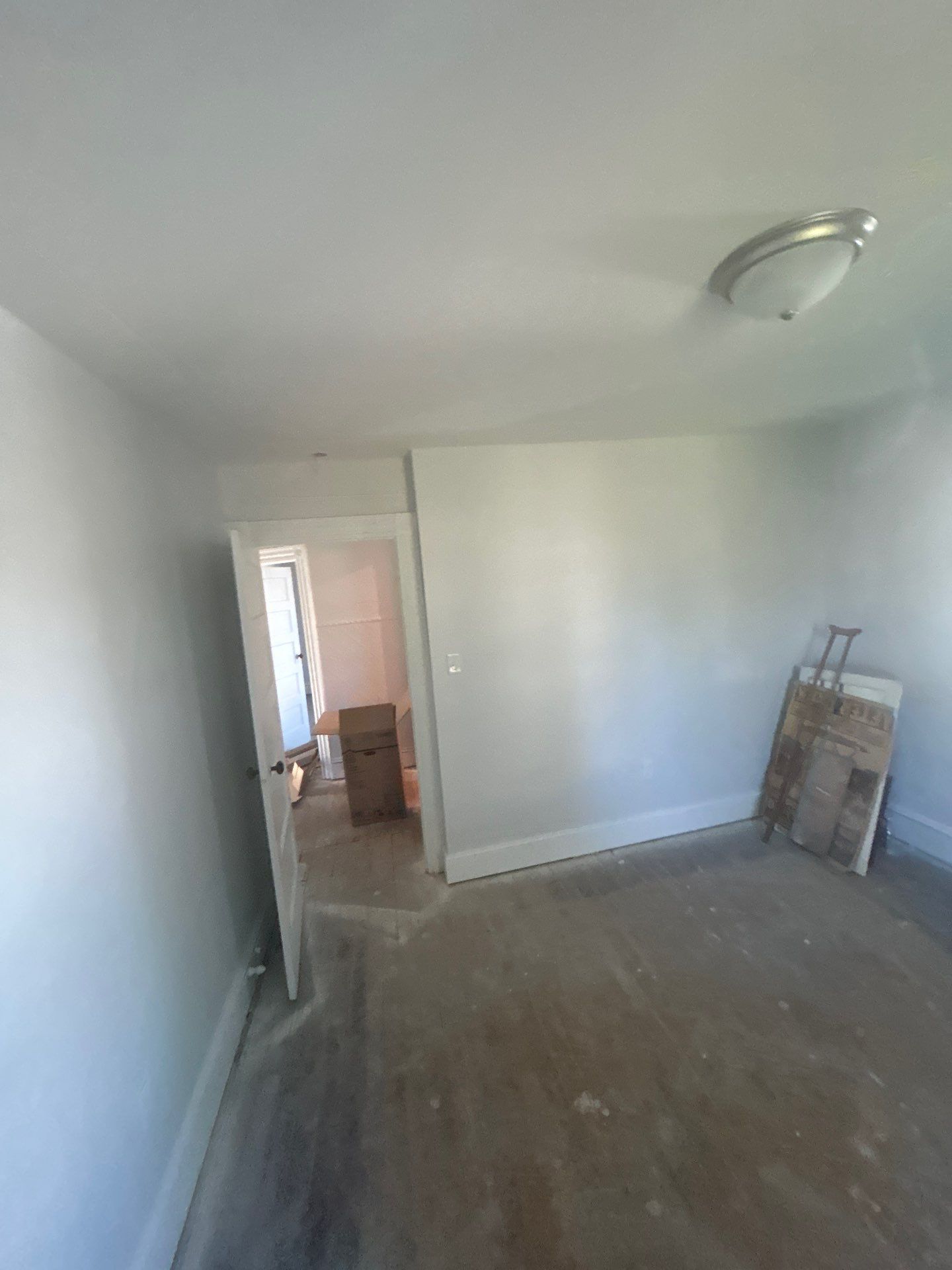
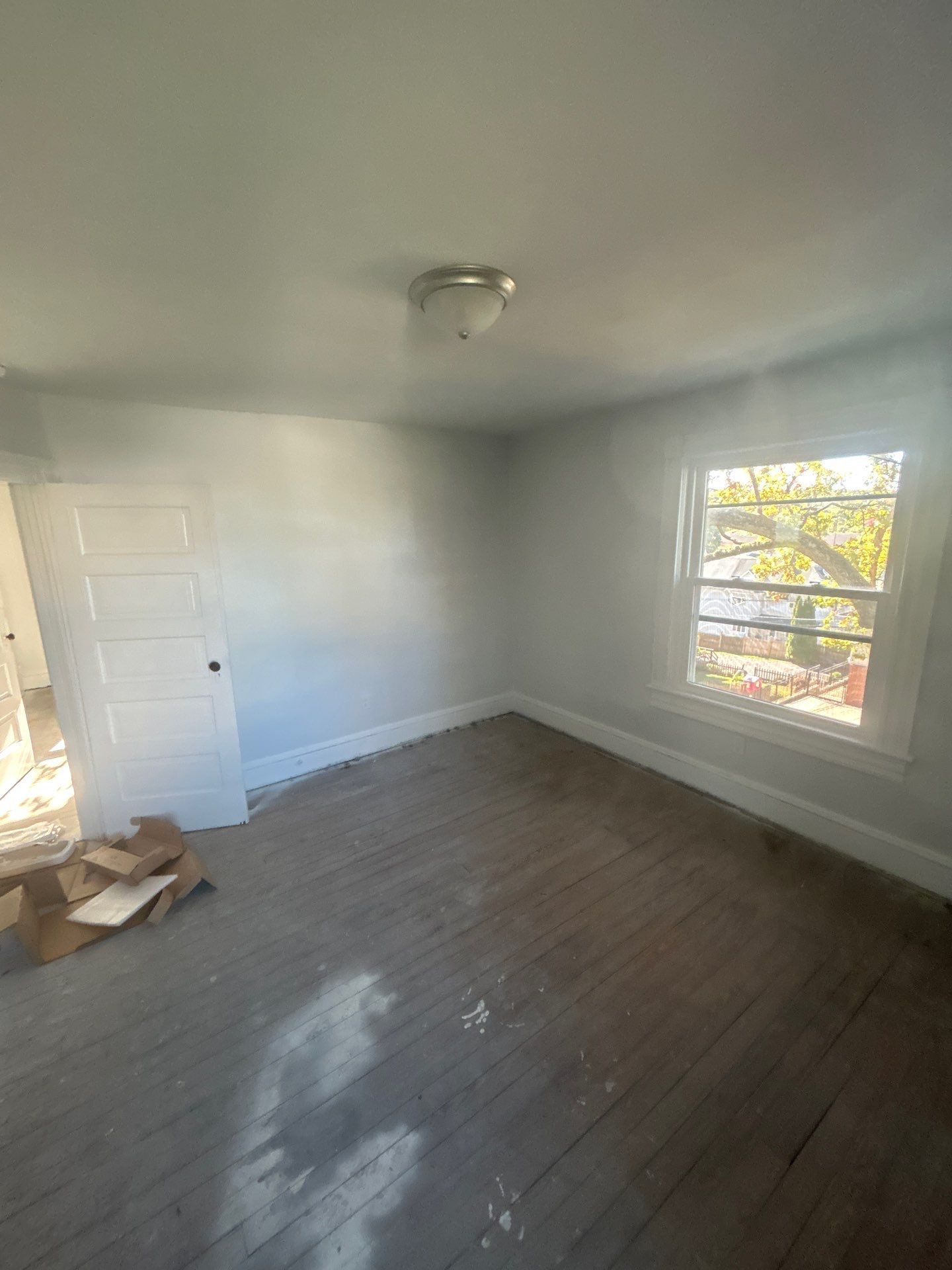
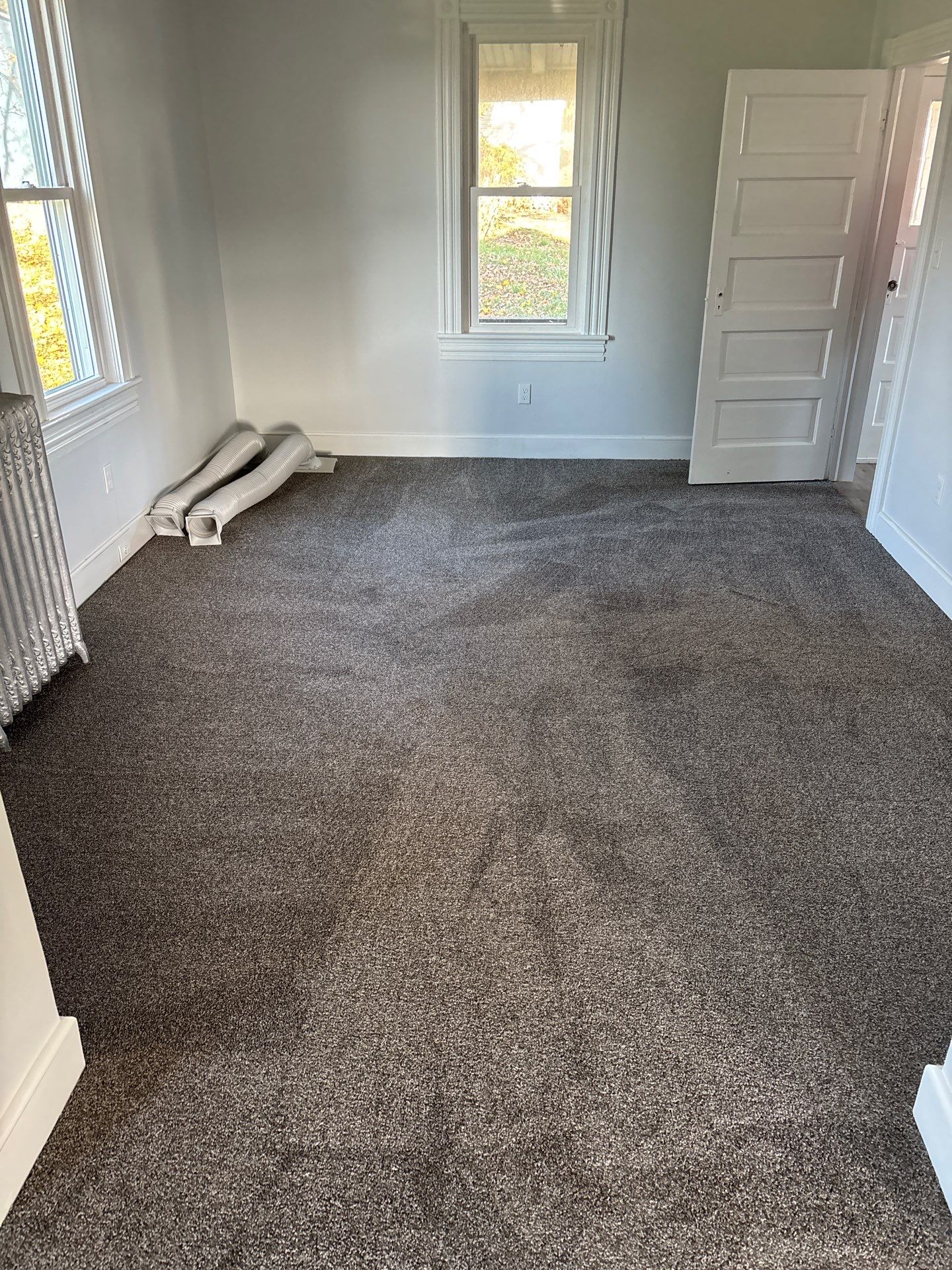
Bedroom floors received new carpeting in the rooms where flooring had been most severely affected, while other areas retained and were refinished to restore original hardwood planks where structurally sound. The result was a room-by-room transformation — from bare framing to fully finished, painted, and carpeted living spaces that the property had not seen in years.
Reconstruction Scope Summary
Drywall: Full installation throughout all affected rooms on multiple floors — from bare lath framing to finished, painted walls.
Flooring: New carpet installed in primary bedroom areas; original hardwood retained and refinished where structurally sound.
Staircase: Historic balustrade, balusters, and newel post preserved and refinished as part of the restoration.
Painting: Complete interior repaint throughout all affected areas in fresh neutral tones.
Electrical: Damaged electrical system addressed and power distribution resolved as part of the project scope.
Northeastern Pennsylvania and the Scranton Area: Understanding Local Water Damage Risk
The Scranton metro area and surrounding communities — including Dunham, Clarks Summit, Dickson City, and the broader Lackawanna County region — have a significant concentration of older housing stock. Many properties in this region were built during the industrial boom of the late 19th and early 20th centuries, with a substantial portion of residential structures predating 1960. This history creates a specific risk profile for water damage events in the area.
Regional Factors Affecting Water Damage Risk
Northeastern Pennsylvania experiences cold, wet winters with periods of rapid freeze-thaw cycling that stress older plumbing systems — particularly galvanized steel and early copper pipe installations common in mid-century residential construction. When pipes in these systems fail, the water often migrates through lath-and-plaster assemblies that absorb and retain moisture far more aggressively than modern drywall, creating conditions for extended structural saturation and accelerated mold growth.
The region’s housing stock also carries elevated abatement risk: homes built before 1978 may contain lead-based paint, and properties from the pre-WWII through 1960s era may have asbestos in flooring, pipe insulation, or ceiling materials. Any water damage restoration in these structures that involves demolition requires the abatement assessment and certified removal step that was a defining feature of this Dunham project.
Why Property Owners in the Scranton Area Choose Advanced DRI
Harrisburg Restoration operates as part of the Advanced DRI network — a regional group of full-service property damage restoration companies serving Pennsylvania and surrounding states. The Advanced DRI network’s capability to handle complex, multi-phase losses — including abatement, mold remediation, structural drying, and full reconstruction under a single project management umbrella — is particularly valuable for Scranton-area property owners dealing with losses in aging residential structures where multiple systems may be compromised simultaneously.
Project Documentation Gallery
The following images document the full project arc — from active mitigation and demolition through abatement operations, structural drying, and final reconstruction. Each image reflects a distinct phase in the recovery of this Dunham, PA property.
| Image | Phase | What It Shows |
|---|---|---|
| Power Distribution Box | Phase 1 — Initial Response | Red power distribution unit deployed due to electrical system damage; safety infrastructure enabling all equipment operations |
| Dri-Eaz LGR 6000Li | Phase 4 — Structural Drying | Commercial LGR dehumidifier positioned on original hardwood floors during structural drying phase |
| Hallway — Lath Exposed | Phase 4 — Demolition | Plaster removed to reveal wood lath skeleton; Evolution extraction unit operating in corridor; ceiling delamination visible |
| Main Floor — Full Demo | Phase 4 — Demolition | Complete structural demolition — exposed floor joists, brick exterior, stripped framing; Dri-Eaz dehumidifier in background |
| Basement — Technician in PPE | Phase 2 — Abatement / Phase 3 — Mold Remediation | Certified technician in full Tyvek suit and respirator assessing compromised electrical panel on stone foundation wall |
| Staircase — Reconstruction | Phase 5 — Reconstruction | Refinished staircase with fresh drywall and paint; miter saw setup for trim carpentry visible |
| Bedroom — Drywall Complete | Phase 5 — Reconstruction | Bedroom with new drywall and primer; subfloor visible awaiting final flooring installation |
| Bedroom — Hardwood Retained | Phase 5 — Reconstruction | Bedroom with original hardwood planks retained and refinished; fresh paint and new trim throughout |
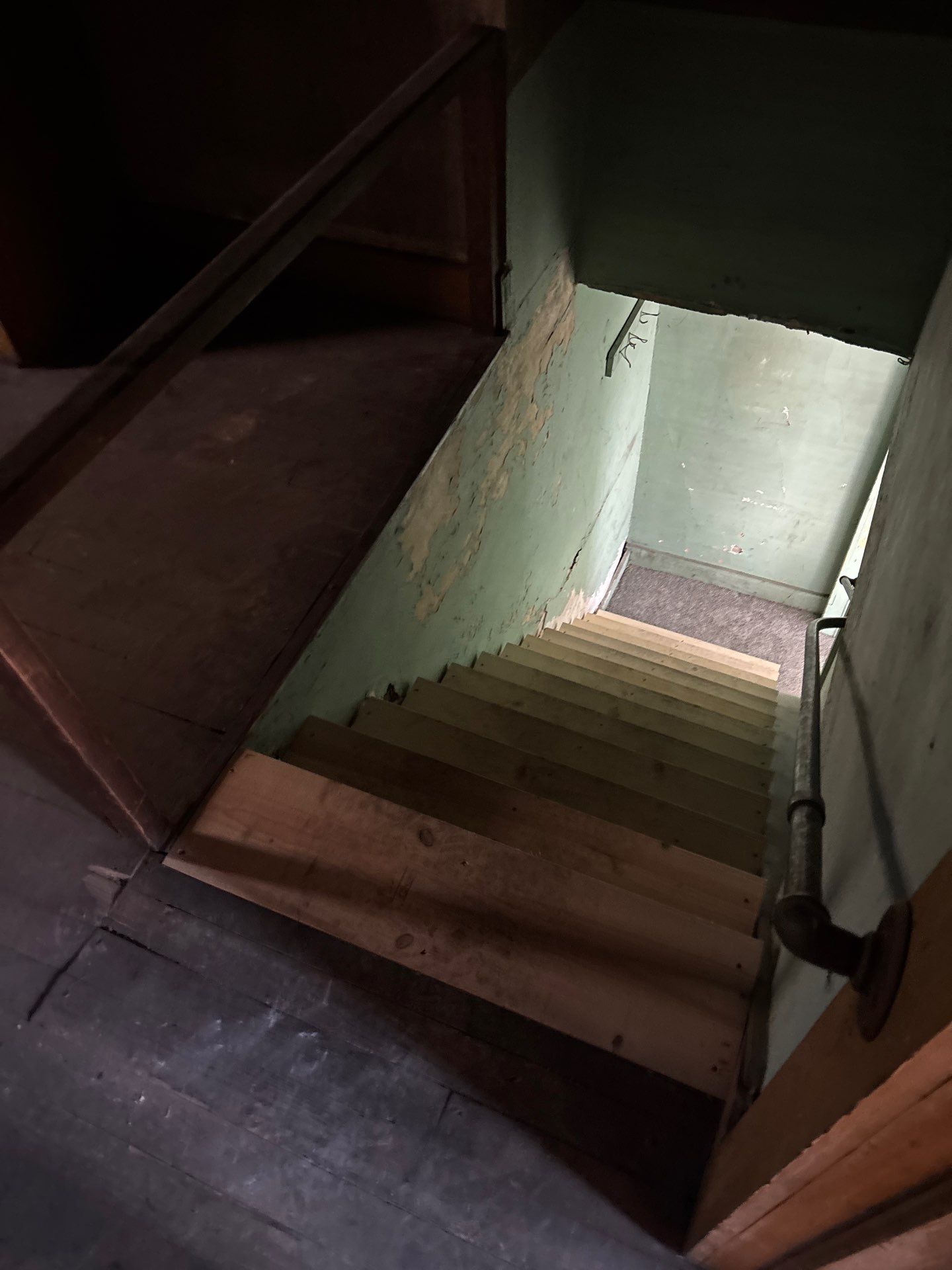
| Basement Staircase | Phase 1 — Assessment | Original basement access stairs showing peeling paint and aging wall surfaces; part of initial scope documentation |
| Bedroom — Final Carpet | Phase 5 — Final Completion | Fully completed bedroom with new carpet, fresh paint, restored trim and doors — move-in ready condition |
Key Takeaways
The Dunham, PA water loss project represents one of the most comprehensive types of residential restoration work — a full-scope recovery where a single pipe failure triggered abatement, mold remediation, electrical intervention, structural demolition, and complete multi-floor reconstruction. Several principles from this project apply broadly to any property owner facing a water loss in an older Northeastern Pennsylvania home:
Age matters in water damage response. Homes built before 1980 carry a substantially higher likelihood of requiring abatement before any demolition can proceed. This is not an obstacle — it is a safety requirement that protects workers, neighbors, and future occupants. A restoration partner without abatement capability cannot safely complete this work.
Hidden mold is the most dangerous kind. Mold that colonizes wall cavities in lath-and-plaster construction is invisible from the surface. It requires opening walls, certifying remediation, and obtaining clearance before reconstruction — steps that cannot be compressed or skipped without creating ongoing health and structural risks.
Electrical damage requires immediate attention. Water intrusion that compromises a home’s electrical system creates fire and electrocution risk. The deployment of a power distribution box was not optional — it was the critical safety step that made all subsequent restoration work possible.
Full reconstruction is sometimes the right outcome. When the cumulative damage to a structure — abatement requirements, mold contamination, electrical failure, and saturated framing — reaches a certain threshold, rebuilding from the studs out delivers a better long-term result than attempted partial remediation. This project ended with a home that not only was restored, but was genuinely improved.
If your property in the Scranton area, Dunham, or anywhere in Lackawanna County has experienced water damage — particularly in an older structure — contact Harrisburg Restoration at (717) 232-5444 for a professional assessment. Our team serves communities across northeastern Pennsylvania with the full range of capabilities this type of complex loss demands.