Project at a Glance
Hours to Arrival
Boxes Relocated
Workers Deployed
Library Remained Open
Executive Summary
When a microburst storm system dropped 4 inches of rain in under an hour on a college campus in Carlisle, Pennsylvania, the resulting flood overwhelmed exterior door seals and inundated the basement level of the institution’s main library with Category 3 water. This water damage repair emergency called for more than standard water extraction—it required the systematic inventory, packing, storage, and eventual reorganization of 10,725 boxes of books while the library remained operational to serve students and faculty. For institutions searching for “water damage restoration near me” after severe flooding, this project demonstrates the comprehensive capabilities required for large-scale commercial recovery.
Advanced DRI‘s water damage repair response to this after-hours emergency demonstrated the full spectrum of commercial water damage restoration capabilities: rapid deployment of multiple crews within 2 hours, coordination of 30+ workers across multiple project phases, navigation of asbestos abatement requirements, management of electrical complications with hardwired bookshelf systems, and execution of complete reconstruction including flooring, drywall, paint, and trim—all while maintaining public access to unaffected areas and working around a non-functioning elevator that required hand-carrying every box, tool, and material up and down multiple flights of stairs. Advanced DRI’s Harrisburg-based team provided this comprehensive institutional water damage repair from their central Pennsylvania headquarters, ensuring rapid response throughout the south central region.
Strategic Response: Why Minutes Matter in Commercial Water Damage Repair
The Critical Window for Libraries and Archives
Water damage in library environments presents unique challenges that intensify with every passing minute. Paper materials begin absorbing moisture immediately upon contact, with books showing visible damage within the first hour. Category 3 water contamination—which includes sewage, storm runoff, and other biohazards—compounds these risks by introducing pathogens that can permanently damage collections and create health hazards for building occupants. When facilities managers search for “water damage restoration near me” during such emergencies, response time becomes the critical factor in preventing total collection loss.
The Advanced DRI team understood that this emergency required immediate action not just to extract water, but to prevent catastrophic loss of the institution’s entire basement-level collection. Within 2 hours of receiving the after-hours call, multiple crews were on-site conducting initial assessment and beginning extraction operations.
Commercial Emergency Response Infrastructure
Advanced DRI’s ability to deploy 30+ workers across multiple project phases reflects the infrastructure necessary for large-scale commercial water damage repair. Unlike residential emergencies that typically involve 2-3 technicians, institutional projects demand coordinated teams with specialized roles: extraction specialists, contents inventory technicians, demolition crews, abatement workers, and reconstruction teams—all working in carefully sequenced phases to minimize operational disruption. This level of emergency damage restoration coordination requires extensive resources and project management expertise.
This water damage repair project required coordination of more than 30 workers across multiple phases, managing 10,725 boxes of books through inventory, packing, storage, and reorganized reshelving—while the library remained open to serve students and faculty throughout the entire restoration process. For institutional facilities searching for reliable “water damage restoration near me” services, this case study demonstrates the project management capabilities essential for large-scale commercial recovery.
Understanding the Incident
The Microburst Event: 4 Inches in Under an Hour
Microbursts represent one of the most dangerous weather phenomena for building infrastructure. These concentrated downdrafts can produce rainfall rates exceeding 4 inches per hour—far beyond the capacity of most drainage systems designed to handle typical storm events of 1-2 inches per hour. The Carlisle microburst overwhelmed the campus drainage infrastructure and created hydrostatic pressure that exceeded the design capacity of the library’s exterior door seals.
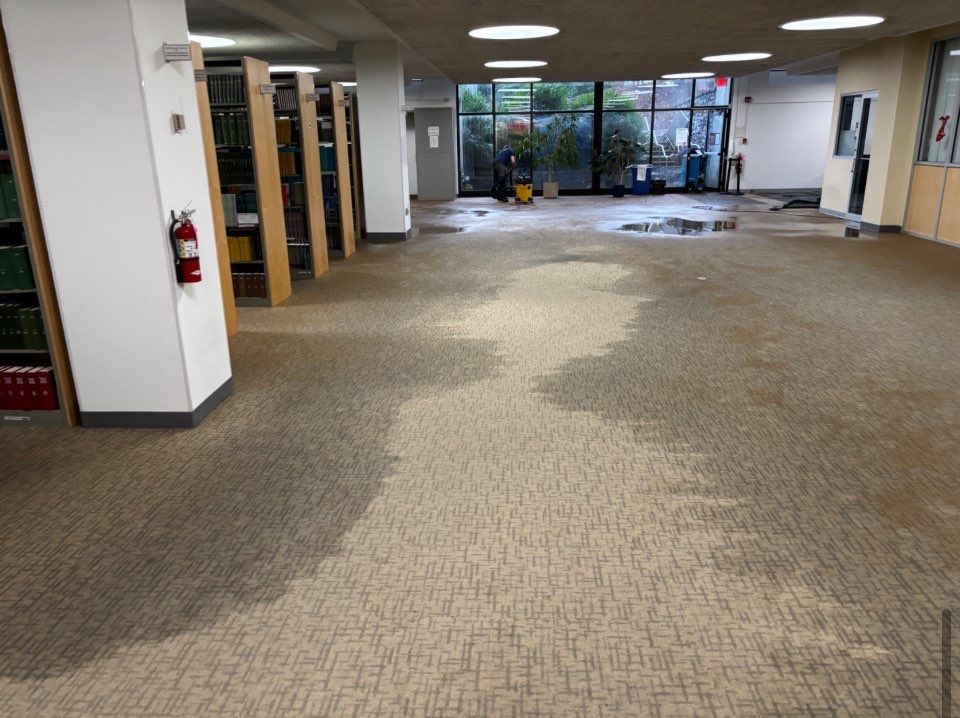
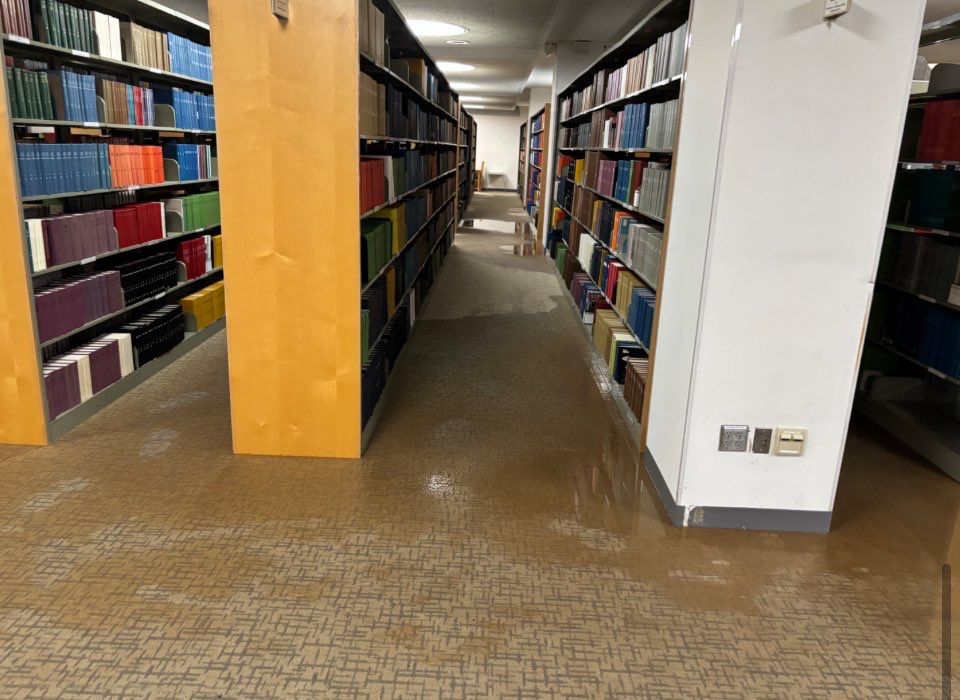
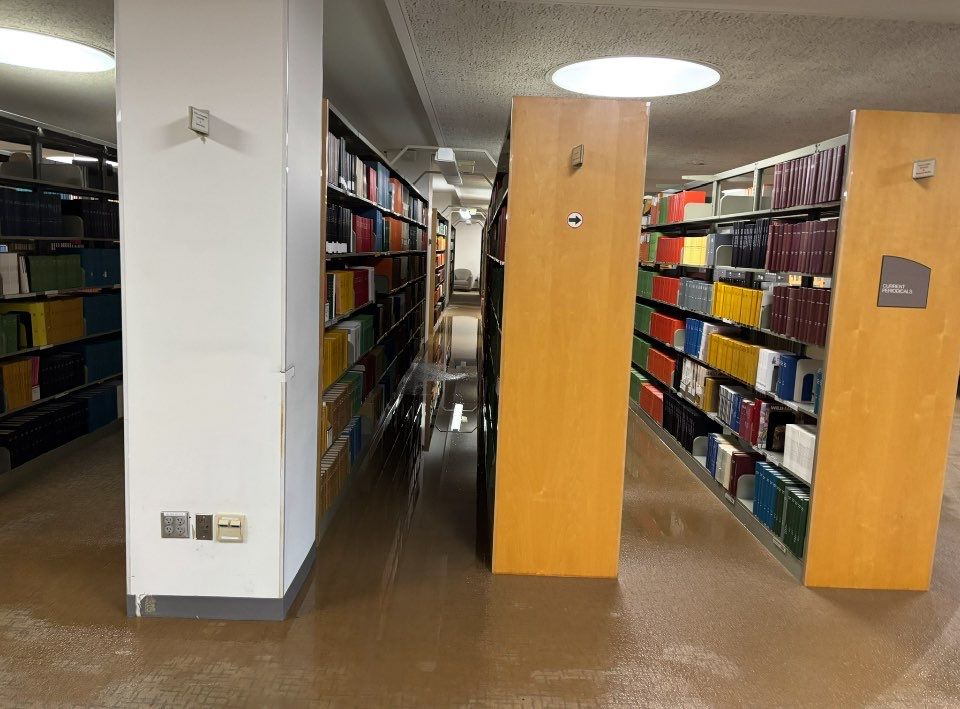
Unlike gradual flooding that allows some preparation time, microburst events can deposit several inches of water in minutes, leaving building occupants with virtually no warning. In this case, the rapid water accumulation meant the basement level was already significantly flooded by the time the emergency was discovered, allowing water to migrate under bookshelves and across the entire floor area.
Category 3 Water Contamination
The water entering through failed exterior door seals qualified as Category 3 (“black water”)—the most serious classification under IICRC standards. This designation indicates water that contains pathogenic agents, toxic materials, or other substances causing severe discomfort or illness. Storm runoff carries soil contaminants, bacteria from outdoor surfaces, potential sewage backup, automotive fluids from parking areas, and other biohazards.
For a library environment, Category 3 designation had immediate consequences: any porous materials contacted by the water—including carpet, carpet pad, and paper materials—required disposal or specialized decontamination. This reality drove the decision to inventory and pack out the entire basement collection of 10,725 boxes, as books that came into contact with contaminated water could not be safely returned to public circulation without professional treatment.
The Compounding Challenge: Non-Functional Elevator
An unrelated mechanical issue had rendered the building’s elevator non-operational at the time of the flooding. This seemingly minor complication transformed every aspect of the restoration into a significantly more labor-intensive operation. Every box of books, every piece of equipment, every load of demolition debris, and every bundle of reconstruction materials had to be hand-carried up and down multiple flights of stairs between the basement work area and the building exit.
For context: 10,725 boxes of books represent approximately 214,500 pounds of material (assuming 20 pounds per box)—over 100 tons that crews moved by hand, twice (once to remove, once to reinstall). This physical constraint required additional crew members, extended project timelines, and demanded careful logistics planning to sequence material movement efficiently.
Why Fast Response Matters in Libraries
Water Damage Progression in Library Collections
0-1 Hour
1-6 Hours
6-24 Hours
24+ Hours
Property Assessment and Water Damage Repair Scope
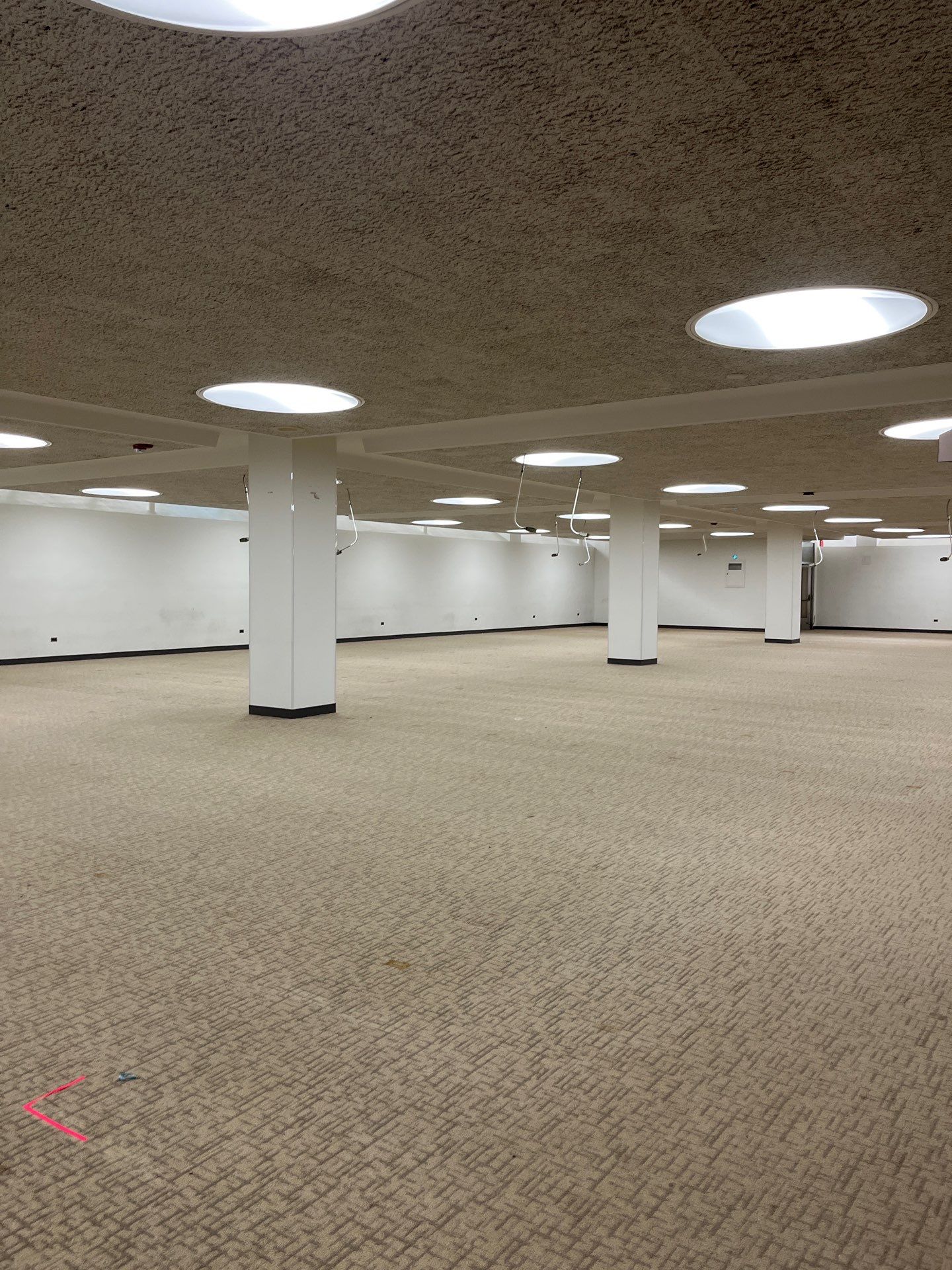
Basement Level: Complete Flood Impact Requiring Water Damage Repair
The basement level of the library encompassed multiple zones, each presenting distinct water damage repair challenges:
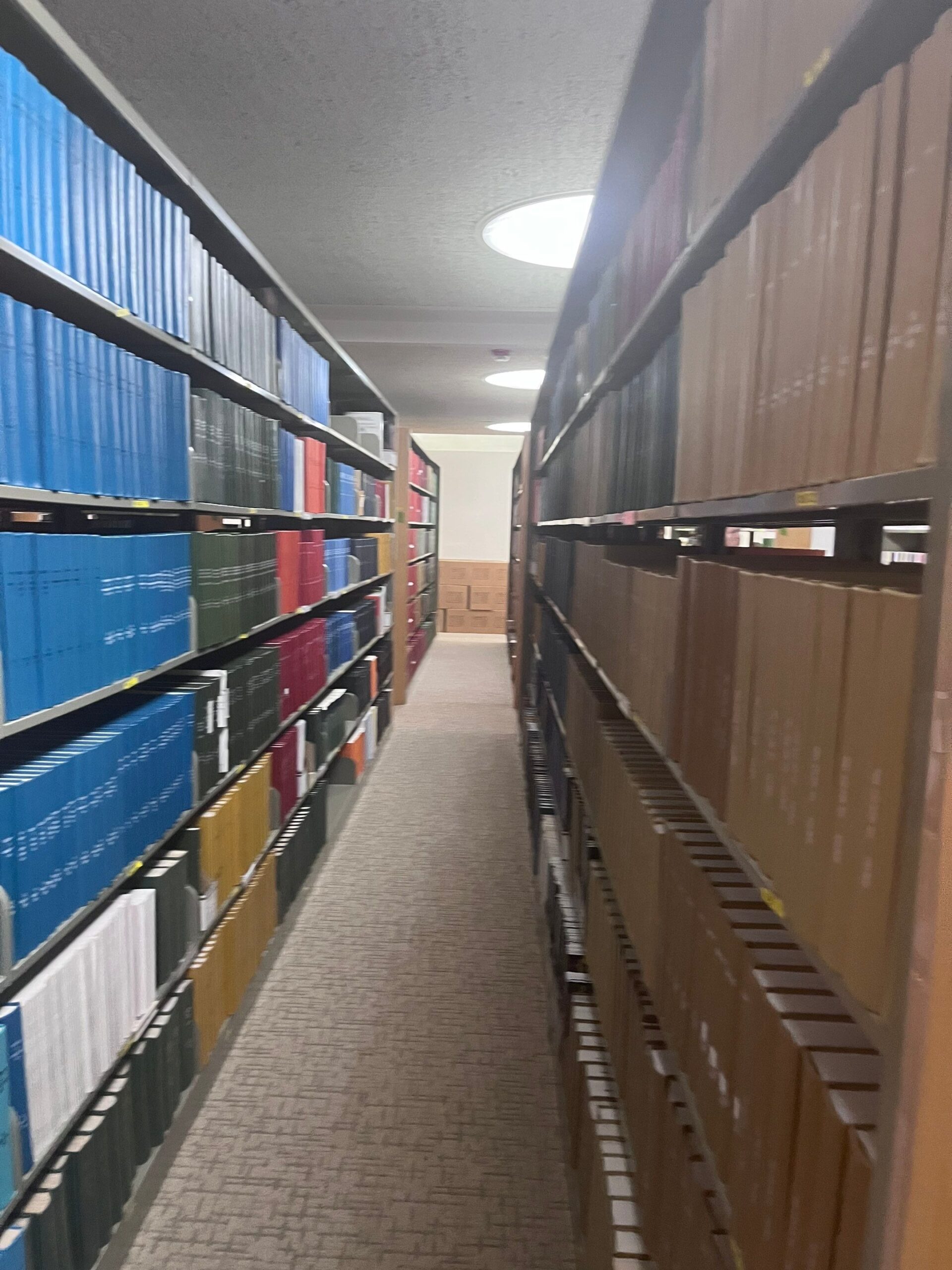
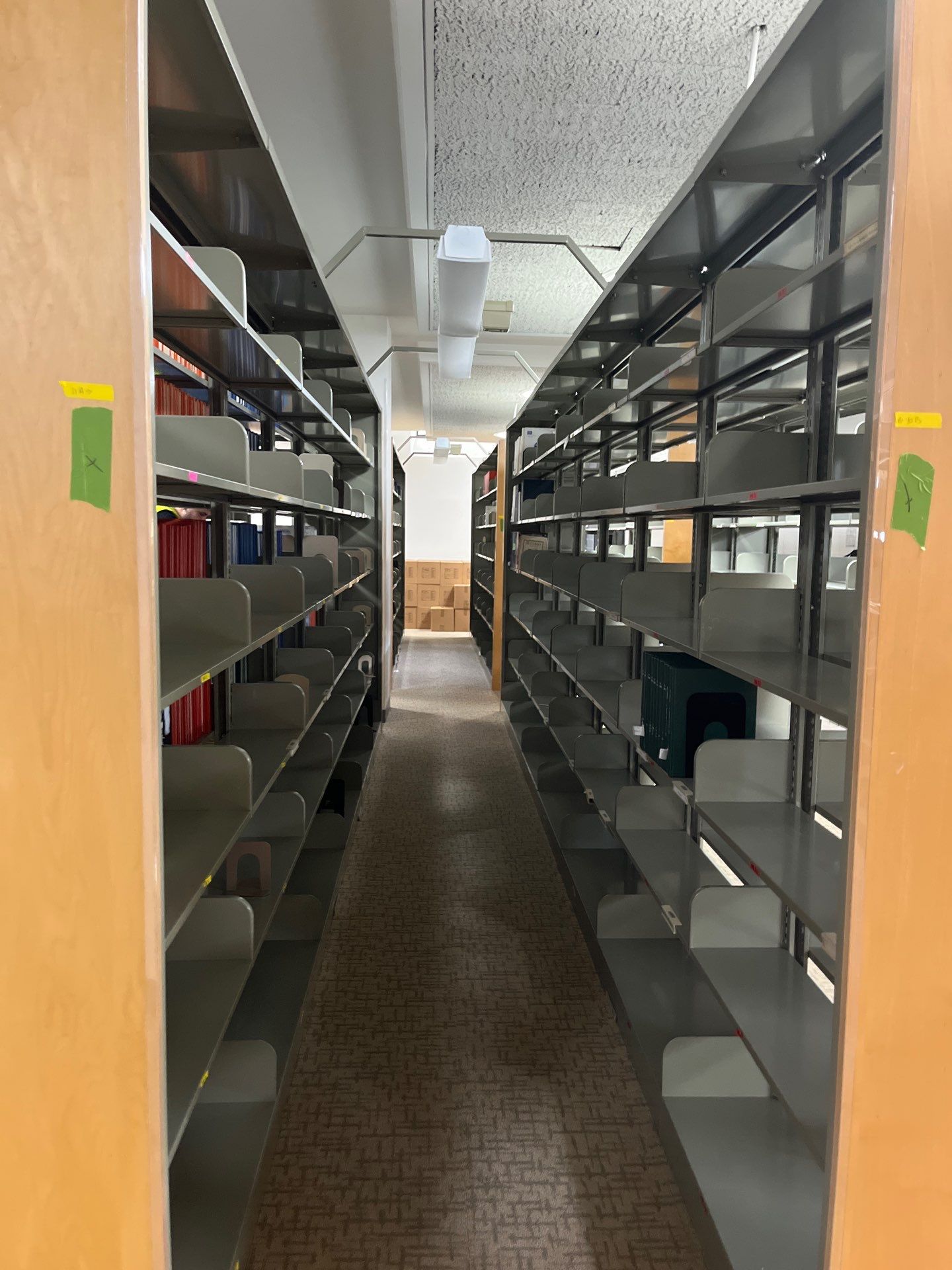
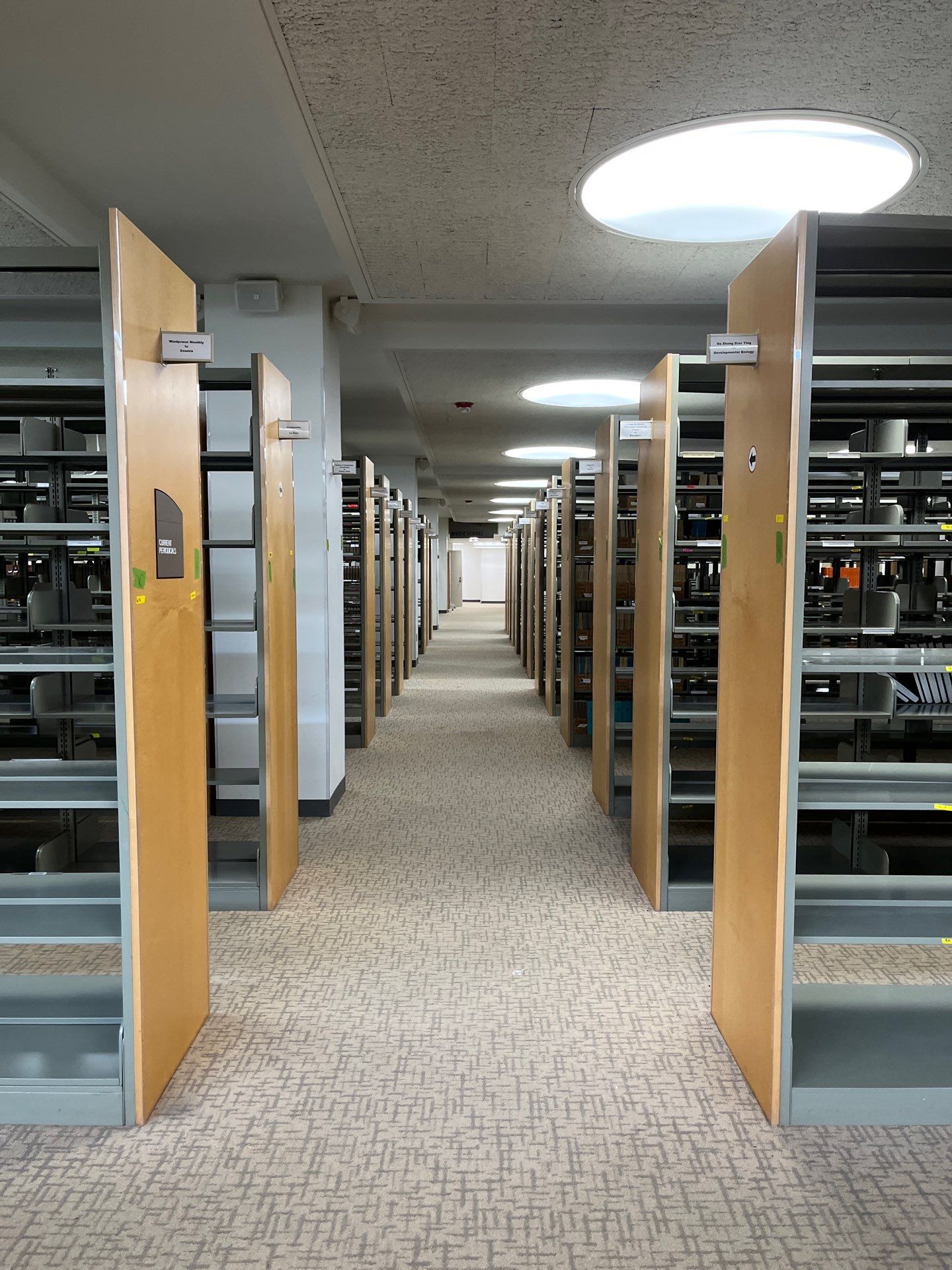
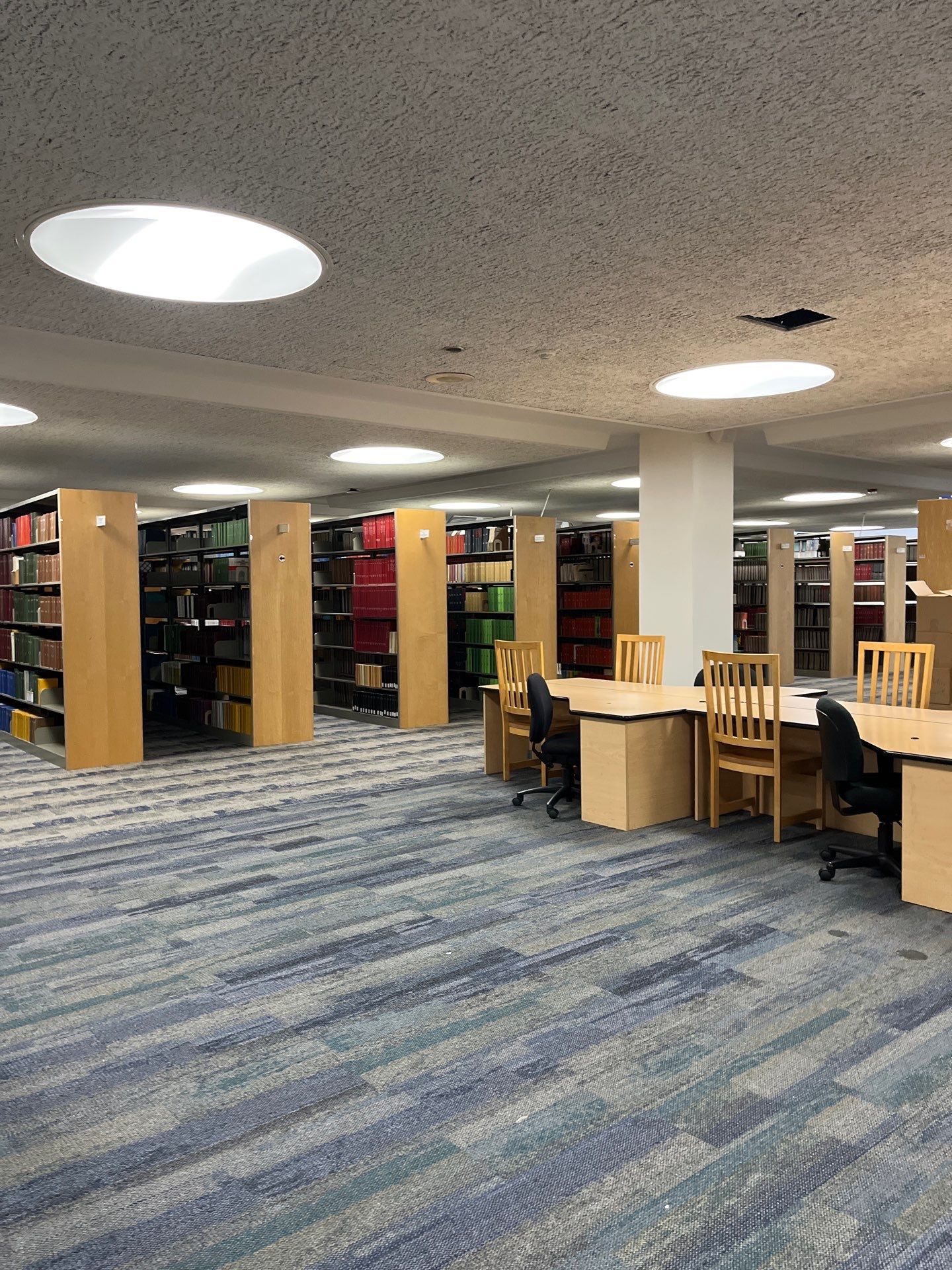
Book Stack Areas: The primary collection storage area featured rows of metal bookshelving units extending across the entire floor. Water had migrated under these shelving units, saturating carpet and carpet pad throughout. The Category 3 classification meant that any books on lower shelves that contacted floodwater required immediate removal and assessment.
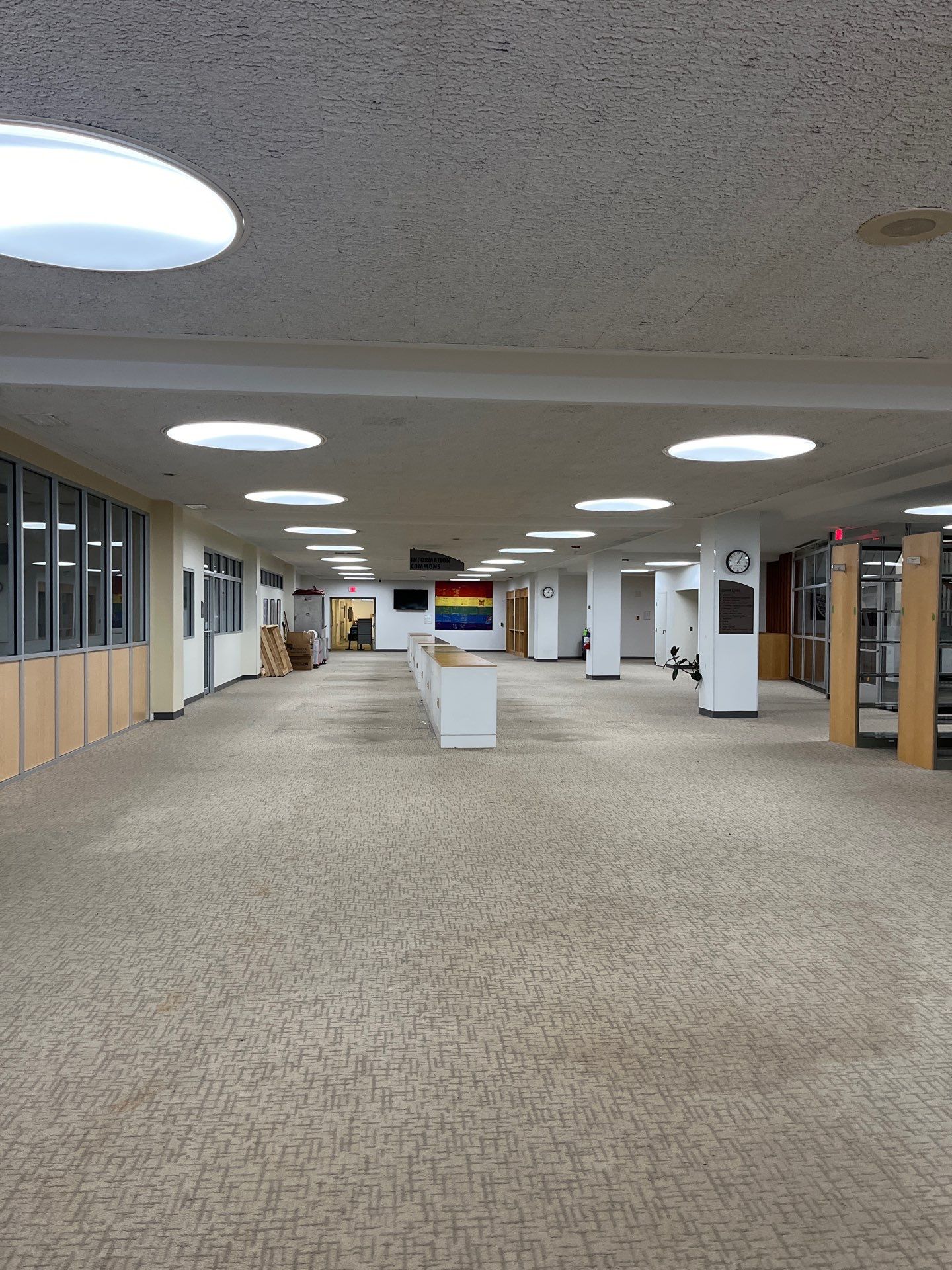
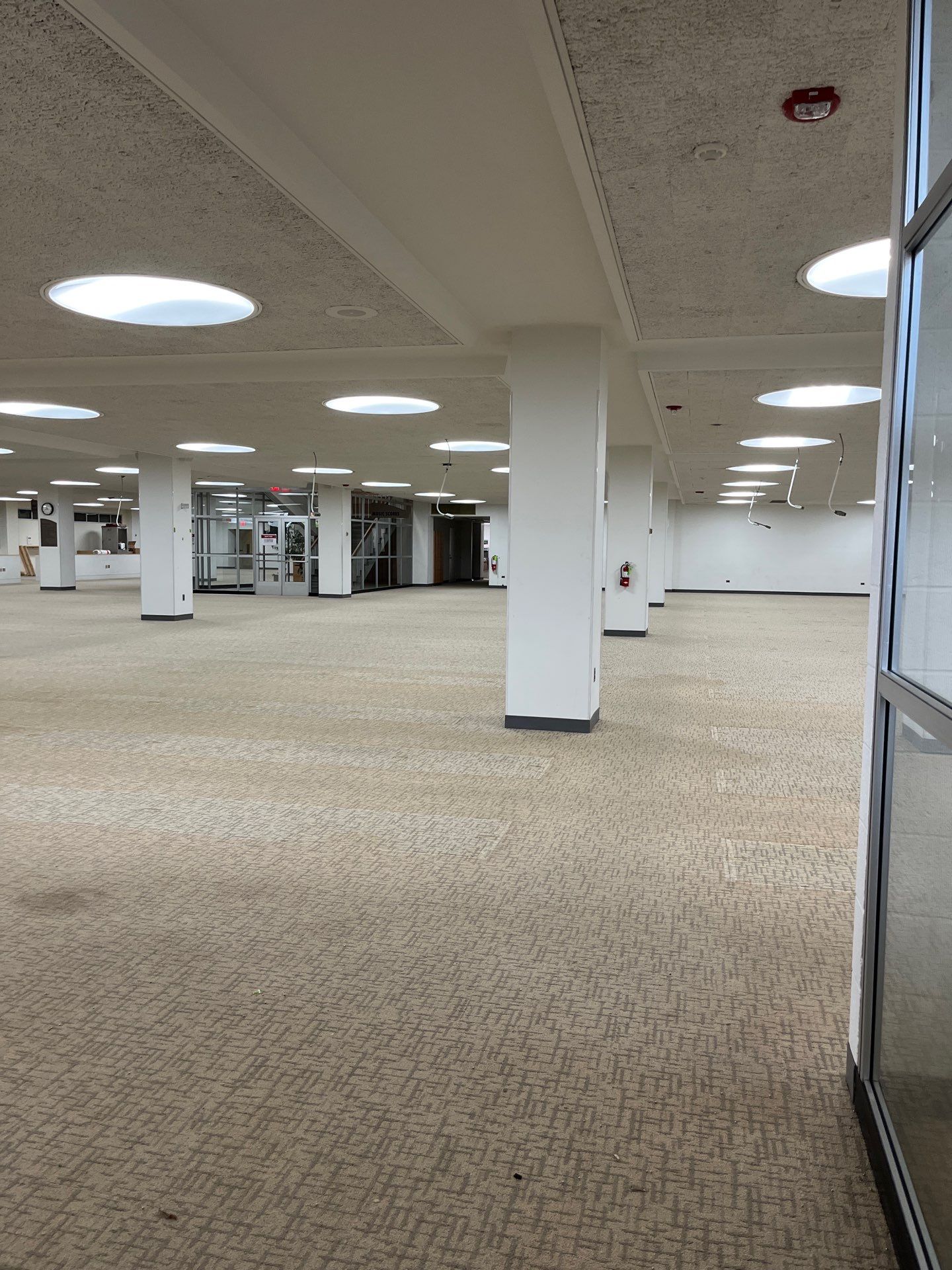
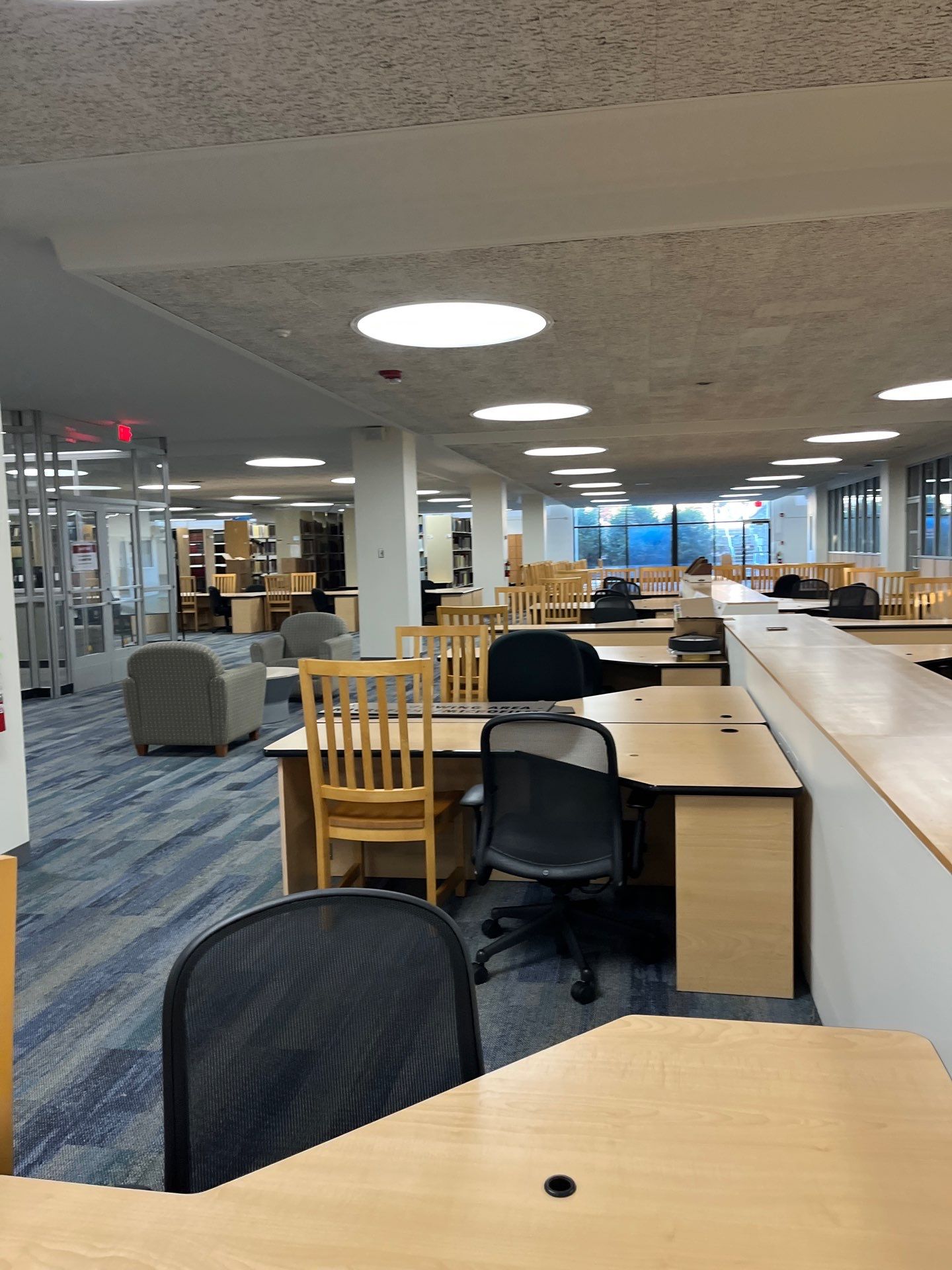
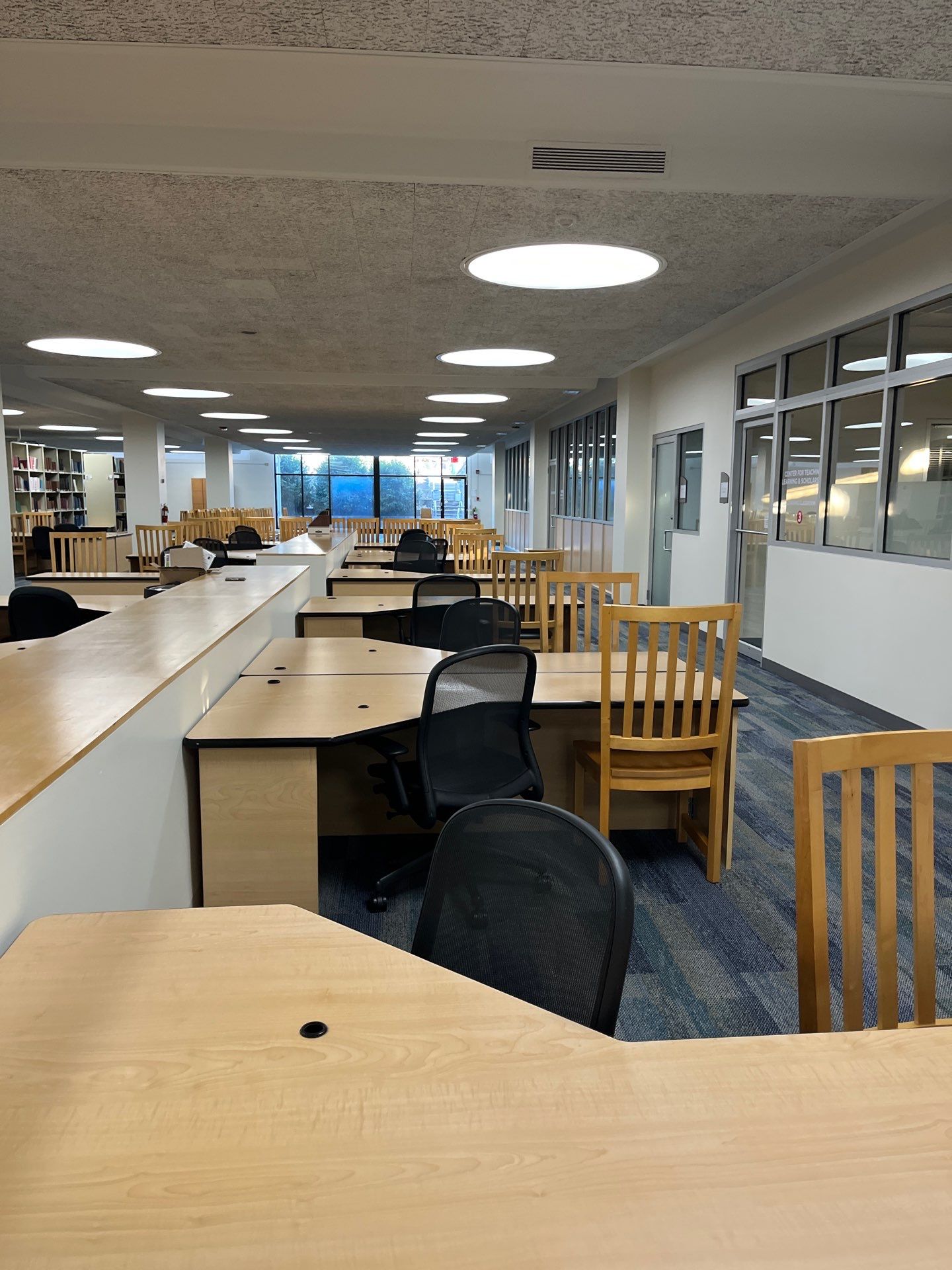
Study and Reading Areas: Open floor sections with study tables, chairs, and reading carrels sustained widespread carpet damage requiring professional water damage repair. These areas required complete contents removal to facilitate flooring replacement and contamination mitigation.
Circulation and Service Desk: The main service point for the basement level experienced flooding around its perimeter, affecting base cabinets and requiring careful protection of computer systems and circulation equipment during water damage repair work.
The Asbestos Discovery
During initial demolition for water damage repair, crews discovered asbestos-containing floor tile beneath the carpet tile system—a common finding in institutional buildings constructed before 1980. This discovery immediately triggered additional regulatory requirements under EPA and OSHA asbestos handling protocols. All demolition work had to pause while certified asbestos abatement contractors conducted proper sampling, containment setup, and removal procedures.
The asbestos layer added approximately 2-3 weeks to the water damage repair timeline and required specialized disposal procedures. However, it also presented an opportunity: with the flooring system already requiring complete replacement due to Category 3 contamination, the institution could eliminate this legacy hazard permanently rather than leaving it in place to potentially complicate future water damage repair renovations.
Electrical Complications: Hardwired Bookshelf Systems
Unlike typical library shelving that simply stands on the floor, these bookshelf units featured integrated electrical systems for task lighting. The power delivery used hard-piped conduit rather than flexible wiring—a more robust but significantly less forgiving installation method. This design choice meant that bookshelf removal required careful electrical disconnection, conduit cutting, and subsequent reinstallation with new conduit runs to accommodate the revised layout.
Each bookshelf unit effectively required the same level of electrical work as permanently installed equipment, multiplying the complexity of both removal and reinstallation phases during water damage repair. Licensed electricians had to be present for disconnection and reconnection, adding another specialized trade to the already complex water damage repair project coordination.
Category 3 Water Classification
Definition: Category 3 water (“black water”) contains pathogenic agents and is grossly unsanitary. This includes sewage, rising floodwater from rivers or streams, and storm surge from hurricanes.
Required Actions: Porous materials (carpet, pad, paper, upholstered furniture) that contact Category 3 water must be removed and discarded. Non-porous materials can be cleaned and disinfected using EPA-registered antimicrobial agents.
Health Risks: Exposure can cause severe discomfort or illness. All work requires appropriate PPE including respirators, protective coveralls, gloves, and eye protection. Category 3 water also creates conditions conducive to rapid mold growth, requiring immediate attention to prevent secondary contamination.
Water Damage Repair Strategy: Multi-Phase Project Management
Phase 1: Emergency Water Damage Repair and Stabilization
Within 2 hours of the after-hours call, Advanced DRI’s emergency water damage repair team arrived on site with truck-mounted extraction equipment and portable generators. The initial priority focused on removing standing water before it could migrate further into unaffected areas or seep deeper into building structures.
Crews deployed truck-mounted extraction systems capable of removing thousands of gallons per hour, working through the night to extract surface water and begin the drying process. This immediate water damage repair response prevented the initial Category 3 contamination from wicking up walls, migrating to upper floors through stairwells, or saturating structural elements that would have significantly complicated later water damage repair reconstruction.
Phase 2: Contents Inventory and Pack-Out (10,725 Boxes)
The most labor-intensive phase of this water damage repair project involved the systematic inventory, packing, and removal of the entire basement collection. This operation required:
Inventory Documentation: Every box received a detailed inventory label indicating its original location using the library’s classification system. This documentation was critical for the eventual reorganized reshelving, as librarians planned to restructure the collection layout during water damage repair restoration.
Organized Packing: Books from each shelf section were packed together and labeled to maintain organizational continuity. Teams packed books spine-up in archival-quality boxes to prevent damage during transport and storage. This level of care during water damage repair distinguishes professional “water damage restoration near me” companies from general contractors who may lack specialized contents handling expertise for water damage repair projects.
Transportation Without Elevator Access: With the elevator non-functional, crews formed relay lines to hand-carry boxes from the basement up multiple flights of stairs to loading areas. This water damage repair operation alone required 15-20 workers per day for several weeks, with careful attention to worker safety given the repetitive lifting and stair navigation during water damage repair phases.
Climate-Controlled Storage: All 10,725 boxes moved to Advanced DRI’s offsite storage facility where temperature and humidity remained controlled to prevent mold growth or further deterioration during the extended water damage repair timeline. Professional water damage repair companies maintain dedicated storage facilities specifically for protecting contents during restoration projects.
Phase 3: Hazardous Materials Abatement
Once contents were cleared, certified asbestos abatement contractors established containment barriers and negative air pressure systems to prevent fiber migration during tile removal. The abatement process followed strict EPA protocols:
Containment setup with poly sheeting barriers, decontamination stations for workers, and HEPA-filtered negative air machines running continuously. Workers in full Tyvek suits and powered air-purifying respirators manually removed each tile, wetted to prevent fiber release, and placed them in labeled asbestos waste containers. Air monitoring throughout confirmed no fiber release beyond containment zones. Final clearance testing by an independent industrial hygienist verified the space was safe for subsequent work phases.
Phase 4: Water Damage Repair Through Demolition and Reconstruction
With hazardous materials removed, demolition crews removed damaged carpet, compromised drywall at floor level (where Category 3 water had wicked up 6-12 inches), and water-damaged baseboards throughout the affected area. This water damage repair phase created a clean slate for reconstruction while ensuring no contaminated materials remained hidden behind new finishes.
Reconstruction proceeded in coordinated stages as part of the complete water damage repair process: subfloor preparation and moisture barrier installation, new commercial-grade carpet tile installation with upgraded designs per section (per the institution’s change orders), drywall replacement and finishing, baseboard installation, and complete painting of all affected areas. Electricians ran new conduit for the revised bookshelf layout, positioning outlets and junction boxes according to the librarians’ new organizational plan.
Phase 5: Reorganized Reshelving After Water Damage Repair
The final phase of this water damage repair project presented unique challenges as librarians had used the extended restoration period to completely redesign their collection organization. Rather than simply returning boxes to their original locations, water damage repair crews had to follow new placement maps that reorganized materials by subject area, usage frequency, and improved accessibility. For institutions searching for “water damage restoration near me” services, this demonstrates the flexibility that distinguishes professional water damage repair contractors.
This required constant communication between Advanced DRI water damage repair crews and library staff, with shelving proceeding section by section as librarians verified correct placement. The hand-carrying constraint remained in effect, meaning all 10,725 boxes made the return journey up multiple flights of stairs to the basement—this time with the added complexity of following a completely new organizational scheme during water damage repair completion.
Advanced DRI’s 5-Phase Commercial Restoration Process
Maintaining Operations During Water Damage Repair: Library Remained Open Throughout
Minimizing Disruption to Educational Mission During Water Damage Repair
One of the most remarkable aspects of this water damage repair project involved keeping the library operational throughout the entire multi-month process. While the basement level underwent complete reconstruction, the main floor and upper levels remained accessible to students, faculty, and researchers. This requirement added significant complexity to water damage repair project management:
Controlled Access Zones: Physical barriers and signage clearly delineated work areas from public spaces. Security personnel monitored access points to prevent unauthorized entry to construction zones while maintaining normal traffic flow to operational areas.
Noise Management: Demolition and construction activities were scheduled during hours of lowest library usage. Particularly disruptive water damage repair operations—such as concrete cutting for electrical conduit or large equipment movement—occurred during evening hours or weekends when fewer patrons were present.
Dust Control: HEPA-filtered air scrubbers ran continuously in work areas to prevent dust migration to active library spaces. Temporary dust barriers with zippered entry points contained particulates while allowing crew access.
Phased Completion: Rather than waiting for the entire basement to be finished, sections were completed and reopened progressively, returning usable space to library operations as quickly as possible while water damage repair work continued in remaining areas.
Coordination with Academic Calendar in Water Damage Repair Planning
The water damage repair project timeline had to account for peak usage periods during mid-term and final exam weeks when library traffic reaches its highest levels. Advanced DRI coordinated with library administration to sequence work phases around these critical periods, minimizing disruption during times when students most depend on library resources.
Change Order Management: Adapting to Evolving Requirements
The Opportunity Within the Crisis
While water damage emergencies are always disruptive, they occasionally present opportunities to address long-deferred improvements. With the basement collection already packed out and stored offsite, the institution’s leadership recognized this as an ideal time to implement organizational changes that would have been nearly impossible under normal operating conditions.
The college’s administration approved multiple change orders that transformed what began as an emergency water damage repair into a comprehensive renovation:
Collection Reorganization: Librarians redesigned the entire classification system to improve accessibility and better reflect contemporary research needs. This required new signage, revised bookshelf layouts, and complete retraining of staff on the new organizational scheme.
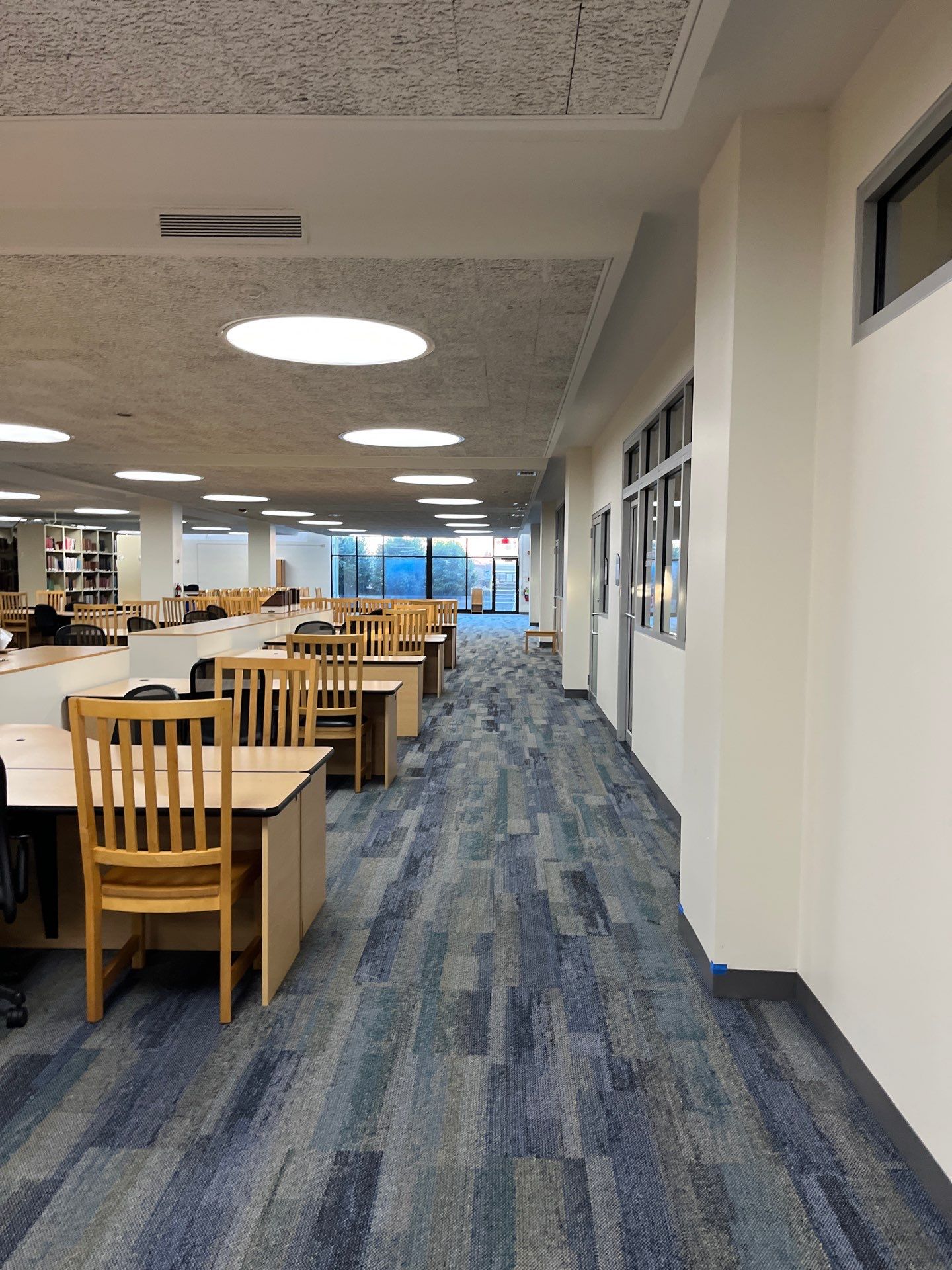
Upgraded Carpet Design: Rather than replacing with identical carpet tile, the institution selected upgraded materials with different design patterns for distinct sections. This visual differentiation helps patrons navigate the space and identifies different subject areas at a glance.
Improved Layout Efficiency: The revised bookshelf arrangement created better traffic flow, more study spaces, and improved sightlines for library staff monitoring the area. Some bookshelf units were eliminated entirely to open up collaborative study areas that had been requested by students for years.
Enhanced Lighting: The electrical work required for bookshelf relocation provided an opportunity to upgrade to LED task lighting throughout, improving illumination while reducing long-term energy costs.
Project Management of Water Damage Repair Scope Changes
Each change order required careful coordination to prevent scope creep from derailing the water damage repair project timeline or budget. Advanced DRI’s project management team worked closely with the institution’s facilities department to document all changes, provide detailed cost estimates, adjust schedules to accommodate new requirements, and ensure that enhancement work didn’t compromise the fundamental goal of returning the library to full operation.
Project Data & Analytics
Labor Deployment Across Project Phases
Peak Workers
Response Time: Commercial vs Standard Service
Advanced DRI
Local Contractors
Regional Services
National Chains
Project Scale Comparison
100-500 boxes
2,000-3,000 boxes
10,725 boxes
Manual Labor Impact: No Elevator Access
Carlisle and South Central Pennsylvania: Understanding Regional Flood Risks
The Cumberland Valley’s Unique Weather Patterns and Water Damage Repair Challenges
Carlisle sits in Pennsylvania’s Cumberland Valley, a geographic feature that significantly influences local weather patterns and creates recurring water damage repair needs. The valley’s orientation channels storm systems moving across the state, occasionally concentrating rainfall in ways that can overwhelm drainage infrastructure designed for typical precipitation events. Cumberland County faces unique water damage risks due to these geographic and meteorological factors.
Microburst events—while relatively rare—pose particular water damage repair risks to the region’s institutional buildings, many of which were constructed before modern drainage codes. The combination of older building infrastructure and increasingly intense weather events creates vulnerability that requires proactive planning and rapid water damage repair response capabilities. Institutions should also consider comprehensive emergency preparedness plans that address multiple disaster scenarios including fire and smoke damage alongside water-related emergencies.
Institutional Building Vulnerabilities Requiring Professional Water Damage Repair
College and university campuses in south central Pennsylvania face specific water damage repair risks:
Basement Storage Areas: Many institutional buildings feature basement-level storage, archives, or specialized facilities that are inherently vulnerable to flooding. Below-grade spaces lack natural drainage and depend entirely on mechanical systems and proper sealing to remain dry. When these systems fail, professional water damage repair services become essential to prevent catastrophic loss of valuable materials and institutional resources.
Aging Infrastructure: Campus buildings often date to construction eras before modern waterproofing standards. Door seals, foundation waterproofing, and drainage systems may not meet current codes, creating vulnerabilities during extreme weather events. Comprehensive water damage repair for these older facilities often requires addressing underlying infrastructure deficiencies alongside immediate flood damage restoration.
Collection Storage Density: Libraries, archives, and research facilities concentrate high-value, irreplaceable materials in compact areas. This density means that even limited water intrusion can affect thousands of items simultaneously. Institutions across York County, Lancaster County, and Cumberland County must consider specialized water damage repair capabilities when developing emergency response plans.
Why Cumberland County Institutions Choose Advanced DRI
Advanced DRI’s successful management of this complex library restoration demonstrated water damage repair capabilities that institutional facilities managers specifically value. When searching for “water damage restoration near me,” Cumberland County institutions find that Advanced DRI offers:
Large-Scale Project Experience: The ability to coordinate 30+ workers across multiple phases while maintaining operations reflects water damage repair expertise that most residential-focused restoration companies cannot provide. Institutions searching for “water damage restoration near me” need contractors with proven commercial water damage repair project management capabilities.
Specialized Contents Handling: Managing 10,725 boxes through inventory, storage, and reorganized reshelving required systematic water damage repair processes and climate-controlled facilities that protect irreplaceable collections. Professional water damage repair for libraries and archives demands specialized expertise beyond standard restoration techniques.
Regulatory Compliance: Proper handling of asbestos abatement, Category 3 water contamination, and coordination with multiple specialty trades demonstrates the regulatory knowledge essential for institutional water damage repair. Commercial water damage repair projects must comply with EPA, OSHA, and local building code requirements throughout every phase of restoration.
Minimal Operational Disruption: The ability to execute major water damage repair reconstruction while keeping the library open throughout reflects project management capabilities critical for educational facilities that cannot simply close for months at a time. When facilities managers search for “water damage restoration near me,” finding contractors who understand operational continuity requirements separates qualified water damage repair specialists from general restoration contractors.
Advanced DRI serves institutions throughout south central Pennsylvania including Dauphin County, Cumberland County, York County, Lancaster County, and surrounding regions with specialized commercial water damage repair services.
Key Takeaways
This Carlisle library water damage repair project exemplifies the complexity of commercial water damage response when contamination classification, hazardous materials, and operational continuity intersect. The successful completion—managing 10,725 boxes through a complete organizational restructuring while the institution remained operational—required capabilities that extend far beyond typical emergency water extraction.
For institutional facilities managers in south central Pennsylvania searching for “water damage restoration near me,” this water damage repair project demonstrates why emergency response planning should account not just for water removal, but for the full scope of restoration that Category 3 contamination may require. The discovery of asbestos floor tile—a common finding in pre-1980 institutional buildings—added weeks to the timeline and significantly increased project complexity, underscoring the importance of partnering with restoration firms capable of coordinating multiple specialty trades under a unified project management structure.
The elevator failure, while seemingly unrelated to the flood emergency itself, illustrates how secondary complications can dramatically impact water damage repair logistics. The requirement to hand-carry 214,500 pounds of books up and down multiple flights of stairs—twice—demonstrates why institutional water damage repair projects demand robust labor coordination and careful attention to worker safety protocols that residential-scale operations rarely encounter. When searching for “water damage restoration near me,” facility managers should verify contractors have experience managing such logistical challenges in commercial water damage repair environments.
Most importantly, this water damage repair project showcased how water damage emergencies can become opportunities for long-deferred improvements when managed by restoration teams capable of flexible project coordination. The transition from emergency water damage repair to comprehensive renovation—incorporating collection reorganization, upgraded finishes, and improved layouts—required change order management expertise that transformed a crisis into a facility enhancement through professional water damage repair services. Learn more about Advanced DRI’s approach to complex commercial restoration projects, or view additional case studies demonstrating our institutional project capabilities.
Commercial Water Damage Repair Expertise Across Pennsylvania
Advanced DRI has provided emergency water damage repair, water damage restoration, fire damage reconstruction, and environmental remediation services throughout Pennsylvania since 2008. Our large-scale commercial project experience includes educational institutions, healthcare facilities, municipal buildings, and corporate campuses facing complex restoration challenges that demand coordinated multi-trade response and minimal operational disruption. Explore our complete range of restoration services tailored for commercial and institutional clients.
Based in Harrisburg, Pennsylvania, our commercial water damage repair division maintains the equipment inventory, skilled labor force, and project management infrastructure to respond to institutional emergencies throughout south central Pennsylvania and the mid-Atlantic region. Our Harrisburg headquarters at 330 East Park Drive enables rapid response to facilities throughout Cumberland County, Dauphin County, York County, Lancaster County, and surrounding areas. For facilities managers searching for “water damage restoration near me” and overseeing libraries, archives, data centers, or other high-value institutional spaces, we provide the specialized water damage repair capabilities that protect irreplaceable collections while maintaining the operational continuity essential to educational and research missions. Review the areas we serve across Pennsylvania and the surrounding region.
When your institution faces water damage, fire loss, or environmental contamination requiring large-scale contents handling, hazardous materials coordination, and carefully phased reconstruction, Advanced DRI delivers the commercial water damage repair expertise that protects your investment and serves your mission.