Project at a Glance
Year Home Built
Peak Moisture Reading
Drying Units Deployed
Flooring Layers Affected
Executive Summary
When a pipe burst inside a century-old residential home in Easton, PA (18042), the consequences reached far beyond a simple leak. Water traveled through multiple layers of historic flooring, saturated plaster-and-drywall ceilings, and threatened irreplaceable hardwood floors installed in a distinctive concentric nested pattern. Harrisburg Restoration, part of the Advanced DRI network, responded to this Lehigh Valley water damage emergency with a precise, occupant-sensitive mitigation plan — keeping the family safely in the home while fully protecting unaffected areas through professional-grade containment.
This case study documents the full scope of the project: the unique structural challenges posed by pre-war construction, the lead testing protocol completed before work began, the containment strategy that shielded the home’s contents, and the commercial drying system that reversed a moisture reading of 96 on affected surfaces.
“A pipe burst in a home built in 1919 isn’t just a water damage call — it’s a historic preservation challenge that demands specialized knowledge of pre-war construction, legacy materials, and careful containment to protect both occupants and contents.”
Why Fast Response Matters
Water Damage Progression Timeline
Understanding the Incident
The Source: Pipe Burst in a Pre-War Structure
The water loss originated from a burst pipe — one of the most common and most destructive emergency scenarios in Lehigh Valley homes, particularly those built before modern plumbing standards. In a residence constructed in 1919, the pipe infrastructure carries over a century of wear, and a single failure can have cascading consequences across multiple floors and rooms.
In this Easton, PA property (18042), the burst pipe released water that rapidly migrated downward and laterally — penetrating historic flooring assemblies that include multiple stacked layers accumulated over decades of renovation. Rather than a clean single-layer subfloor, the technicians encountered a stratified floor system that trapped and held moisture between each layer, significantly increasing the drying complexity.
Multi-Layer Flooring: A Historic Home’s Hidden Challenge
Homes built in the early 20th century were frequently updated with new flooring installed directly over existing floors — a practice that saves labor but creates a moisture trap when water damage occurs. In this Easton property, water had infiltrated the space between layers, requiring careful assessment to determine whether the hardwood surface layer could be salvaged or whether each layer needed individual treatment.
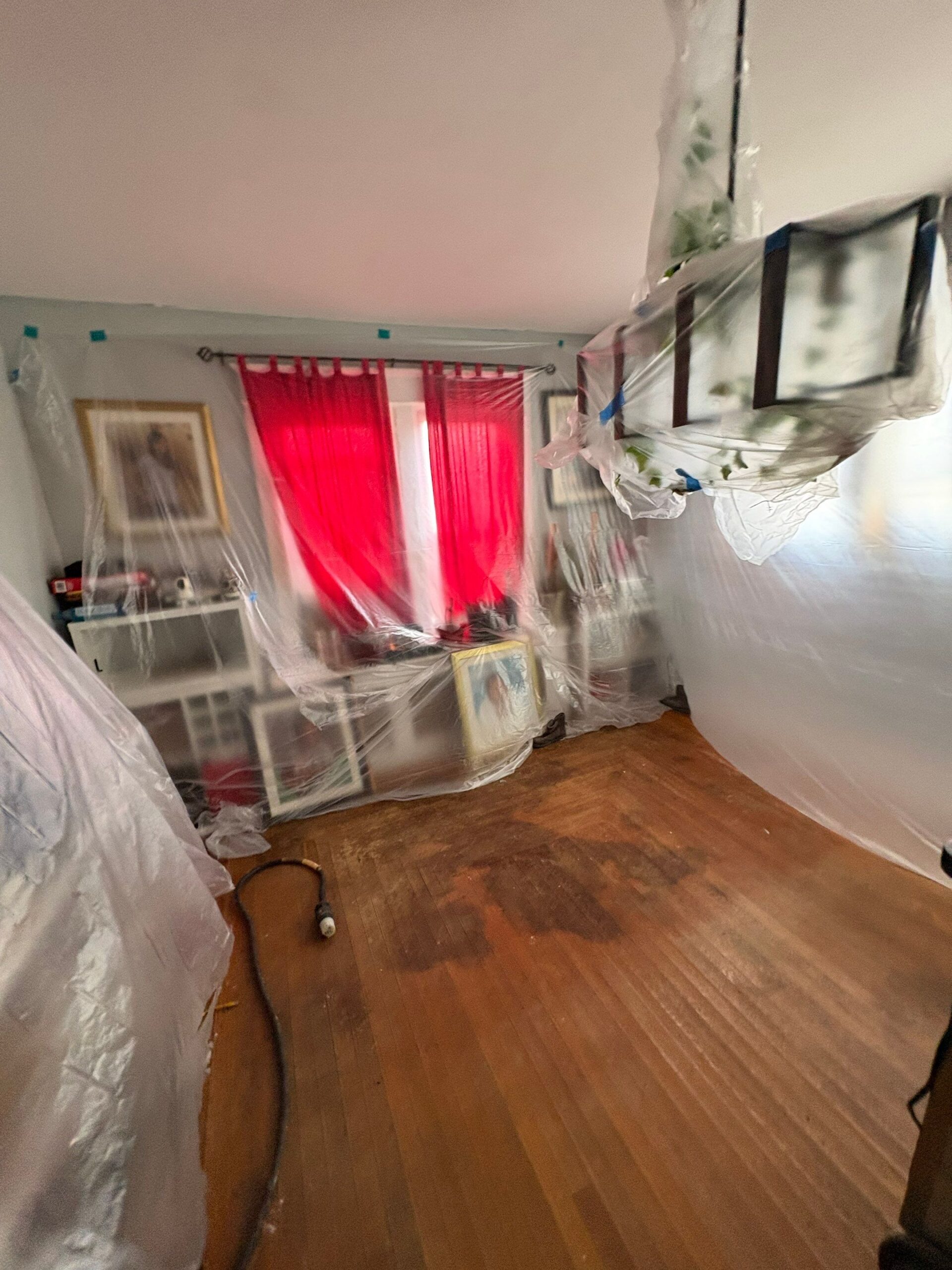
The hardwood floors throughout the affected living areas were installed in a distinctive concentric nested pattern — a hallmark of pre-war craftsmanship that makes these floors architecturally significant and extremely difficult to replace. At the time of assessment, active buckling was observed across multiple rooms, indicating that moisture had already begun deforming the wood fibers. Swift intervention was critical to preserving this irreplaceable flooring.
Pre-War Construction: Key Differences
Plaster-on-Lath Ceilings: Unlike modern drywall, original plaster is extremely dense and holds moisture for extended periods, requiring aggressive drying strategies to prevent hidden mold growth.
Drywall Glued to Plaster: In this property, drywall had been applied directly over the original plaster using construction adhesive — a renovation technique that creates an air gap where moisture accumulates and is extremely difficult to dry without targeted airflow.
Multi-Layer Floors: Multiple flooring generations stacked over one another create moisture reservoirs between layers that standard surface drying cannot reach.
Lead Testing Requirement: Homes built before 1978 may contain lead-based paint. A full lead test was completed prior to any disturbance of building materials — results confirmed negative, allowing work to proceed safely.
Property Assessment and Scope of Damage
Ceiling Failure: Living Room
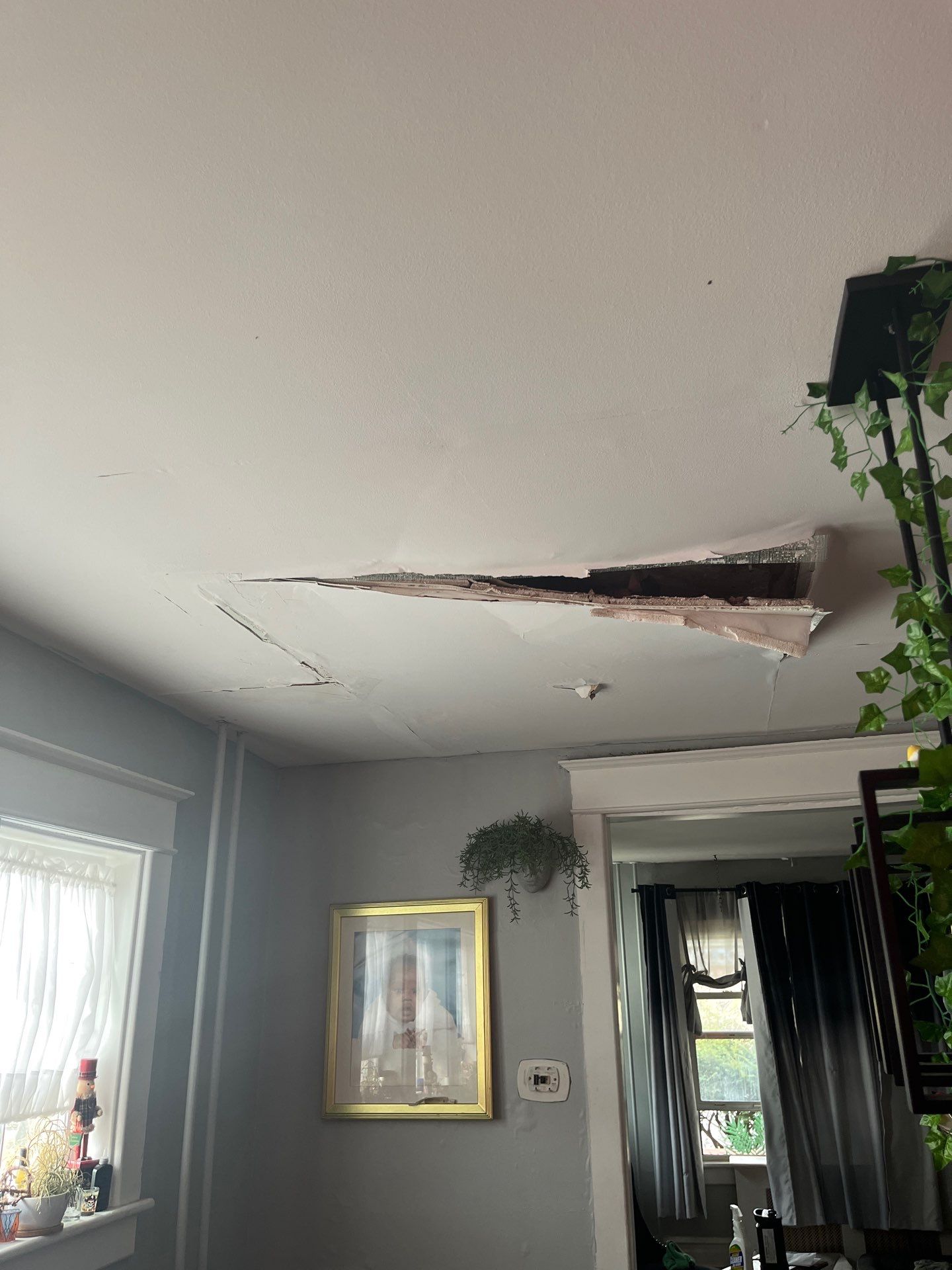
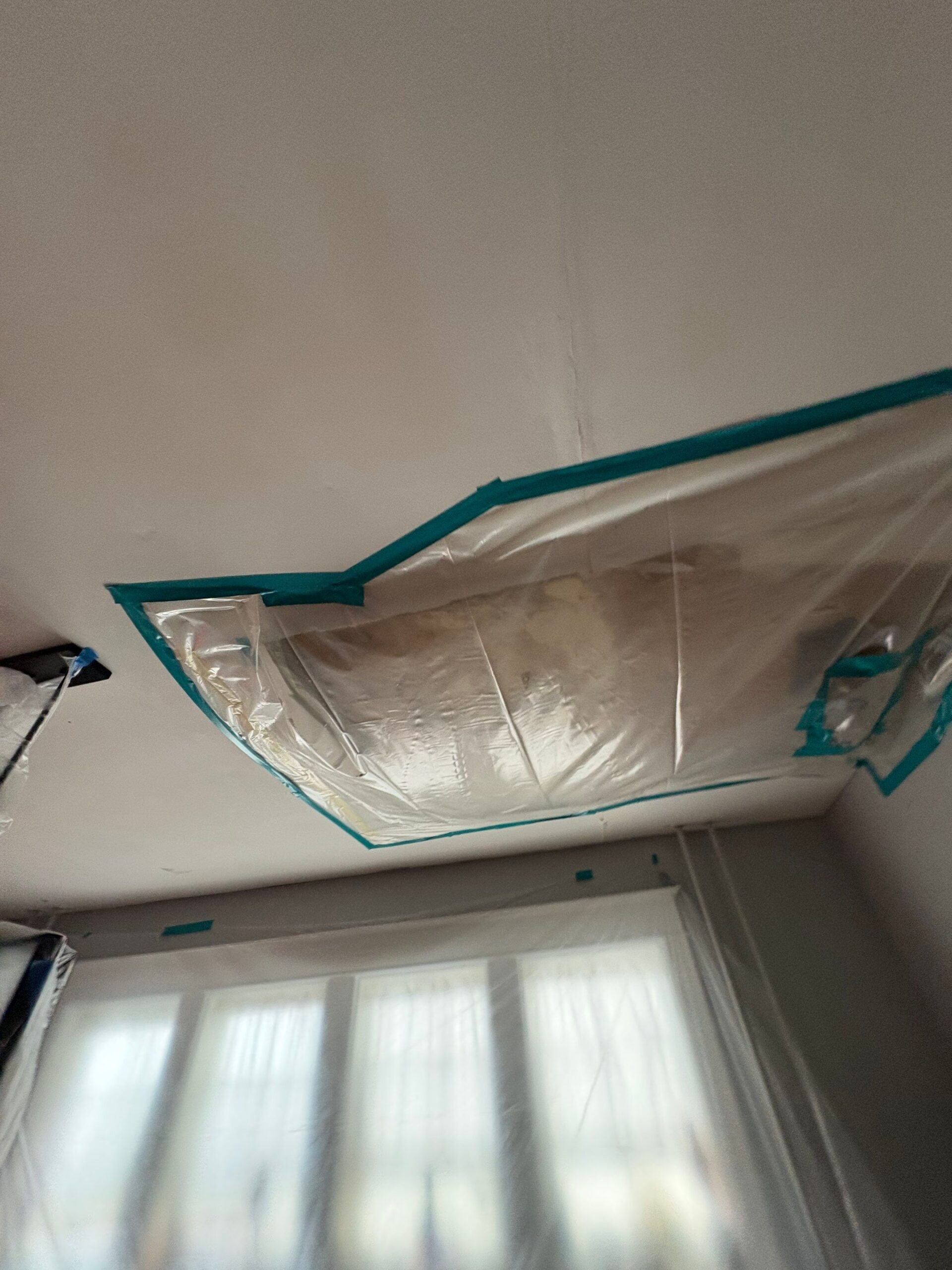
The most visually dramatic evidence of the pipe burst was found in the living room ceiling. Water-saturated drywall — bonded directly to the underlying plaster layer — lost structural cohesion and partially collapsed, creating a large breach that exposed the cavity above. Radiating cracks extended outward from the central failure point, indicating that the surrounding ceiling area had also absorbed significant moisture and remained at risk of further collapse.
An emergency containment measure was applied: plastic sheeting was sealed to the ceiling around the damaged area using professional blue tape, creating a collection basin to capture any remaining drip-through while the drying process began. This protected the hardwood floors and contents directly below from additional water exposure.
Moisture Readings: Critically Saturated
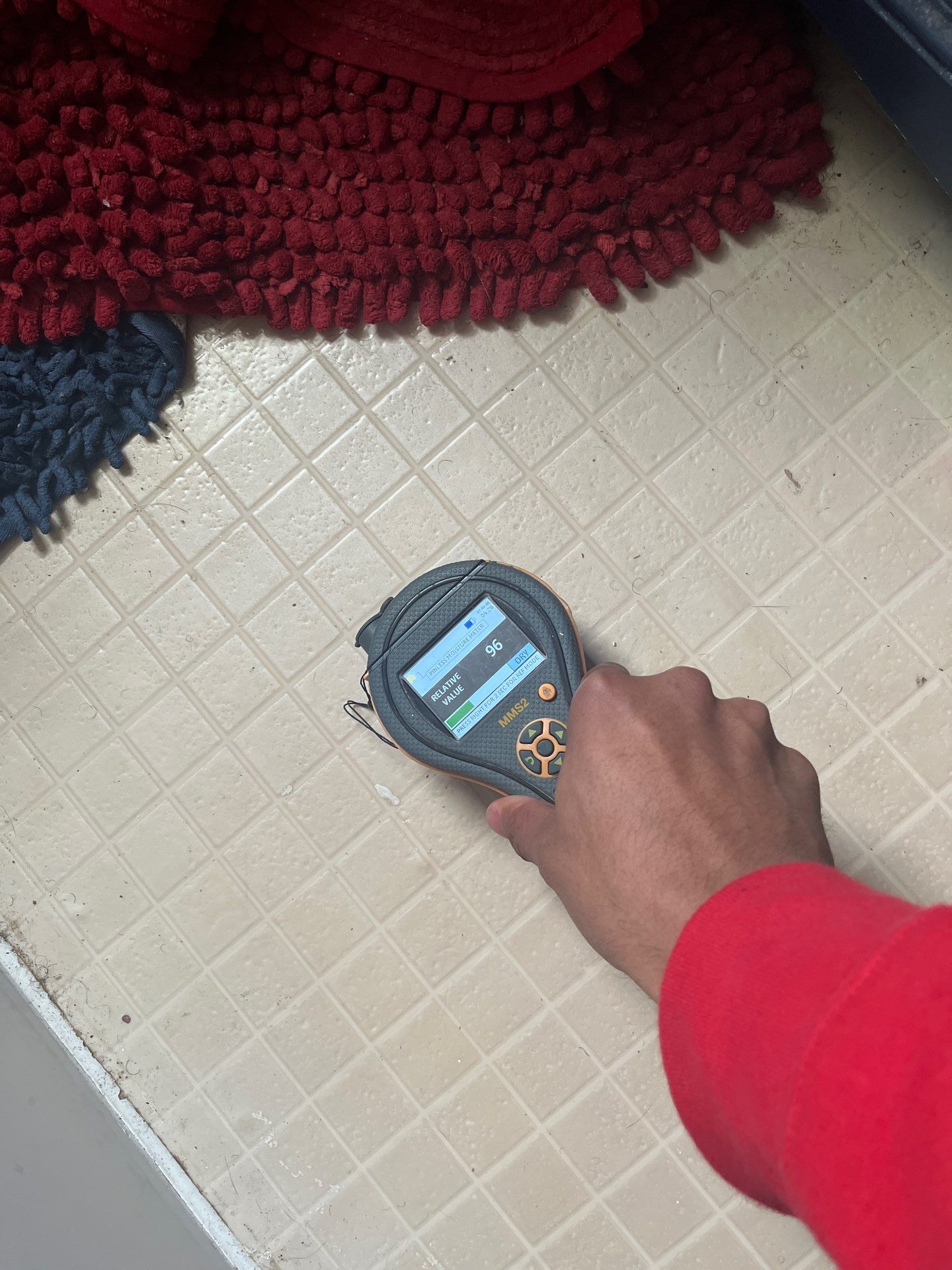
Using a Tramex MM52 non-invasive moisture meter, technicians documented a relative value reading of 96 on bathroom tile flooring — indicating near-maximum saturation of the substrate beneath the tiles. This reading confirmed that water had penetrated well beyond the visible surface, saturating the subfloor assembly through the grout and adhesive layers. Similar readings were taken throughout affected areas to map the full extent of moisture migration.
Affected Zones
The water loss impacted multiple interconnected areas of the first floor:
| Zone | Damage Type | Materials Affected | Status |
|---|---|---|---|
| Living Room | Ceiling collapse, floor buckling | Drywall, plaster, hardwood (concentric pattern) | Active drying |
| Adjacent Room | Floor saturation, wall wicking | Hardwood floors, lower drywall | Active drying |
| Bathroom | Subfloor saturation | Tile, adhesive, subfloor (reading: 96) | Active monitoring |
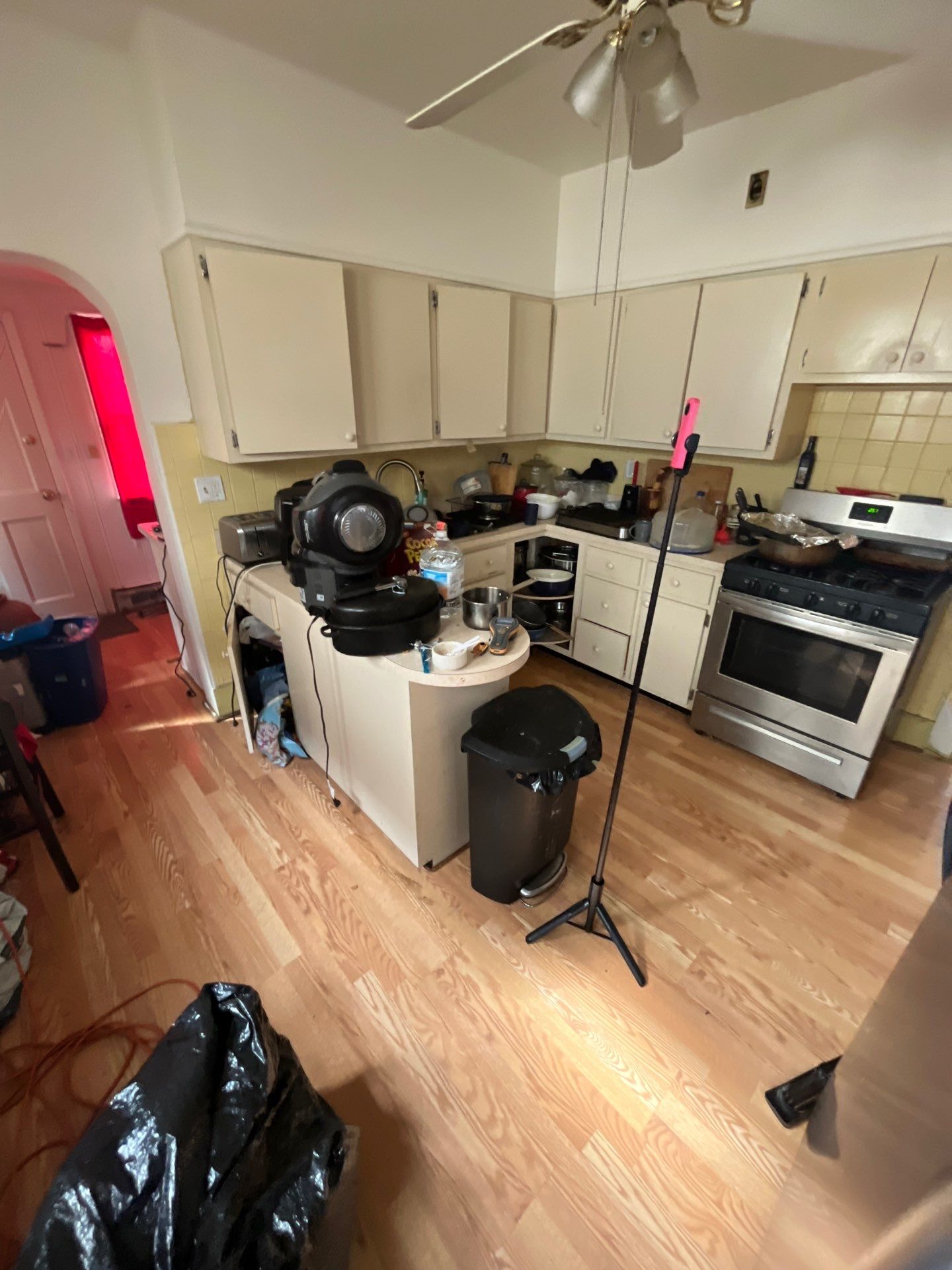
| Kitchen | Adjacent exposure | Hardwood floors (monitored) | Containment boundary |
Response Strategy
Occupant-Safe Mitigation: Keeping the Family at Home
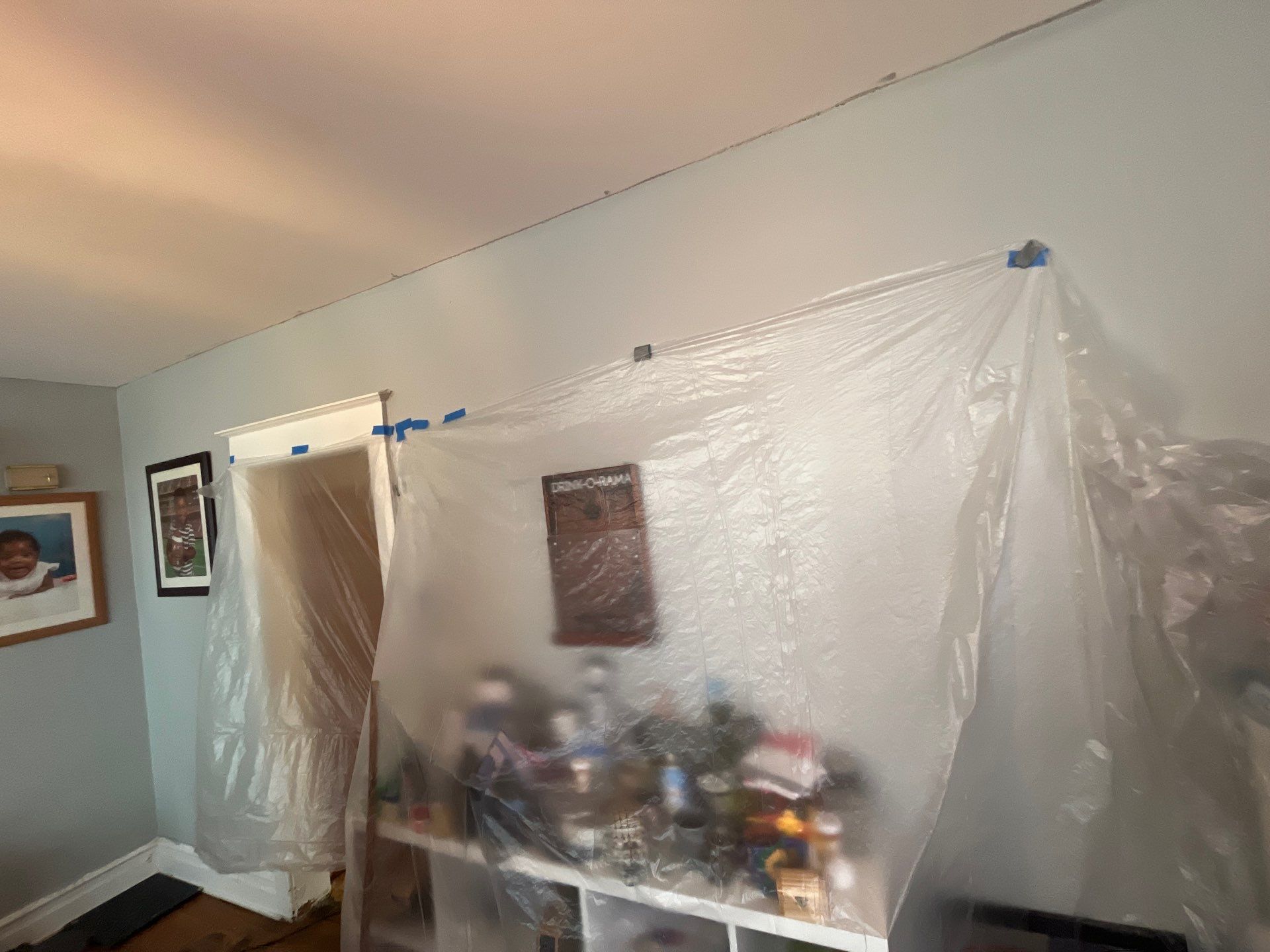
One of the most important decisions in this project was the commitment to allow the occupants to remain in the residence throughout the mitigation process. Displacement adds significant stress and cost to an already difficult situation. Harrisburg Restoration’s containment approach — using heavy-gauge plastic sheeting sealed with professional tape along ceiling lines and wall perimeters — created a complete separation between the active work zone and the occupants’ living areas.
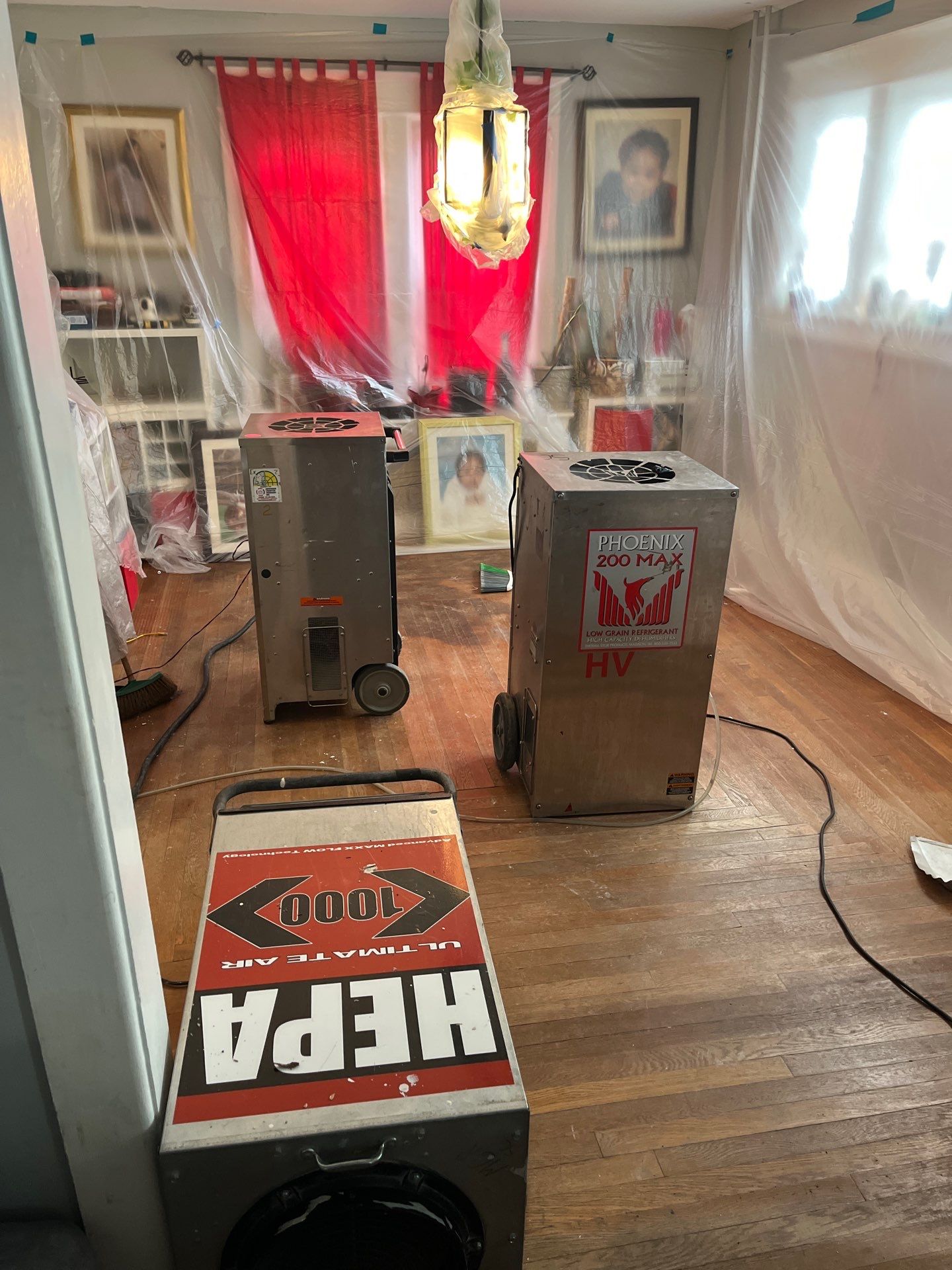
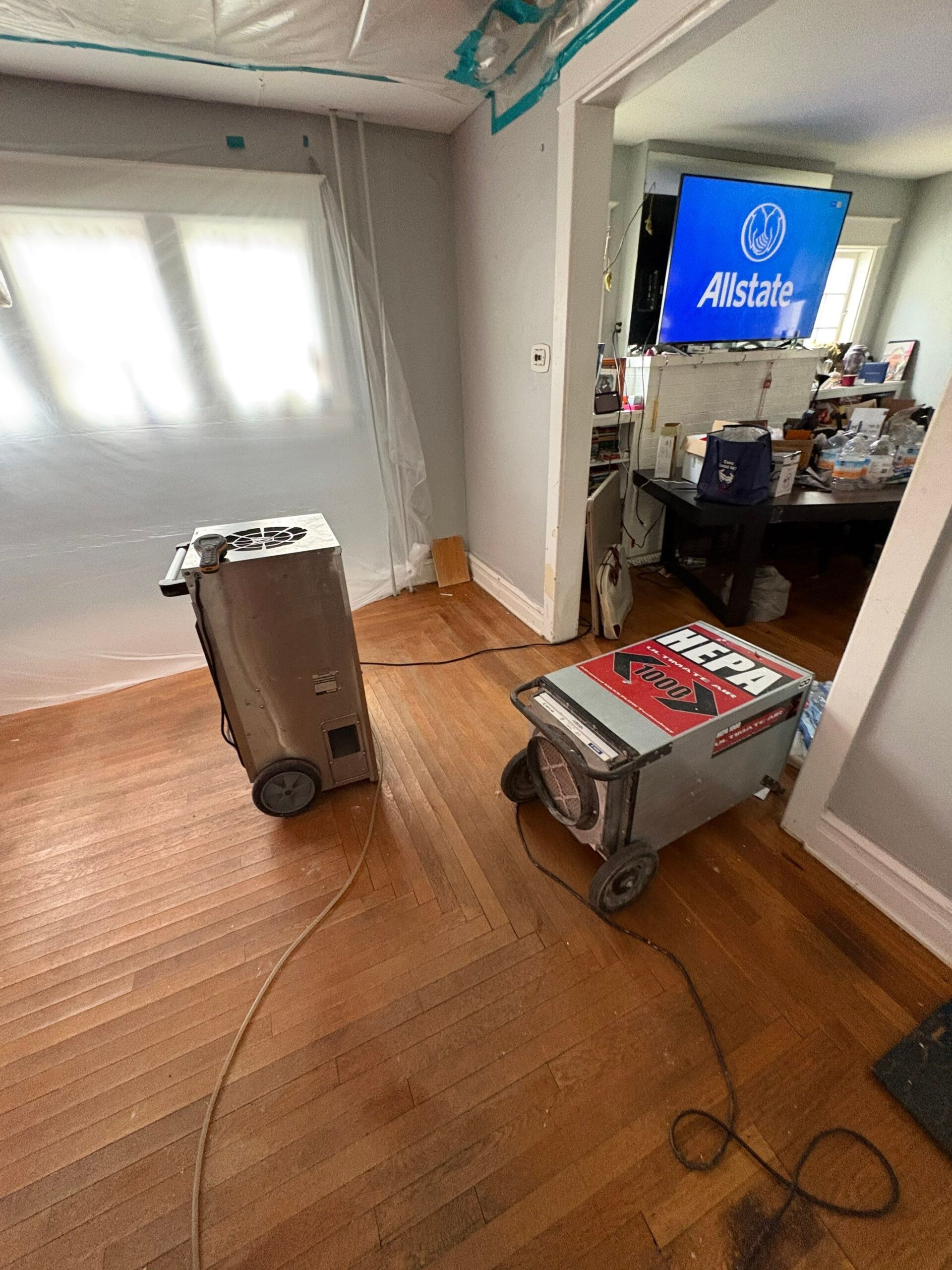
This containment system served multiple purposes: it physically isolated the drying equipment and affected materials from unaffected rooms, it protected furniture, artwork, shelving, and personal belongings from dust and debris, and it created a controlled drying environment where the dehumidifiers and negative air machine could operate at peak efficiency.
Lead Testing Protocol
Before any building materials were disturbed, a full lead test was conducted in compliance with EPA RRP (Renovation, Repair, and Painting) guidelines for pre-1978 structures. The Easton property, constructed in 1919, fell well within the age threshold requiring this assessment. Results returned negative for lead, allowing the project to proceed under standard mitigation protocols without additional personal protective equipment escalation or specialized disposal requirements.
“Skipping lead testing in a home built in 1919 is never an option. Before a single piece of drywall is touched, we confirm the safety of our team and the occupants — this is non-negotiable protocol on every pre-war structure.”
Harrisburg Restoration’s 5-Step Water Damage Process
Equipment Deployment Analysis
Harrisburg Restoration deployed a targeted three-unit drying system engineered for the specific challenges of this pre-war Easton property: high-density building materials, multiple saturated flooring layers, a complex ceiling assembly, and the need to maintain air quality suitable for occupants remaining on-site.
Deployed Equipment
🌀 Phoenix 200 MAX HV Dehumidifiers — 2 Units
Two Phoenix 200 MAX HV commercial Low Grain Refrigerant (LGR) dehumidifiers formed the core of the drying system. LGR technology allows these units to extract moisture efficiently even as ambient humidity drops — a critical advantage in an enclosed containment zone. Each unit was positioned to create overlapping drying fields across the living room and adjacent affected room, ensuring no dead zones of stagnant moist air.
Low Grain Refrigerant (LGR)
High Velocity (HV)
2 (one per affected room)
Structural drying — floors, walls, ceiling assembly
🔴 Ultimate Air HEPA 1000 Negative Air Machine — 1 Unit
A single Ultimate Air HEPA 1000 negative air machine was deployed within the primary containment zone. This unit served two essential functions: first, it maintained negative air pressure inside the contained area, preventing airborne particles (including any disturbed plaster dust or drywall debris) from migrating into the occupied portions of the home; second, its HEPA filtration captured fine particulates down to 0.3 microns, ensuring the air quality remained safe for the family living on the other side of the containment barrier.
HEPA — captures 99.97% at 0.3 microns
Negative air pressure + air scrubbing
Occupant air quality protection
1 (primary living zone)
Project Data & Analytics
Equipment Deployment Breakdown
Total Units
Response Impact: Fast vs. Delayed
Moisture Reading Scale — Bathroom Subfloor
Readings above 80 indicate severe saturation requiring immediate commercial drying intervention.
Structural Challenges of Pre-War Construction
Drywall Glued to Plaster: A Hidden Complication
One of the most technically demanding aspects of this Easton water damage project was the ceiling and wall assembly: drywall had been applied directly over the original 1919 plaster using construction adhesive at some point in the home’s renovation history. This bonded dual-layer system poses a unique challenge in water damage mitigation — the adhesive creates a sealed air gap between the two materials that standard drying airflow cannot penetrate.
Moisture trapped in this interstitial space can persist long after surface readings suggest dryness, creating conditions conducive to hidden mold growth. Technicians accounted for this assembly in their drying calculations, positioning equipment and extending the monitoring period to ensure the cavity had fully dried before declaring completion.
Concentric Nested Hardwood Floors: Preservation Priority
The hardwood floors in this home were not standard straight-run planks. Installed in a concentric nested pattern — interlocking rings of wood that radiate outward from a central point — these floors are a distinctive feature of early 20th-century craftsmanship. Replicating this pattern today would require custom millwork and specialized installation expertise, making preservation the clear priority over replacement.
Active buckling documented at the time of the Harrisburg Restoration team’s arrival indicated that moisture had already begun deforming the wood fibers. The commercial drying system was configured to draw moisture upward through the floor system, working with the natural capillary action of the wood grain to reverse the swelling process before permanent deformation set in.
Why Hardwood Floors Buck and Warp
Cell Structure Expansion: Wood is hygroscopic — its cellular structure absorbs and releases water. When saturated, individual cells expand laterally, causing boards to push against each other and lift from the subfloor.
Trapped Moisture Layers: In multi-layer floor assemblies, moisture becomes trapped between levels, maintaining constant pressure against the surface layer even after the source is stopped.
Drying Window: The window for successfully flattening buckled hardwood through drying rather than replacement is narrow — typically 48 to 72 hours from the onset of saturation.
Restoration Timeline and Methodology
Easton, PA and the Lehigh Valley: Understanding Water Damage Risk in Historic Homes
The Lehigh Valley — encompassing Easton, Bethlehem, and Allentown — is home to a dense concentration of late-19th and early-20th century residential construction. The region’s housing stock is among the oldest in Pennsylvania, and with age comes elevated risk of the type of pipe failure that triggered this water loss event.
Regional Factors Affecting Water Damage Risk
Easton’s location along the Delaware River corridor and its cold winter temperature cycles contribute to freeze-thaw stress on plumbing systems. Pipes in uninsulated wall cavities of older homes are particularly vulnerable to sudden failure during rapid temperature swings — a scenario that played out in this 18042 property. The area’s older building stock also means that many homes share the same structural characteristics documented here: plaster construction, multi-generation flooring layers, and materials that require specialist knowledge to dry safely.
Why Lehigh Valley Homeowners Choose Harrisburg Restoration
Harrisburg Restoration serves the greater Central Pennsylvania and Lehigh Valley region as part of the Advanced DRI network — a partnership that provides access to commercial-grade equipment, certified technicians, and documented restoration methodology that meets insurance carrier requirements. For homeowners in Easton (18042), Bethlehem, and the surrounding Northampton County area, this means access to the same level of professional response typically reserved for large commercial losses.
Harrisburg Restoration can be reached at (717) 232-5444 for water damage emergencies throughout Central PA and the Lehigh Valley. Service is available 24 hours a day, seven days a week.
Service Coverage: Central PA & Lehigh Valley
Response Zones from Harrisburg HQ (17111)
Project Documentation Gallery
The following images document the Easton, PA water damage project from initial assessment through active drying. Each photograph was captured by Harrisburg Restoration technicians as part of the standard documentation package provided to homeowners and insurance carriers.


Key Takeaways
The Easton, PA water loss presented a layered set of challenges that demanded expertise beyond standard water damage response: a pre-war building assembled with materials and methods no longer common, lead testing requirements, occupants remaining on-site, critically saturated substrates at a reading of 96, and irreplaceable hardwood floors at immediate risk of permanent damage.
Harrisburg Restoration’s approach — comprehensive safety assessment first, complete containment second, targeted commercial drying third — reflects a methodology built for exactly these scenarios. By keeping the family in their home, protecting their belongings, and deploying Phoenix LGR commercial dehumidification alongside HEPA negative air pressure, the team was able to address one of the most complex residential water damage situations in the Lehigh Valley with precision and care.
For water damage emergencies in Easton (18042), Bethlehem, Allentown, or anywhere in the Lehigh Valley and Central Pennsylvania, contact Harrisburg Restoration at (717) 232-5444. Our certified technicians are available 24/7 — because water damage never waits for business hours.