Executive Summary
When a Category 1 clean water loss compromised a finished basement in Harrisburg, PA (17104), Harrisburg Restoration deployed certified water mitigation technicians within the same business day to prevent secondary damage and microbial growth. Working in a 250-square-foot zone complicated by a central support pillar, heavy furniture, and an adjacent staircase, our team executed IICRC S500 drying protocols and achieved full clearance in four days — with no visible mold and all materials returned to dry-standard moisture readings.
This Harrisburg water damage restoration project demonstrates how strategic equipment placement, daily monitoring, and rapid response from our 17111 headquarters protect south-central Pennsylvania homeowners from the long-tail costs of basement water loss.
Project at a Glance
Sq Ft Affected
Days to Dry Standard
Clean Water Loss
Carpet Salvaged
Strategic Response: Why Minutes Matter in Water Damage
Water damage in Harrisburg basements doesn’t wait. Within the first 24 hours of any water loss, drywall begins wicking moisture, baseboards swell, and the conditions for microbial growth begin forming inside wall cavities. By hour 48, what started as a simple Category 1 clean water event can escalate into a Category 2 or 3 contamination scenario — requiring antimicrobial treatment, demolition, and significantly more invasive reconstruction.
The Critical Window
For the 17104 ZIP code and surrounding Harrisburg neighborhoods, Harrisburg Restoration’s same-day response model exists specifically to compress this window. The faster certified technicians arrive on scene, the higher the percentage of materials — carpet, padding, drywall, baseboards — that can be dried in place rather than demolished and replaced.
Strategic Headquarters Location
Our Harrisburg Restoration headquarters sits in postal code 17111, giving our crews efficient access to the entire greater Harrisburg metro area, including Susquehanna Township, Lower Paxton, Swatara, and the surrounding Dauphin County communities. For a water loss in 17104, our response team mobilizes equipment trailers and IICRC-certified technicians directly from this central location.
“Every hour a wet structure sits without active drying is an hour that moisture migrates deeper into wall cavities, subflooring, and structural framing. Same-day response isn’t a marketing claim — it’s the foundation of cost-effective restoration.”
Service Coverage from Harrisburg HQ
Response Times from Harrisburg Headquarters (17111)
Understanding the Incident
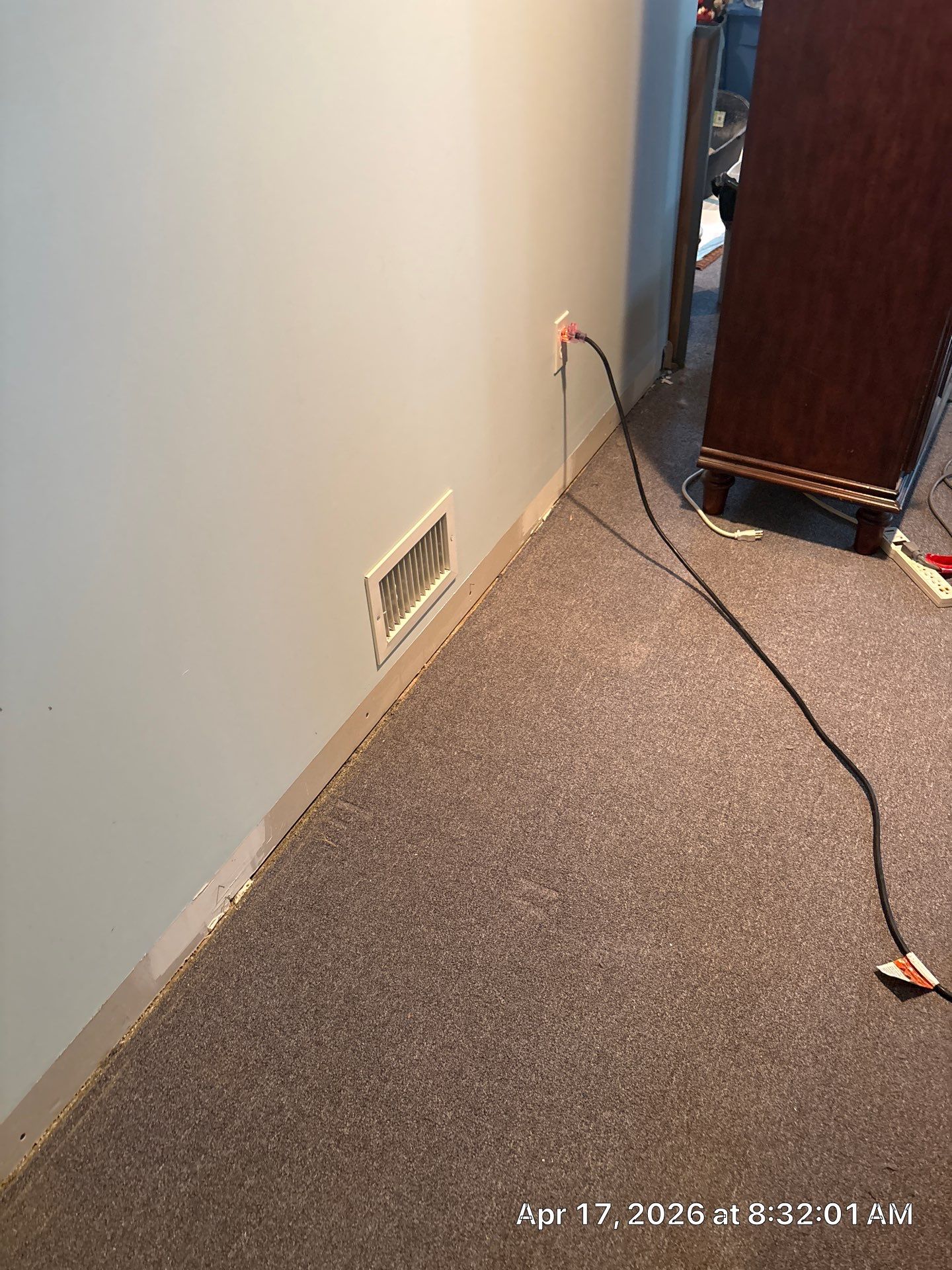
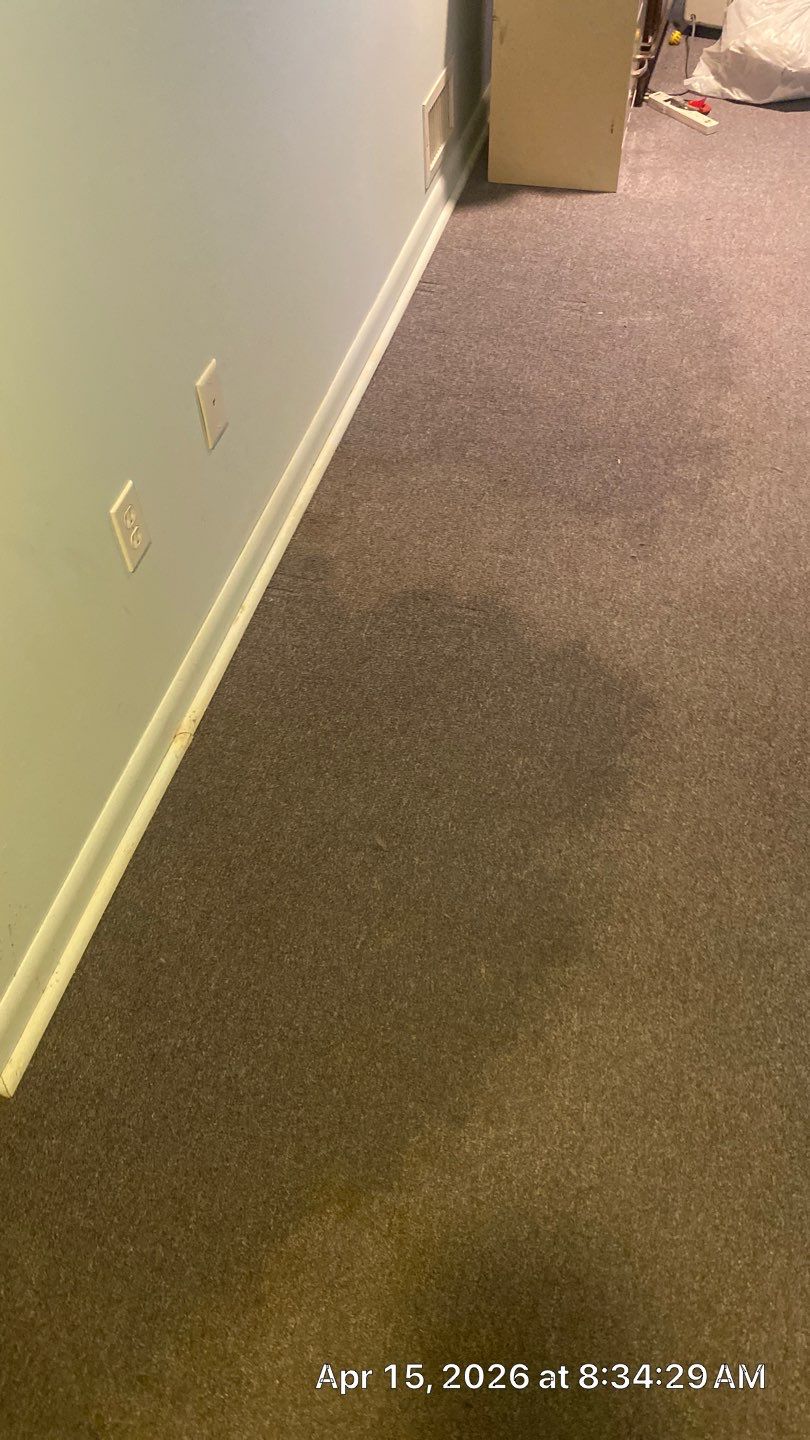
The loss occurred in a finished basement level of a single-family residence in the 17104 postal area of Harrisburg. Upon arrival, our technicians documented standing moisture across approximately 250 square feet of carpeted flooring, with visible saturation patterns indicating water had spread along the perimeter walls and pooled at low points near the staircase landing.
The Source: Category 1 Clean Water Loss
Initial assessment classified the event as a Category 1 clean water loss under IICRC S500 standards. Category 1 water originates from a sanitary source — typically supply lines, broken pipes, or appliance overflow — and poses no substantial harm to humans on contact. However, the classification window is narrow: untreated Category 1 water can deteriorate to Category 2 within 48 hours and Category 3 within 72 hours as it interacts with building materials, dust, and biological contaminants.
IICRC S500 Water Categories Explained
Category 1 (Clean): Originates from sanitary water sources. Minimal risk if addressed within 24-48 hours.
Category 2 (Grey): Contains significant contamination. Requires antimicrobial treatment.
Category 3 (Black): Grossly contaminated. Requires demolition of porous materials.
Property Assessment and Scope of Damage
The affected basement zone presented a complex drying environment. Our certified technicians documented several structural and content-related challenges that would directly inform equipment placement and airflow strategy.
Affected Materials
Carpet and padding across the full 250-square-foot footprint showed elevated moisture readings on initial inspection. Drywall along the lower 24 inches of perimeter walls registered above 80% relative humidity — well above the dry standard of 12-15%. Baseboards along the affected walls were saturated and required detachment to allow wall cavity airflow.
Structural Complications
Three obstacles complicated the standard drying setup commonly used in Harrisburg water damage restoration projects of this size:
Drying Setup Challenges
Central Support Pillar: A structural pillar in the middle of the room created an airflow shadow, requiring strategic air mover repositioning.
Heavy Furniture: A wooden hutch and filing cabinet along the perimeter walls blocked direct airflow to wet baseboards and lower drywall sections.
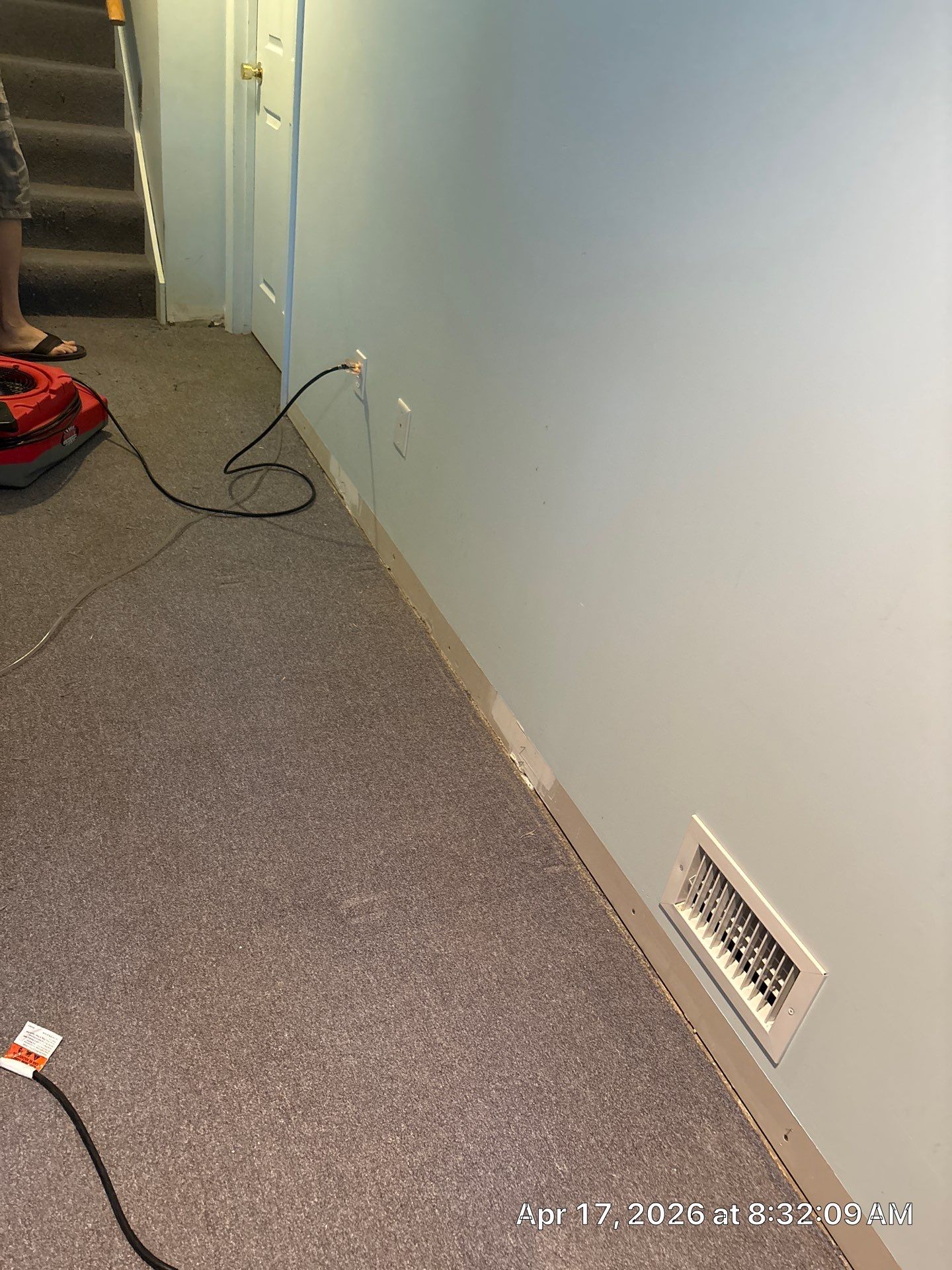
Staircase Geometry: An adjacent staircase created angled wall surfaces and a corner zone where moisture tends to linger without focused airflow.
Response Strategy
Our Harrisburg water mitigation team executed a focused, single-technician response calibrated to the scale and category of the loss. For a 250-square-foot Category 1 event, oversized equipment deployment is counterproductive — too many air movers in a small space create turbulent airflow that actually slows evaporation, while excessive dehumidification draws moisture from non-affected materials.
Strategic Equipment Placement
Rather than deploying multiple air movers in a standard perimeter pattern, our technician positioned a single low-profile high-velocity centrifugal air mover at an angle that directed airflow around the central pillar, behind the hutch and filing cabinet, and into the staircase corner. This approach maintained consistent evaporation across all affected surfaces despite the structural obstacles.
Baseboard Detachment for Cavity Drying
Baseboards along the affected walls were carefully detached — not demolished — to expose the wall-to-floor seam and allow airflow into the wall cavity. This non-destructive approach preserved the original baseboards for reinstallation during reconstruction, reducing total project cost for the property owner.
Equipment Deployment Analysis
For this Harrisburg basement water damage project, equipment selection prioritized efficiency over volume. Two pieces of professional-grade restoration equipment, combined with precise moisture monitoring instrumentation, delivered IICRC-compliant drying within the 4-day target window.
Low-Grain Refrigerant (LGR) Dehumidifier
The industrial wheeled LGR dehumidifier served as the primary moisture removal engine for the affected zone. LGR technology pulls moisture from air at significantly lower grain-per-pound (GPP) thresholds than standard refrigerant dehumidifiers, making it the IICRC-preferred choice for enclosed spaces like finished basements.
Low-Grain Refrigerant
Industrial-Grade
Below 55 GPP
Enclosed Basements
Low-Profile High-Velocity Air Mover
The centrifugal air mover delivered concentrated airflow across the carpet surface and into detached baseboard cavities. Low-profile design allowed positioning beneath the wooden hutch and around the filing cabinet — critical for ensuring airflow reached otherwise blocked surfaces in this Harrisburg PA water damage scenario.
Centrifugal Fan
Low / Wedge-Style
Concentrated Stream
Tight Spaces & Cavities
Penetrating Moisture Meter
Daily moisture monitoring used a penetrating pin-type meter to measure actual moisture content within drywall, carpet padding, and baseboards. Unlike non-penetrating surface meters, pin-type instruments provide accurate sub-surface readings essential for documenting compliance with IICRC dry standards.
Penetrating Pin
Sub-Surface %MC
Below 12% MC
Daily Logged
Why Fast Response Matters
Water Damage Progression Timeline
0-1 Hour
1-24 Hours
24-48 Hours
48+ Hours
Restoration Timeline and Methodology
The four-day restoration timeline followed a structured daily protocol of moisture measurement, equipment adjustment, and documentation. Below are the verified moisture readings logged throughout the project.
| Day | Drywall Reading | Ambient GPP | Status |
|---|---|---|---|
| Day 1 | 80%+ (Wet) | 85 | Setup Complete |
| Day 2 | 45% (Drying) | 55 | Active Evaporation |
| Day 4 (Final) | Below 12% | 40 | Dry Standard Achieved |
Project Data & Analytics
Moisture Reduction Progress
Day 1
Day 2
Day 4
Ambient Humidity Reduction (GPP)
Day 1
Day 2
Day 4
Equipment Deployment
Units Total
Materials Salvaged vs Replaced
Harrisburg Restoration’s 5-Step Water Mitigation Process
Harrisburg and South-Central Pennsylvania: Understanding Local Water Damage Risks
Harrisburg sits at the confluence of the Susquehanna River and Paxton Creek — a geographic reality that shapes water damage risk profiles across the 17104 ZIP code and surrounding neighborhoods. Combined with the region’s aging residential housing stock and seasonal freeze-thaw cycles, Harrisburg homes face a higher-than-average frequency of basement water events.
Regional Factors Affecting Water Damage Risk
Many Harrisburg homes in the 17104 area were built between the 1920s and 1960s, meaning original supply lines, fittings, and drain systems are often decades past their expected service life. Galvanized steel supply lines corrode internally, polybutylene piping fails unexpectedly, and original cast iron drains develop pinhole leaks — all common causes of Category 1 water losses in finished basements.
Why Harrisburg Homeowners Choose Harrisburg Restoration
As part of the Advanced DRI network, Harrisburg Restoration brings IICRC-certified technicians, professional-grade equipment, and S500-compliant protocols to every water mitigation project in south-central PA. Our central 17111 location, combined with proven response times across Dauphin, Cumberland, Lancaster, York, and Lebanon counties, means Harrisburg homeowners get the same urgency a national chain promises — delivered by a local team that actually knows the region.
For property owners across the Harrisburg metro experiencing water damage, call (717) 232-5444 for same-day emergency response.
Key Takeaways
This Harrisburg PA water damage restoration project illustrates that effective Category 1 mitigation isn’t about deploying maximum equipment — it’s about deploying the right equipment in the right configuration for the affected space. By executing IICRC S500 protocols with strategic precision, our certified technicians:
Achieved dry standard in 4 days despite structural complications including a central support pillar, heavy furniture obstructing wall access, and an adjacent staircase geometry. Final moisture readings registered below 12% MC across all affected materials.
Salvaged 90% of affected materials through non-destructive baseboard detachment and in-place carpet drying. Only the carpet padding required replacement, significantly reducing reconstruction scope and timeline.
Prevented Category escalation by responding within the critical 24-hour window. No microbial growth occurred, no secondary damage developed, and the area was cleared for reconstruction without antimicrobial treatment.
For property owners across Harrisburg and the broader south-central Pennsylvania service area, this project demonstrates what professional water mitigation looks like when it’s done right — fast, focused, and documented every step of the way. Learn more about the parent network at advanceddri.com.