Project at a Glance
Year Built — Hazmat Testing Required
Levels Affected
HVAC, Plumbing & Electrical Replaced
Mitigation Through Full Reconstruction
Executive Summary
When fire tore through a Lancaster County home in the fall of 2025, it left behind far more than visible char and smoke. The 1951-built residence presented a cascade of compounding challenges: collapsed ceilings, total contents loss, asbestos-containing materials, broken windows, compromised solar panel infrastructure, and a homeowner who works out of state and needed a team he could trust completely — without being on-site to supervise.
Harrisburg Restoration, a member of the Advanced Disaster Recovery network, was called to manage the full scope: emergency mitigation, hazardous material abatement, structure cleaning, and complete reconstruction. What followed was a meticulous, multi-month process that transformed a fire-devastated property back into a livable home — on behalf of an owner who was never there to see it happen in real time.
“The homeowner trusted us to keep things moving while he was away working. That trust — and our ability to honor it — is what made full recovery possible.”
Why Fire Damage Escalates Without Immediate Action
Fire Damage Progression Timeline
Understanding the Incident: Fire Damage in Lancaster County
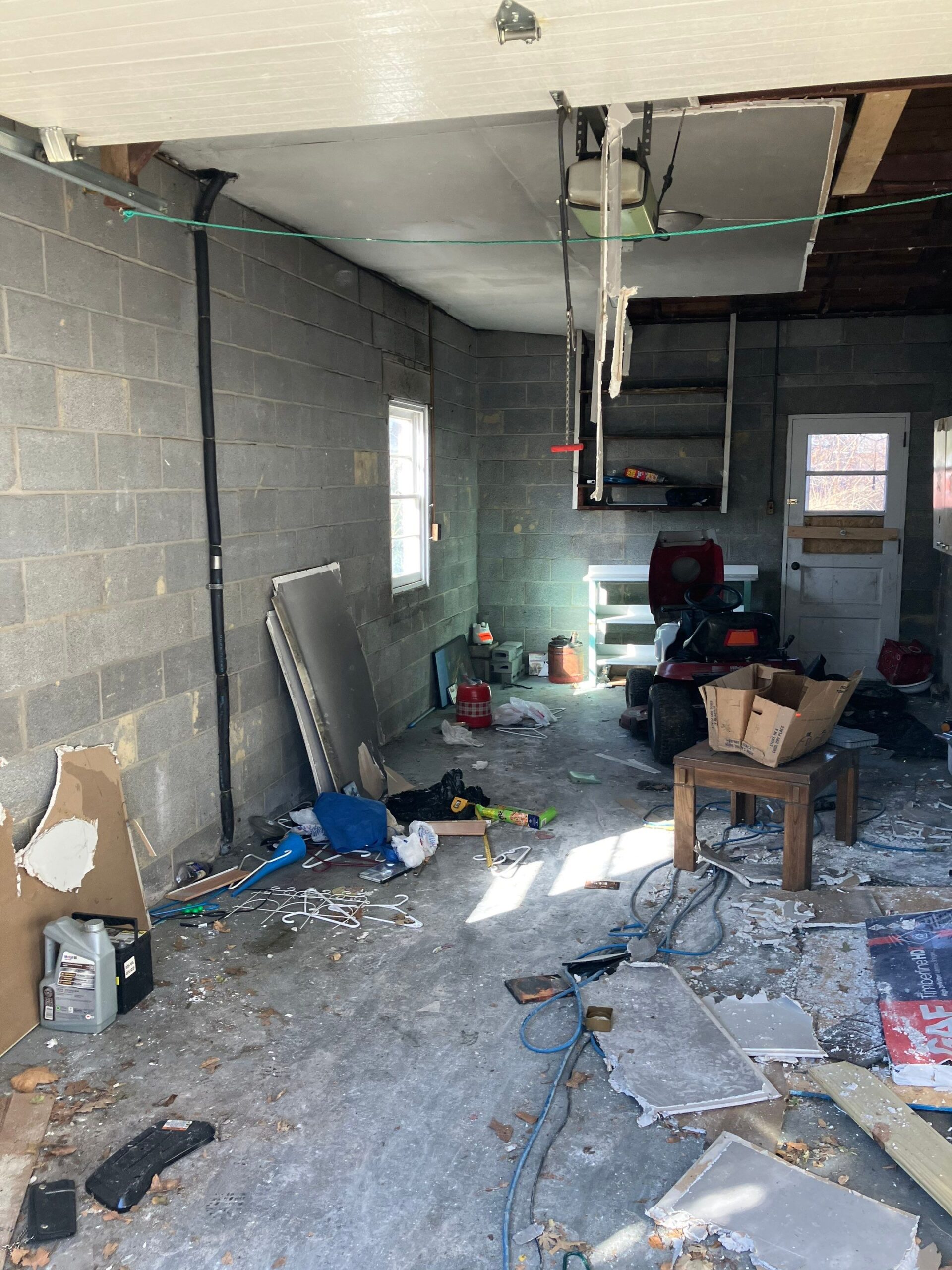
The fire caused widespread damage across multiple levels of this Lancaster County residential property. Ceilings had collapsed in multiple rooms, contents were destroyed beyond salvage, and the structure’s mechanical systems — HVAC, plumbing, and electrical — were completely unusable. Windows broken out during fire suppression efforts had already been boarded by others prior to Harrisburg Restoration’s arrival, but the building remained unsecured and unheated heading into the fall season.
Because the home was built in 1951, pre-remediation testing was non-negotiable under federal and Pennsylvania environmental regulations. Our team conducted lead-based paint testing (results: negative) and asbestos testing (results: positive for sheet vinyl flooring in the kitchen). These findings immediately shaped the project’s sequencing — abatement had to precede any demolition work in affected zones.
The Complexity of a Pre-1980 Fire-Damaged Home
Older construction presents a unique layering of risk in fire scenarios. Materials that were standard in mid-century residential construction — vinyl composite flooring, certain ceiling tiles, pipe insulation — may contain regulated hazardous materials. Disturbing them without proper abatement protocols can expose workers and residents to serious health risks and create significant legal liability for property owners. Harrisburg Restoration’s team is trained and certified to identify, test, and safely remove such materials before any structural work begins.
Hazardous Materials Assessment — Key Findings
Lead-Based Paint Test: Negative — no lead-containing coatings identified.
Asbestos Test: Positive — sheet vinyl flooring in kitchen confirmed to contain asbestos-containing materials (ACM).
Action Taken: Licensed abatement of kitchen sheet vinyl completed prior to demolition. All ACM disposed of per EPA and Pennsylvania DEP regulations.
Crew Protocol: Full PPE required throughout the project due to extensive soot contamination across all areas.
Solar Panels: A Complicating Factor
The presence of solar panels on the roof introduced additional complexity to both the structural repair and the insurance documentation process. Any roofing or structural work in proximity to the array required coordination to avoid damaging the system further and to ensure safe working conditions for the crew. The solar installation also affected the sequencing of repairs and required additional communication with the carrier to document scope accurately.
Property Assessment and Scope of Damage
Contents: Total Loss and Inventory Documentation
No contents were salvageable. The combination of fire, heat, smoke, and firefighting water rendered every item in the home a total loss — many burnt beyond recognition. Despite this, proper documentation was essential. Harrisburg Restoration worked directly with the carrier and the homeowner to generate a comprehensive contents inventory, even for items that could no longer be identified by description alone. This painstaking documentation process is critical to ensuring policyholders receive the full benefit of their coverage.
Structural Damage: Multiple Rooms, Multiple Levels
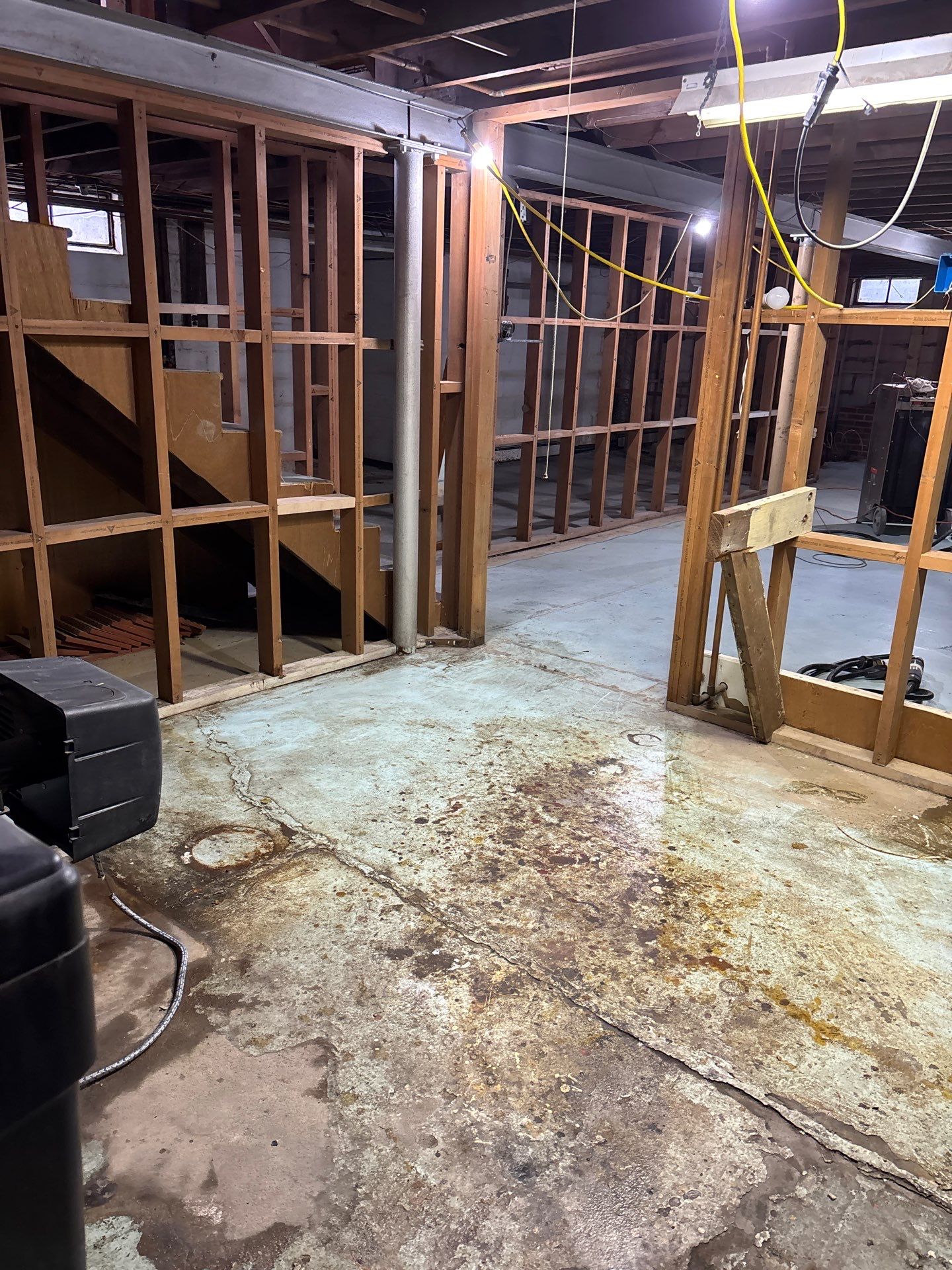
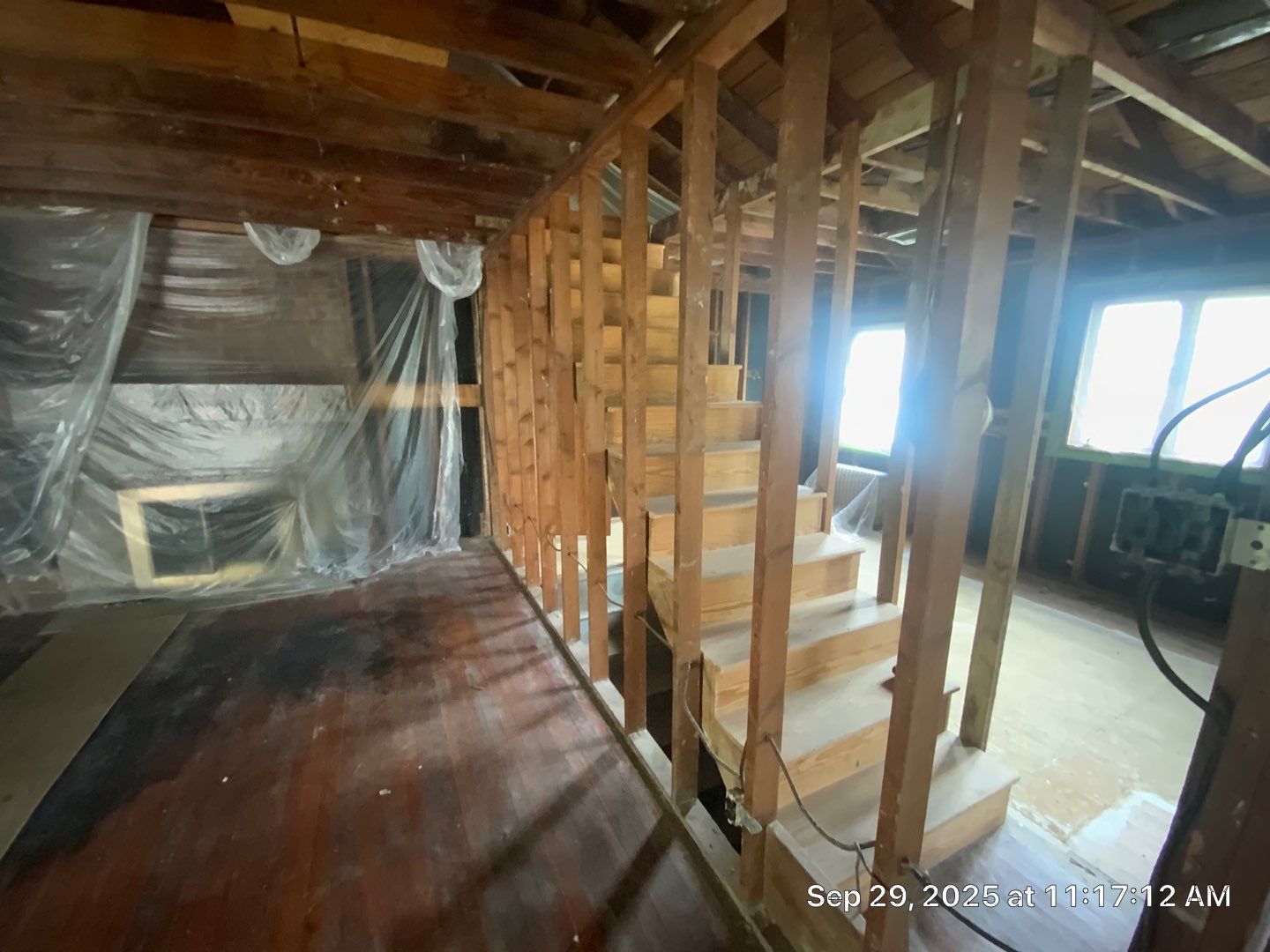
Ceilings had failed in multiple rooms, exposing structural framing and insulation throughout the upper level. The gut demolition documented in project photography — exposed stud walls, bare concrete subfloor, stripped framing — reflects the extent to which fire and suppression water had rendered finished surfaces completely unsalvageable. Every wall covering, ceiling assembly, and floor finish required removal before any drying or reconstruction could begin.
Mechanical Systems: Complete Replacement
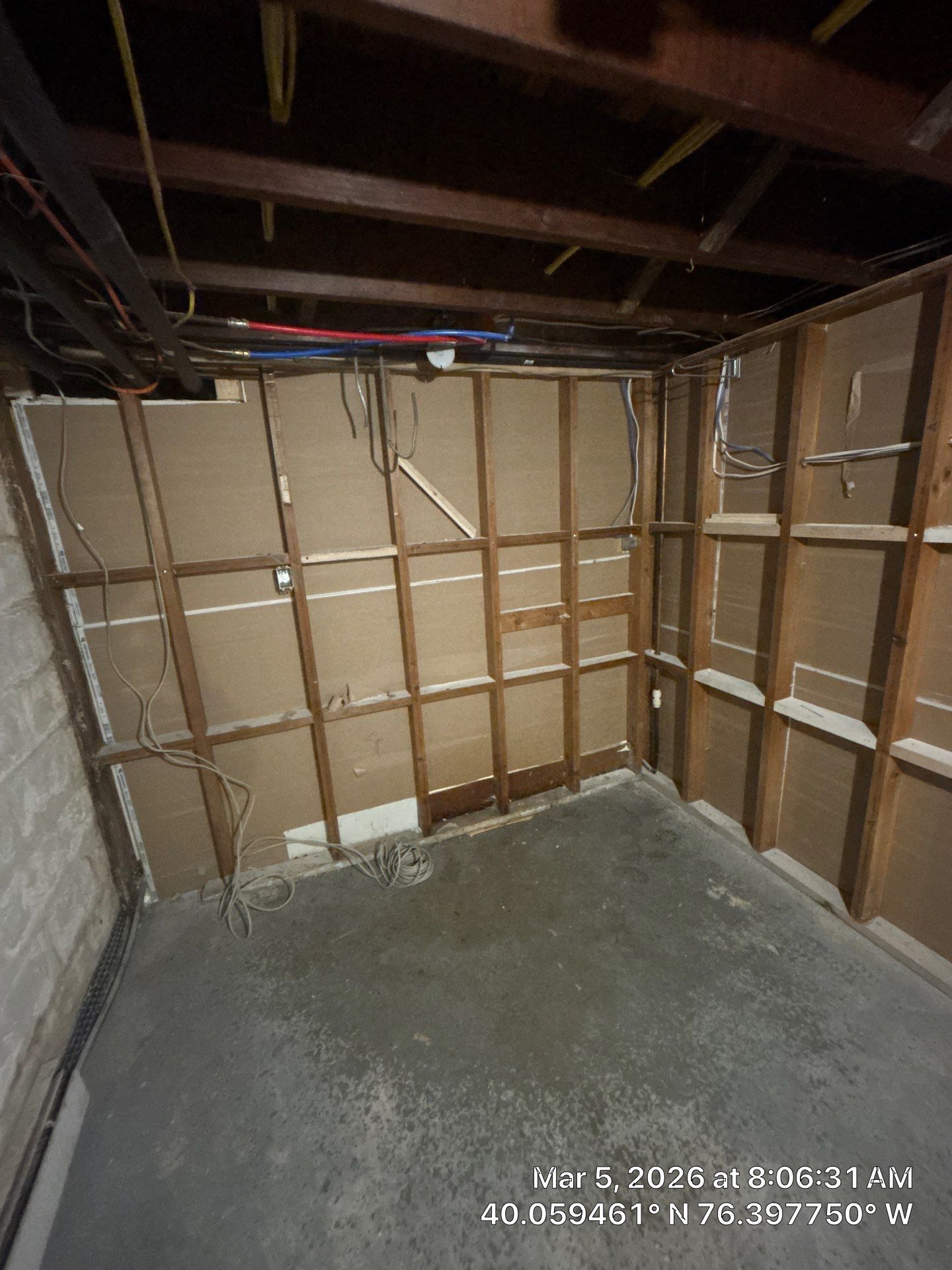
The HVAC system, all plumbing, and the electrical system required complete replacement. These are not systems that can be cleaned or partially restored after significant fire exposure — heat damage, soot infiltration into ductwork, and potential wiring compromise made full replacement the only appropriate path forward. New PEX plumbing, updated electrical, and a new HVAC system were installed as part of the reconstruction phase.
Equipment Deployment: Drying a Fire-Damaged Structure
Fire damage restoration requires specialized drying equipment that goes beyond standard water damage protocols. Firefighting water saturates wall cavities, subfloor assemblies, and framing members — often in combination with heavy soot loading that makes standard air movement counterproductive without proper containment. Harrisburg Restoration deployed professional-grade equipment calibrated specifically for post-fire structural drying.
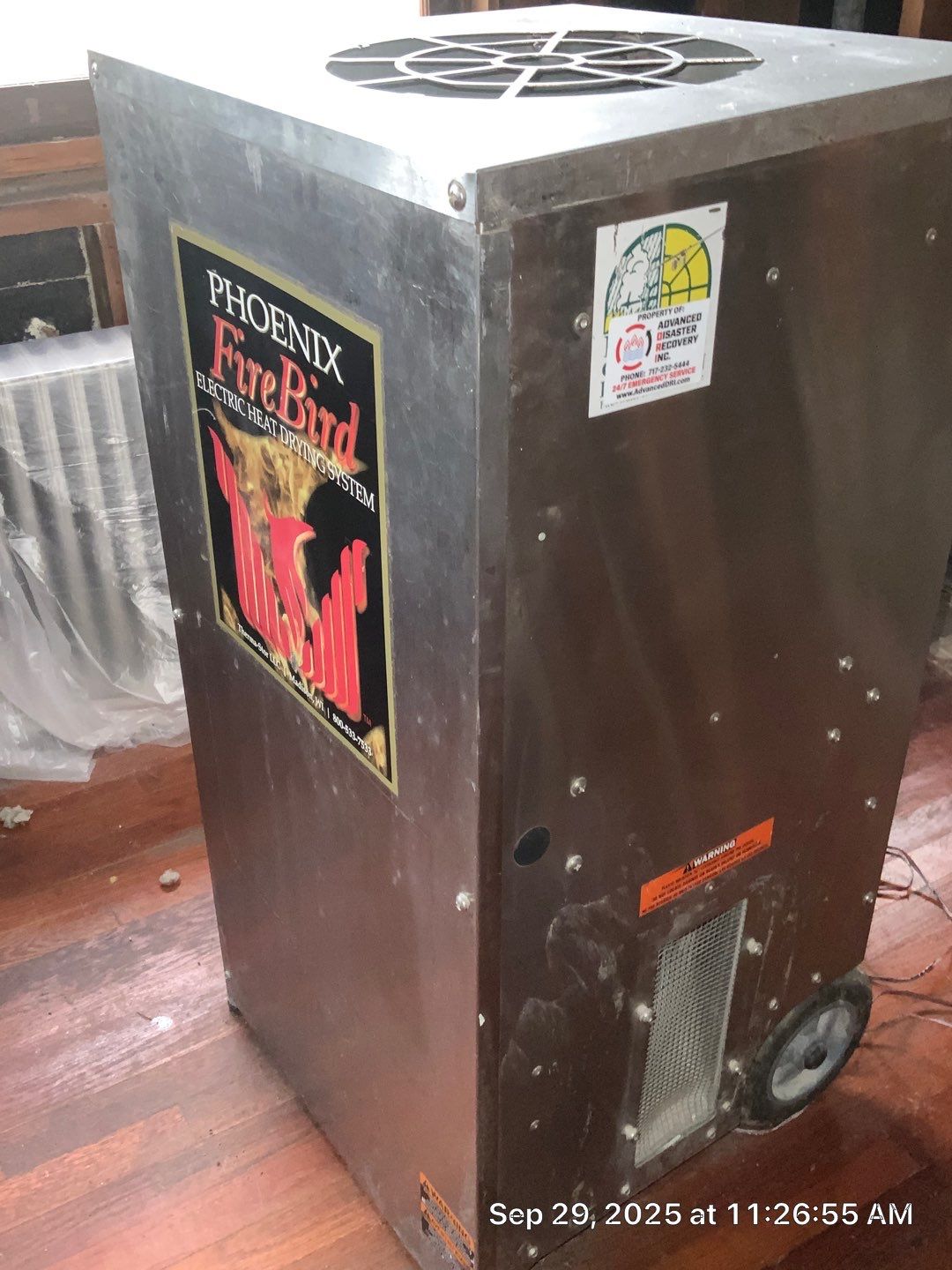
🔥 Phoenix FireBird Electric Heat Drying System
The Phoenix FireBird is purpose-built for fire restoration projects where conventional drying is insufficient. It generates controlled, high-temperature dry heat to accelerate evaporation deep within structural assemblies — particularly valuable in older construction where wall cavities and floor systems have absorbed significant firefighting water. The unit is property of Advanced Disaster Recovery and was deployed on-site as documented in project photography from September 29, 2025.
Electric Heat Drying System
Post-fire structural drying
Phoenix Restoration Equipment
Deep cavity heat penetration
📊 Moisture Monitoring Equipment
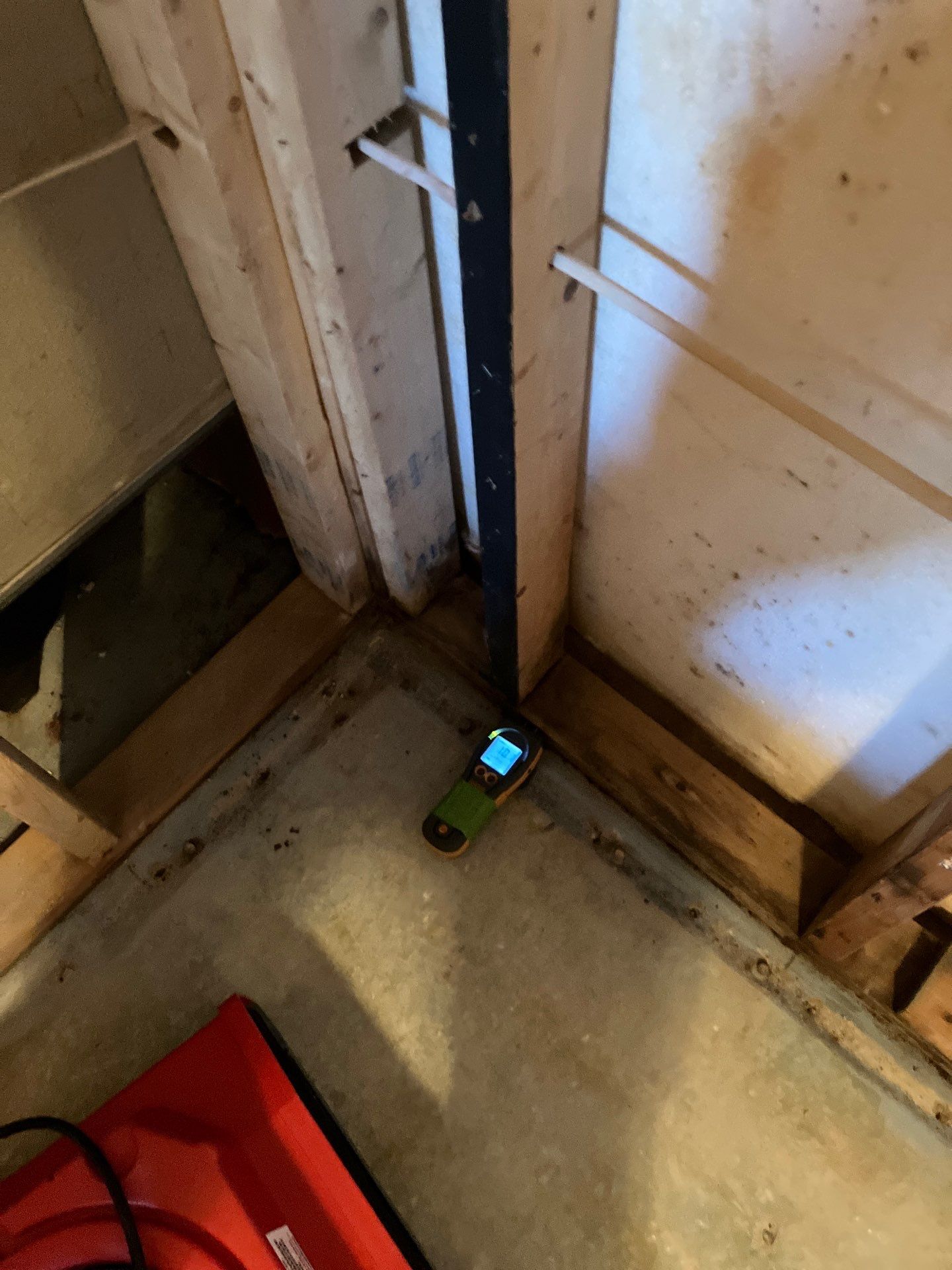
Throughout the drying phase, technicians deployed calibrated moisture meters at strategic locations — wall base plates, floor assemblies, and framing members — to track drying progress and confirm that structural moisture levels reached acceptable targets before reconstruction began. This monitoring is documented in project photography showing meter placement at wall-floor junctions in the stripped-down structure.
Wall bases, floor systems, framing
Verify drying completion pre-rebuild
Response Strategy: Managing a Complex Project for an Absent Owner
The Absent Homeowner Challenge
The homeowner travels for work and was not able to be present throughout the restoration process. This placed an extraordinary level of responsibility on Harrisburg Restoration’s project management. Regular communication, detailed photo documentation, and proactive decision-making kept the project moving without requiring the owner to return from work. Insurance carrier coordination, abatement scheduling, and reconstruction sequencing were all managed on the owner’s behalf.
This level of project stewardship is what distinguishes a professional restoration contractor from a general contractor. Every decision made in the homeowner’s absence — from contents inventorying to abatement protocol to mechanical system replacement — was documented, communicated, and executed in alignment with both the carrier’s requirements and the owner’s best interest.
Winterization: Protecting the Structure
With the project spanning from fall into winter, winterization of the property was essential. Open windows (boarded by others prior to arrival), a non-functional HVAC system, and an unheated structure created conditions that could allow pipes to freeze and cause additional water damage on top of the existing loss. Harrisburg Restoration winterized the property to protect the structural investment and prevent secondary damage during the remediation and reconstruction timeline.
Harrisburg Restoration’s Fire Recovery Process
Restoration Timeline and Methodology
Project Scope Overview
Services Performed
Fire Damage Cause Distribution in PA
49%
16%
13%
22%
Source: NFPA residential fire statistics, approximate
Lancaster County and South Central Pennsylvania: Understanding Local Fire Risk Factors
Lancaster County’s housing stock skews older — thousands of homes in the 17601–17603 ZIP code corridor were built before 1980, many before 1960. This matters enormously in fire restoration because age-specific hazardous materials, outdated wiring standards, and original mechanical systems all affect how a post-fire restoration must be scoped and sequenced. A team unfamiliar with pre-1980 construction will miss regulatory requirements that a trained restoration contractor identifies immediately.
Why Older Homes Require Specialized Fire Restoration
Homes built before the 1980s were commonly constructed with materials that are now known to be hazardous: asbestos-containing floor tiles, ceiling tiles, pipe insulation, and sheet vinyl — as well as lead-containing paints in some cases. A fire event doesn’t eliminate these hazards; it can actually disperse them, making proper testing and abatement a legal and health-safety prerequisite before any demolition work begins. Harrisburg Restoration’s team is equipped to navigate these requirements in compliance with EPA NESHAP and Pennsylvania DEP standards.
Why Lancaster County Homeowners Choose Harrisburg Restoration
Based in 17111, Harrisburg Restoration serves Lancaster County, York County, Dauphin County, and the broader south-central Pennsylvania region. Our proximity means rapid response — but equally important for complex fire losses is our depth of experience managing full-scope projects from mitigation through final reconstruction. We work directly with insurance carriers, manage abatement subcontractors, and keep homeowners informed whether they’re down the street or across the country.
Service Coverage: Harrisburg Restoration’s Response Area
Response Times from Harrisburg HQ (17111)
Project Documentation Gallery
The following images document conditions at the Lancaster County property across key phases of the project — from initial post-fire damage assessment through the completed reconstruction in March 2026.
| Image | Phase | What It Documents |
|---|---|---|
| Image 1 | Post-Fire Assessment | Attached garage/outbuilding — concrete block structure, ceiling panels dislodged, debris-covered floor, contents destroyed |
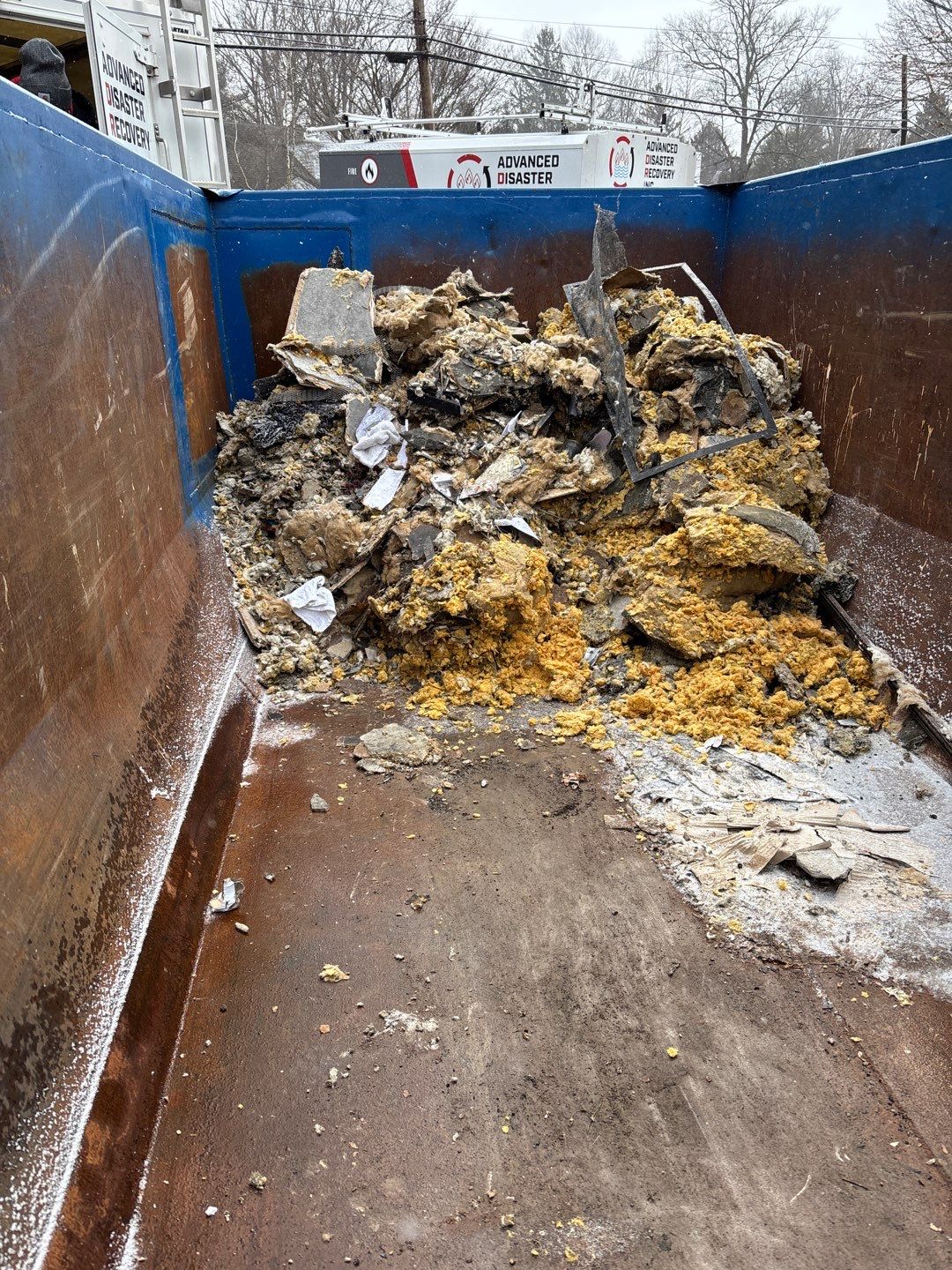
| Image 2 | Demolition & Debris Removal | Advanced Disaster Recovery dumpster loaded with fire debris — burnt fiberglass insulation, charred drywall, structural material |
| Image 3 | Gut Demolition Complete | Interior stripped to bare wood stud framing — stained concrete floor, exposed structure, drying equipment positioned |
| Image 4 | Moisture Monitoring | Calibrated moisture meter placed at wall base plate — tracking drying progress in structural framing |
| Image 5 | Upper Level — Sep 29, 2025 | Exposed rafters and stair framing with plastic containment sheeting — dark-stained original hardwood floor visible |
| Image 6 | Equipment — Sep 29, 2025 | Phoenix FireBird Electric Heat Drying System deployed — property of Advanced Disaster Recovery, (717) 232-5444 |
| Image 7 | Reconstruction Complete — Mar 5, 2026 | Finished kitchen — new white cabinetry, quartz countertops, stainless appliances, LVP flooring, recessed lighting |
| Image 8 | Reconstruction Complete — Mar 5, 2026 | Basement after gut demo — new OSB backing on stud walls, new PEX plumbing (red/blue) and updated wiring visible |
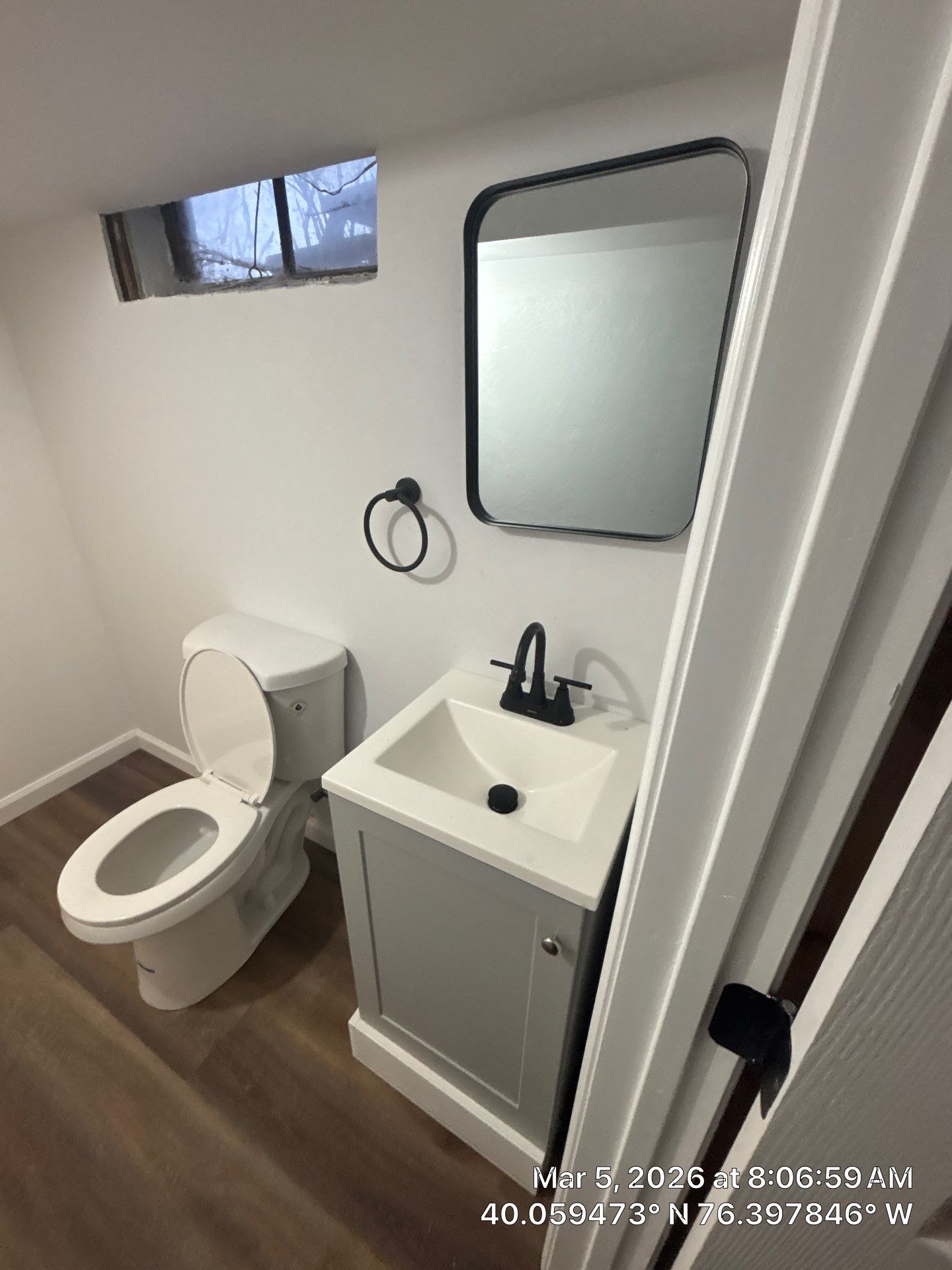
| Image 9 | Reconstruction Complete — Mar 5, 2026 | New basement bathroom — toilet, vanity, black matte fixtures, mirror, LVP flooring installed |
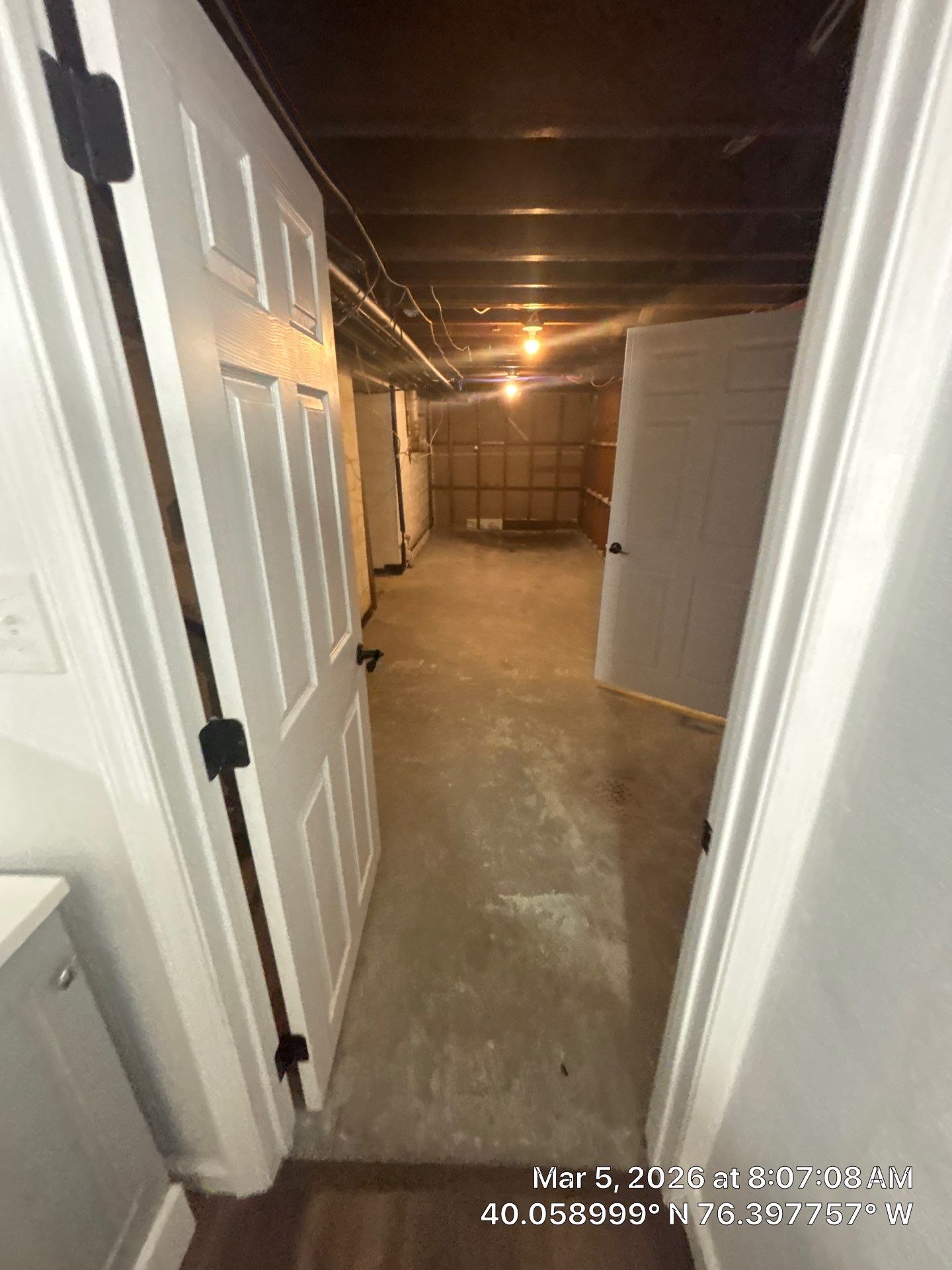
| Image 10 | Reconstruction Complete — Mar 5, 2026 | Basement hallway — new six-panel white doors, exposed joists painted dark, access to unfinished storage |
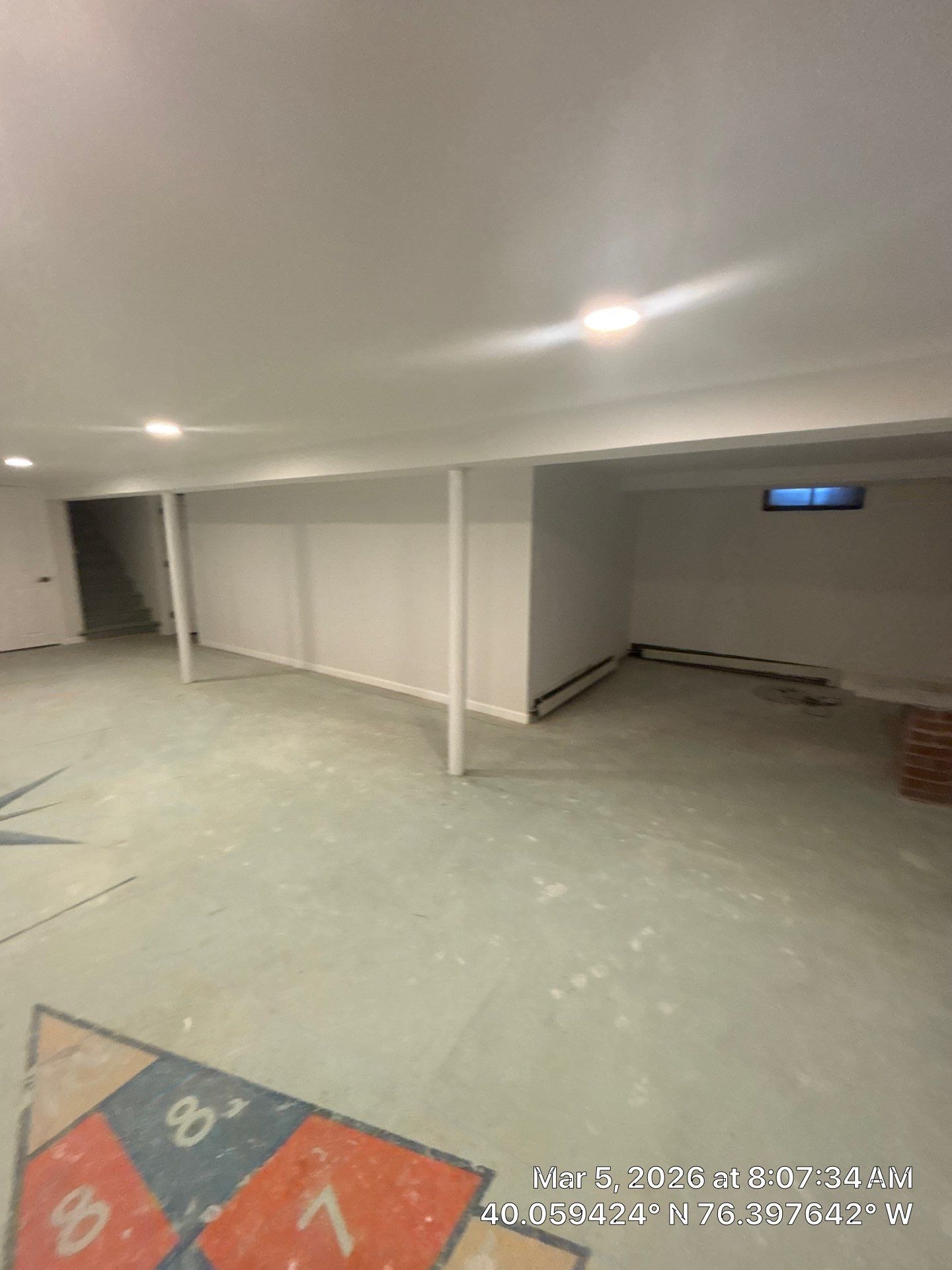
| Image 11 | Reconstruction Complete — Mar 5, 2026 | Finished basement main area — drywalled and painted white ceiling with recessed lighting, baseboard heat |
Key Takeaways: What This Lancaster Fire Restoration Demonstrates
This project represents one of the most complex scenarios a restoration contractor can face: a total fire loss in a pre-1960 home, with confirmed hazardous materials, a compromised structure across multiple levels, complete mechanical system failure, the added complexity of rooftop solar, and an owner who needed a team to manage everything independently.
Harrisburg Restoration’s ability to deliver — from initial hazmat testing through abatement, full gut demolition, drying, and complete reconstruction — reflects what it means to have a single qualified contractor manage the entire scope of a catastrophic fire loss. No gaps in accountability. No handoffs between vendors who don’t communicate. A finished home, documented and delivered, six months after the fire.
If your Lancaster County, York County, or Dauphin County property has sustained fire damage, contact Harrisburg Restoration at (717) 232-5444. We’re available 24/7 for emergency response and work directly with all major insurance carriers.