Project at a Glance
Rodents Removed
Restoration Phases
Rooms Affected
Structure Demolition
Executive Summary
When property owners in Chambersburg, Pennsylvania searched for “fire damage restoration near me” after a devastating residential structure fire, they faced challenges that extended far beyond typical restoration projects. Harrisburg Restoration responded to one of the most complex fire damage restoration scenarios in Franklin County history—a project that ultimately required managing extensive structural fire damage, comprehensive contents inventory from a home with significantly more belongings than typical properties, and an unprecedented biohazard situation that developed during investigation delays.
This case study examines Harrisburg Restoration’s three-phase approach to recovering a Chambersburg residence where over 100 rats colonized the structure between the initial fire event and restoration clearance. The project demonstrates how professional restoration services must sometimes address complications far beyond smoke cleanup and structural repairs. From systematic contents pack-out through controlled demolition and comprehensive structural cleaning, this project required adaptive expertise across multiple restoration disciplines.
“Fire damage restoration becomes exponentially more complex when secondary problems develop during investigation delays. This Chambersburg project required simultaneous management of fire restoration protocols and active biohazard remediation—over 100 rodents emerged from wall cavities during demolition work.”
Understanding the Incident: Fire Damage and Investigation Delays
The Original Fire Event
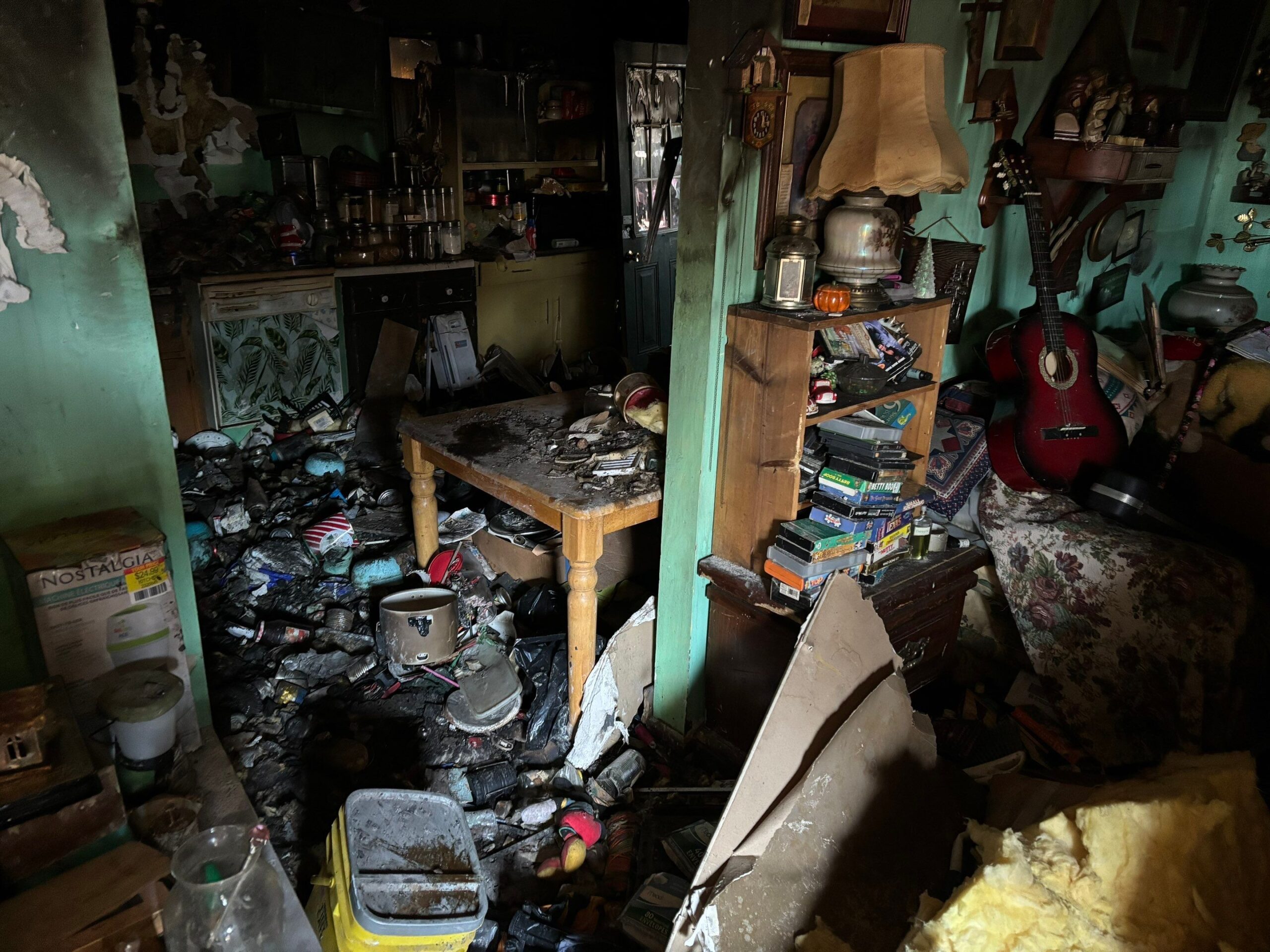
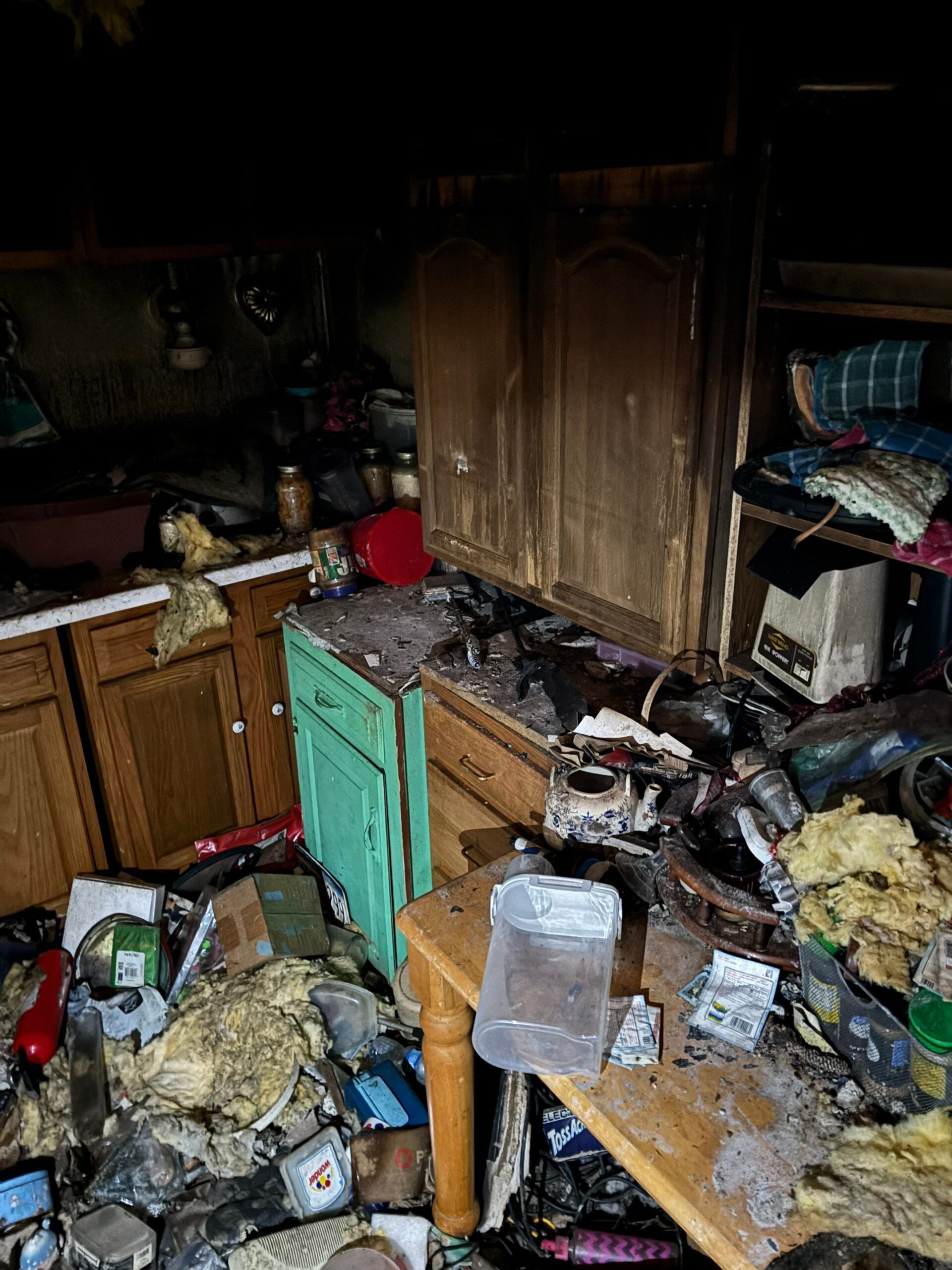
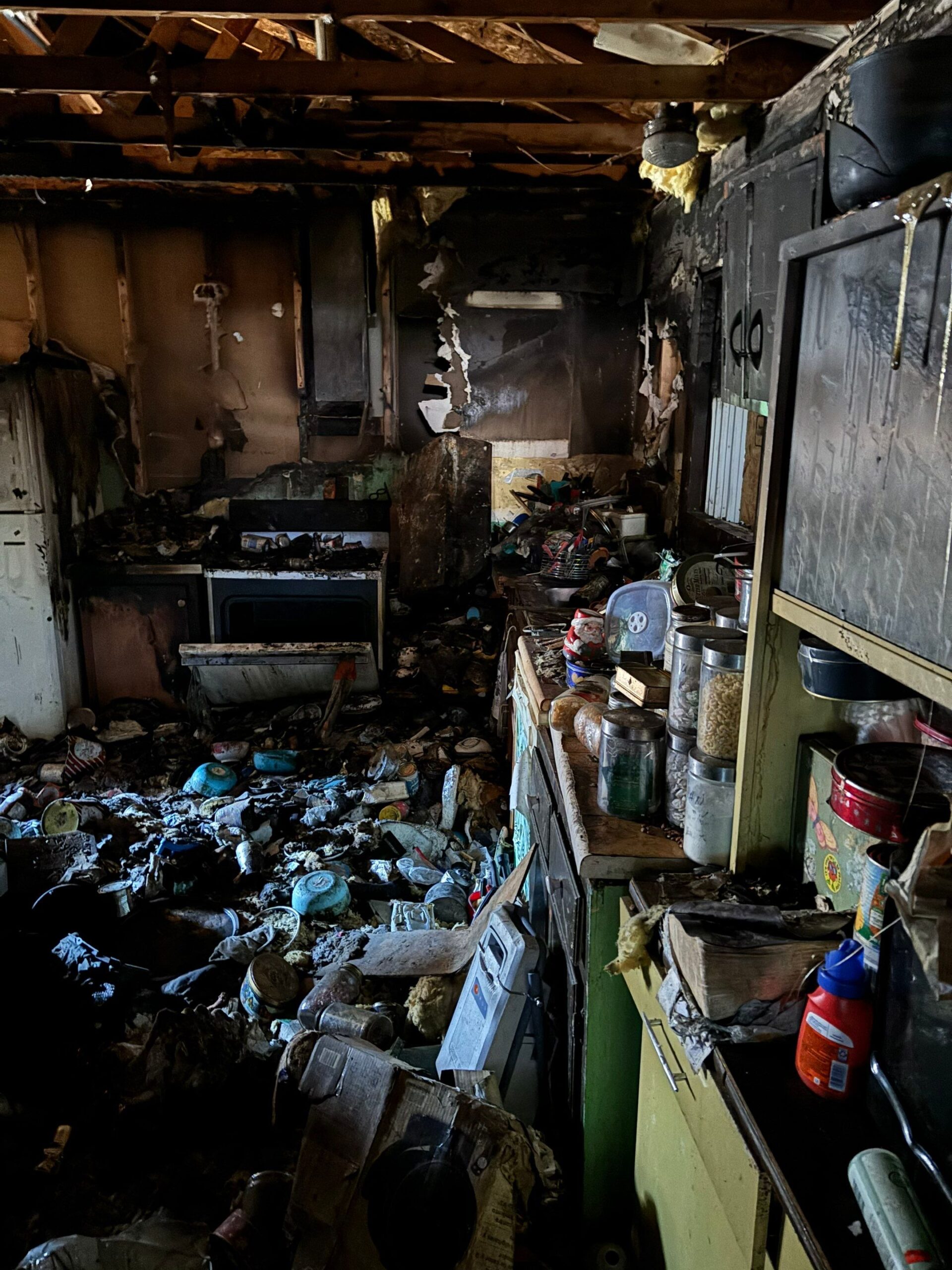
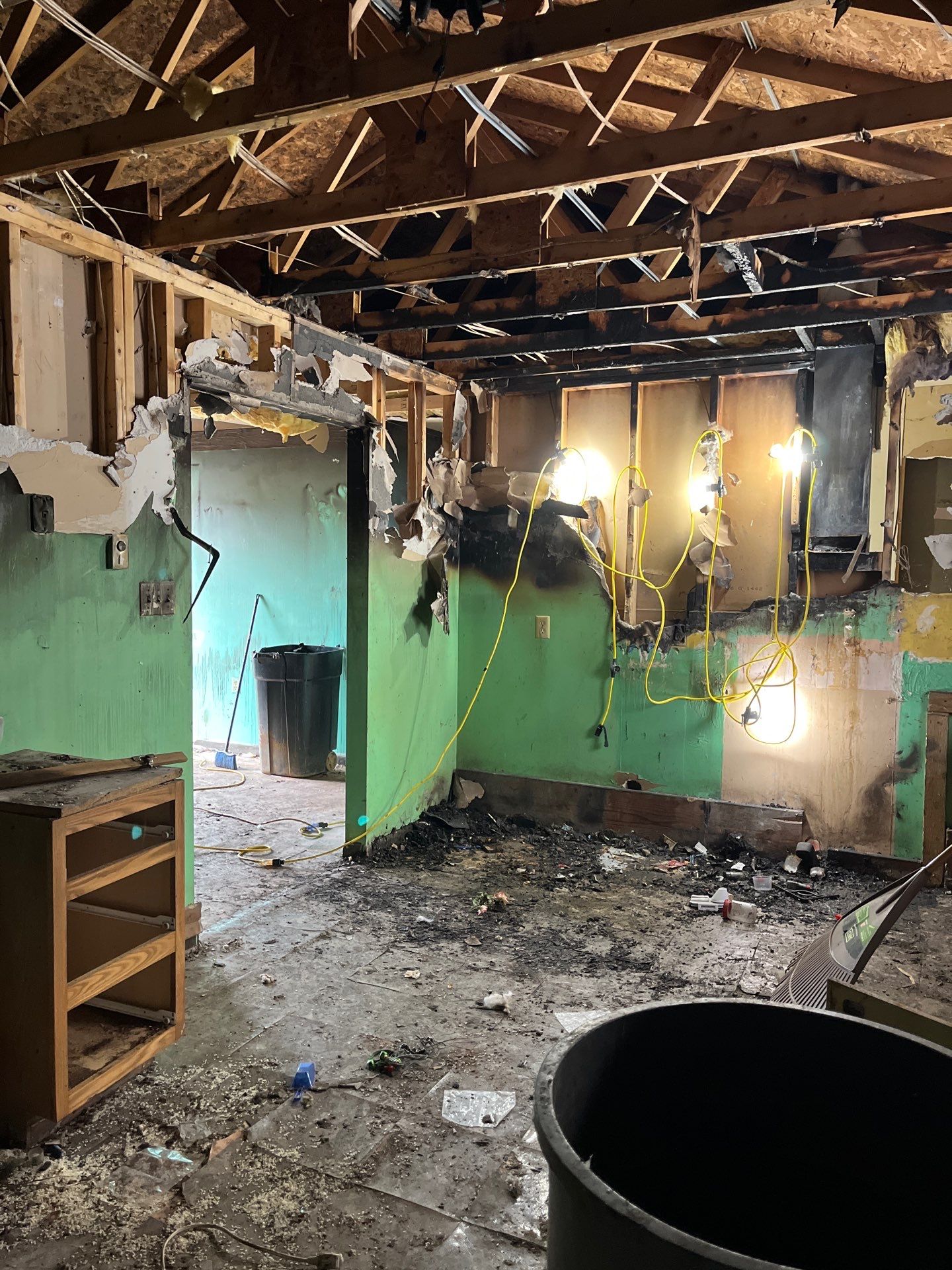
The residential structure fire in Chambersburg, PA resulted in significant damage concentrated in the kitchen area, with heavy smoke migration throughout the entire home. Fire damage extended beyond the point of origin, affecting ceiling structures, wall assemblies, and creating pervasive smoke and soot contamination across multiple rooms. The intensity of the fire required comprehensive Cause and Origin investigation before fire damage restoration work could commence.
The Investigation Delay: An Unexpected Complication
Following standard protocol for structure fires, the Chambersburg property was secured pending completion of fire investigation procedures. However, the extended period between the fire incident and clearance for restoration created an unanticipated secondary crisis. The compromised structure, with its fire-damaged openings and reduced security, became an attractive habitat for rodents seeking shelter.
By the time Harrisburg Restoration received clearance to begin restoration work, the home had been colonized by more than 100 rats. The rodents had established nesting sites throughout the structure, particularly within wall cavities, ceiling spaces, and areas damaged by the original fire. This infestation represented a significant biohazard that complicated every phase of the restoration process.
Why Standard Extermination Wasn’t Viable
Traditional pest control methods were not feasible for this Chambersburg project. The sheer volume of contents remaining in the home—significantly more than typical residential properties—prevented exterminators from accessing the areas where rodents had established colonies. Additionally, the rats had penetrated deep into wall cavities and structural voids that would only become accessible during the necessary demolition work. Harrisburg Restoration’s crews would need to address the infestation simultaneously with contents removal and structural demolition.
Fire Damage Restoration Response Coverage
Response Distance from Harrisburg HQ
Regional Fire Damage Restoration Coverage
Harrisburg Restoration’s strategic location in Pennsylvania’s capital region provides direct access to Franklin County and surrounding areas. When property owners search for “fire damage restoration near me” in Franklin County and throughout south-central Pennsylvania, Harrisburg Restoration provides comprehensive fire damage restoration capabilities for complex projects requiring multi-discipline restoration expertise.
Property Assessment: More Than a Typical Fire Restoration
Exceptional Contents Volume
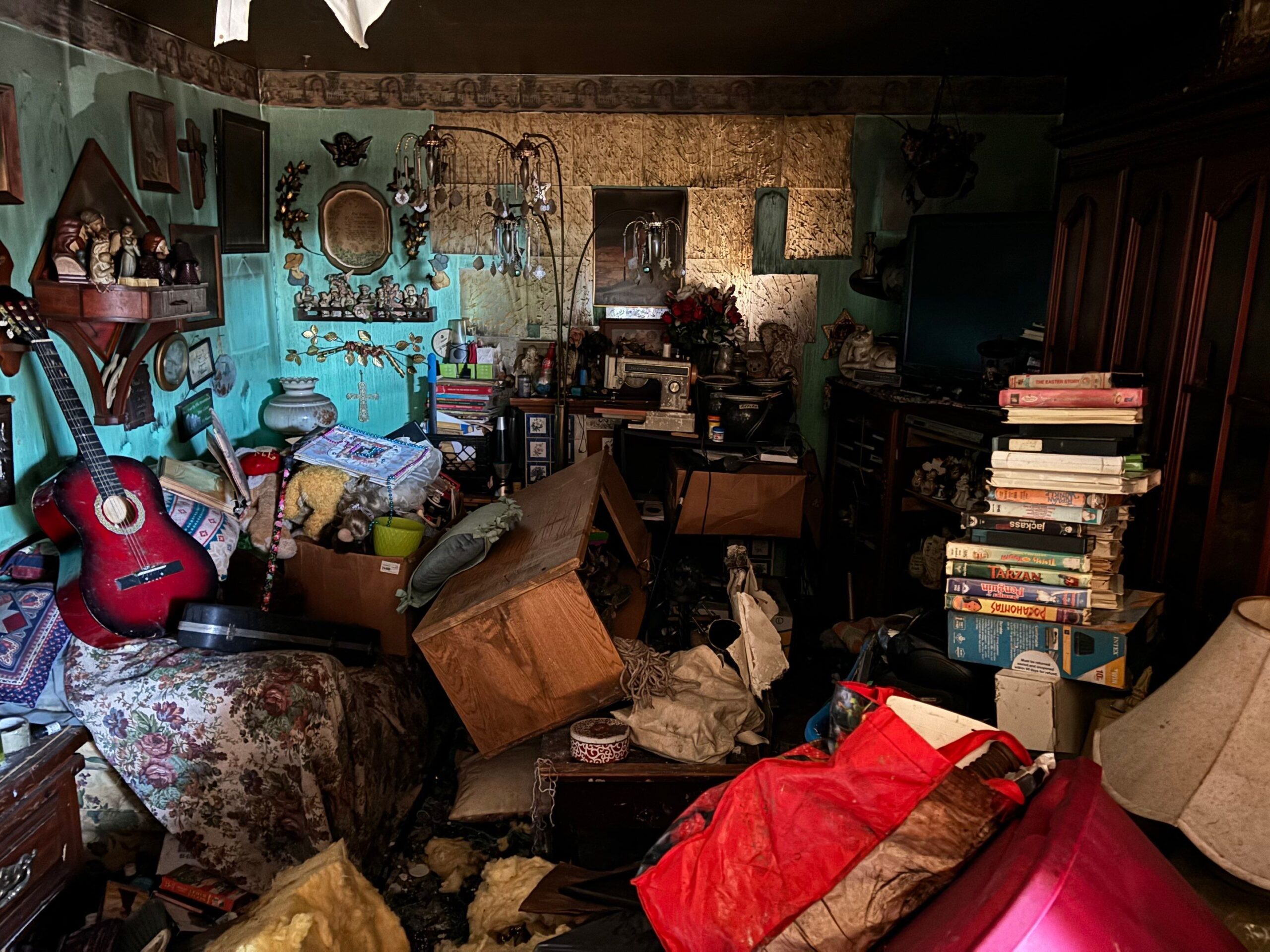
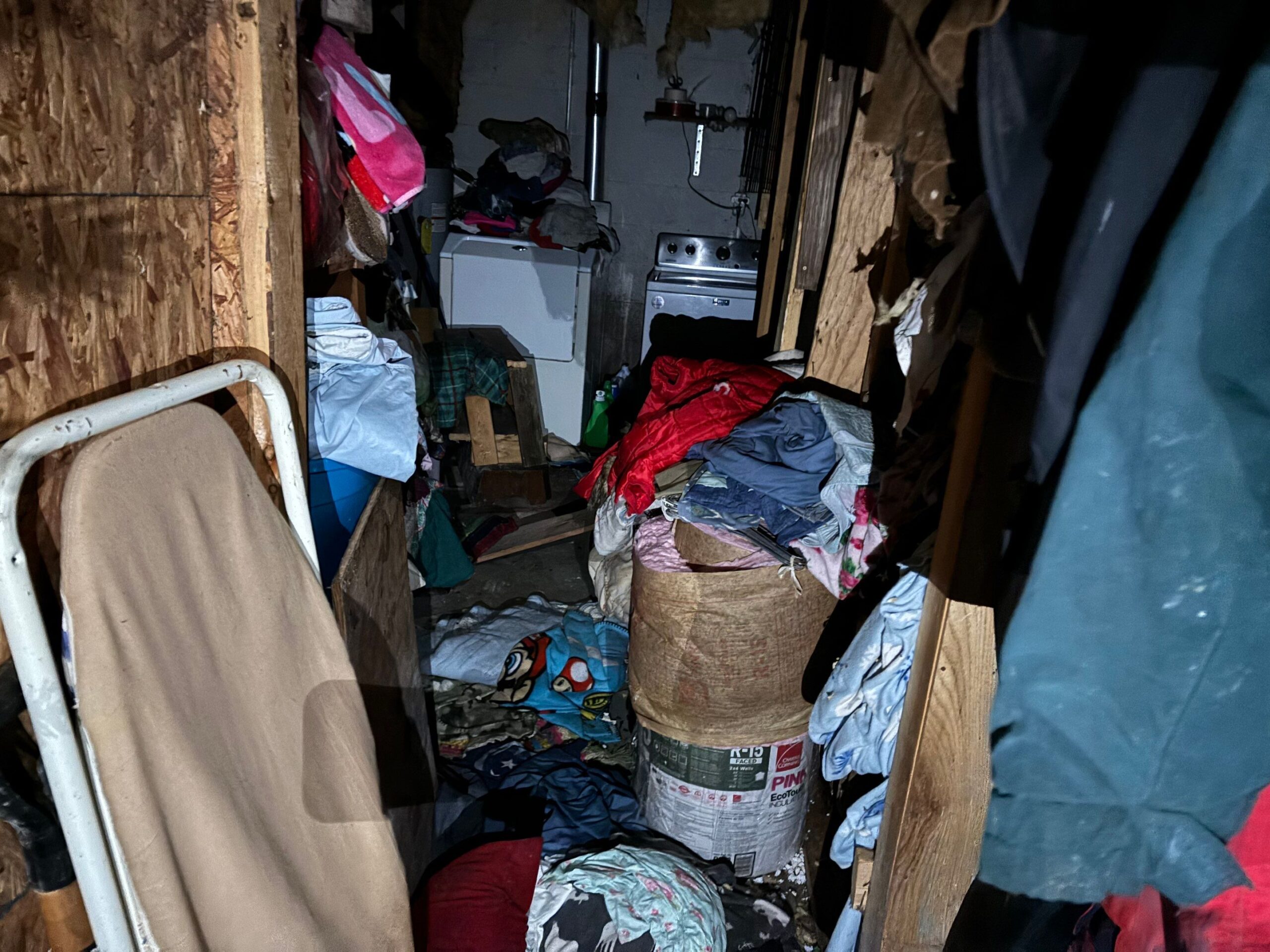
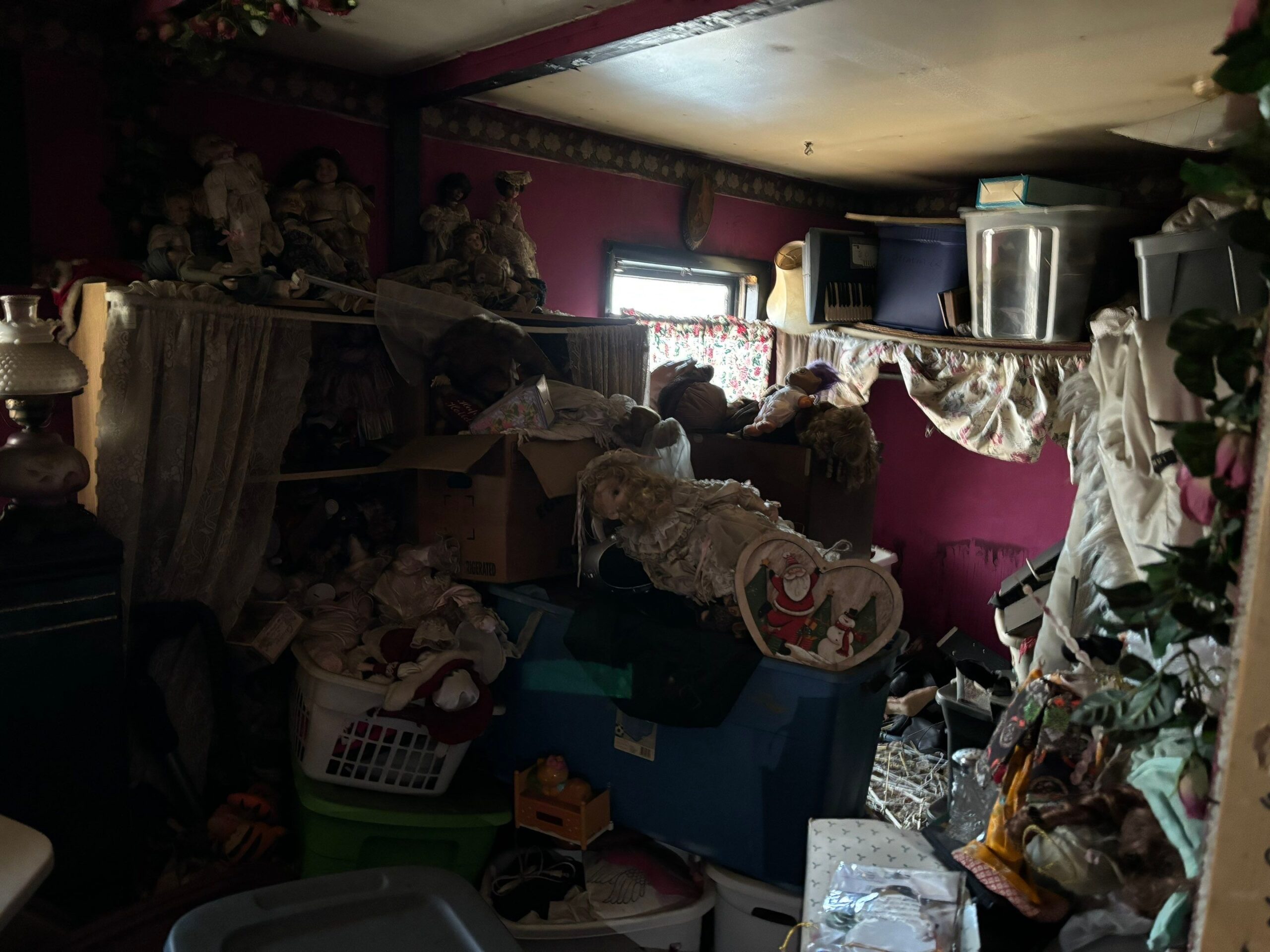
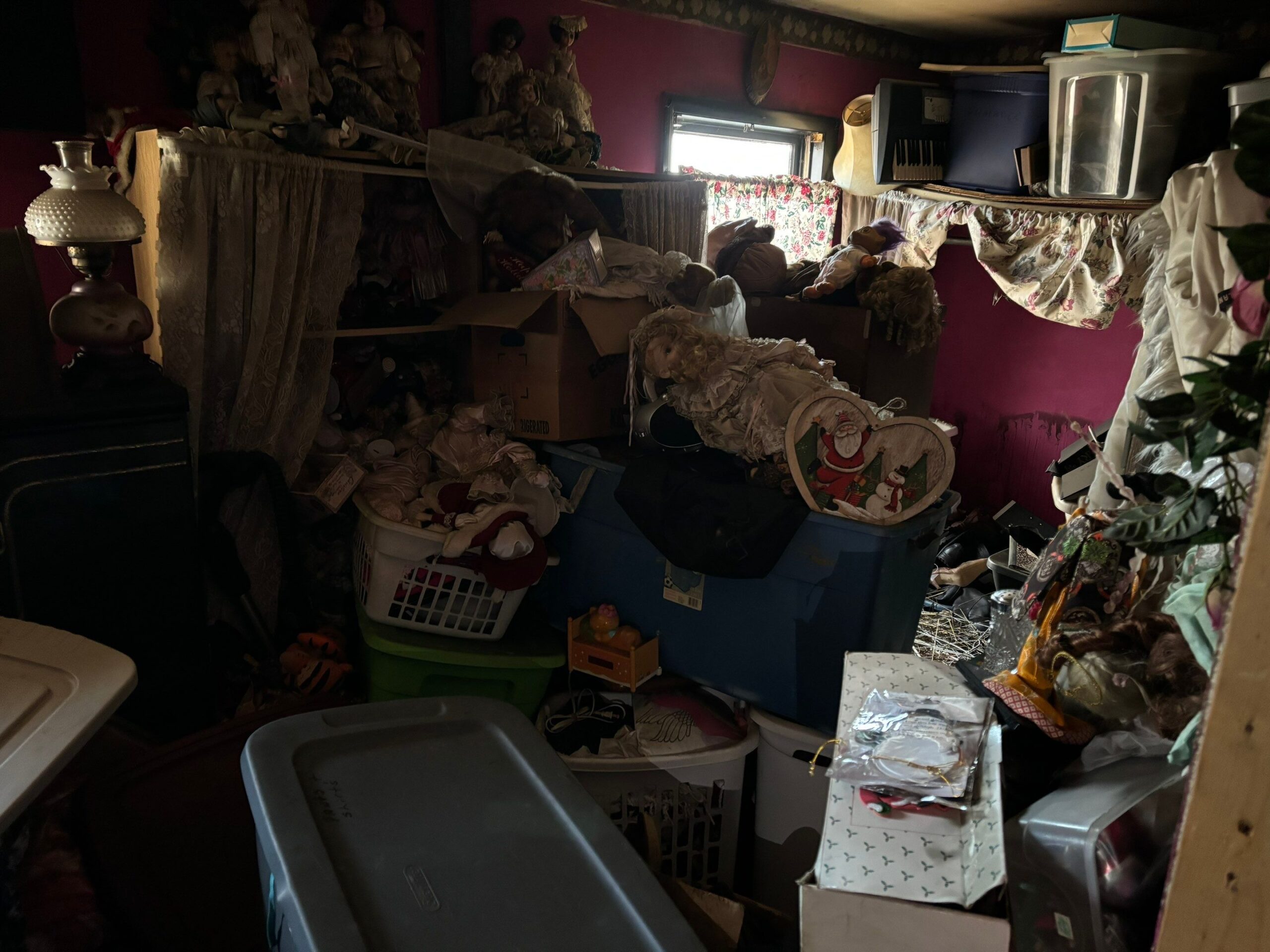
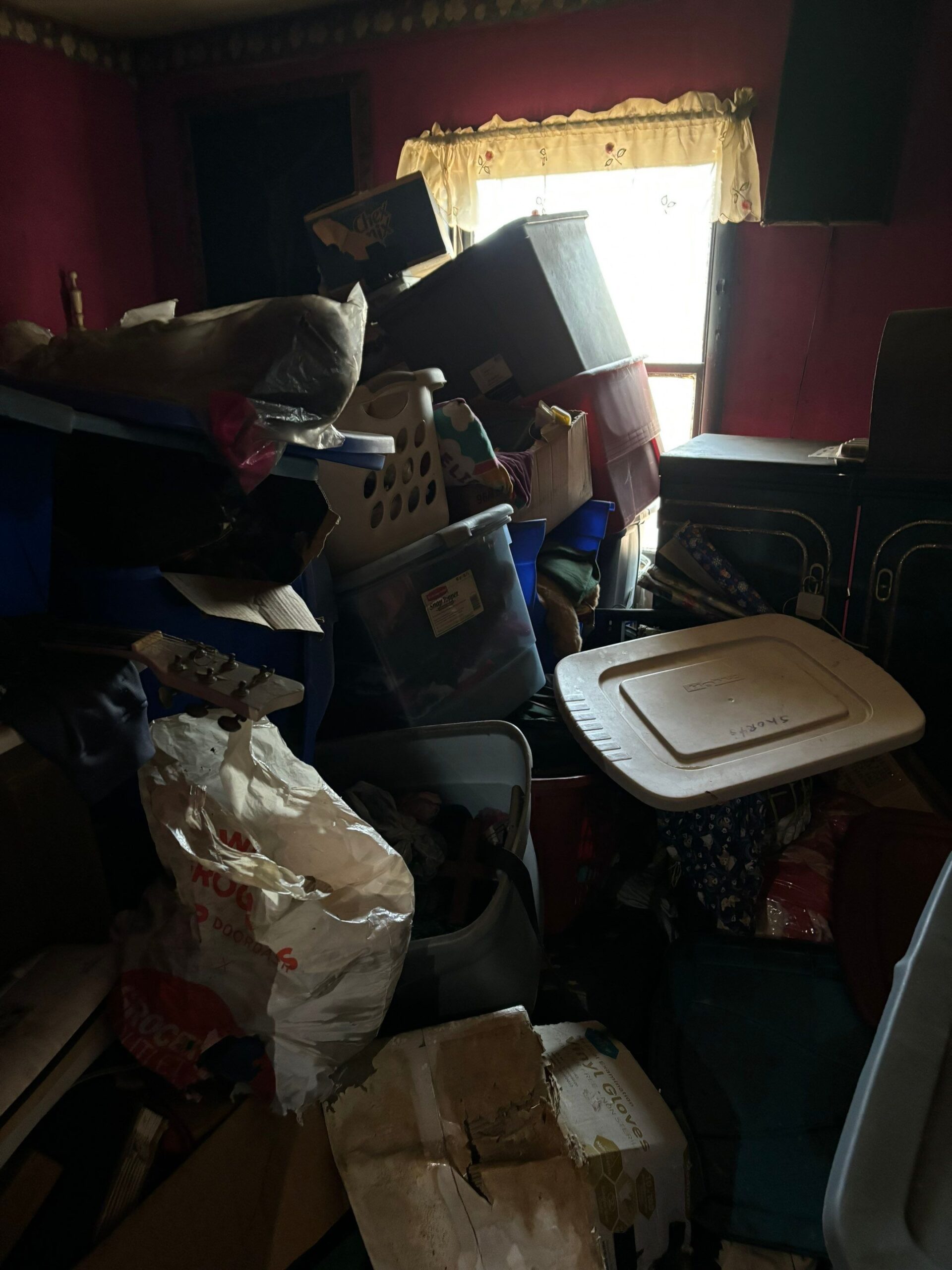
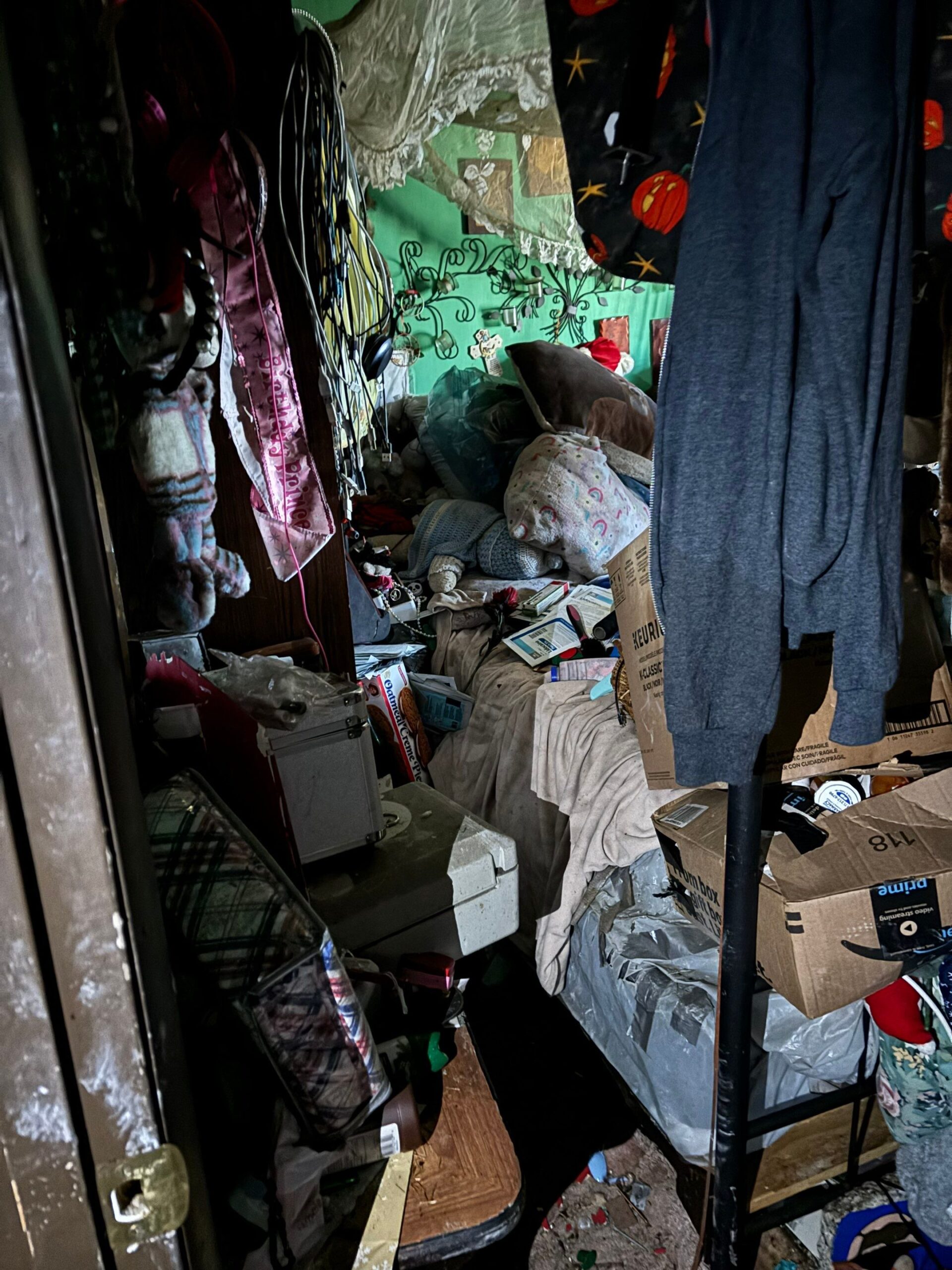
Initial assessment of the Chambersburg fire damage revealed that this residential property contained significantly more contents than standard homes. The residence was filled with personal belongings, collectibles, furnishings, decorative items, kitchen contents, clothing, and accumulated possessions across multiple rooms. Every surface, storage area, and living space contained items requiring careful documentation, assessment for smoke damage, and professional pack-out services—a critical component of comprehensive restoration.
The volume of contents presented logistical challenges beyond typical restoration projects. Harrisburg Restoration’s crews needed to implement systematic inventory procedures across the entire structure, documenting thousands of items for insurance purposes while simultaneously assessing each piece for salvageability after smoke and soot exposure. This contents-heavy scenario would require multiple crews working in coordinated phases to safely remove all belongings before structural demolition could begin.
Scope of Fire and Smoke Damage
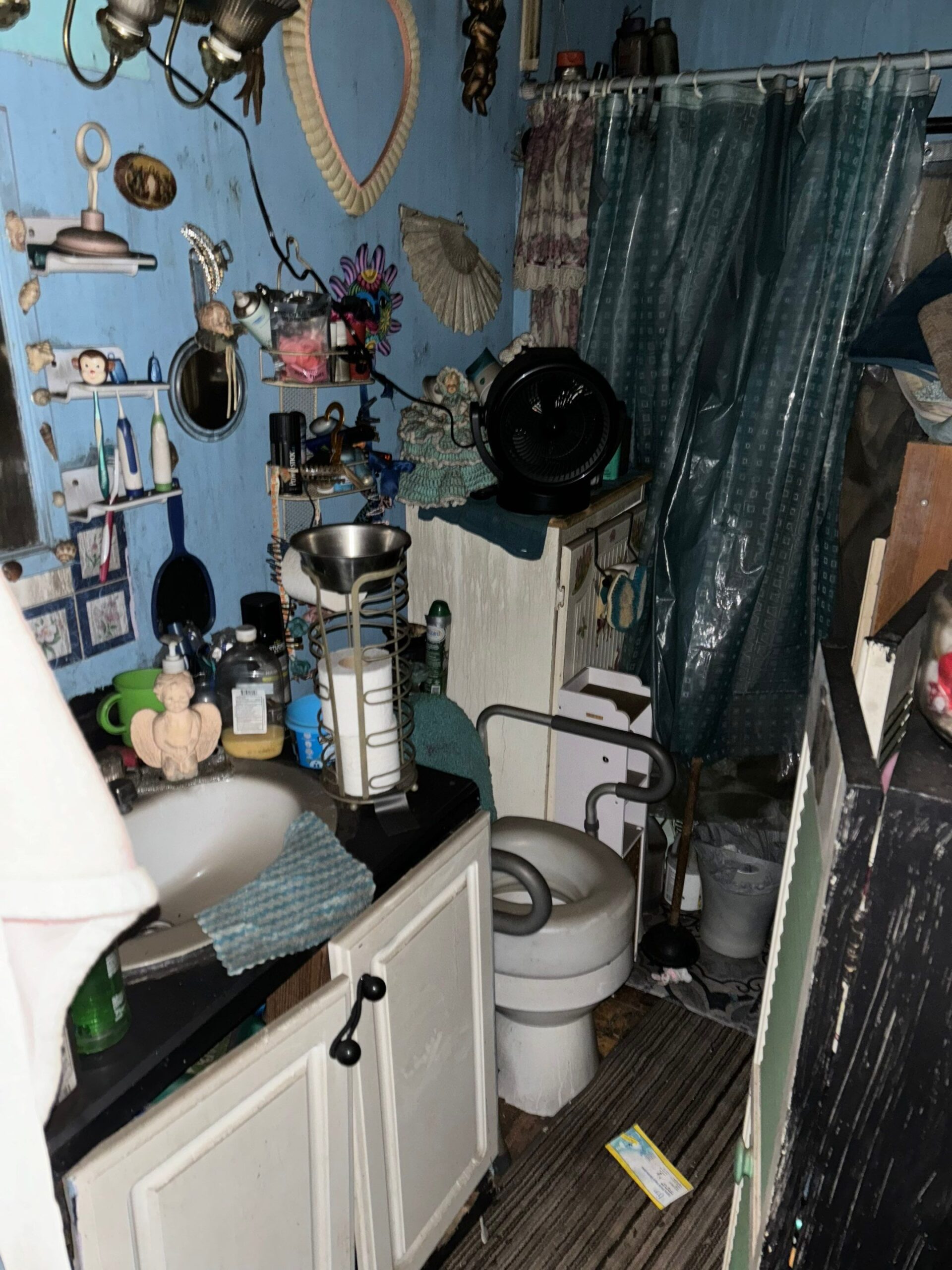
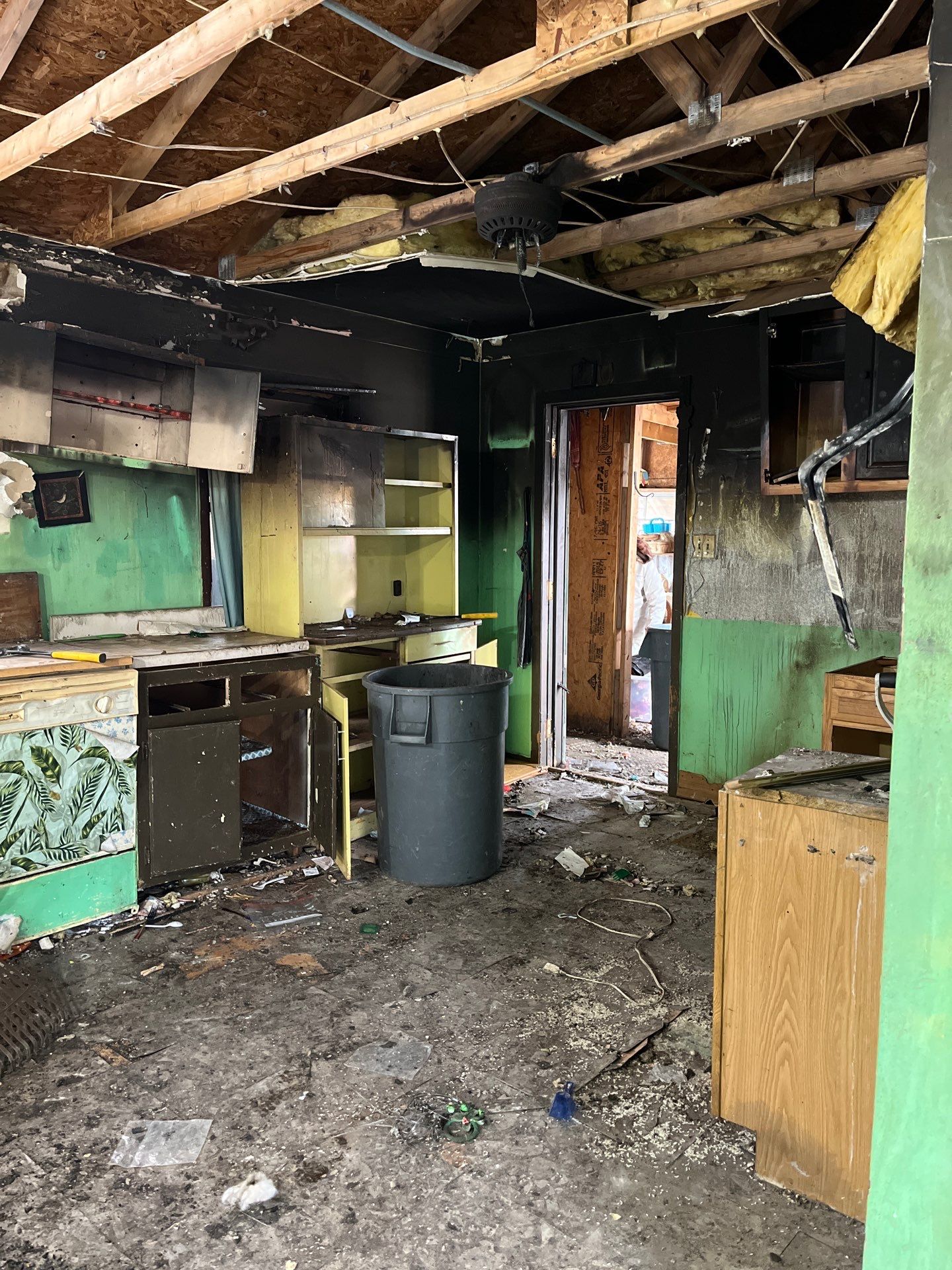
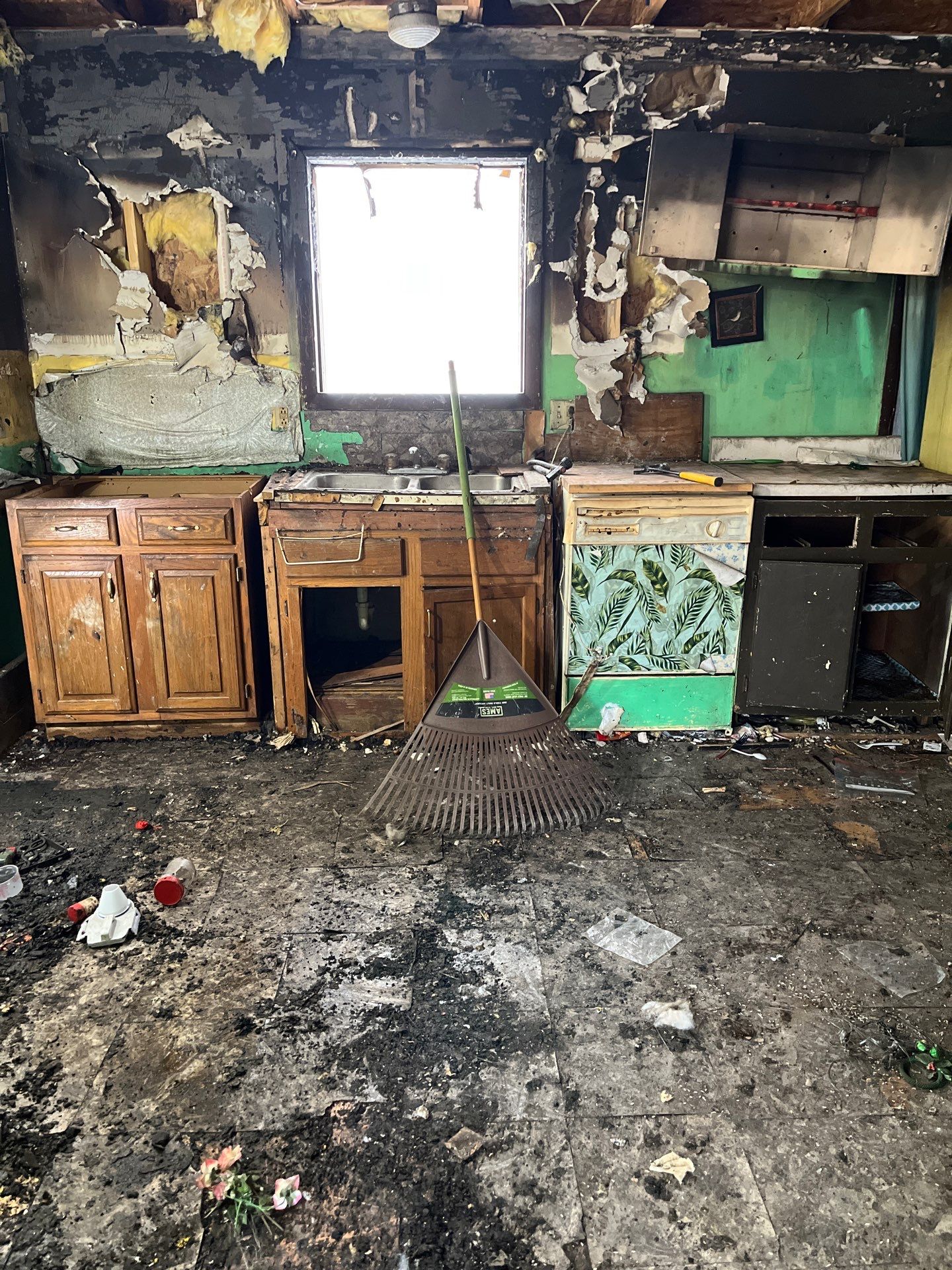
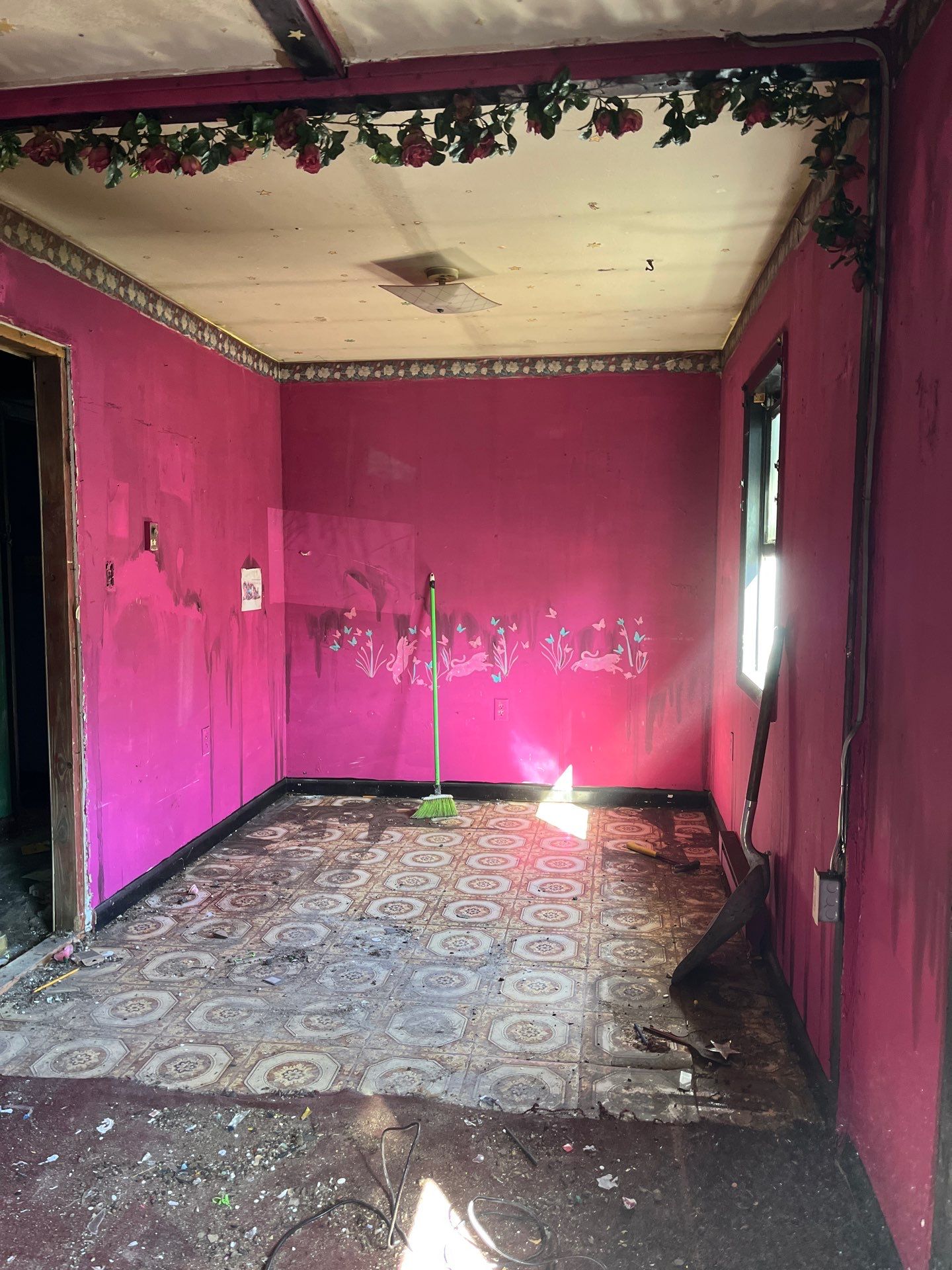
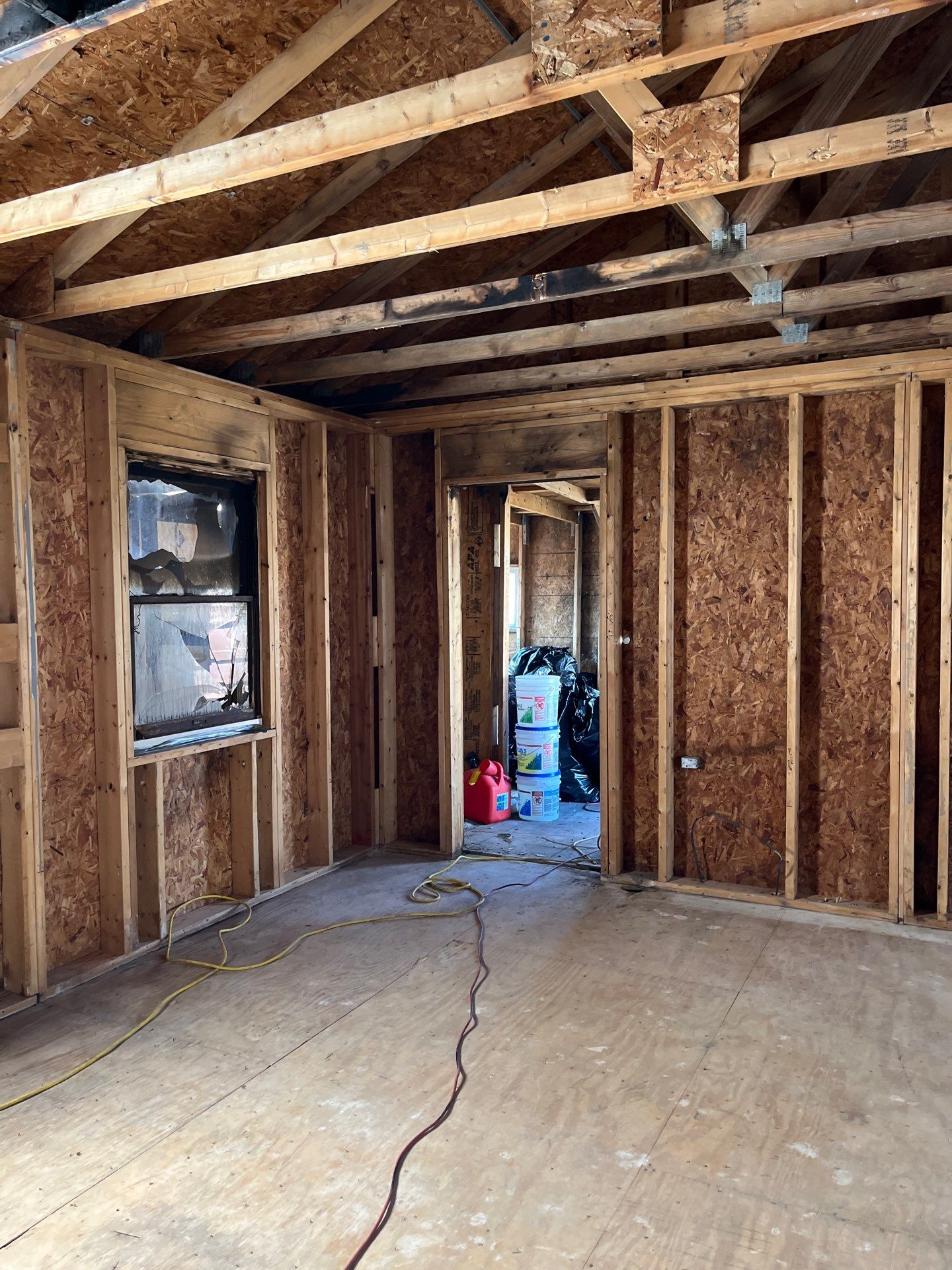
Fire damage was concentrated in the kitchen area, where flames had caused severe structural damage to cabinetry, ceiling assemblies, and wall materials. However, the impact extended far beyond the fire’s origin point. Heavy smoke migration had affected every room in the residence, depositing soot and creating pervasive odor contamination throughout living spaces, bedrooms, bathrooms, and storage areas—requiring comprehensive restoration throughout the entire structure.
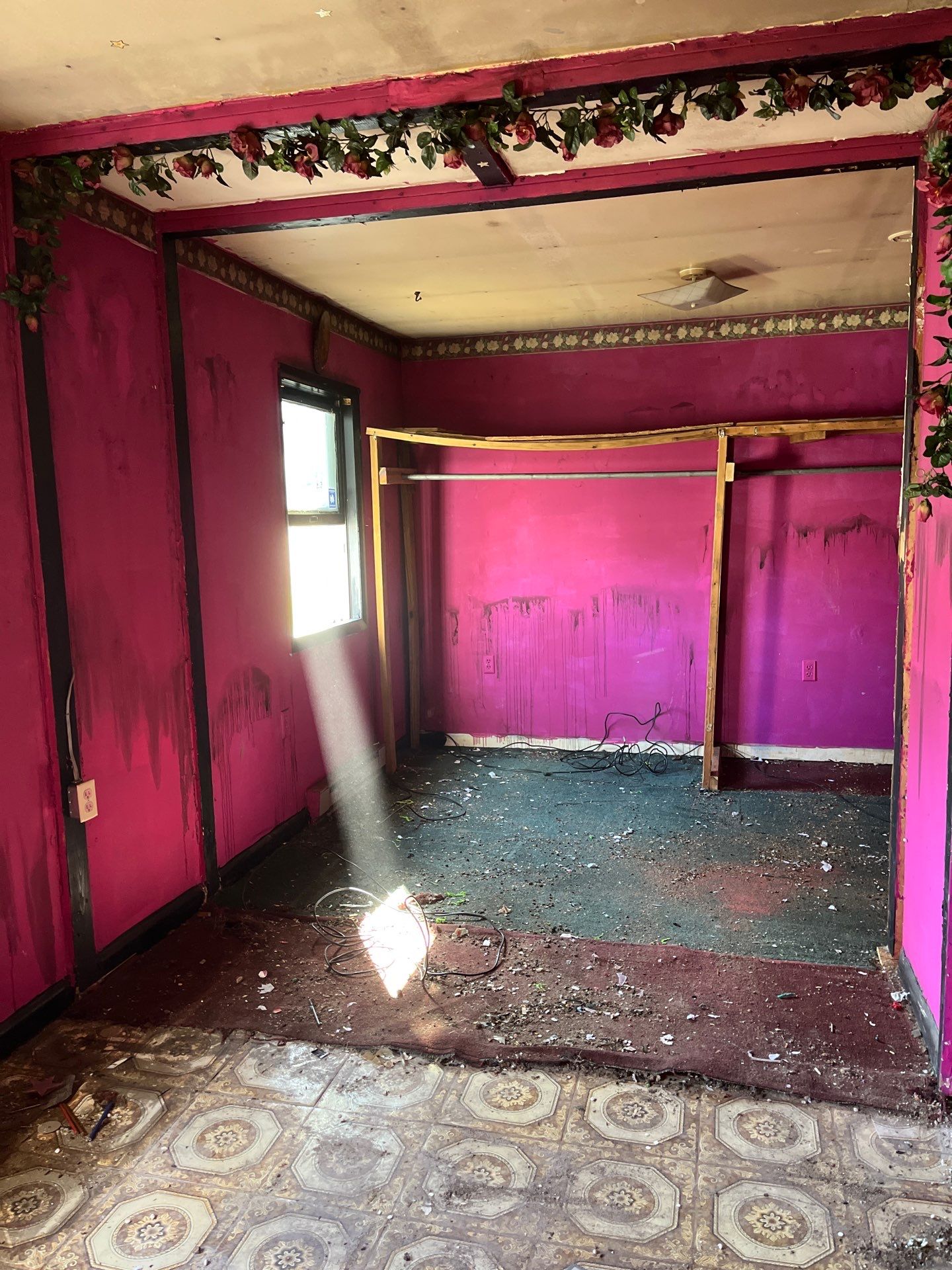
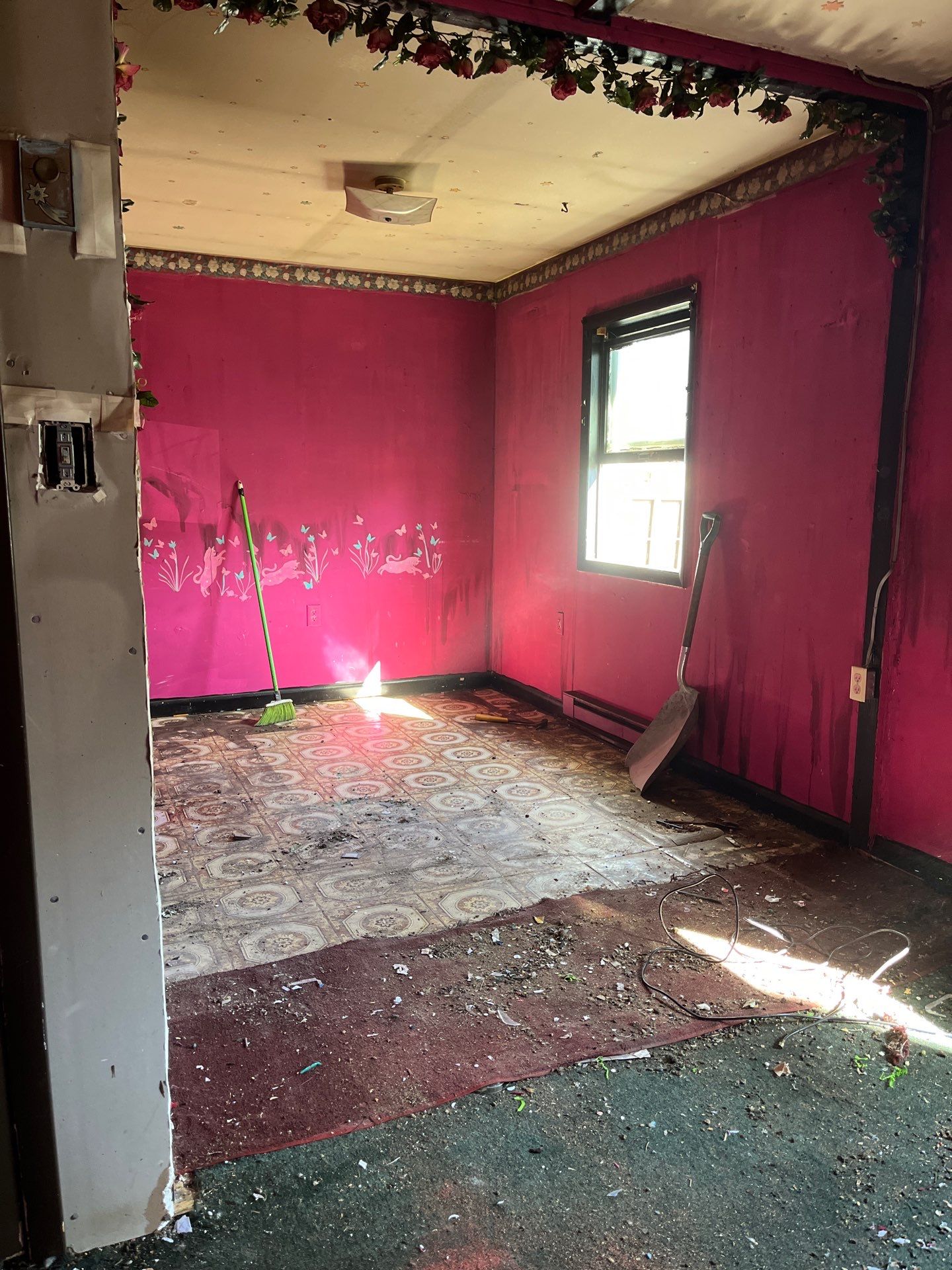
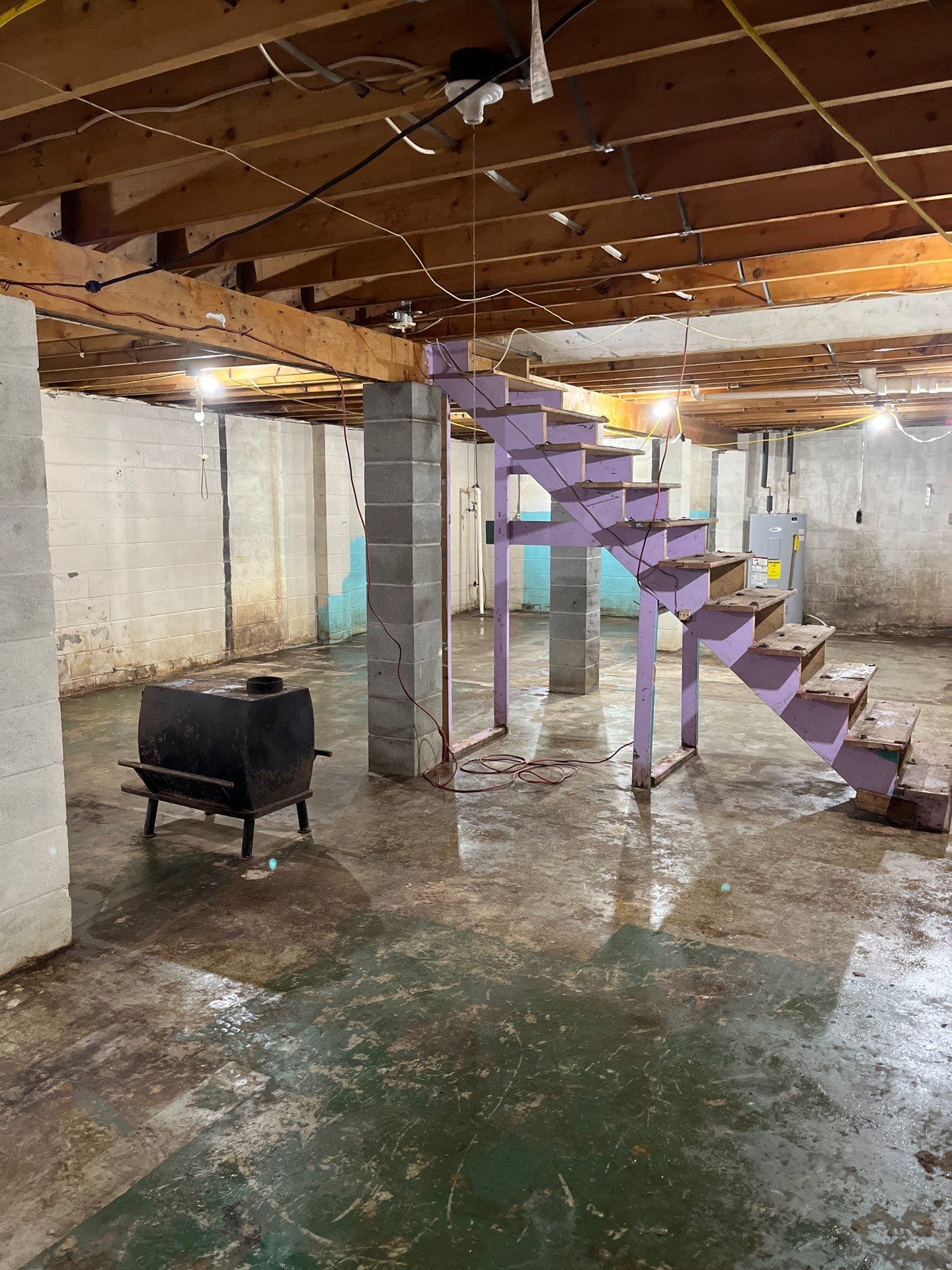
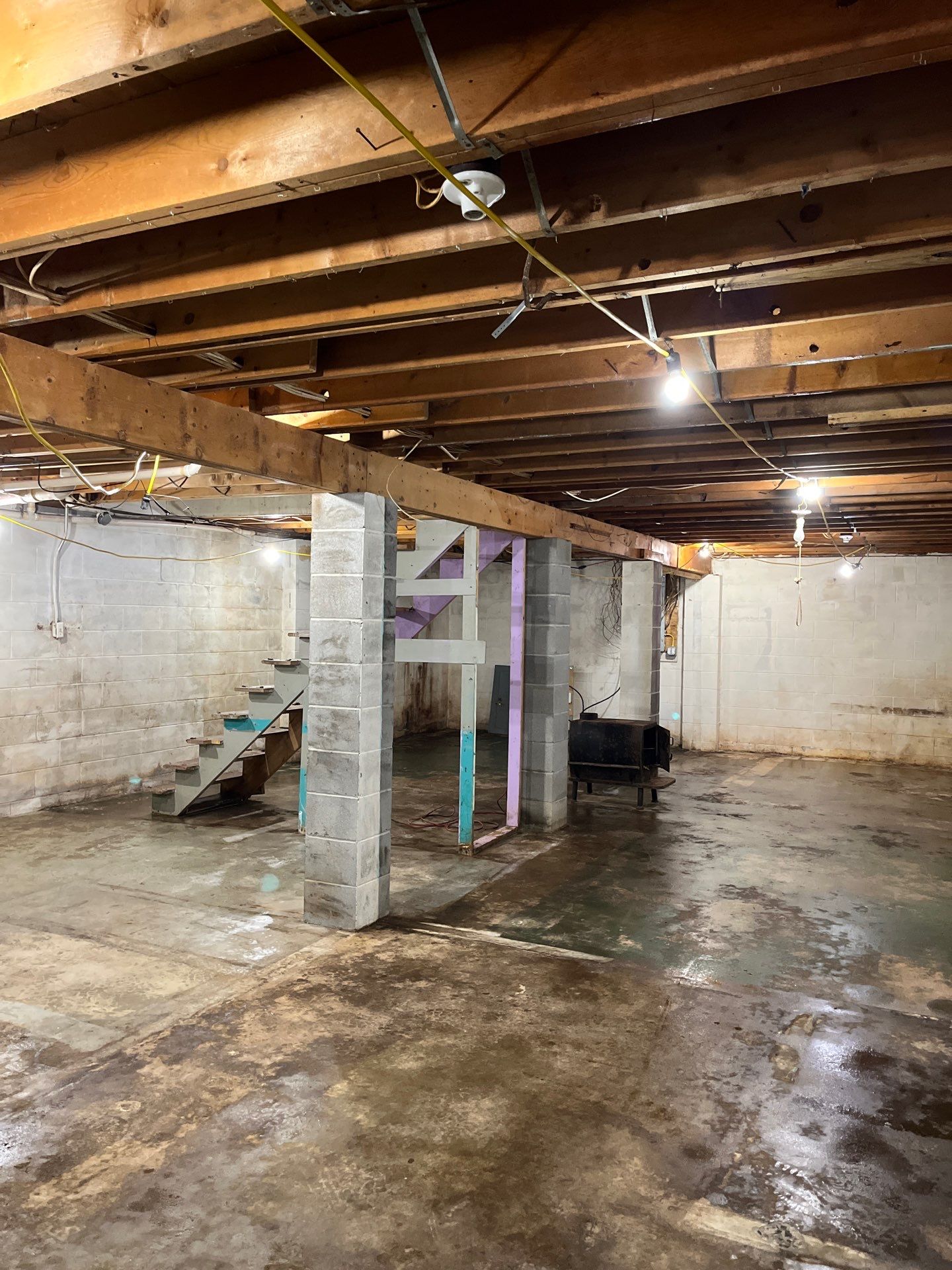
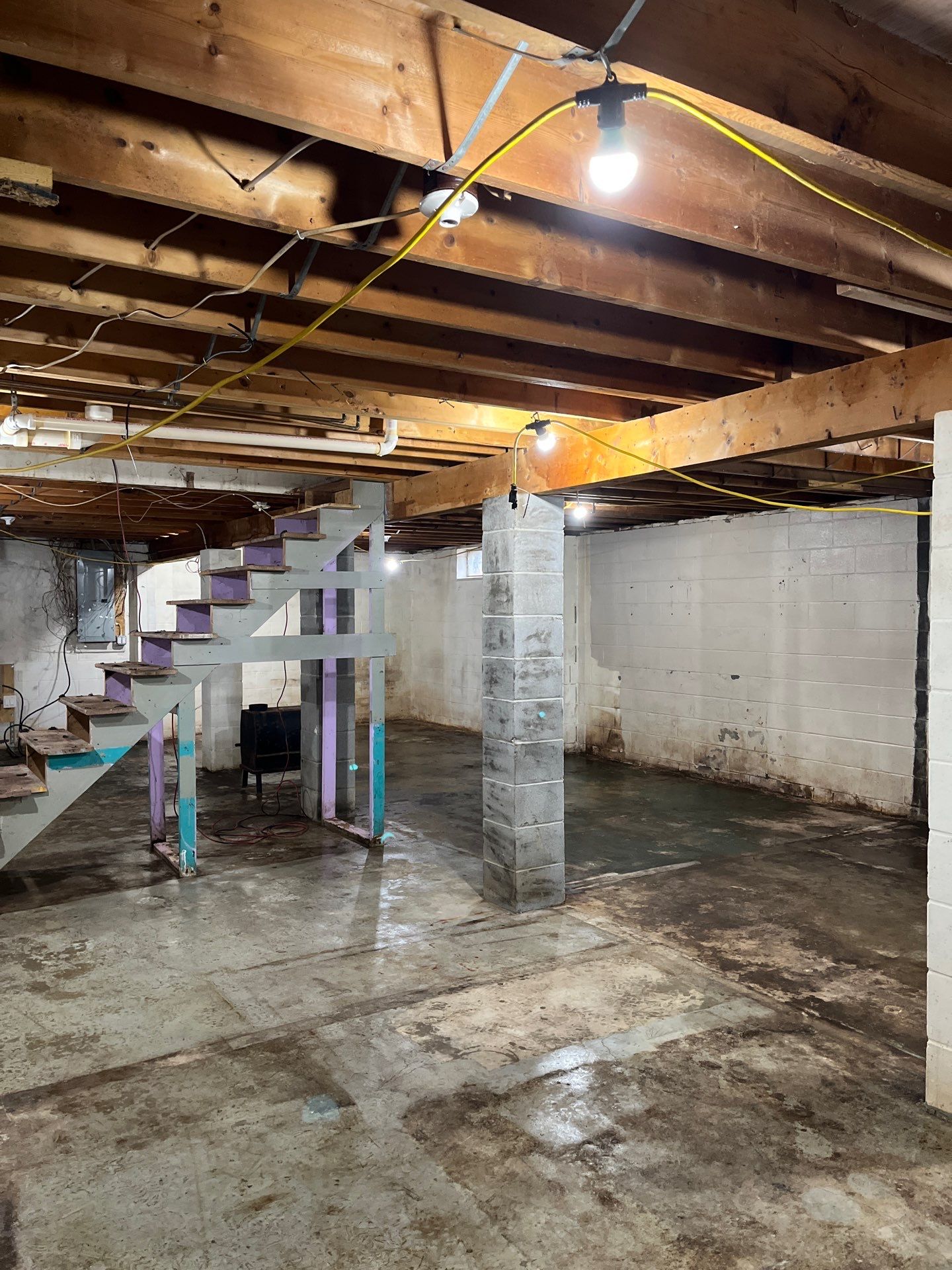
Ceiling structures showed varying degrees of damage, with complete burn-through in the kitchen area exposing roof framing and insulation. Wall assemblies exhibited fire damage, smoke staining, and heat-related deterioration. The distinctive turquoise and pink painted walls visible in the bedroom areas showed extensive smoke staining patterns, indicating how thoroughly combustion byproducts had penetrated the entire structure during the fire event.
Fire Damage Categories Requiring Restoration
Primary Fire Damage (Kitchen Area): Complete destruction of cabinetry, ceiling structure burn-through, compromised wall assemblies, total loss of appliances and fixtures—requiring complete restoration
Secondary Heat and Smoke Damage: Ceiling discoloration throughout structure, wall smoke staining, soot deposition on all surfaces, contents contamination requiring professional restoration services
Tertiary Odor Contamination: Smoke odor penetration into porous materials, HVAC system contamination, persistent combustion byproduct residues addressed through restoration protocols
Post-Fire Complications: Extensive rodent infestation, animal waste contamination, additional structural compromises from rodent activity complicating restoration. Many fire scenarios also involve water damage from firefighting efforts requiring integrated restoration approaches.
The Biohazard Challenge: Managing Rodent Infestation During Restoration
Scale of the Infestation
The rodent infestation at the Chambersburg restoration site was unprecedented in scale. Harrisburg Restoration crews ultimately removed over 100 rats from the structure during the restoration process. The rodents had established extensive colonies throughout the home, with particular concentrations in wall cavities, ceiling voids, and areas where fire damage had created entry points and nesting opportunities.
The infestation added layers of complexity to every restoration task. Contents inventory required crews to work in full protective equipment due to potential exposure to rodent waste, contaminated materials, and disease vectors. Structural demolition—a standard component of restoration—became unpredictable as rats emerged from wall cavities when crews removed damaged materials. The biohazard situation demanded constant vigilance and adaptive protocols throughout the project.
Why Simultaneous Restoration and Pest Removal Was Necessary
Traditional pest control services could not address the infestation prior to Harrisburg Restoration’s work for several critical reasons. The exceptional volume of contents in the home prevented exterminators from accessing areas where rodents had nested. Many rats had established colonies deep within wall cavities and structural voids that were only accessible through the controlled demolition required for restoration.
Additionally, the extent of fire damage had created numerous entry points and pathways throughout the structure. Simply treating accessible areas would not eliminate the infestation while structural compromises remained. Harrisburg Restoration’s approach integrated rodent removal with each phase of work—during contents pack-out, throughout controlled demolition, and as part of structural cleaning procedures.
Safety Protocols for Fire Damage Restoration with Biohazard Challenges
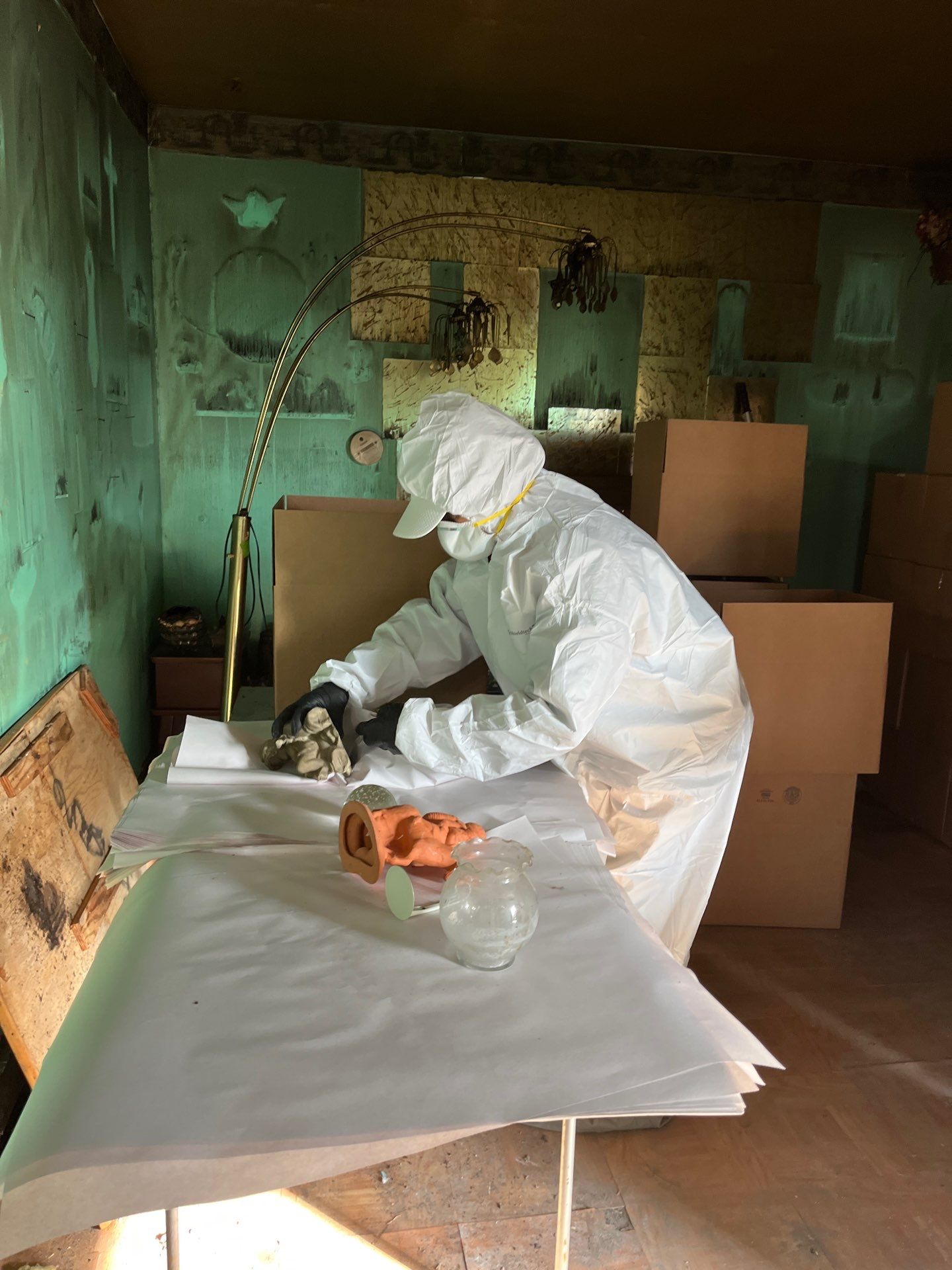
Managing the simultaneous challenges of fire damage restoration and active rodent infestation required comprehensive safety protocols. Harrisburg Restoration crews worked in full protective equipment including respirators, protective suits, gloves, and eye protection throughout the project. The company implemented strict hygiene procedures, designated contamination zones, and systematic decontamination protocols for personnel and equipment.
Crews were trained to safely capture and remove rodents as they emerged during demolition work, while also addressing the accumulated waste, nesting materials, and contamination left by the infestation. This parallel management of structural restoration and biohazard remediation represents the type of complex, multi-faceted challenge that distinguishes comprehensive restoration services from standard fire cleanup operations. For property owners requiring emergency restoration services, understanding these complex protocols is essential when evaluating restoration contractors. Similar comprehensive expertise can be found through restoration specialists like Advanced DRI, who handle equally challenging multi-discipline restoration projects across the Mid-Atlantic region.
Three-Phase Fire Damage Restoration Process
Phase One: Comprehensive Contents Inventory and Pack-Out
Systematic Documentation Process
The contents pack-out phase for the Chambersburg restoration presented extraordinary logistical demands. Harrisburg Restoration crews implemented systematic inventory procedures to document thousands of items across multiple rooms—a critical first step in professional restoration. Every piece—from kitchen contents to bedroom furnishings, collectibles to clothing—required individual assessment for smoke damage, photographic documentation for insurance purposes, and careful handling to preserve salvageable items.
The volume of contents exceeded typical residential restoration scenarios by a significant margin. Crews worked room by room, creating detailed inventories while simultaneously managing the challenge of rodent activity among stored belongings. Protective equipment was mandatory throughout this phase due to potential contamination from both fire residues and rodent waste.
Contents Assessment and Salvage Determination
Each item underwent careful evaluation to determine salvageability after smoke and soot exposure—a standard procedure in professional restoration. Porous materials like upholstered furniture, bedding, and clothing showed varying degrees of smoke penetration. Hard-surface items including kitchenware, decorative objects, and furniture pieces were assessed for cleaning potential. The assessment process had to account for both visible fire damage and the pervasive smoke odor that had penetrated throughout the structure.
Harrisburg Restoration’s crews packed salvageable contents using professional pack-out procedures, protecting items from additional damage during transportation and storage. Non-salvageable materials were documented and removed from the site following proper disposal protocols. The contents phase required multiple crews working over extended periods to complete the comprehensive inventory and removal necessary before structural demolition could commence.
Working Around Active Rodent Activity
The contents pack-out phase required crews to work defensively around active rodent presence. Rats had nested among stored belongings, creating contamination concerns for every item handled. Crews encountered rodents during contents removal, requiring careful protocols to protect both personnel and remaining contents from cross-contamination. This parallel management of contents inventory and biohazard conditions added significant time and complexity to what would normally be a straightforward, albeit large-scale, pack-out operation.
Phase Two: Controlled Demolition in Fire Damage Restoration
Extent of Structural Demolition Required
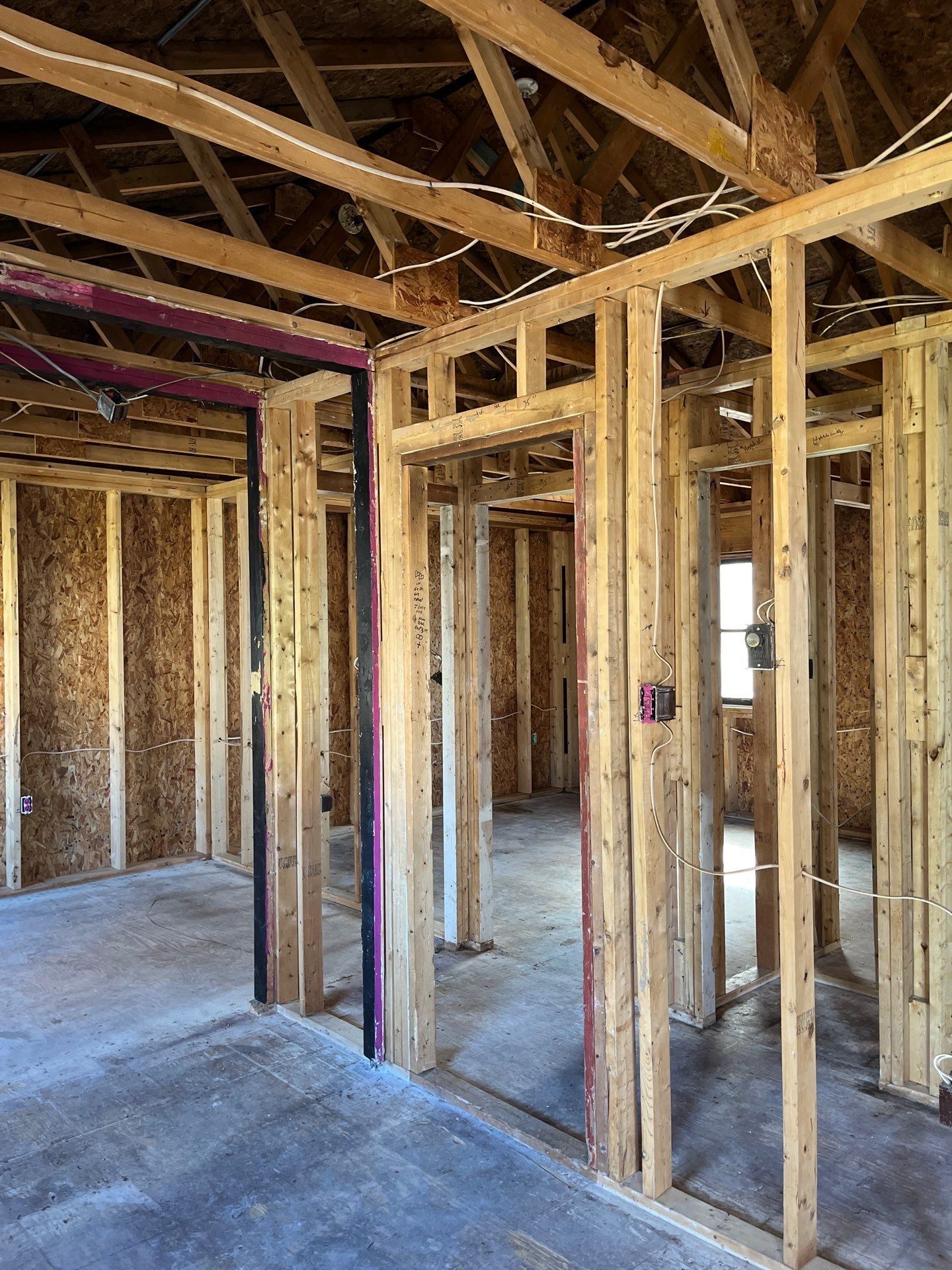
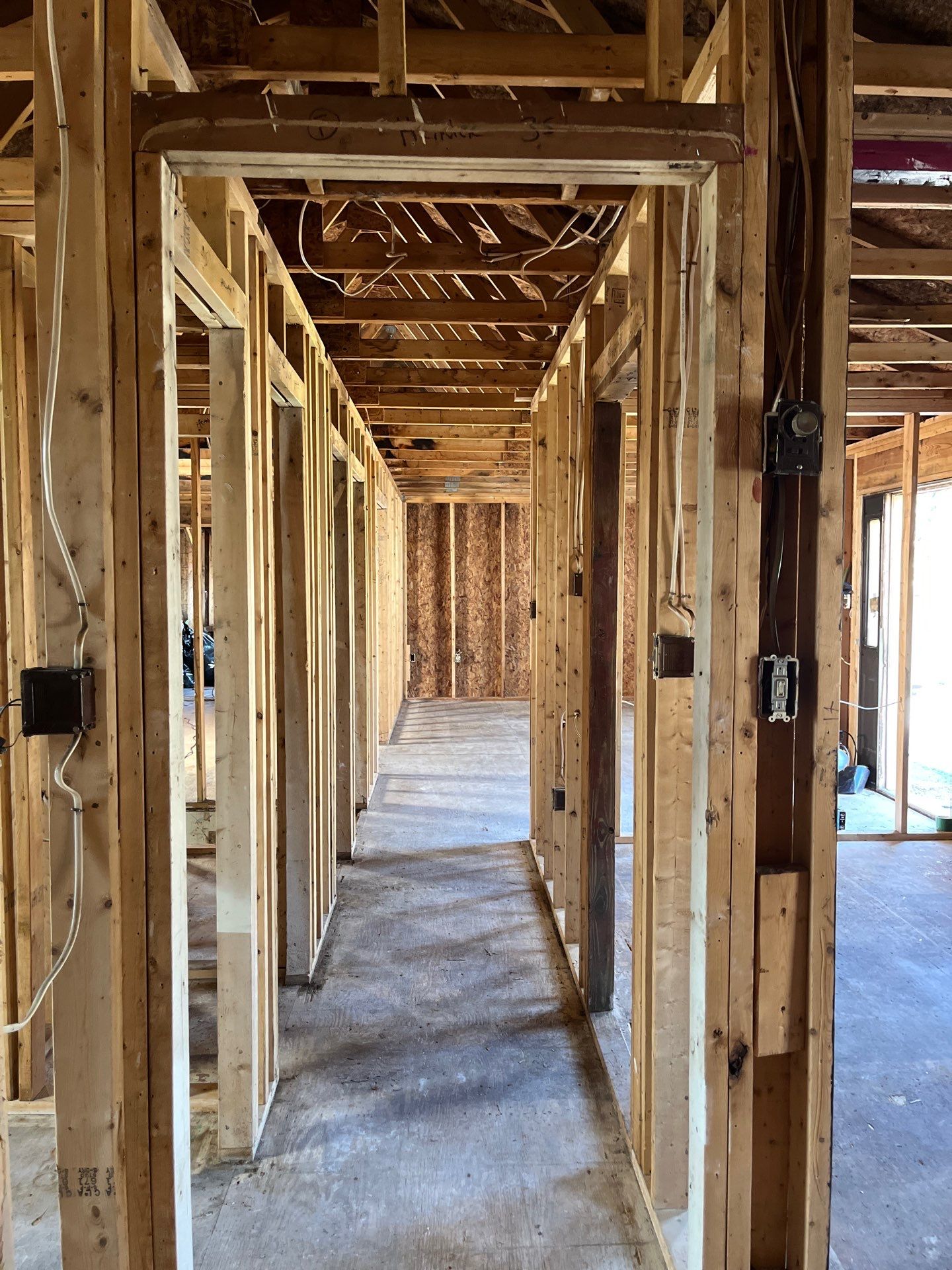
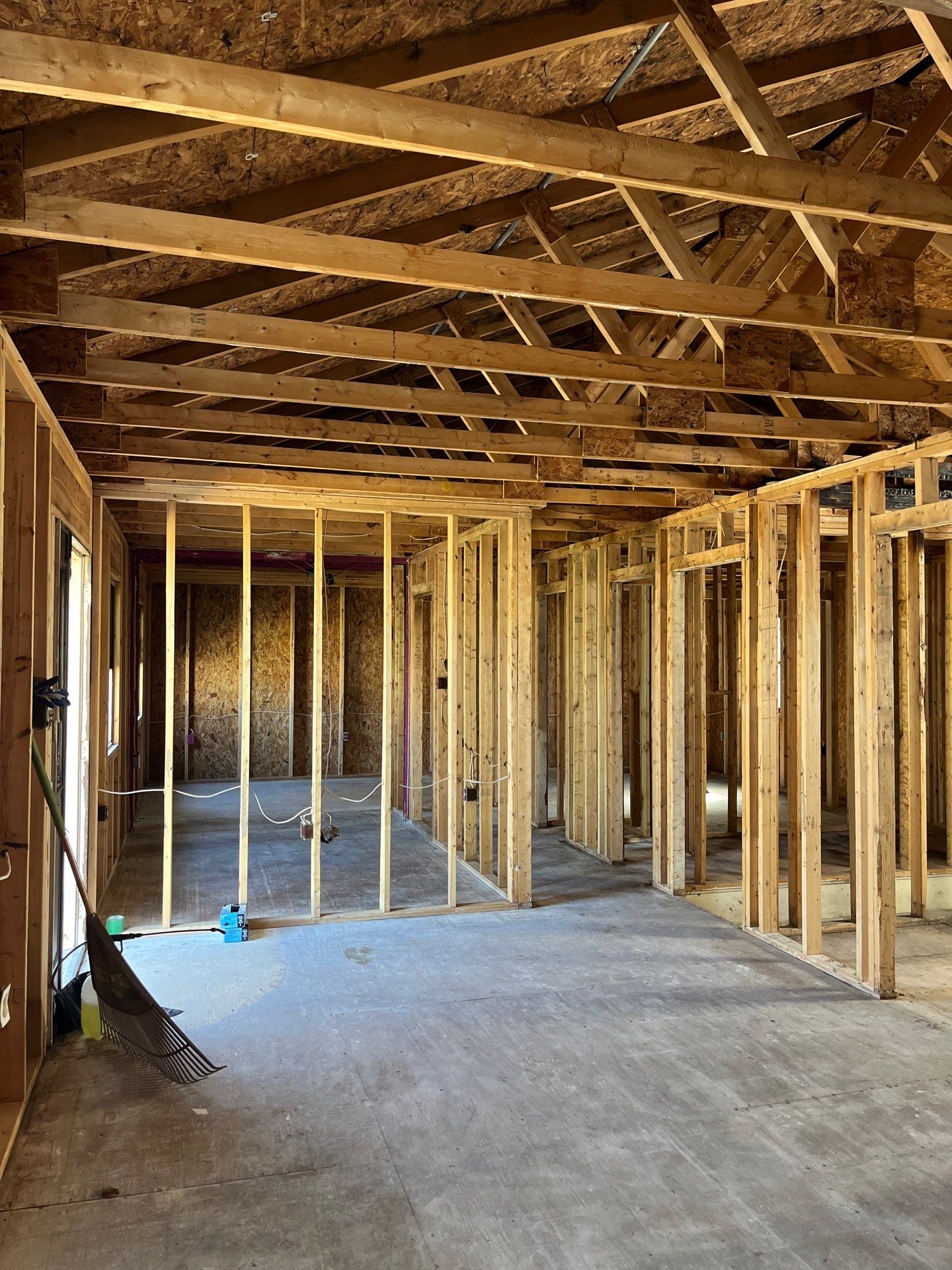
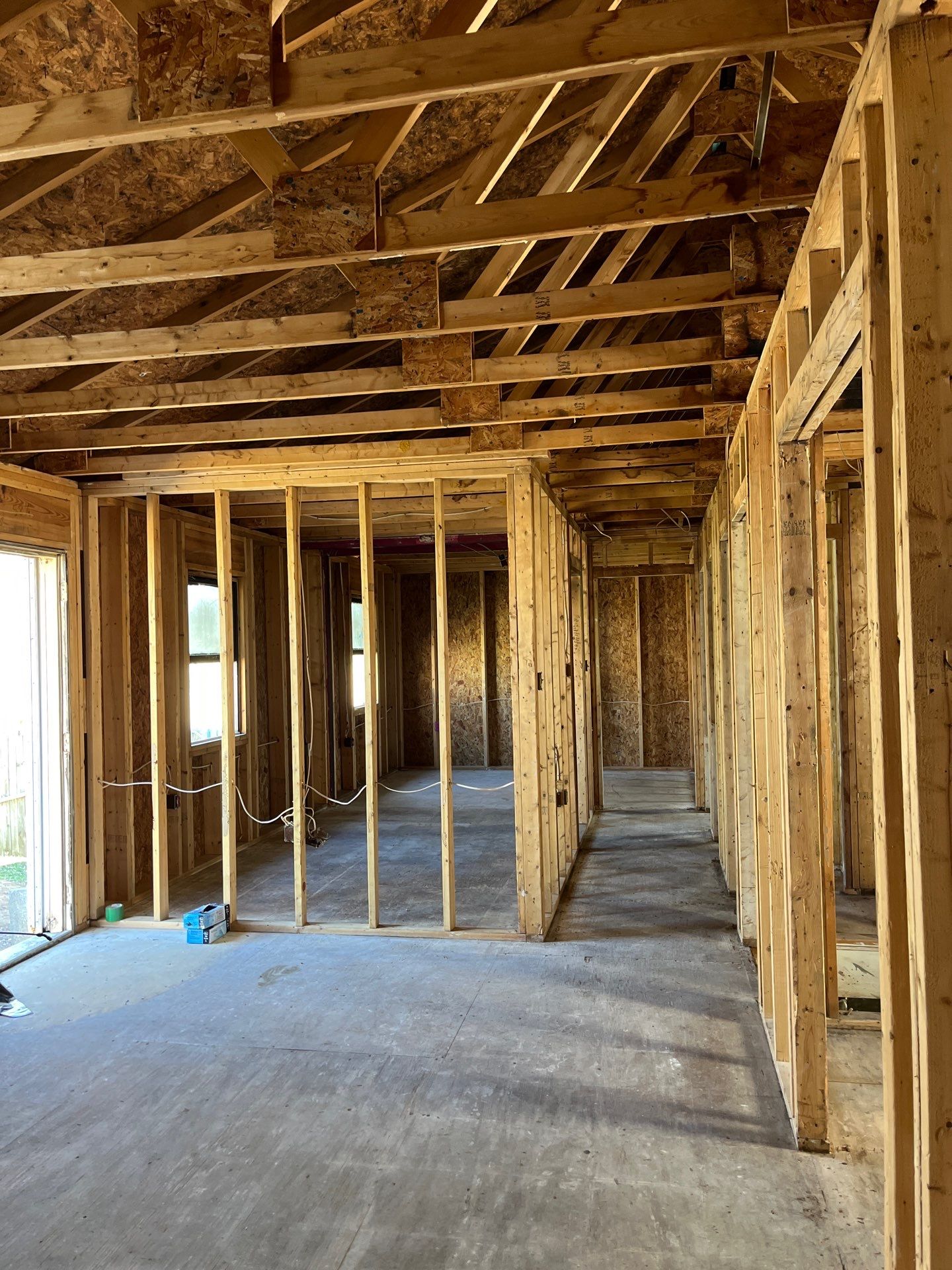
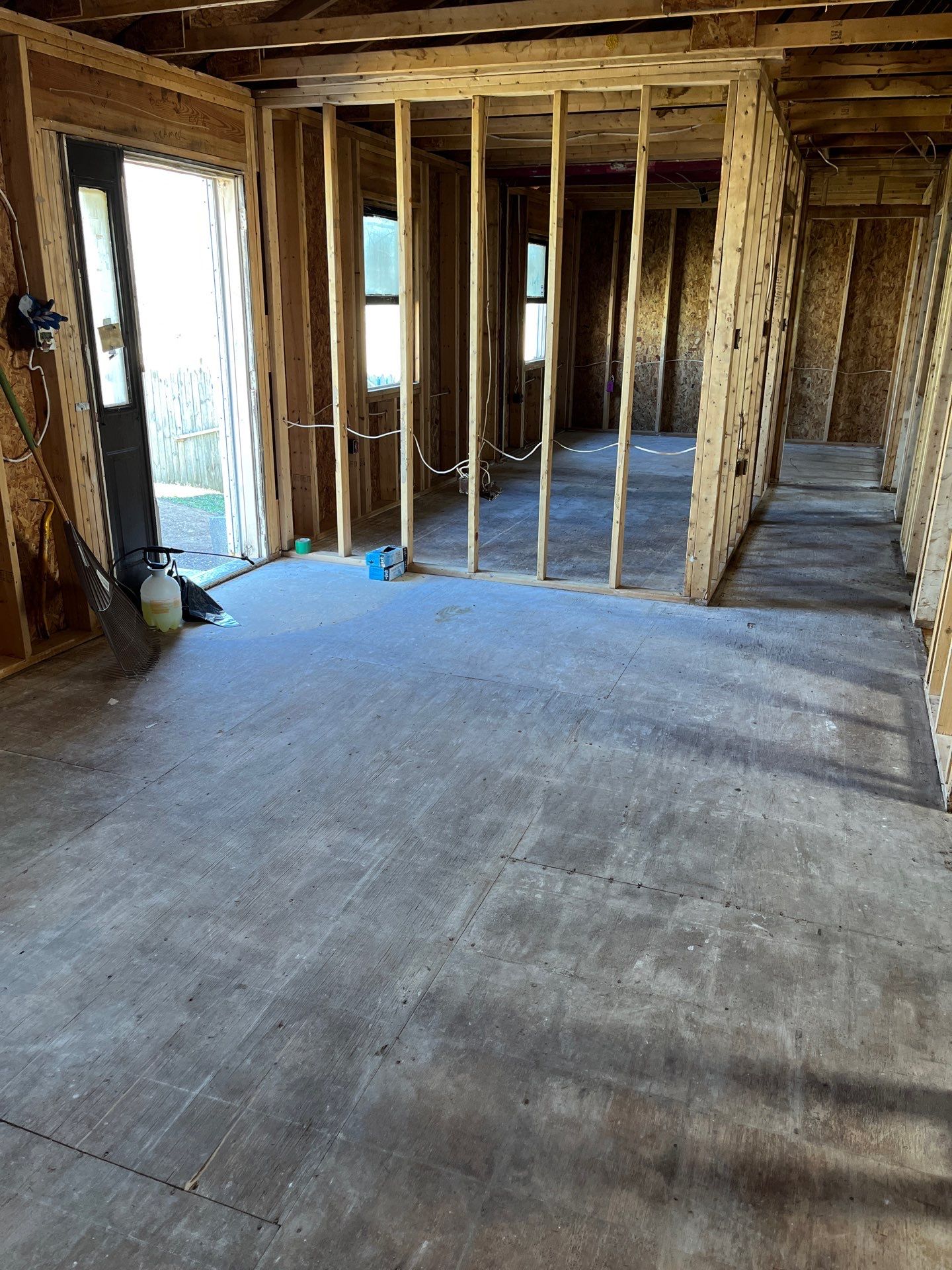
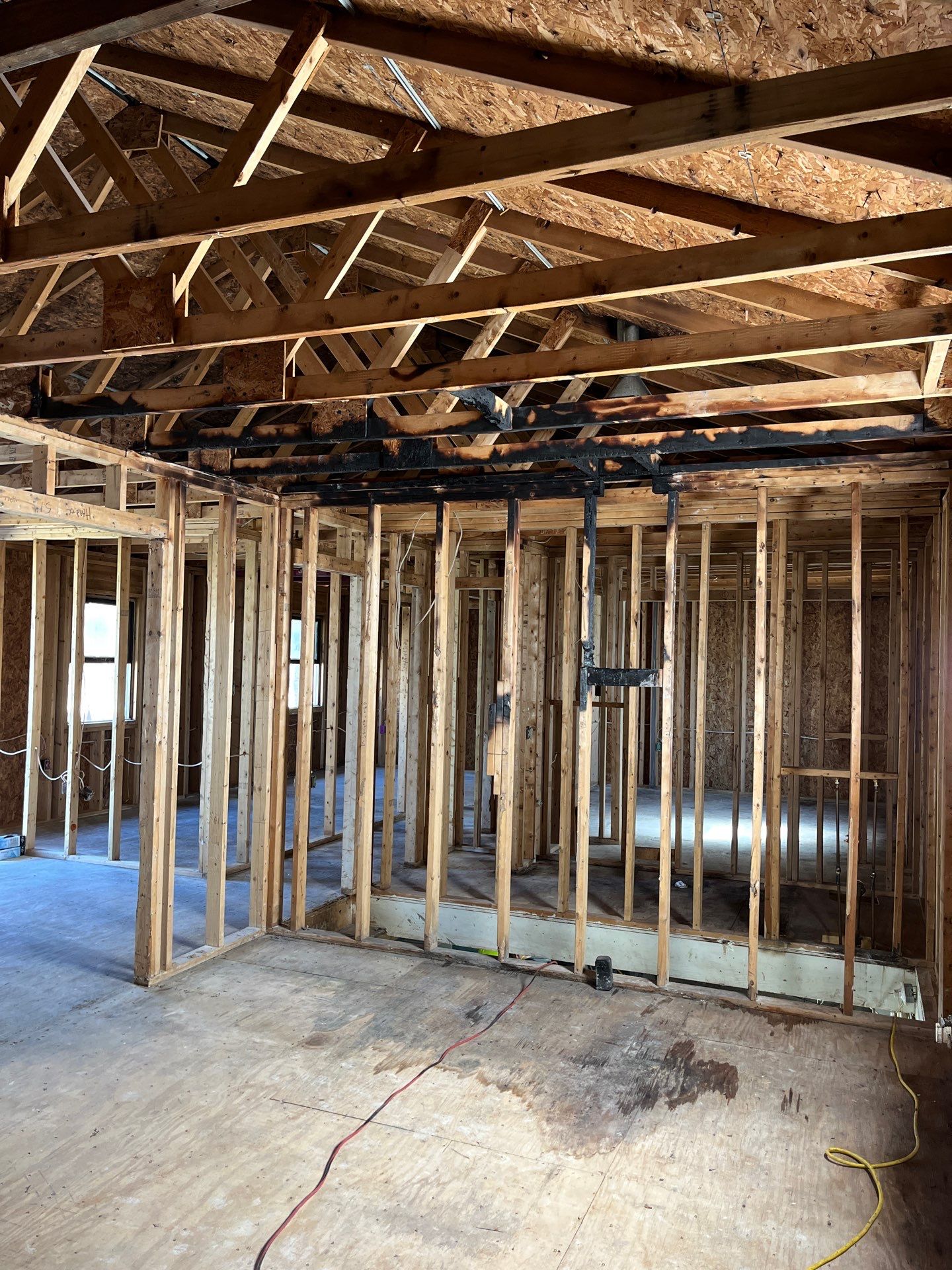
Once contents were removed, Harrisburg Restoration crews began controlled demolition of fire-damaged building materials throughout the Chambersburg residence—a standard but critical component of comprehensive restoration. The kitchen area required complete demolition—removal of all cabinetry, ceiling structures, wall assemblies, flooring, and compromised framing elements. Fire damage extended into ceiling cavities where flames had burned through structural layers, requiring extensive material removal to expose clean, undamaged framing.
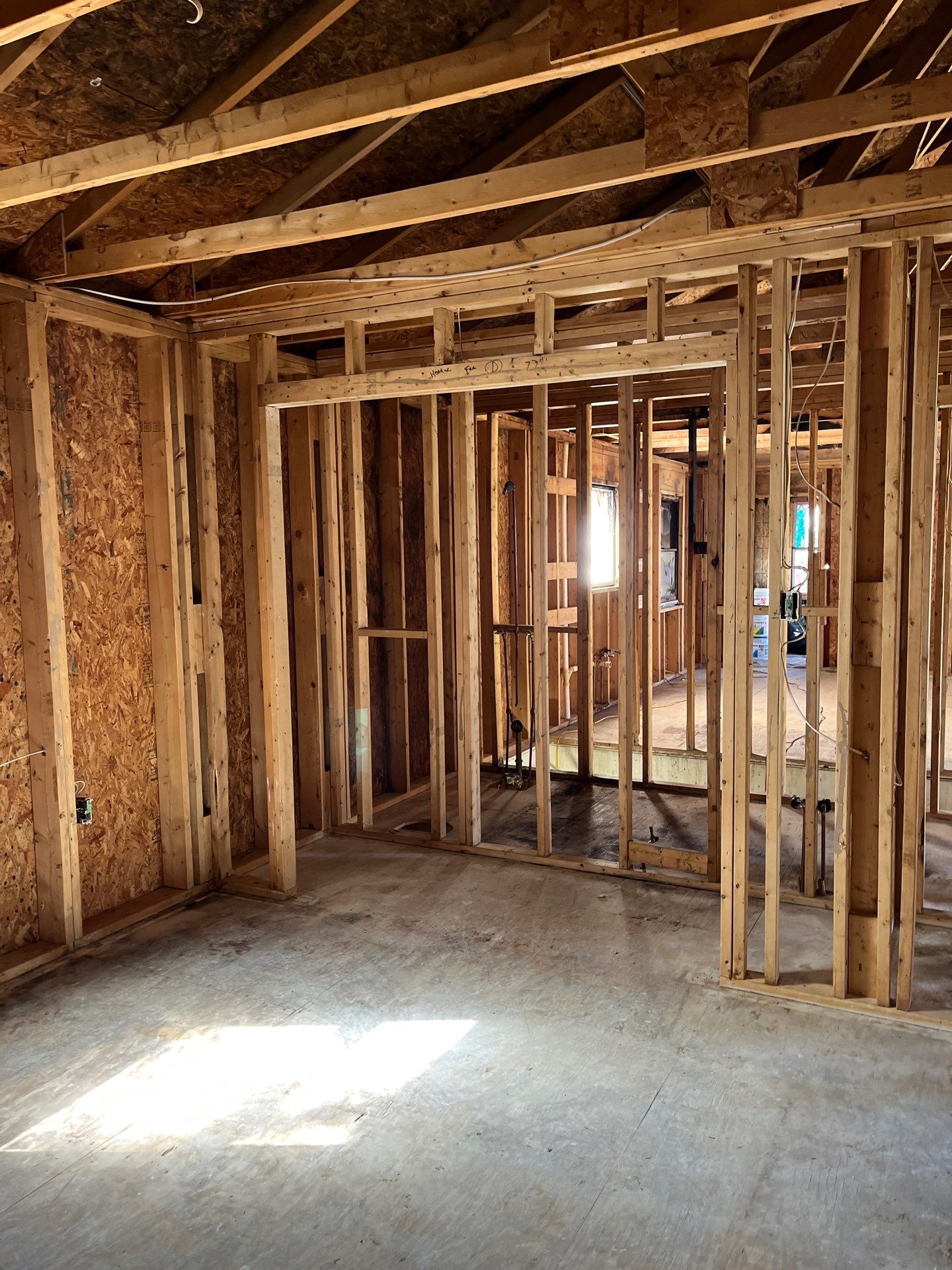
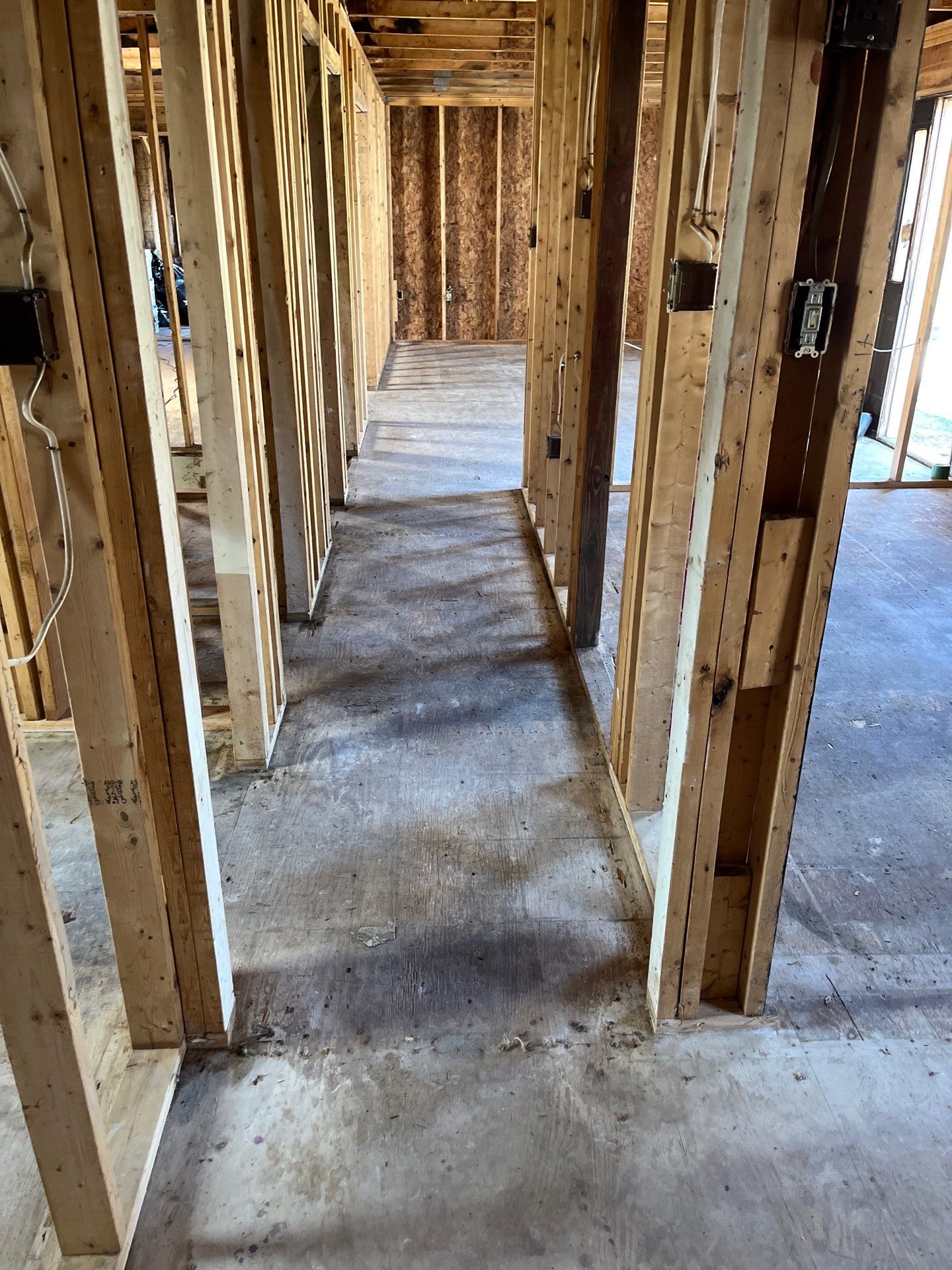
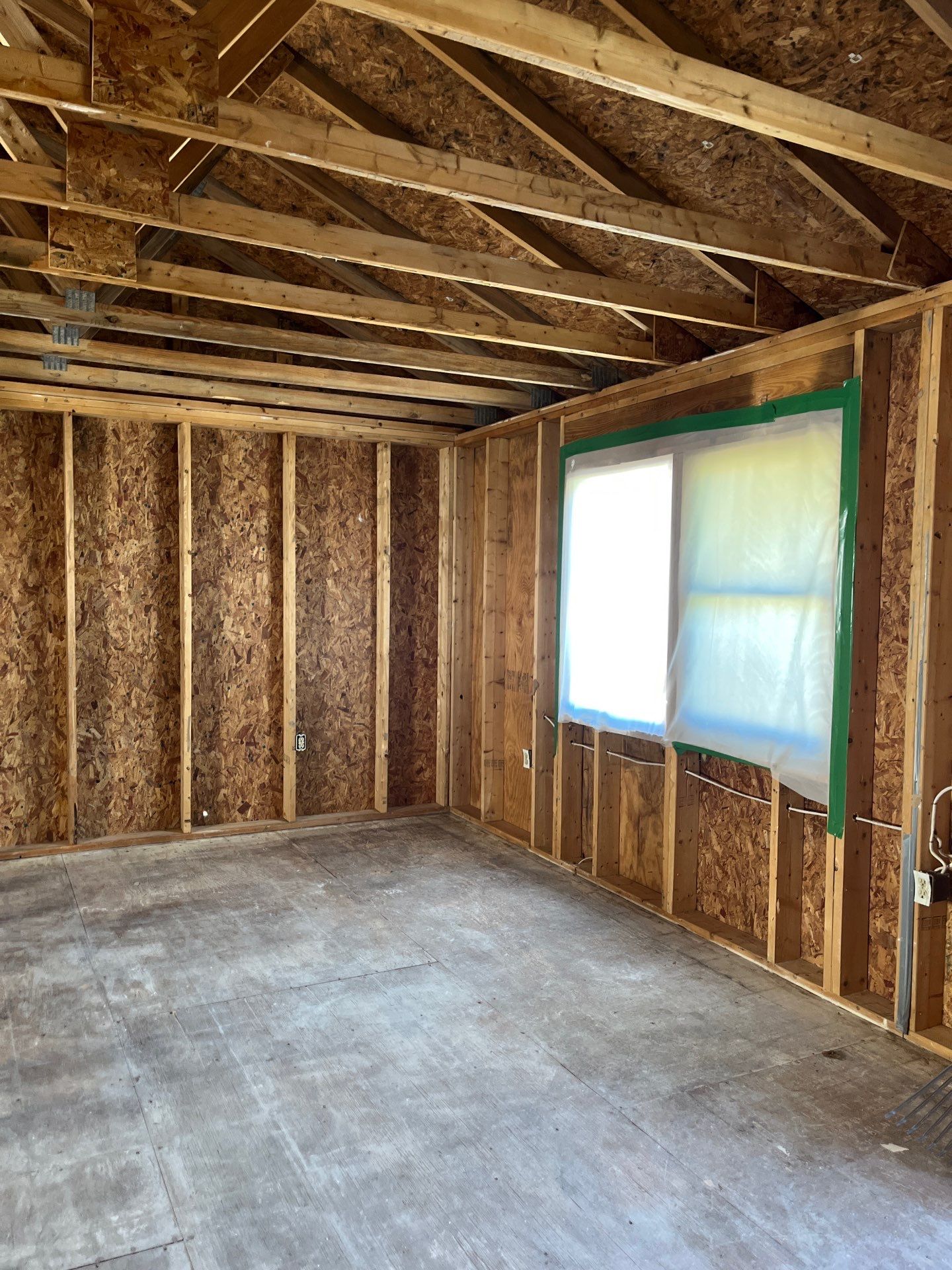
Beyond the primary fire zone, smoke-damaged materials throughout the home required removal as part of the restoration process. Drywall showing heavy soot staining came down to expose wall framing. Ceiling materials with smoke penetration were removed. Flooring that had absorbed smoke contamination or showed fire damage was torn out. The demolition scope encompassed virtually every finished surface in the home, reducing the structure to its basic framing before cleaning and reconstruction could begin.
The Unexpected Challenge: Rodents Within the Walls
The demolition phase revealed the true extent of the rodent infestation. As crews removed drywall and opened wall cavities, rats emerged from nesting sites hidden within the structure. Many of the 100+ rodents ultimately removed from the property were discovered during this phase, living in wall voids, ceiling spaces, and structural cavities that had been inaccessible during initial assessment.
Each section of wall removal became unpredictable during restoration. Crews had to work cautiously, prepared for rodents to emerge as materials came down. The company implemented capture protocols to safely remove rats as they were exposed, while maintaining focus on the primary demolition objectives. This simultaneous management of structural demolition and ongoing rodent extraction required experienced crews capable of adapting to constantly changing conditions. Hidden wall cavity contamination can also lead to mold growth requiring professional remediation, making thorough demolition and inspection critical in fire restoration projects.
Demolition Methodology and Safety Protocols
Harrisburg Restoration’s controlled demolition procedures for this Chambersburg project followed systematic protocols designed to safely remove damaged materials while preserving structural integrity. Crews worked from top to bottom, removing ceiling materials before wall assemblies, then flooring. This approach prevented debris accumulation from interfering with ongoing work and allowed systematic inspection of framing elements for hidden fire damage.
Throughout demolition, crews maintained strict safety protocols addressing both fire damage hazards and biohazard concerns. Respiratory protection guarded against particulates from burnt materials and potential pathogens from rodent contamination. The work area was contained to prevent contamination spread, and all removed materials were properly disposed of following protocols for both fire-damaged and biohazard waste.
Materials Removed During Fire Damage Restoration Demolition
Kitchen Zone: Complete cabinet assemblies, all ceiling structures including drywall and framing, fire-damaged wall assemblies, compromised flooring, destroyed appliances and fixtures
Living Areas: Smoke-damaged drywall throughout structure, ceiling materials with soot penetration, contaminated insulation, affected flooring materials
Bedroom Areas: Wall coverings showing smoke damage, ceiling materials, contaminated flooring, window treatments and fixtures
Bathroom Spaces: Smoke-affected surfaces, water-damaged materials from firefighting efforts, contaminated fixtures
Structural Voids: Rodent nesting materials, contaminated insulation, accumulated waste from infestation
Phase Three: Structural Cleaning and Preparation for Reconstruction
Cleaning Fire-Damaged Framing
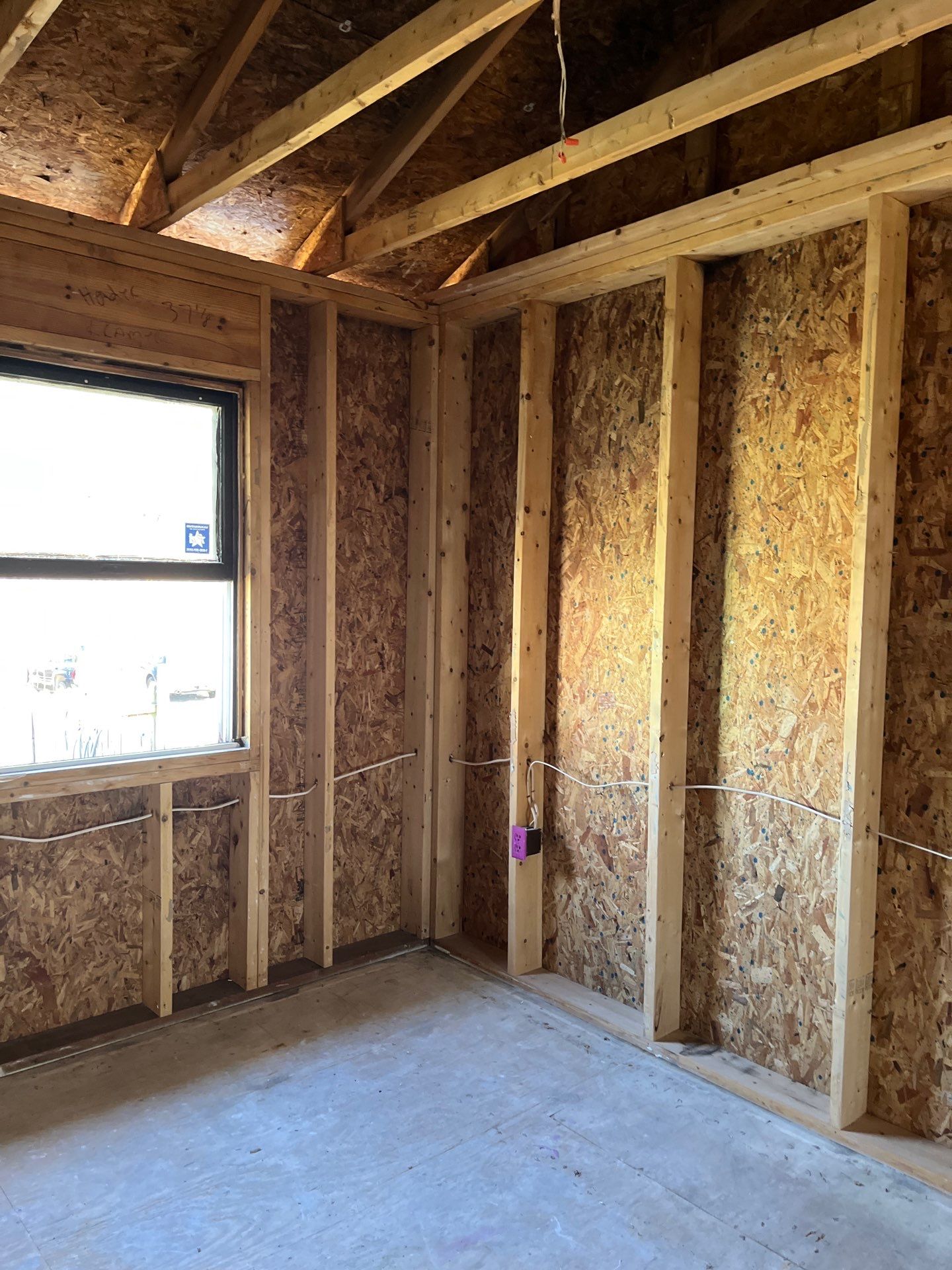
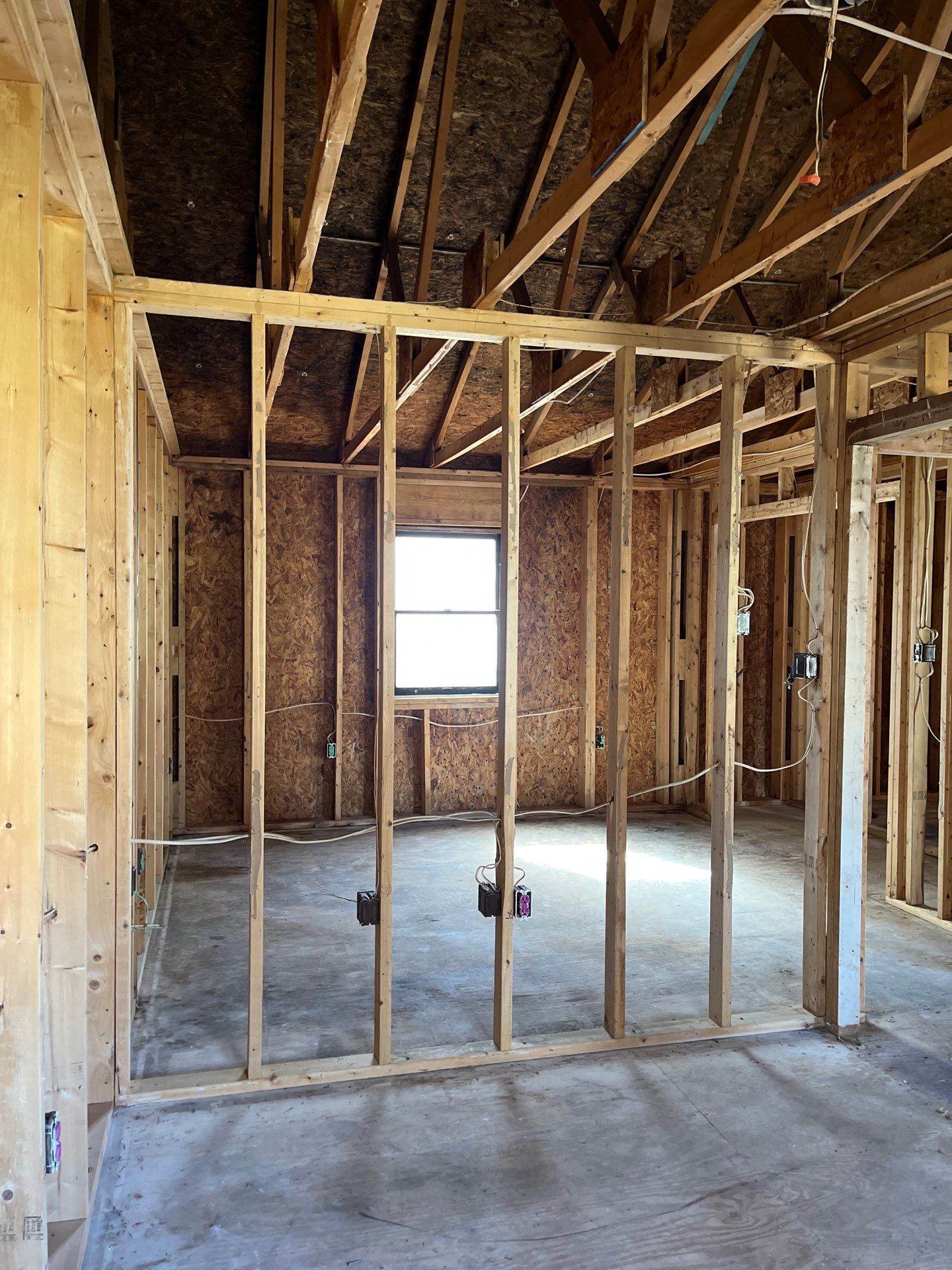
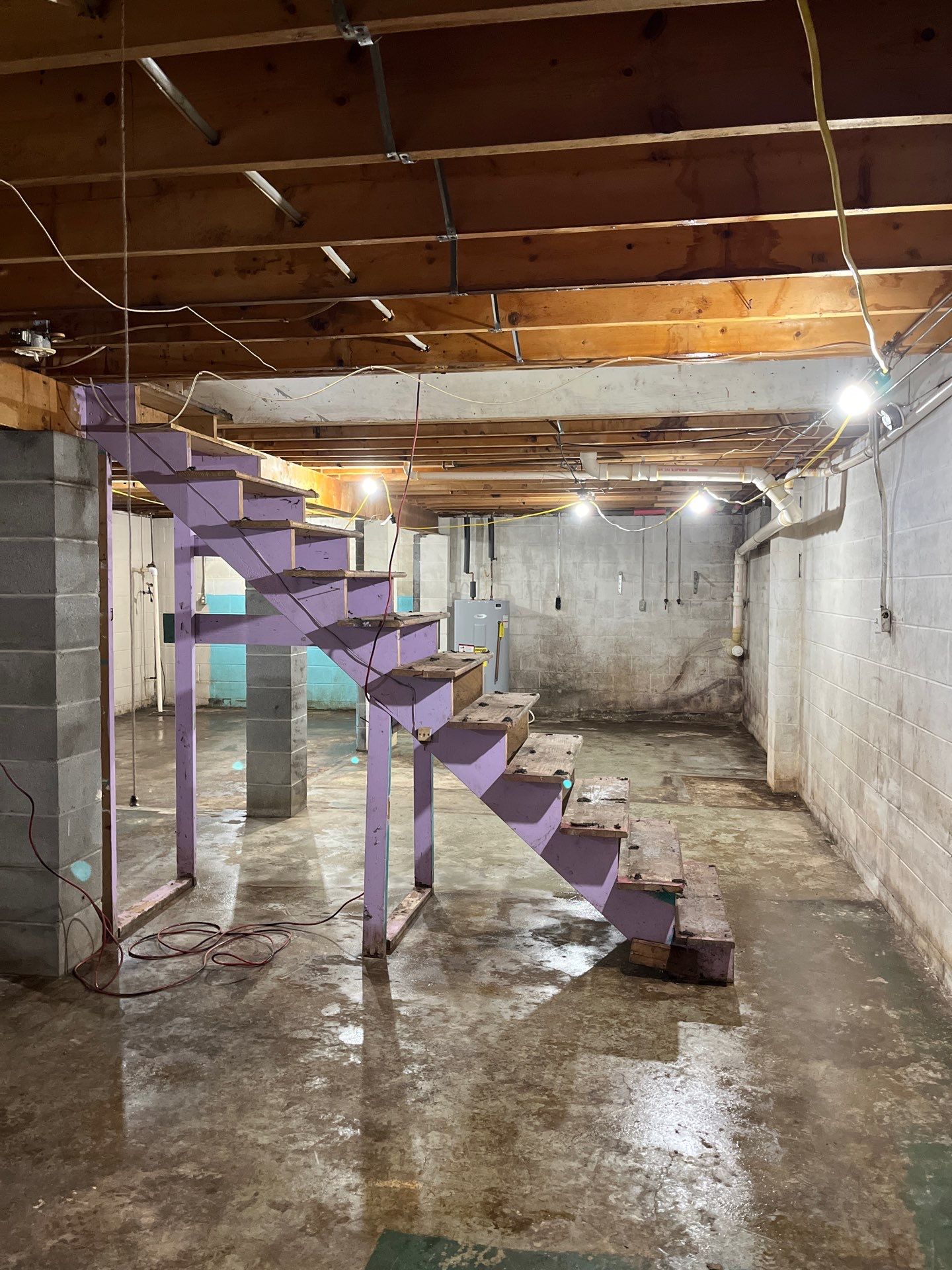
With all damaged materials removed and the structure reduced to its framing, Harrisburg Restoration crews began comprehensive cleaning of the remaining structural elements—the final critical phase before reconstruction. Exposed framing members required thorough cleaning to remove smoke residues, soot deposits, and fire damage byproducts. Wood framing showing heat damage or charring was assessed for structural integrity as part of professional restoration—some members required replacement while others could be cleaned and retained.
The cleaning process addressed both visible contamination and pervasive smoke odor that had penetrated into wood framing. Crews used specialized cleaning agents designed for fire restoration, working systematically through the structure to ensure all surfaces were properly decontaminated. This thorough cleaning was essential to prevent smoke odor from returning after reconstruction was complete.
Biohazard Remediation in Fire Damage Restoration
Structural cleaning during restoration also had to address contamination from the extensive rodent infestation. Wall cavities where rats had nested required thorough cleaning and disinfection beyond standard protocols. Accumulated waste, nesting materials, and biological contamination throughout the structure demanded comprehensive remediation. Harrisburg Restoration crews worked to eliminate all traces of the infestation, ensuring the cleaned structure would be safe for reconstruction crews and, ultimately, for the homeowners’ return.
This dual cleaning objective—addressing both fire damage residues and biohazard contamination—required careful attention to every surface and void within the structure. The goal was to deliver a completely clean, decontaminated structural frame ready for the reconstruction phase that would restore the Chambersburg residence to pre-loss condition.
Final Inspection and Reconstruction Preparation
Following completion of all demolition and cleaning work, the structure underwent final inspection to verify readiness for reconstruction. All fire-damaged materials had been removed. Structural framing was cleaned, with compromised members replaced as needed. The entire structure had been decontaminated of both fire residues and biohazard materials. The extensive rodent problem had been completely resolved through the systematic approach integrated with restoration work.
The cleaned structure revealed the comprehensive nature of the work required. Nearly every surface in the home had been removed down to framing. The project that began with fire damage, was complicated by unprecedented rodent infestation, and required management of contents far exceeding typical residential volumes was now positioned for the reconstruction phase that would transform the gutted structure back into a habitable home.
Fire Damage Restoration Project Complexity Analysis
Fire Damage Restoration Challenges
Biohazard Complications
Integrated Fire Damage Restoration Solution Requirements
Technical Expertise: What Makes Professional Fire Damage Restoration Successful
Comprehensive Project Management
The Chambersburg restoration demanded project management capabilities far beyond standard residential fire cleanup. Harrisburg Restoration coordinated multiple specialized crews across three distinct phases, managed complex logistics for contents removal and storage, adapted protocols in real-time as the rodent infestation scope became clear, and maintained safety standards addressing both fire damage hazards and biohazard concerns simultaneously.
Successful completion required experienced leadership capable of making strategic decisions as conditions evolved. When the extent of the rodent problem became apparent, Harrisburg Restoration immediately adjusted safety protocols, equipment requirements, and timeline projections. This adaptive project management—responding to unprecedented challenges while maintaining focus on core restoration objectives—exemplifies the expertise that differentiates comprehensive restoration services from basic fire cleanup operations.
Multi-Discipline Fire Damage Restoration Capabilities
This project required Harrisburg Restoration to demonstrate proficiency across multiple restoration disciplines. Fire restoration expertise guided the demolition and cleaning phases. Contents management specialists handled the extensive inventory and pack-out operations. Biohazard remediation protocols addressed the rodent contamination. Structural assessment skills ensured compromised framing members were identified and addressed. The project’s success depended on integrated expertise spanning the full spectrum of restoration services.
Safety-First Culture in Complex Environments
Throughout the Chambersburg project, Harrisburg Restoration maintained unwavering commitment to crew safety despite constantly evolving challenges. Full protective equipment, strict hygiene protocols, systematic decontamination procedures, and continuous safety monitoring protected personnel working in an environment contaminated by both fire residues and biological hazards. This safety-first approach to restoration, even when it meant slower progress or additional equipment costs, reflects the company’s core values and professional standards.
Key Takeaways: Lessons from Complex Fire Damage Restoration
Investigation Delays Can Create Secondary Problems: The extended period between fire occurrence and restoration clearance allowed a severe rodent infestation to develop, dramatically complicating an already challenging project. Property owners facing fire damage should work with restoration professionals and insurance adjusters to minimize delays when possible.
Contents Volume Significantly Impacts Restoration Timeline: Homes with substantially more belongings than typical require extended time for proper inventory, assessment, and pack-out. The contents phase of this Chambersburg project consumed significant resources before structural work could even begin.
Some Challenges Require Integrated Solutions: The rodent infestation could not be addressed through standard pest control before restoration work began. Harrisburg Restoration’s ability to manage rodent removal simultaneously with contents pack-out and demolition was essential to project completion.
Comprehensive Expertise Matters in Complex Scenarios: This project demanded expertise in fire restoration, contents management capabilities, biohazard remediation protocols, and structural assessment skills. Companies lacking experience across multiple restoration disciplines would struggle to manage such complexity effectively.
Thorough Cleaning Prevents Long-Term Problems: Despite the challenges and complications, Harrisburg Restoration maintained focus on comprehensive cleaning of all remaining structural elements. This thoroughness—addressing both fire residues and biohazard contamination—ensures the reconstructed home will be truly restored to pre-loss condition without lingering odors or contamination concerns.
Fire Damage Restoration Near Me: Understanding Service Coverage
Regional Coverage for South-Central Pennsylvania
Harrisburg Restoration’s strategic location in Pennsylvania’s capital city provides direct access to Franklin County, York County, Cumberland County, and surrounding south-central Pennsylvania regions. When property owners search for “fire damage restoration near me” in Franklin County and throughout the region, they benefit from working with professionals based in Harrisburg who understand local building codes, climate factors, and regional construction practices that impact restoration projects.
Fire restoration, particularly for projects involving extensive contents, complete structural demolition, and unexpected complications, often requires specialized expertise that goes beyond basic fire cleanup services. Harrisburg Restoration’s successful completion of this challenging Chambersburg project—managing it effectively despite unprecedented complications—demonstrates the value of working with professionals who have the experience and resources to handle truly difficult scenarios.
Why Property Owners Choose Specialized Expertise
The Chambersburg project illustrates several factors property owners should consider when selecting restoration services and searching for “fire damage restoration near me.” Not all companies have experience managing projects with exceptionally high contents volume. Many contractors lack protocols for handling biohazard situations that develop during restoration work. Some companies cannot coordinate the complex, multi-phase operations required for complete recovery.
Harrisburg Restoration’s successful completion of this challenging project reflects comprehensive capabilities developed through years of experience managing complex damage scenarios throughout south-central Pennsylvania. From the initial contents inventory through final structural cleaning, every phase demonstrated the expertise, adaptability, and commitment to thoroughness that defines professional restoration services.
Fire Damage Restoration Services Throughout South-Central Pennsylvania
Harrisburg Restoration provides comprehensive restoration services throughout Franklin County, Dauphin County, York County, Cumberland County, Adams County, and surrounding south-central Pennsylvania regions for projects requiring specialized expertise. When property owners search for “fire damage restoration near me” in these regions, they discover that Harrisburg Restoration’s experience spans residential and commercial fire damage scenarios, including structure fires with extensive smoke migration, kitchen fires requiring complete room reconstruction, electrical fires affecting multiple building systems, and complex projects complicated by secondary issues like water damage from firefighting efforts or post-fire structural problems.
Comprehensive Fire Damage Restoration Capabilities
Fire damage restoration encompasses far more than cleaning visible soot and removing burned materials. Professional restoration addresses smoke odor penetration into building materials, complete contents inventory and pack-out with insurance documentation, assessment of structural integrity after fire exposure, controlled demolition of damaged materials, thorough cleaning of remaining structures, and coordination with reconstruction contractors for complete property recovery.
The Chambersburg project demonstrates Harrisburg Restoration’s capacity to manage all phases of complex restoration, adapting to unexpected challenges while maintaining focus on delivering comprehensive results. This integrated approach—from initial emergency response through final preparation for reconstruction—ensures property owners receive complete services rather than fragmented solutions requiring coordination among multiple contractors. For more examples of complex restoration projects, see our restoration case studies.
When to Choose Specialized Fire Damage Restoration Services
Property owners facing fire damage should consider specialized expertise when projects involve extensive structural damage requiring complete demolition, high contents volume requiring systematic inventory and pack-out, smoke damage affecting entire structures rather than localized areas, complications from firefighting water damage or delayed restoration, or scenarios where standard contractors lack experience managing complex operations.
When searching for “fire damage restoration near me,” property owners should evaluate not just geographic proximity but comprehensive expertise. Harrisburg Restoration’s work in Chambersburg exemplifies the company’s commitment to taking on challenging projects that demand comprehensive expertise, adaptive problem-solving, and unwavering attention to safety and thoroughness throughout multi-phase operations. Learn more about our restoration team or contact us for emergency fire damage restoration services throughout south-central Pennsylvania.