Project at a Glance
Sq Ft Rebuilt
MC Before Enclosing
Residual Smoke Odor
Completed Ahead of Schedule
Executive Summary
After a heavy interior fire loss tore through a Lancaster, Pennsylvania home, our Central PA disaster recovery team carried the property from a hazardous, soot-blackened shell all the way to turn-key completion. The project spanned controlled demolition, deep smoke and odor remediation, full structural build-back, and finish work — roughly 1,800 square feet of heavily affected living space restored to pristine condition.
This was a true mitigation-through-reconstruction case: stabilize the structure, strip the fire-charred and water-damaged materials, neutralize penetrating soot and odor, then rebuild every wall, ceiling, floor, and fixture. The home was handed back fully restored, with zero residual smoke odor and every structural inspection passed — ahead of schedule.
Understanding the Incident
A Heavy Interior Fire Loss
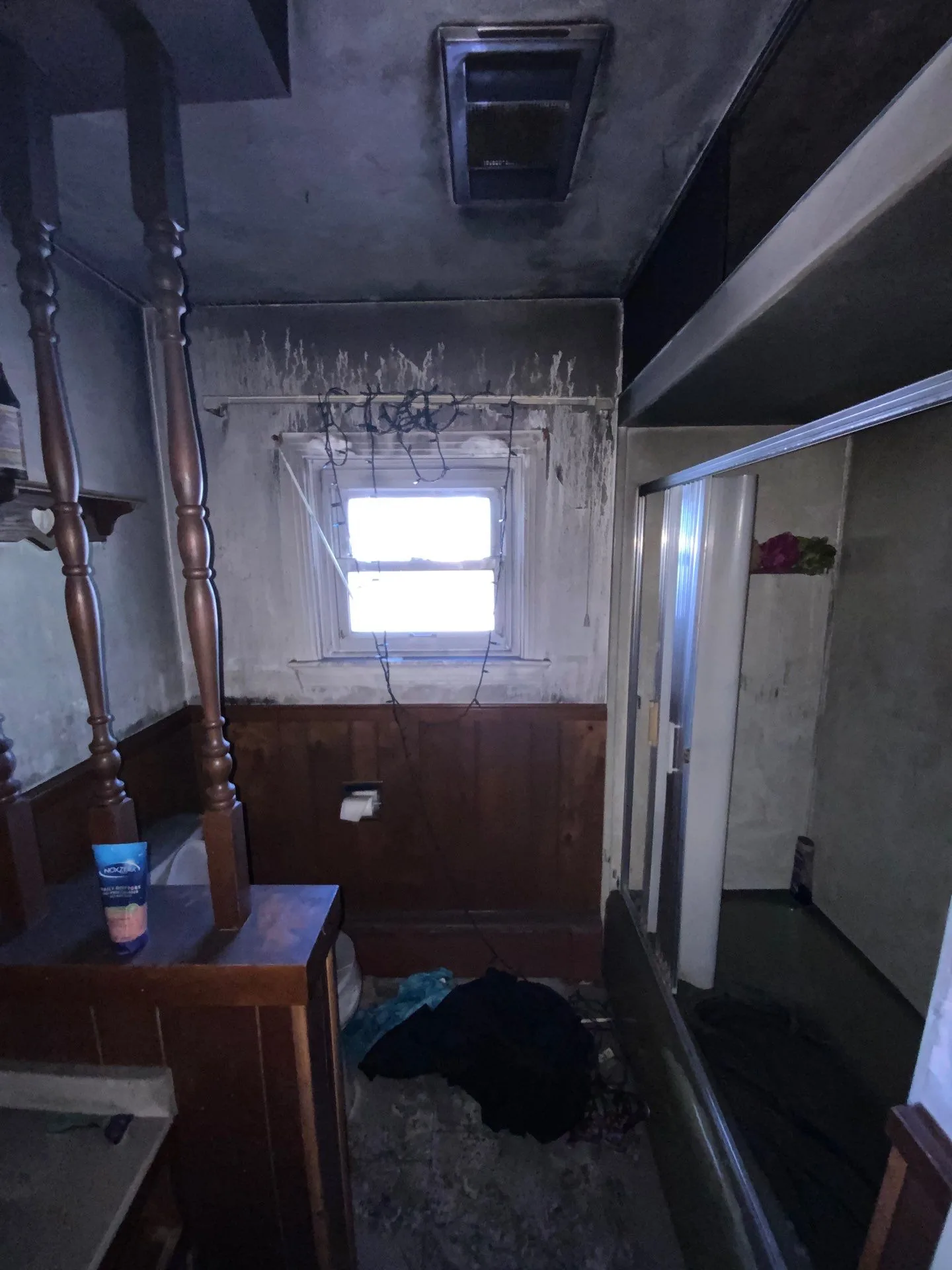
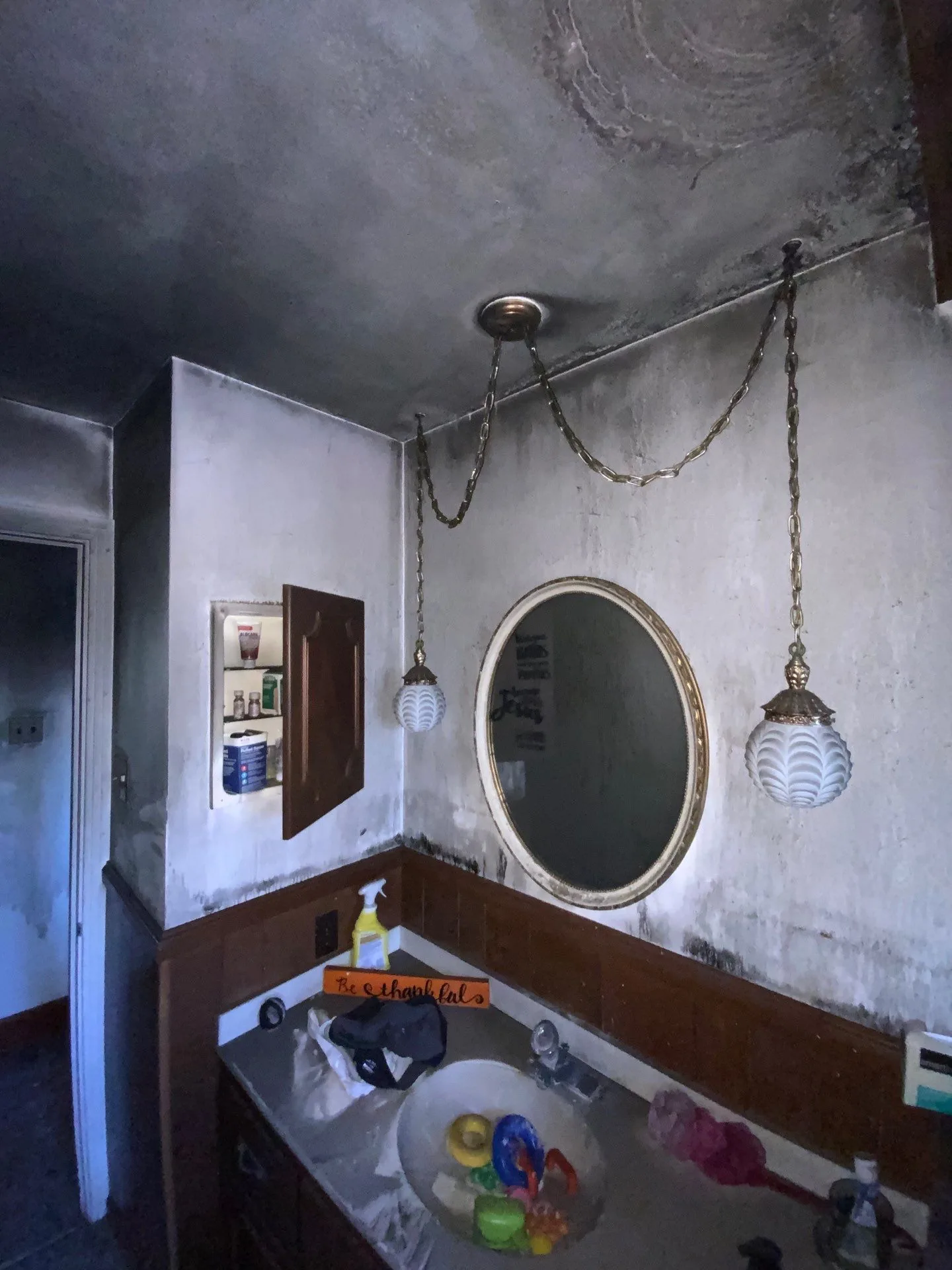
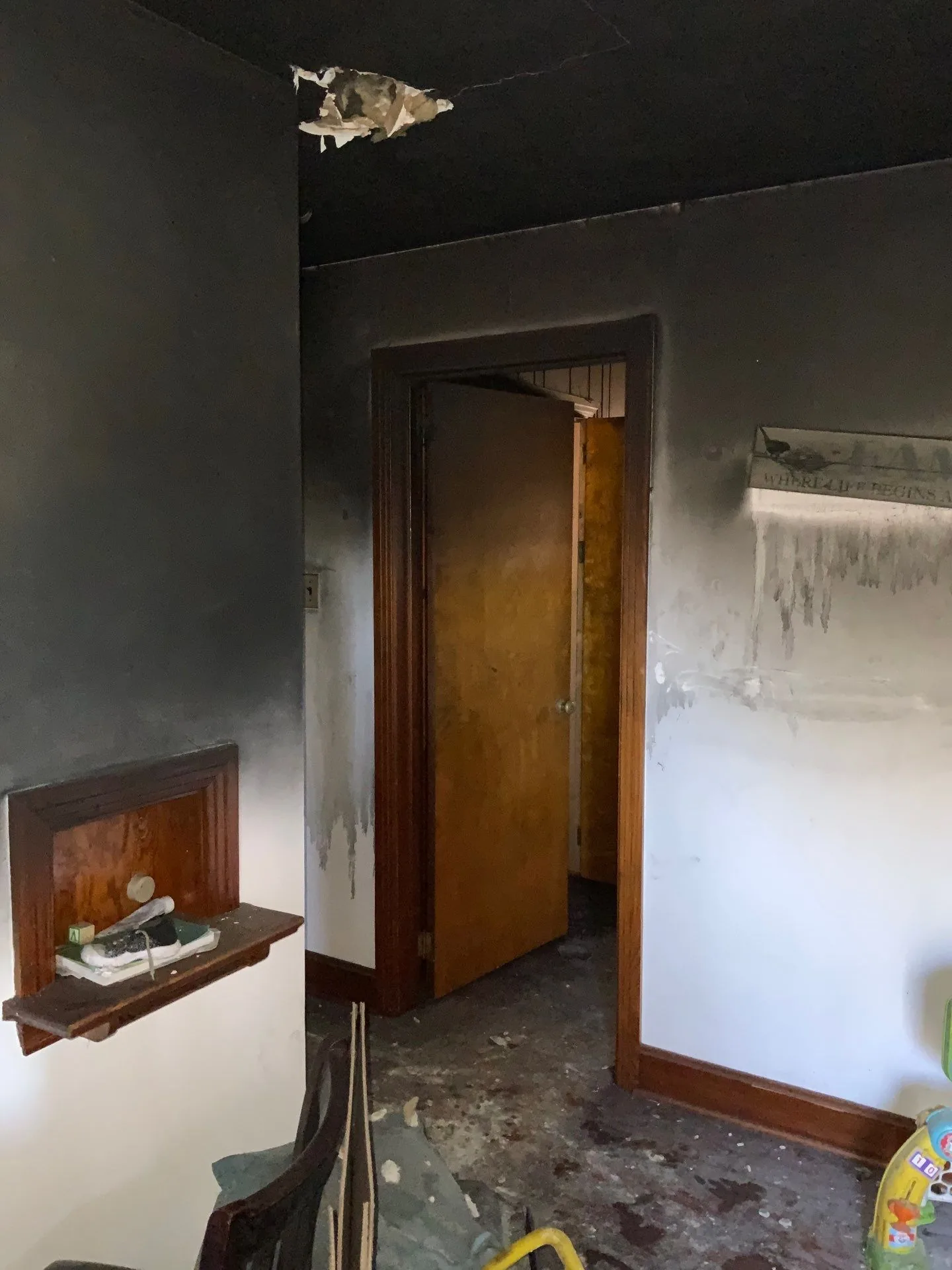
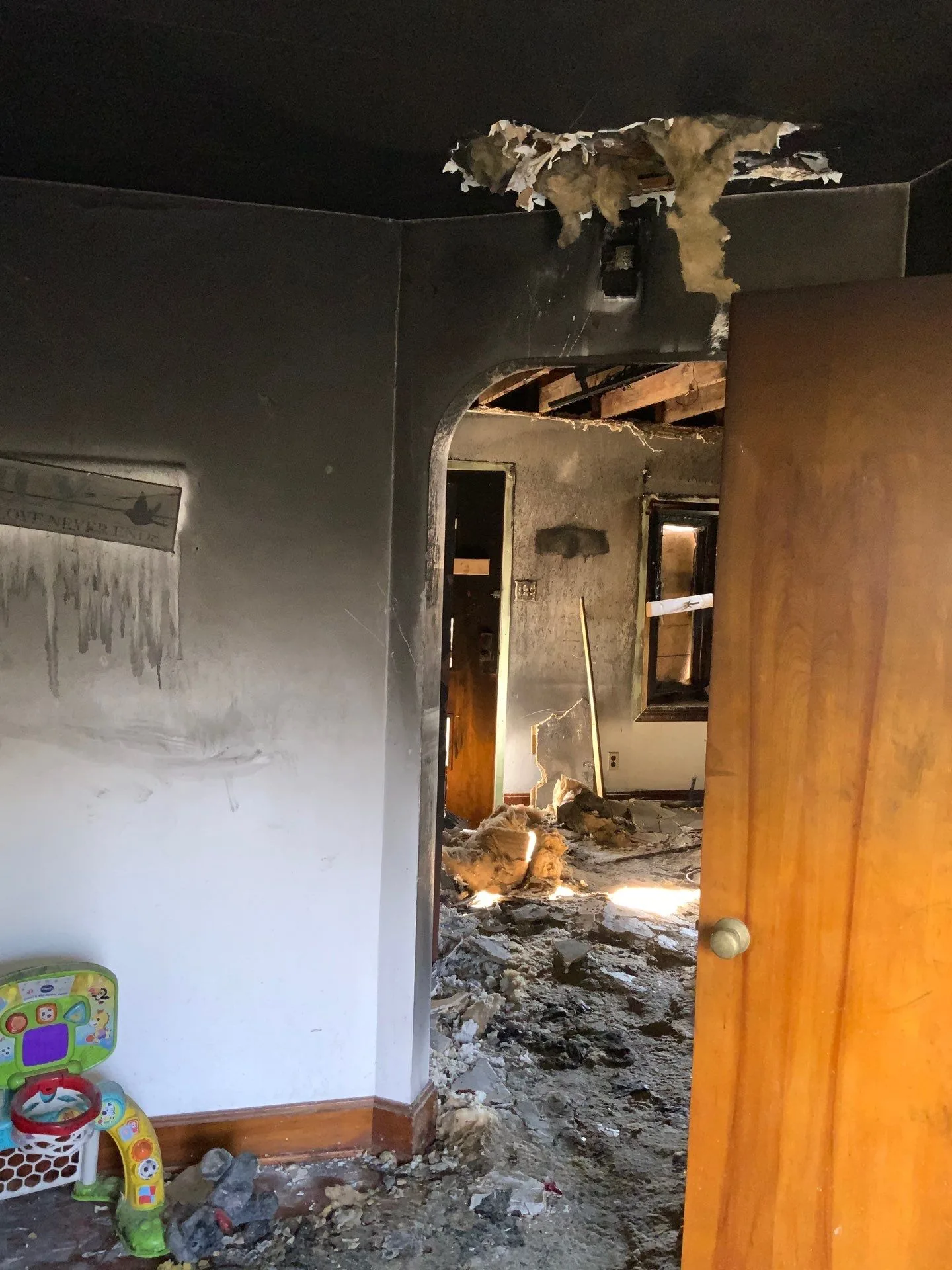
The fire caused severe, multi-layered damage. Flames breached the ceilings and burned into the upper attic framework, dropping charred insulation across the entire floor plan. Intense smoke drove soot deep into porous wood paneling and plaster walls, while firefighting water saturated plaster and finishes throughout the affected level.
Damage of this scale cannot be cleaned and painted over. Heavy smoke residue penetrates the substrate, and compromised framing must be evaluated and rebuilt before any new finishes are installed. Affected materials included fire-charred wood framing, burned drywall, compromised drop ceilings, and water-damaged plaster.
“With a fire like this, the visible char is only half the problem. Soot soaks into the wood and plaster, and if you seal it wrong, the odor bleeds right back through your fresh paint months later.”
Property Assessment and Scope of Damage
Technicians documented the loss room by room, separating salvageable structural masonry from materials that had to be removed. The ceiling breach required engineering evaluation of the exposed attic framing before any framing repairs could begin.
| Zone | Condition Found | Action Taken |
|---|---|---|
| Ceilings & attic framing | Fire-breached; framing exposed | Engineering evaluation; re-framing |
| Wood paneling & plaster | Heavy soot penetration | Mechanical scraping; shellac sealing |
| Drywall & drop ceilings | Burned / compromised | Controlled demolition & removal |
| Insulation | Burnt; spread across floor plan | Full removal & disposal |
| Salvageable masonry | Smoke residue | Cleaned, sealed, retained |
Response Strategy
The recovery followed a disciplined sequence: make the site safe, strip out everything compromised, eliminate soot and odor at the source, then rebuild back to a finished, livable home. Each phase had to be verified before the next could begin.
Stabilization Before Reconstruction
Because the fire breached the ceilings and exposed the upper attic framework, the team brought in engineering evaluations before committing to framing repairs. Only once the structure was confirmed sound did controlled demolition and structural stripping proceed — removing fire-charred wood framing, burned drywall, compromised drop ceilings, and water-damaged plaster.
Sealing Penetrating Soot & Odor
Smoke soot had fully penetrated the porous wood paneling and plaster. After detailed thermal fogging and mechanical scraping, every salvageable structural surface was sealed with specialized shellac-based primers to lock in residues and prevent bleed-through odors from ruining the final paint.
Equipment Deployment Analysis
A fire-and-rebuild project of this scope demands two distinct toolkits: remediation equipment to strip soot and odor from the air and structure, and build-back equipment to restore finishes to factory quality.
HEPA Air Scrubbers & Hydroxyl Generators
Industrial HEPA air scrubbers captured airborne soot particulate while hydroxyl generators neutralized smoke odor molecules throughout the affected level, supporting the path to a zero-odor result.
Subfloor Grinding & Leveling Equipment
Subfloor grinding equipment and leveling compounds prepared a flat, sound substrate for new flooring after the original finishes were removed.
Drywall Sanders with Dust Extraction
Professional drywall sanders with integrated vacuum dust extraction delivered smooth, finish-ready walls and ceilings while controlling dust across the occupied build zone.
Airless Sprayers & Pneumatic Trim Tools
Airless paint sprayers applied even primer and finish coats at scale, while pneumatic trim nailers and woodworking tools set doors, casings, and baseboards cleanly.
Fire Restoration: Phase by Phase
Each phase was gated by verification: structure confirmed sound before framing, soot sealed before drywall, and moisture verified below 9% before any cavity was enclosed.
Reconstruction Timeline and Methodology
A Sentimental Asset Preserved
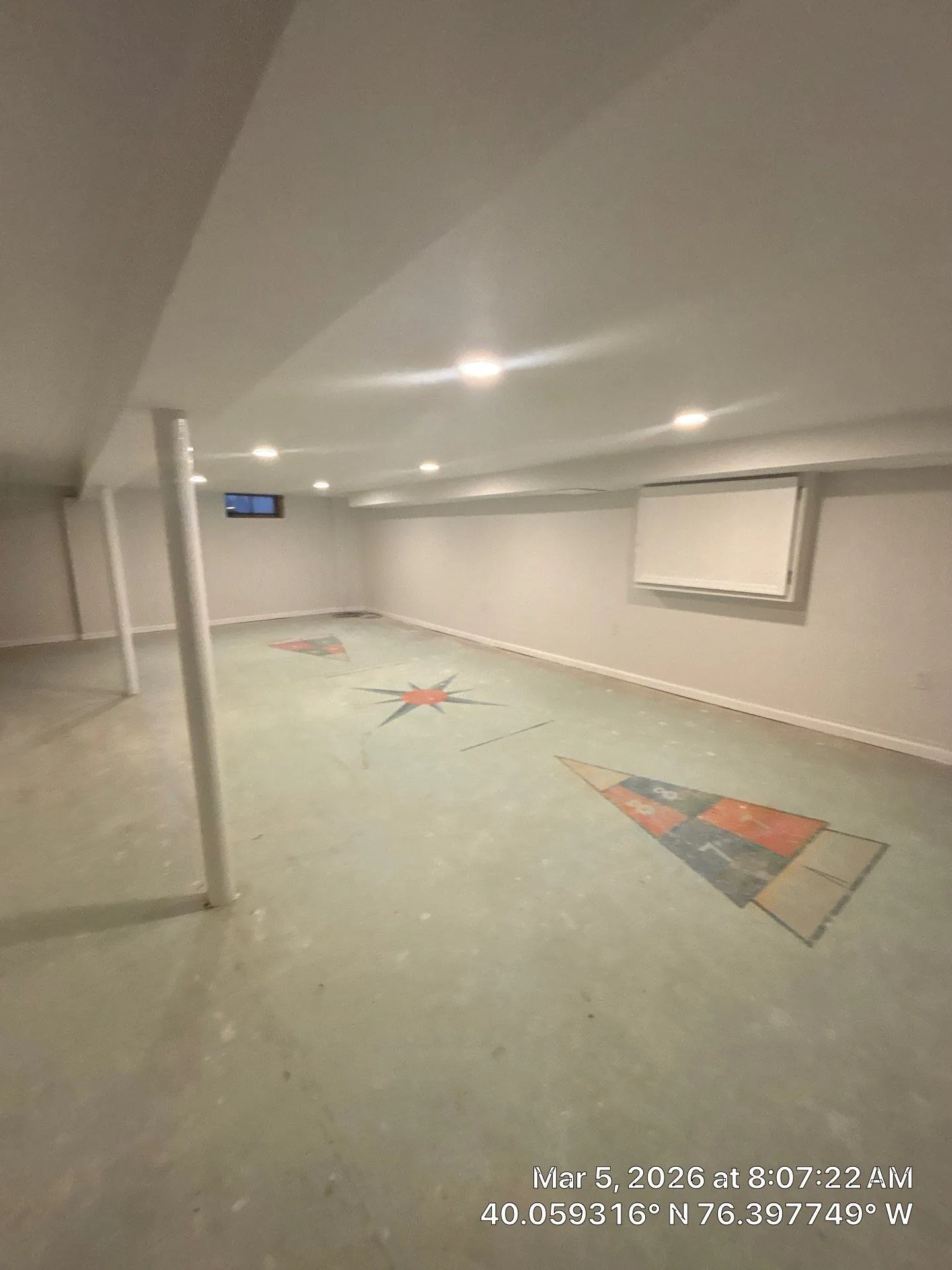
Saving the basement playroom floor: rather than replacing a historical hand-painted concrete floor feature, the team carefully cleaned, sanitized, and sealed around the vintage designs — remediating the surrounding concrete and coating it with a durable commercial-grade clear floor sealant.
Restoration over replacement: preserving an irreplaceable homeowner asset while still meeting full remediation standards is the kind of judgment call that separates a true restoration from a simple rebuild.
Build-Back Scope Delivered
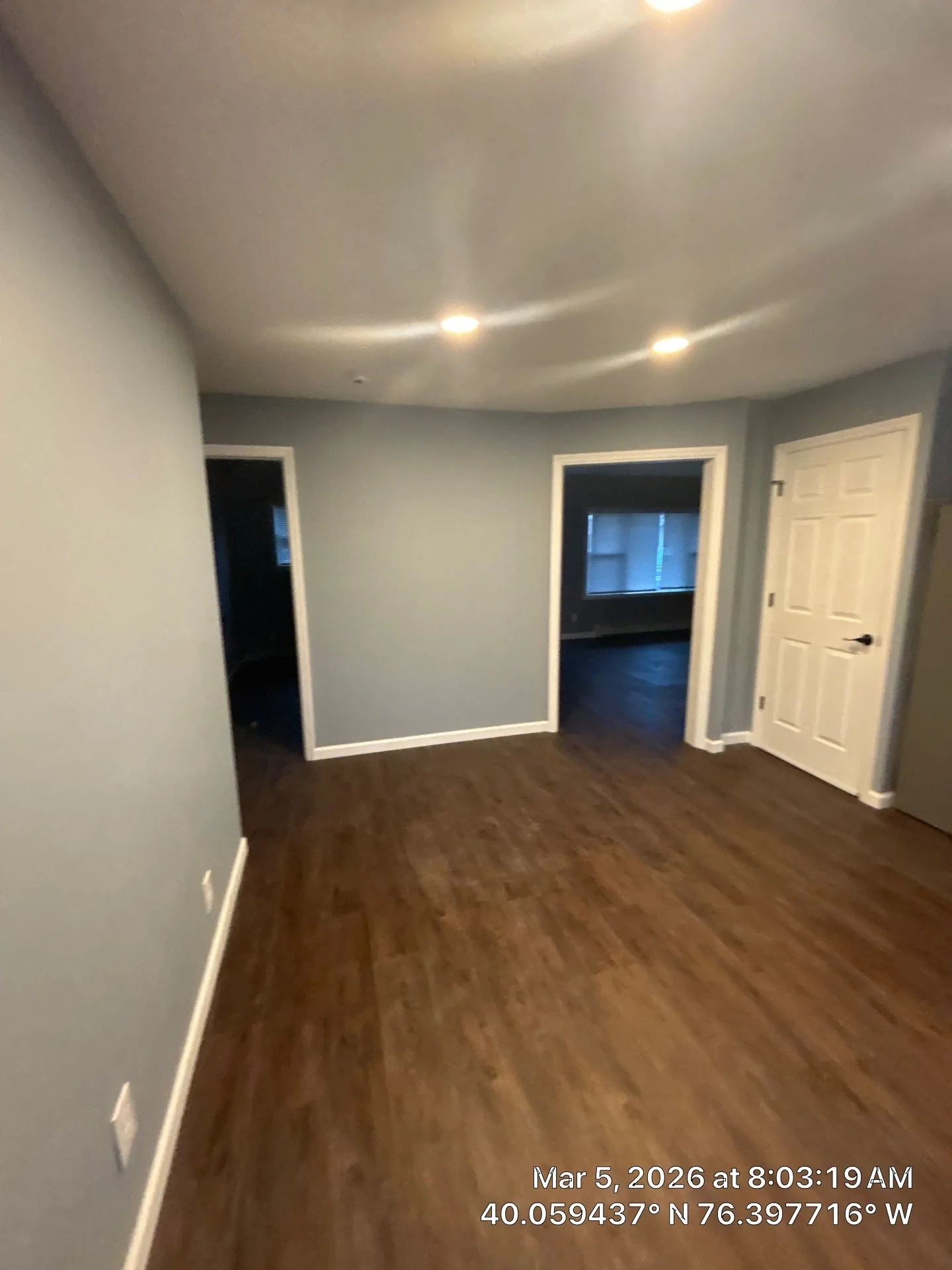
The interior was rebuilt from the studs out, finishing with the details that make a house feel like home again.
| Trade | Work Completed |
|---|---|
| Framing & drywall | Re-framed partitions; hung, taped, mudded & finished all ceiling and wall drywall |
| Finish carpentry | Six-panel interior doors, decorative casings, new baseboards, window trim |
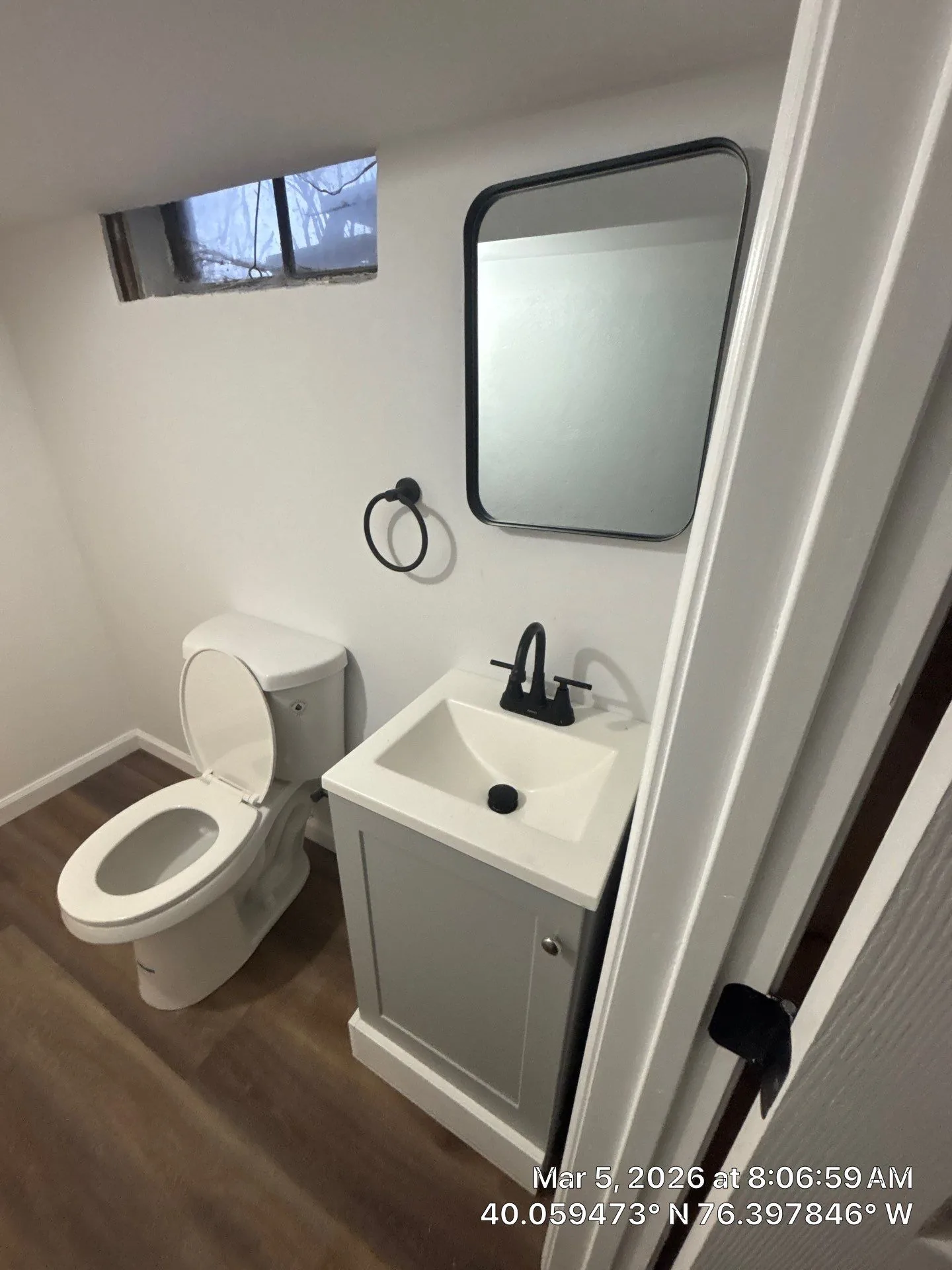
| Flooring | Moisture-resistant wood-look LVP in common areas plus a new half-bath |
| Bathroom build | Modern vanity, mirror, matte black plumbing fixtures, new toilet |
| Painting | Priming plus multi-coat modern neutrals with semi-gloss white trim |
Fire Damage Recovery Across Central Pennsylvania
Based in Harrisburg, Advanced DRI provides full-service fire damage mitigation and reconstruction throughout Central PA — including Dauphin, Cumberland, Perry, York, Lancaster, Lebanon, Schuylkill, Northumberland, and Snyder counties.
Why a Single Restoration Partner Matters
A major fire loss touches structure, air quality, and finishes all at once. Keeping mitigation, remediation, and reconstruction under one roof means soot is sealed before drywall goes up, moisture is verified before cavities are enclosed, and the homeowner deals with one accountable team from the hazardous first day through final handback.
Key Takeaways
A heavy interior fire loss in Lancaster was carried from a hazardous, soot-blackened shell to a turn-key, fully restored home — roughly 1,800 square feet rebuilt, all framing and subfloors verified below 9% moisture content before enclosing, air quality testing passed, and zero residual smoke odor. The home was handed back in pristine condition, ahead of schedule.
Fire or smoke damage to your property? Advanced DRI’s Central PA team handles the entire recovery from stabilization to reconstruction. Call (717) 232-5444 for fire damage mitigation and rebuild services in Lancaster and the surrounding communities.