Executive Summary
When a residential fire erupted near a basement laundry station in Asbury, New Jersey (postal code 08802), the resulting damage extended far beyond the visible char and soot. Melted synthetic materials, hazardous particulates, water from fire suppression efforts, and a complex unfinished basement layout created a multi-layered restoration challenge requiring specialized expertise. New Hampton Restoration deployed certified fire damage technicians equipped with HEPA filtration, industrial drying systems, and detailed remediation protocols to fully decontaminate the approximately 600 square feet of affected basement space.
Over a focused five-day mitigation timeline, our team completed comprehensive debris removal, soot and char remediation, structural drying, and surface decontamination — returning masonry walls and the concrete floor slab to acceptable moisture standards and preparing the space for reconstruction. This case study documents the technical response, equipment deployment, and innovative methodologies that made full restoration possible.
Project at a Glance
Sq Ft Decontaminated
Day Project Timeline
Final Moisture Reading
Equipment Units Deployed
Strategic Response: Why Fire Damage Requires Immediate Specialized Action
The Critical Window for Fire Mitigation
Fire damage restoration operates on a compressed timeline. Within hours of suppression, soot particles — many smaller than one micron — begin permanently bonding with porous surfaces like concrete, masonry, and unfinished wood. Acidic residues from burned synthetic materials accelerate corrosion of metals and degrade structural elements. Compounding these issues, water introduced during fire suppression creates simultaneous water damage and elevates the risk of secondary mold growth within 24 to 48 hours.
For property owners in Warren County and the broader northwestern New Jersey region, the speed of professional fire mitigation directly determines what materials can be salvaged versus permanently lost. Our certified technicians arrived prepared to address all three damage vectors simultaneously: particulate contamination, water saturation, and structural assessment.
Extended Service Coverage to Northwestern New Jersey
While New Hampton Restoration operates its primary headquarters in postal code 10958, our service capabilities extend throughout the tri-state region to communities including Asbury, Phillipsburg, Washington, Hackettstown, and surrounding Warren County areas. For complex fire damage projects requiring specialized equipment and experienced technicians, our reach across the New York and New Jersey border ensures that property owners receive professional-grade restoration regardless of the smaller-town setting.
Fire Damage Progression Timeline
Why Fire Damage Worsens Without Prompt Mitigation
0-4 Hours
4-24 Hours
24-72 Hours
72+ Hours
Understanding the Incident
The Source: Laundry Station Fire with Synthetic Material Involvement
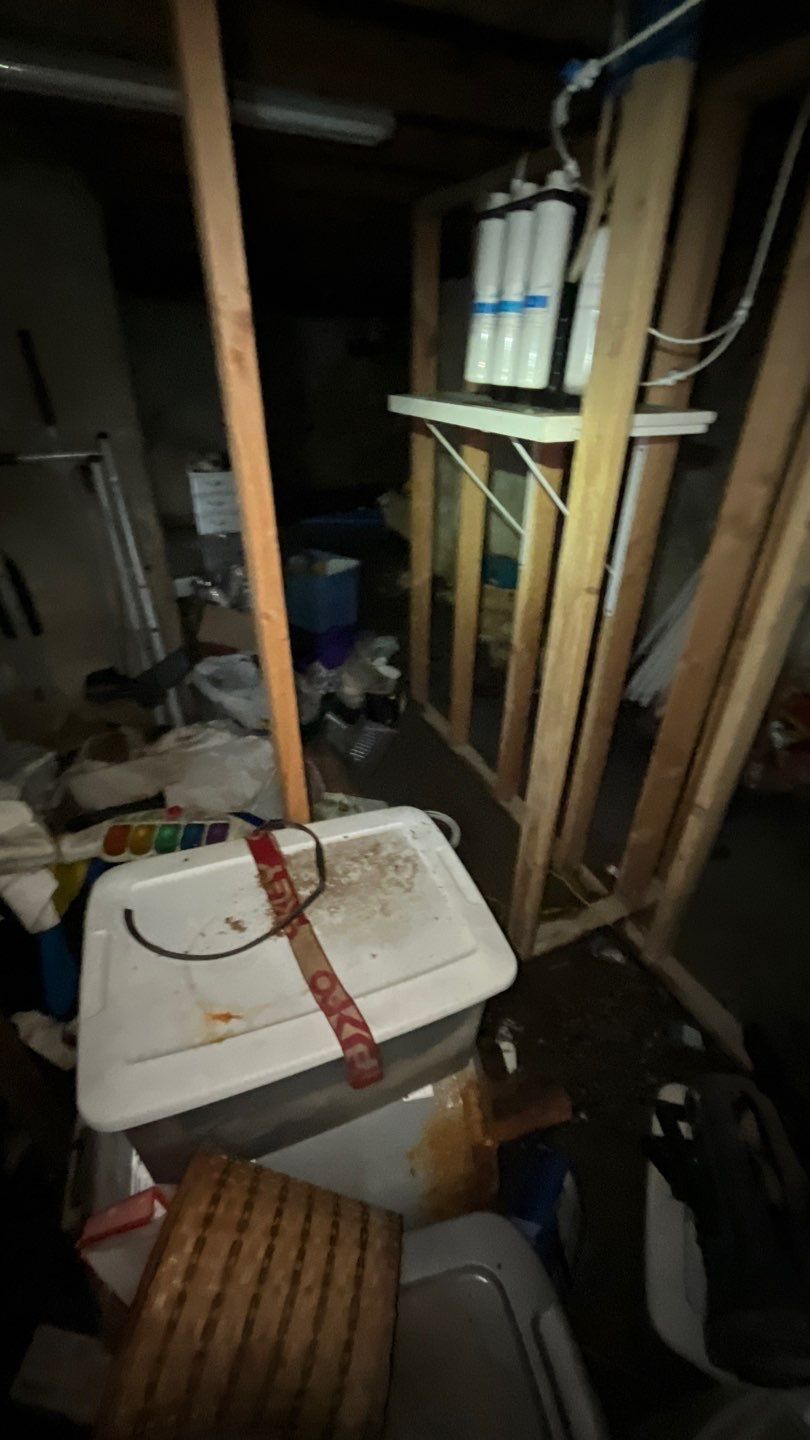
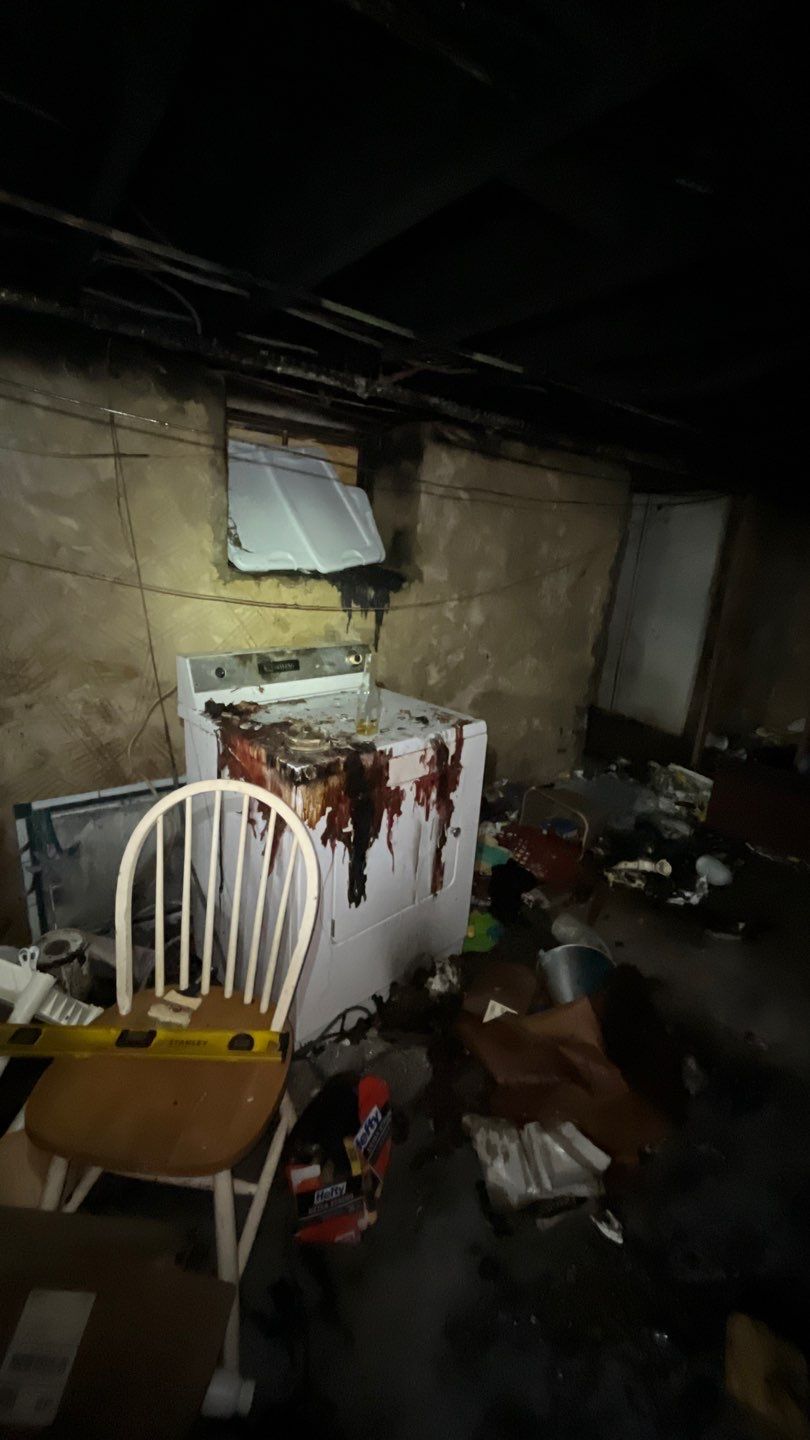
The fire originated near a basement laundry station, where a malfunctioning appliance ignited surrounding combustible materials. Photo documentation revealed a heavily charred washing machine and dryer assembly, with visible melted plastics, scorched control panels, and synthetic fabric residue fused to the appliance surfaces. The intense heat at the point of origin caused localized ceiling joist charring and propagated soot deposits across the entire basement footprint.
What made this fire particularly challenging from a restoration standpoint was the high concentration of melted plastics and synthetic materials. Unlike wood fires, which produce primarily carbon-based soot, synthetic material combustion releases complex chemical residues that adhere aggressively to porous surfaces. These residues penetrate concrete, masonry, and exposed wood framing — requiring specialized cleaning protocols rather than standard wipe-down methods.
Compounded Water Damage from Fire Suppression
Fire suppression activities introduced substantial water into the basement environment. This water absorbed soot and ash, creating a slurry that penetrated deeper into the concrete slab and masonry walls than dry soot alone would have reached. Our technicians needed to address this combined contamination simultaneously — preventing the suppression water from “smearing” particulates further into the substrate while also managing elevated humidity that could trigger mold growth.
“The combination of melted synthetic materials, suppression water, and a porous unfinished basement substrate transforms a fire scene from a straightforward cleanup into a hazardous environment requiring HEPA-filtered air, full respiratory PPE, and a precise sequencing of remediation steps.”
Property Assessment and Scope of Damage
Upon arrival at the Asbury property, our certified fire damage technicians conducted a thorough assessment of the affected basement. The space presented several conditions that informed our remediation strategy:
Unfinished Basement Construction
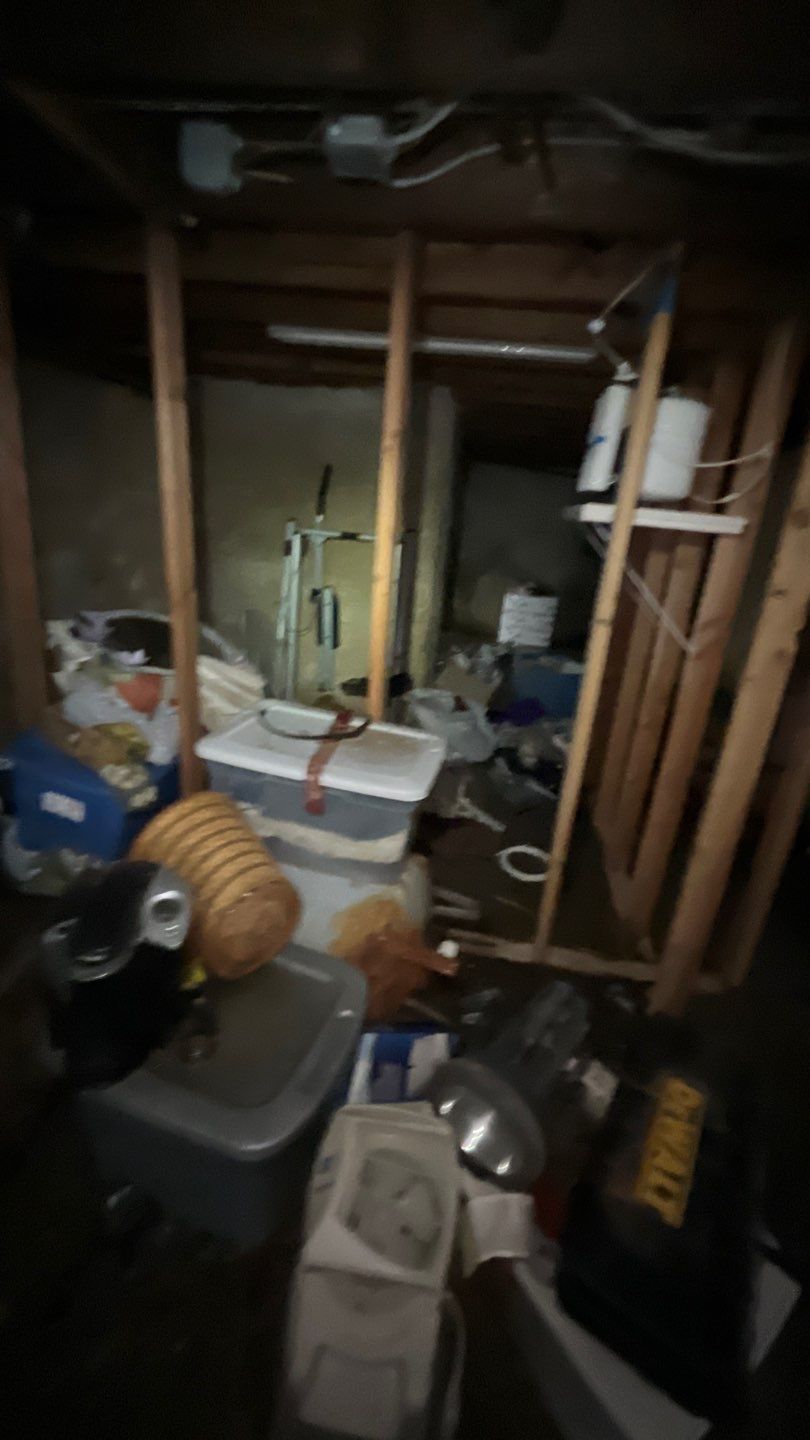
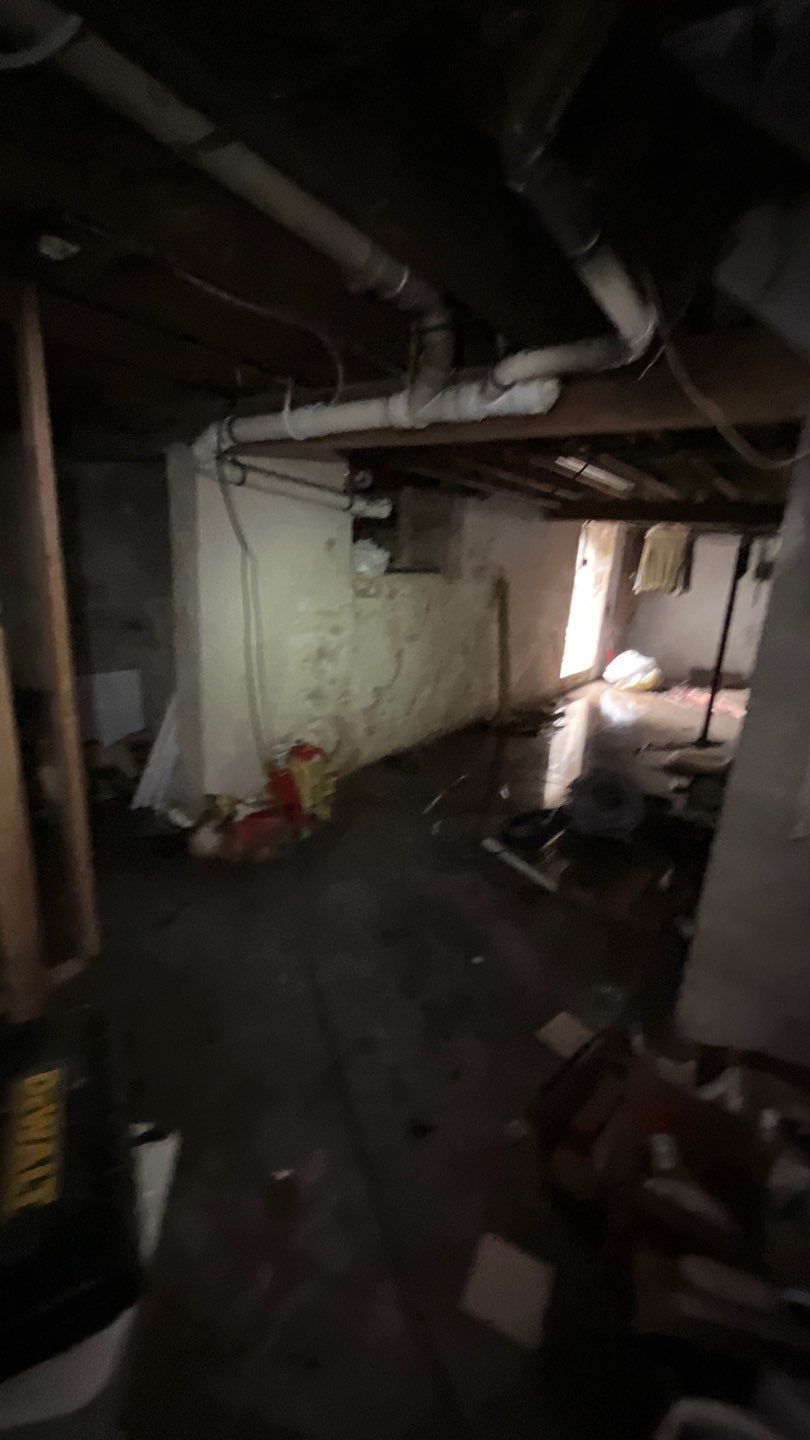
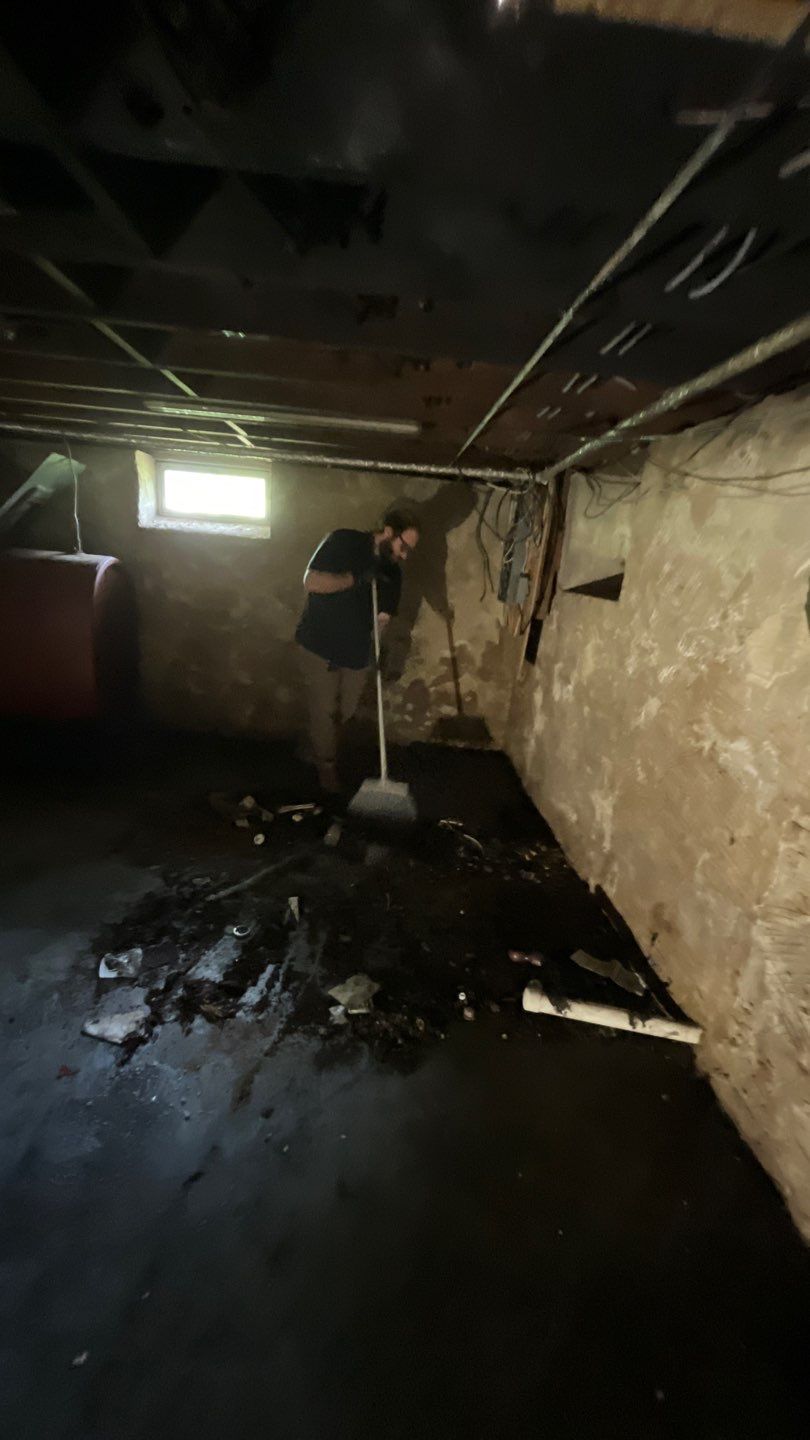
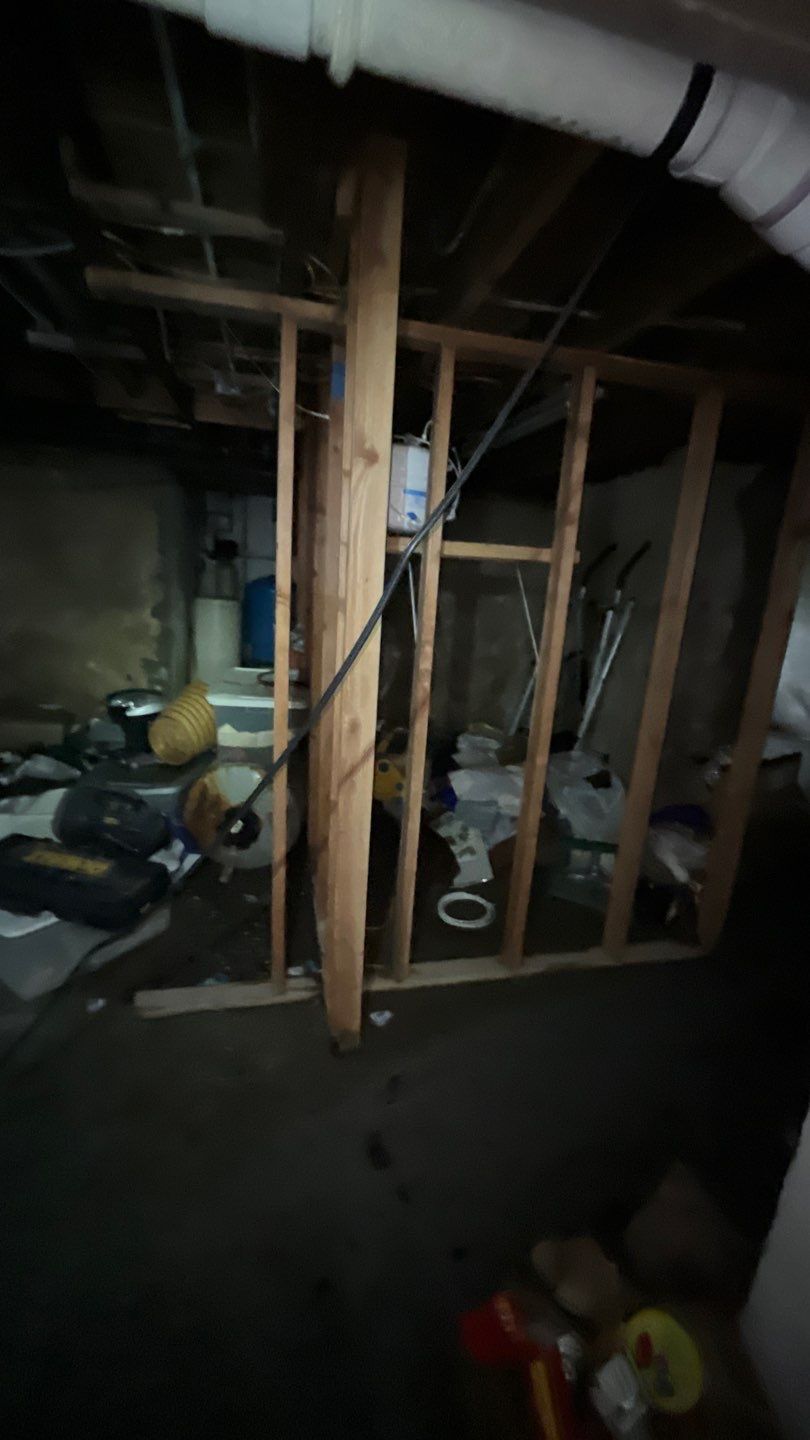
The basement featured exposed ceiling joists, open wall framing in some sections, partially finished framed partitions in others, masonry foundation walls, and a concrete floor slab. Exposed mechanical systems including plumbing, electrical wiring, ductwork, and a water filtration system added complexity to the remediation. While unfinished basements lack drywall and finished surfaces that would have absorbed contamination, the exposed framing and porous masonry presented their own challenges — each wood member required individual evaluation for char depth and soot penetration.
Zone-by-Zone Damage Assessment
| Zone | Primary Damage | Restoration Approach |
|---|---|---|
| Laundry Area (Origin) | Heavy char, melted plastics, appliance destruction | Bulk debris removal, deep substrate decontamination |
| Open Basement Floor | Soot deposits, suppression water saturation | HEPA vacuum, structural drying, surface cleaning |
| Framed Partition Walls | Soot adherence to exposed studs | Manual cleaning, encapsulation evaluation |
| Ceiling Joist Area | Char marks, smoke staining on joists | Detailed cleaning, structural assessment |
| Masonry Foundation Walls | Soot impregnation, moisture absorption | HEPA scrubbing, dehumidification, pressure cleaning |
| Stored Contents | Contaminated personal items, debris pile | Sort, evaluate, document, dispose per regulations |
Contents Triage and Documentation
The basement contained substantial stored contents — plastic storage bins, household items, tools, sporting equipment, and miscellaneous personal property. Each item required individual evaluation: items with direct char damage or melted contamination were documented and removed for disposal, while items with surface soot exposure were assessed for cleaning viability. This methodical triage protected the property owner’s interests while ensuring no contaminated materials remained to cause secondary odors during reconstruction.
Response Strategy and Mitigation Approach
The HEPA-Vacuum-First Methodology
One of the most critical decisions made during this project was sequencing the remediation correctly. Standard cleanup protocols often begin with liquid cleaning agents, but for this fire — with its heavy load of dry soot mixed with suppression water residue — that approach would have driven contaminants deeper into the porous concrete substrate. Instead, our technicians implemented a HEPA-vacuum-first methodology.
This approach involved aggressive dry particulate recovery using HEPA-filtered industrial vacuums and manual scraping tools before any liquid agents touched the surfaces. By removing the bulk of dry soot first, we prevented the “smearing” effect where wet cleaning transforms surface soot into a stain that bonds permanently with the substrate. Only after dry decontamination was complete did our team transition to controlled wet cleaning of the remaining residue.
Why Sequencing Matters in Fire Restoration
Dry Soot Removal First: Eliminates 70 to 80 percent of particulate mass before water introduction, dramatically reducing staining and substrate penetration.
HEPA Air Filtration Throughout: Captures airborne particulates released during physical agitation, preventing recontamination of cleaned surfaces and protecting technician health.
Controlled Wet Cleaning Second: Targeted application of cleaning agents to remaining residue, with immediate extraction to prevent reabsorption.
Final Drying Third: Eliminates moisture introduced during cleaning plus residual suppression water in masonry and slab.
The Technician Safety Protocol
Post-fire environments present significant respiratory and chemical hazards. Burned synthetic materials release polycyclic aromatic hydrocarbons, fine particulates, and acidic compounds that pose acute and chronic health risks. Every technician on this project wore full protective suits and fitted respirators throughout the soot remediation phase. HEPA air scrubbers ran continuously to filter the work environment, and access to the basement was strictly controlled until air quality testing confirmed safe conditions for reconstruction trades.
Equipment Deployment Analysis
This fire mitigation project required a coordinated equipment array addressing three simultaneous challenges: airborne particulate filtration, water removal and structural drying, and detailed surface decontamination. Our deployment included specialized fire restoration equipment alongside standard water damage tools, positioned strategically throughout the 600-square-foot affected area.
HEPA Air Scrubber
The cornerstone of fire damage air quality management, the HEPA air scrubber filters airborne particulates down to 0.3 microns at 99.97 percent efficiency. During active remediation, the scrubber created negative air pressure within the basement, preventing soot-laden air from migrating to other areas of the home. Continuous operation throughout the project removed odor-causing particulates and protected technician health.
HEPA 99.97% at 0.3μm
Continuous, Negative Air
Airborne Particulate Capture
Full 5-Day Project
Industrial LGR Dehumidifier
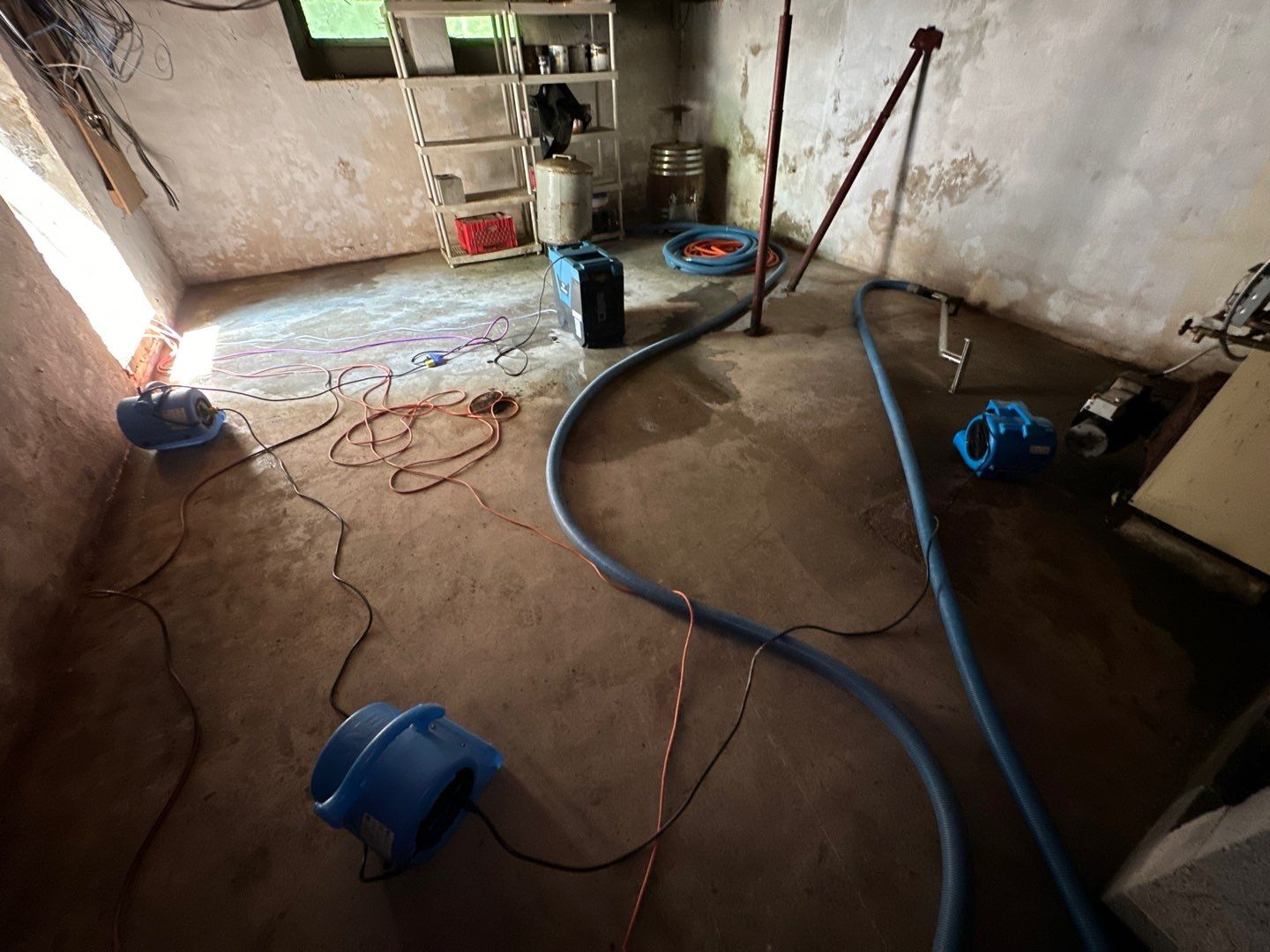
Photo documentation shows an industrial low-grain refrigerant dehumidifier positioned centrally within the basement during the drying phase. LGR technology is critical for post-fire environments because it can drive moisture levels below what standard refrigerant dehumidifiers achieve — essential for the dense masonry walls and concrete slab saturated by fire suppression water. The unit operated continuously for 72 hours during the active drying phase.
Low-Grain Refrigerant (LGR)
Masonry & Concrete
72 Hours Continuous
<12% Final Reading
High-Velocity Air Movers
Multiple blue centrifugal air movers were positioned strategically around the basement perimeter and central work area. Photo documentation shows four air movers in the primary drying configuration, with additional units deployed during peak drying phases. Air movers accelerate surface evaporation from masonry walls and the concrete floor slab, working in conjunction with the LGR dehumidifier to drive moisture out of porous structural materials.
Centrifugal, High-Velocity
4+ Units
Perimeter & Central
Surface Evaporation
Industrial Wet/Dry Vacuum Extractors
Used during multiple phases of the project, industrial wet/dry vacuums served two distinct purposes: HEPA-filtered dry vacuum recovery of soot particulates during the initial decontamination phase, and wet extraction of suppression water and cleaning solution during the surface cleaning phase. The extraction hoses visible in drying-phase photos document the active water removal occurring during initial response.
HEPA-Filtered Wet/Dry
Soot Particulate Recovery
Suppression Water Removal
HEPA-Rated
Project Data & Analytics
Equipment Deployment Breakdown
Total Units
Moisture Reduction Progress
Initial Reading
After 24 Hours
After 48 Hours
Final (72hr)
Salvage vs. Replace Outcome
Common Residential Fire Causes
49%
12%
10%
4%
25%
Restoration Timeline and Methodology
The five-day project timeline reflects a deliberately sequenced approach where each phase prepared conditions for the next. Skipping or rushing any single stage would have compromised final outcomes.
Our Fire Damage Mitigation 5-Step Process
Innovative Solutions Applied to a Complex Fire Scene
The HEPA-Vacuum-First Approach
The single most important methodological decision on this project was implementing a HEPA-vacuum-first approach rather than the more common wet-cleaning-first protocol. With heavy soot loading combined with suppression water already present in the basement, conventional liquid-first cleaning would have driven contaminants deeper into the porous concrete slab. By prioritizing aggressive dry particulate recovery using HEPA-filtered vacuums and manual scraping, our technicians removed the bulk of soot mass before any cleaning solutions came into contact with the substrate.
Negative-Air Containment Strategy
HEPA air scrubbers were configured to create negative air pressure within the basement work zone. This prevented the migration of soot-laden air upward into the main living areas of the home — a critical concern in fire damage projects where airborne particulates can recontaminate previously unaffected spaces. The continuous negative-air operation also accelerated odor reduction by constantly cycling and filtering the basement atmosphere.
Detailed Cleaning of Exposed Ceiling Joists
Unfinished basements with exposed ceiling joists present a particular fire restoration challenge — every wood member must be individually evaluated and cleaned. Char depth varies across joists depending on proximity to the fire origin, and missed soot pockets between joists will continue producing odors throughout reconstruction. Our technicians performed methodical joist-by-joist inspection and cleaning, ensuring no contamination remained hidden in the structural framing.
Why Detail Cleaning Prevents Secondary Odors
Hidden Soot Reservoirs: Even small soot deposits in joist crevices, behind framing members, or in masonry pores continue releasing odor molecules for months after a fire.
Cumulative Effect: Multiple small unaddressed soot pockets compound into persistent whole-home odor problems that resist later deodorization attempts.
Reconstruction Risk: Sealing contaminated surfaces under new drywall or finishes traps odors permanently — they bleed through new construction for years.
Best Practice: Methodical detail cleaning during mitigation eliminates the need for reactive odor remediation later.
Northwestern New Jersey Fire Damage Considerations
The Asbury area, situated in Warren County in postal code 08802, presents specific characteristics that influence fire damage restoration. The region’s older housing stock often features unfinished basements with exposed framing, masonry foundations, and aging mechanical systems — exactly the construction profile encountered in this project. These unfinished basements frequently house laundry equipment, water heaters, and storage that can serve as fire origin points or fuel loads during a residential fire.
Regional Factors Affecting Fire Restoration
Northwestern New Jersey homes commonly feature century-old or near-century-old construction with stone or concrete foundation walls, exposed ceiling joists, and limited mechanical ventilation in basement spaces. These conditions create distinctive remediation challenges: porous masonry surfaces absorb soot more aggressively than finished drywall, exposed wood framing requires individual cleaning attention, and limited natural ventilation slows the drying process compared to above-grade spaces.
The region’s seasonal humidity patterns also influence post-fire drying timelines. Spring projects, like this April 2026 mitigation, benefit from moderate ambient humidity that supports effective dehumidifier operation. Summer projects face higher humidity loads that extend drying durations, while winter projects can suffer from cold-substrate condensation that complicates the drying process.
Why Northwestern NJ Property Owners Choose Specialized Fire Restoration
Residential fires in Asbury and surrounding Warren County communities including Phillipsburg, Washington, Bloomsbury, Stewartsville, and Belvidere require contractors with both the specialized equipment and the experience to handle older-home construction. New Hampton Restoration’s tri-state service capability brings IICRC-aligned fire mitigation protocols, industrial-grade HEPA filtration, and certified technicians to property owners across the region — eliminating the need to coordinate multiple smaller contractors for what is fundamentally a single integrated restoration project.
Project Outcomes and Documentation
Verified Moisture Standards Achieved
The final outcome data confirms a successful mitigation phase. Masonry walls and the concrete floor slab returned to less than 12 percent moisture content following 72 hours of continuous dehumidification — well within the dry standard required before reconstruction can safely proceed. Achieving this benchmark prevents secondary mold growth and ensures that new construction materials installed during reconstruction will not encounter residual moisture problems.
Air Quality Restoration
Continuous HEPA filtration throughout the project significantly improved indoor air quality from the heavily contaminated post-fire state to conditions suitable for reconstruction trades to safely enter the space without specialized respiratory protection. Final visual inspection confirmed that bulk char and soot deposits had been successfully removed from all accessible surfaces.
Hazardous Material Disposal Compliance
All charred debris, contaminated contents, and fire-damaged appliances were documented and disposed of according to local Warren County and New Jersey state regulations governing post-fire material disposal. This documentation provides the property owner and insurance carrier with a clear chain-of-custody record demonstrating regulatory compliance.
Preparation for Next-Phase Work
With mitigation complete, the basement was stabilized and documented as ready for two distinct follow-on phases: professional smoke deodorization to address residual odor compounds embedded in remaining surfaces, and structural reconstruction to rebuild any damaged framing, install new electrical and plumbing as needed, and ultimately return the basement to functional condition.
Key Takeaways
Methodology matters as much as equipment. The HEPA-vacuum-first approach demonstrated on this project illustrates how proper sequencing of remediation steps can dramatically improve outcomes — particularly for fires involving synthetic materials and combined water damage. Standard wet-cleaning-first protocols would have driven contaminants deeper into porous substrates, creating long-term odor and staining problems.
Unfinished basements demand specialized expertise. Exposed joists, masonry walls, and concrete slabs each absorb and retain fire contamination differently than finished surfaces. Successful mitigation requires technicians who understand the unique behavior of each substrate type and can adjust techniques accordingly — not a one-size-fits-all cleaning protocol.
Mitigation prepares for restoration; it does not replace it. The successful completion of this five-day mitigation project sets the stage for two additional phases — deodorization and reconstruction — to complete the property’s recovery. Property owners benefit from understanding this multi-phase reality from the outset, allowing proper planning and insurance coordination.
Speed combined with precision delivers the best outcomes. Beginning mitigation work within hours of fire suppression — and completing all critical decontamination steps within a focused five-day window — limited the depth of permanent damage and preserved the property’s structural integrity for full restoration.
If you’ve experienced fire damage in Asbury, Warren County, or anywhere across the New Jersey and New York tri-state region, professional response within the first 24 hours can make the difference between salvageable structure and total loss. Reach New Hampton Restoration’s certified fire damage team at (845) 294-8919 for immediate response, or learn more about our parent network at Advanced DRI.