Project at a Glance
Emergency Response
Damage Stabilized
Hole Covered
ZIP-Tape Seal
Executive Summary
When severe structural damage opened up the roof of a Harrisburg, Pennsylvania home, our Central PA restoration team responded the same day with an emergency stabilization and weatherproofing plan. In a single visit, technicians cleared the debris field, bridged a large puncture in the roof deck with new sheathing, deployed a heavy-duty reinforced tarp over the primary damage zone, and mechanically secured every edge for wind-rated protection.
This project is a clear example of why fast roof stabilization matters: by sealing the opening before the next weather event, the team prevented water from reaching the attic, insulation, and finished interior — keeping a roof emergency from cascading into a far larger restoration job while the homeowner arranges a permanent replacement.
Understanding the Incident
The Source: Severe Structural Roof Damage
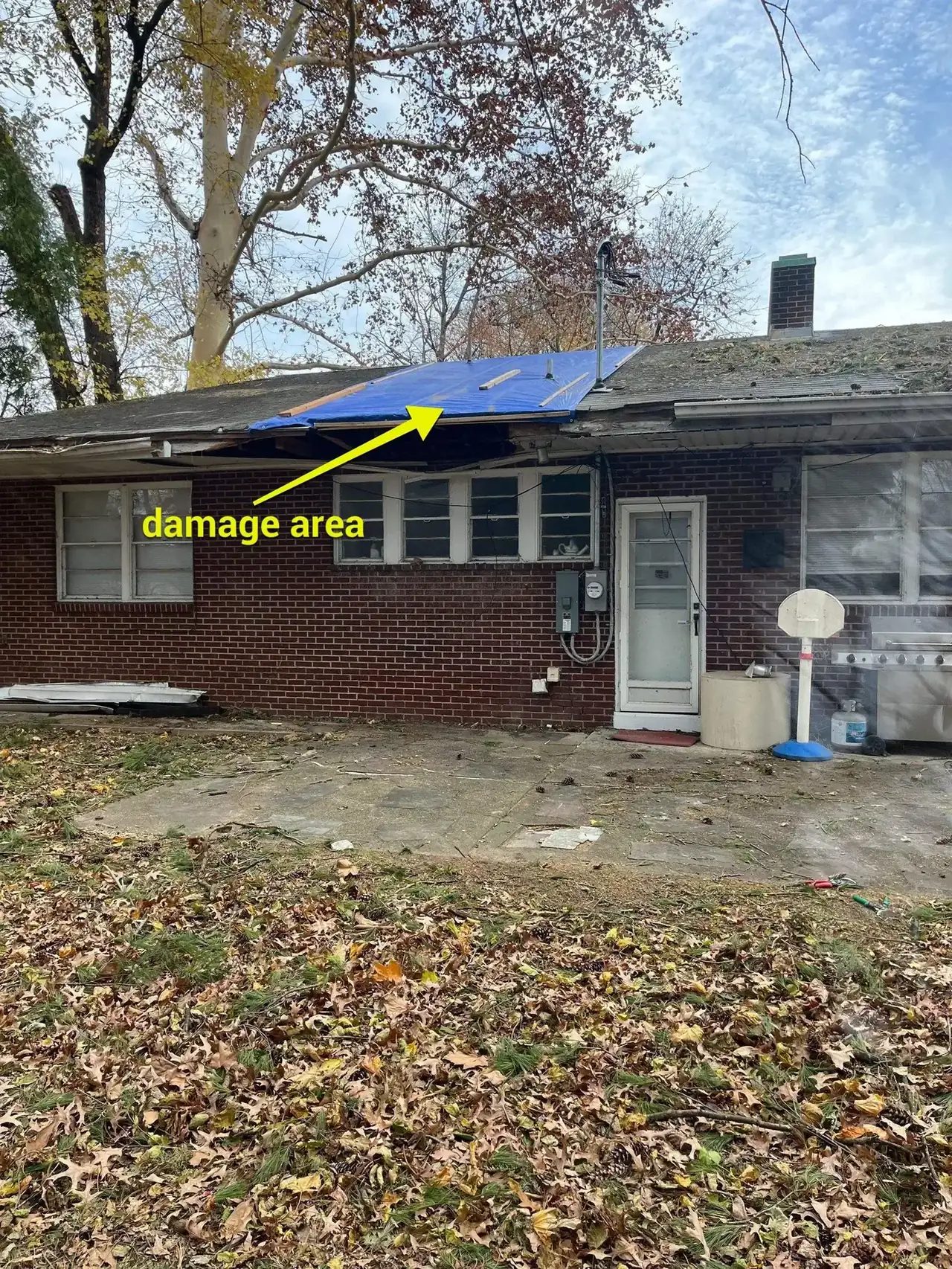
The roof had sustained severe structural damage consistent with a tree strike, leaving a large puncture through the roof deck. An open roof is one of the most time-sensitive losses a home can experience — every hour the opening is exposed is another opportunity for wind-driven rain to enter the structure and migrate down through the framing, insulation, and ceilings below.
The primary damage zone covered roughly 200 square feet of roof surface, including an area immediately adjacent to a plumbing vent stack — a detail that would shape the entire weatherproofing strategy.
“An open roof doesn’t wait for business hours. The faster you bridge the hole and seal the edges, the smaller the eventual repair — and the lower the chance of mold inside the home.”
Property Assessment and Scope of Damage
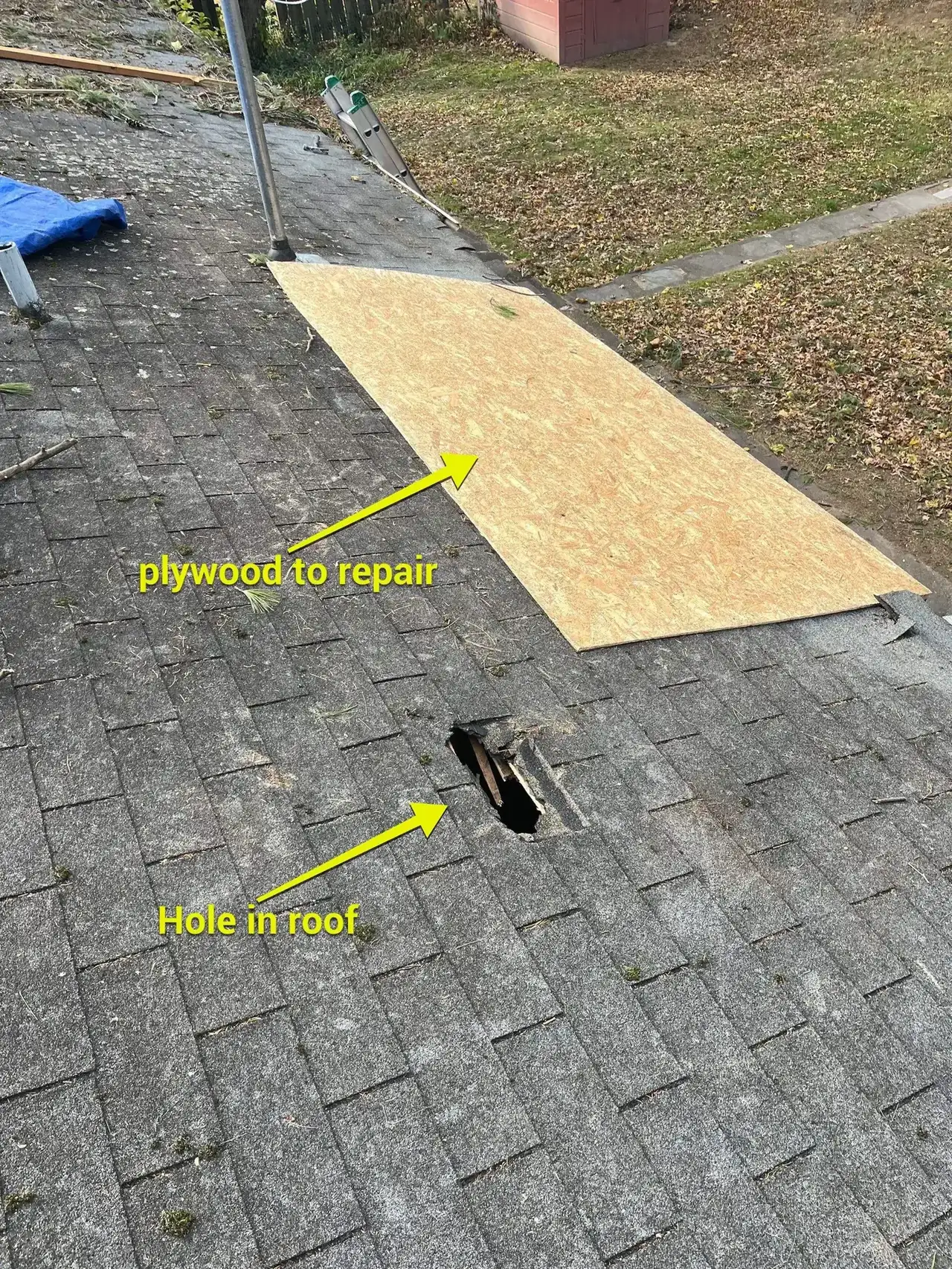
On arrival, technicians surveyed the roof from industrial ladders to map the puncture, the surrounding debris field, and the proximity of the opening to the plumbing vent stack. The footprint was concentrated around a single large breach in the deck, with loose shingle debris scattered across the work area.
| Zone | Condition Found | Action Taken |
|---|---|---|
| Work area | Fallen limbs & loose shingle debris | Debris cleared for safe access |
| Roof deck | Large puncture hole | OSB plywood sheathing installed |
| Plumbing vent stack | Open seam beside breach | Tarp cut around stack; flashing-taped |
| Primary damage zone | ~200 sq ft exposed | Reinforced tarp deployed & secured |
Response Strategy
The stabilization followed a proven emergency sequence: clear the area so the deck can be worked safely, bridge the structural opening with rigid sheathing, weatherproof the zone with a reinforced tarp, and mechanically secure every edge so wind cannot lift or peel the cover.
Sealing Around the Plumbing Vent Stack
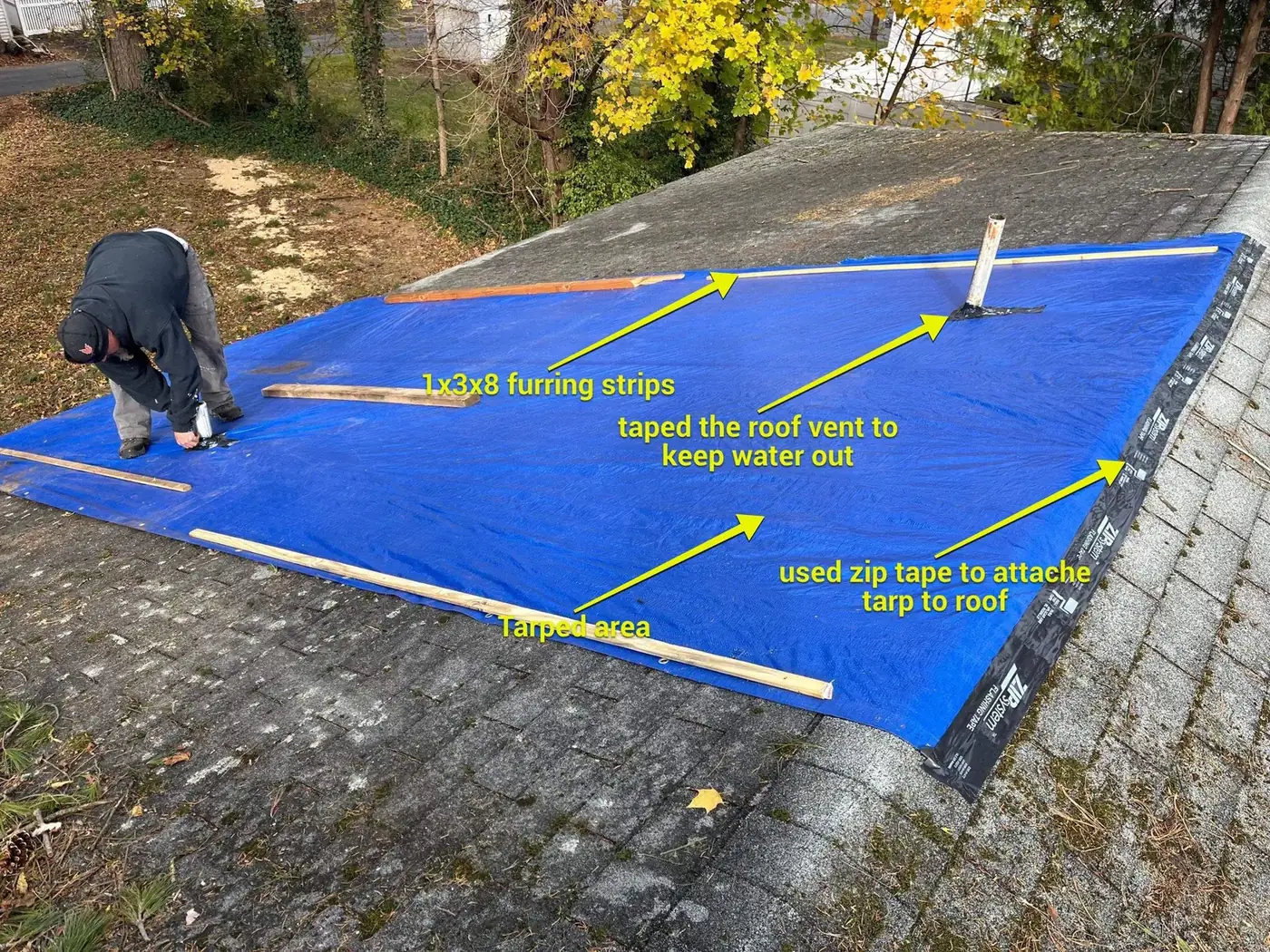
Because the puncture sat close to a plumbing vent stack, a standard tarp pass would have left a path for water to run down the pipe and into the attic. Technicians cut the tarp around the stack and applied waterproof flashing tape to form a watertight seal at the penetration. The age of the existing shingles called for extra caution during taping — surfaces were prepared carefully to achieve a secure, lasting bond rather than a temporary stick.
Equipment & Materials Analysis
The right materials in the right sequence did the work here — a rigid patch to carry the load, a reinforced cover to shed water, and a high-adhesion tape system to lock the edges against wind.
OSB Plywood Sheathing (4×8 sheets)
Oriented strand board was cut and fastened over the puncture to bridge the opening in the roof deck, restoring a continuous surface and allowing safe temporary transit across the damage zone.
Reinforced Poly Tarp & Furring Strips
A heavy-duty blue poly-tarp was laid over the primary damage zone and adjacent roof vent, then held down with 1x3x8 furring strips fastened with pneumatic nailers to keep the cover taut and flat.
ZIP System Flashing Tape
High-adhesion ZIP System flashing tape sealed the leading edges of the tarp and the cut around the plumbing stack — a far more robust moisture barrier than nails or staples alone for wind-rated protection.
Why Fast Roof Stabilization Prevents Interior Water Damage
Wind-driven rain enters the puncture and pools on framing and insulation within minutes of the next storm.
A rigid sheathing patch bridges the hole and the tarp sheds water away from the opening, restoring a continuous shedding surface.
High-adhesion flashing tape locks the tarp edges so wind-driven rain cannot bypass the cover and reach the attic.
✓
Attic, insulation, and ceilings stay dry — preventing the mold growth and material loss that follow a wet interior.
The longer an opening stays exposed, the more likely a simple stabilization turns into interior demolition, drying, and mold remediation.
Stabilization Timeline and Methodology
Why This Approach Worked
Same-day response: the opening was bridged and sealed before the next weather event, eliminating the window for wind-driven rain to enter the home.
Edge sealing over fasteners alone: ZIP System flashing tape along the tarp’s leading edges created a far more robust barrier than nails or staples, sharply reducing the risk of wind-driven rain bypassing the cover.
Emergency Roof Response Across Central Pennsylvania
Based in Harrisburg, Advanced DRI provides 24/7 emergency roof stabilization and board-up throughout Central PA — including Dauphin, Cumberland, Perry, York, Lancaster, Lebanon, Schuylkill, Northumberland, and Snyder counties.
Why Local Response Matters
Storm and tree-strike roof damage is one of the most common emergency calls in the region, and the wind-driven rain common in the Harrisburg area makes edge sealing critical. Because an exposed roof can let water into a home within a single storm, a fast, local response is the single biggest factor in keeping the damage to a temporary tarp rather than a full interior rebuild.
Key Takeaways
A storm-damaged Harrisburg roof was stabilized in a single day with debris clearing, a plywood deck patch, a reinforced tarp, and a wind-rated ZIP-tape seal. The structural hole was 100% covered, the plumbing stack was successfully flashed, and the home is protected from secondary interior damage until permanent replacement.
Storm damage to your roof? Advanced DRI’s Central PA team is available 24/7. Call (717) 232-5444 for emergency roof stabilization in Harrisburg and the surrounding communities.