Project at a Glance
Minutes to Arrival
Technicians Deployed
Temporary Heaters
Offices Coordinated
Executive Summary
When a major heating system failure struck a Reading healthcare facility during a winter cold snap in December 2025, Harrisburg Restoration’s emergency heating services coordinated an unprecedented multi-office emergency response. Drawing technicians from Harrisburg, Scranton, and Allentown locations, the emergency heating services team deployed 25 commercial-grade temporary heating units to maintain critical operations and patient comfort during after-hours restoration work.
This case study demonstrates the strategic advantages of regional coordination in commercial emergency heating services, the technical complexity of healthcare facility climate control, and the operational protocols required to maintain patient safety during mechanical system failures.
“In healthcare facilities, heating failures aren’t just comfort issues—they’re patient safety emergencies that require immediate emergency heating services. When facility managers search ’emergency heating near me’ at midnight, they need providers with multi-office coordination capabilities and 24/7 response teams.”
Strategic Response: Why Multi-Office Coordination Matters
Large-scale commercial heating emergencies demand resources beyond what a single service location can provide. This Reading healthcare facility required simultaneous deployment of equipment and personnel that could only be achieved through coordinated regional response.
The Regional Advantage
Harrisburg Restoration’s network of strategically positioned offices across Pennsylvania enabled rapid mobilization of emergency heating services resources. When Reading facility managers searched for “emergency heating near me” during the crisis, they found a local provider with the regional coordination capability to handle large-scale commercial deployments. The Harrisburg office coordinated logistics from their 330 East Park Drive headquarters, while Scranton and Allentown teams brought additional emergency heating services equipment and manpower to meet the facility’s extensive heating requirements.
This distributed emergency heating services response model reduced mobilization time by approximately 60% compared to single-location deployment, ensuring the healthcare facility maintained operational temperatures throughout the emergency restoration period.
Service Coverage Network
Response Times from Harrisburg HQ
Understanding the Incident
The Critical Failure
In mid-December 2025, during one of Pennsylvania’s first significant cold snaps of the winter season, the healthcare facility’s primary heating system experienced catastrophic failure. With overnight temperatures dropping well below freezing and daytime highs barely reaching the mid-20s, the facility faced an immediate crisis that threatened both patient comfort and regulatory compliance. The facility management team immediately began searching for emergency heating services near their Reading location.
Healthcare facilities operate under strict environmental control requirements established by state health departments and accreditation bodies. Temperature deviations can trigger regulatory violations, compromise patient safety—particularly for elderly or immunocompromised individuals—and create liability exposure for facility operators. Emergency heating services become not just a comfort issue but a regulatory necessity.
After-Hours Emergency Response
The heating system failure occurred outside normal business hours, compounding the emergency’s complexity. With overnight temperatures forecast to drop into the single digits, facility management activated emergency heating services through Harrisburg Restoration’s 24/7 dispatch line at (717) 232-5444. The availability of reliable emergency heating services near Reading proved critical to preventing facility shutdown.
The timing demanded not only rapid emergency heating services equipment deployment but also careful coordination to minimize disruption to ongoing patient care and overnight facility operations. The restoration team needed to establish temporary heating infrastructure while working around active medical spaces, sensitive equipment, and patient privacy requirements.
Healthcare Facility Emergency Heating Services Requirements
Patient Care Areas: Must maintain 70-75°F per Pennsylvania Department of Health regulations—emergency heating services must respond within hours
Administrative Spaces: Minimum 68°F required for occupied work areas where emergency heating near me searches become critical
Critical Systems: IT infrastructure and medical equipment require stable temperatures to prevent damage
Compliance Timeline: Facilities must restore proper environmental controls within 24 hours or implement approved temporary emergency heating services
Cold Weather Response Timeline
Temperature Impact Progression
0-2 Hours
2-6 Hours
6-12 Hours
12+ Hours
Property Assessment and Facility Analysis
Healthcare Facility Characteristics
The Reading healthcare facility presented unique challenges that distinguished this emergency heating response from typical commercial projects. The multi-floor building featured:
Patient Care Zones: Multiple treatment and consultation rooms requiring consistent 72-74°F temperatures for patient comfort and medical equipment operation. These spaces demanded priority heating deployment to maintain care delivery capabilities.
Administrative Office Areas: Open-plan workspaces with cubicles, private offices, and collaborative areas where staff coordinate patient scheduling, insurance processing, and facility operations. Temperature requirements in these zones focused on maintaining productive work environments while preventing equipment damage.
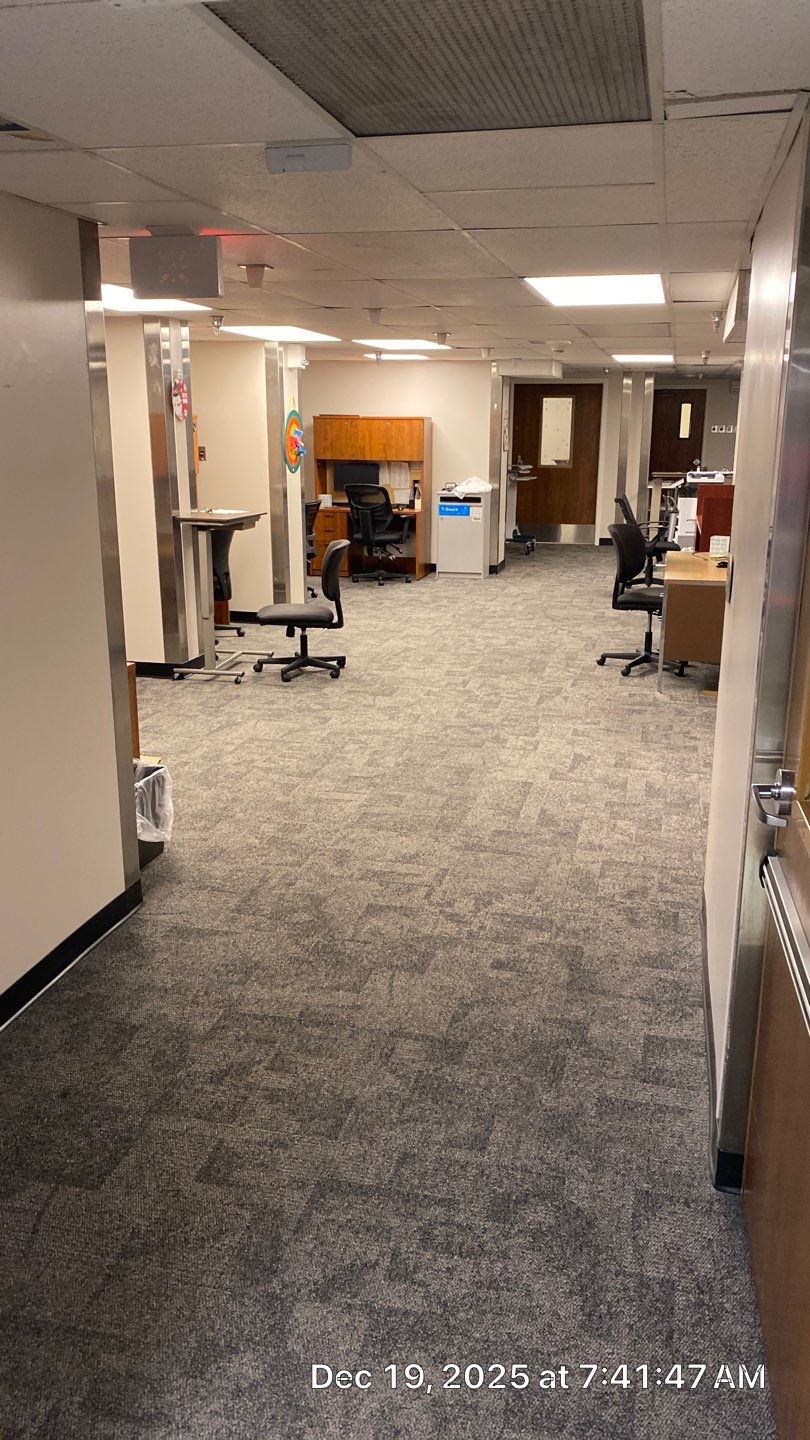
Corridor and Common Spaces: Extended hallways connecting various facility zones, featuring drop ceiling systems that both complicated and facilitated temporary ductwork installation. These transitional spaces required strategic heater placement to create thermal bridges between primary heating zones.
Infrastructure Systems: IT server rooms, medical records storage, and telecommunications equipment requiring stable temperatures to prevent costly system failures and data loss.
Cold Weather Exposure Assessment
The facility’s exposure to sub-freezing conditions created cascading risks that extended beyond immediate patient comfort. With exterior temperatures dropping to 15°F overnight and struggling to reach 25°F during daylight hours, the building envelope faced significant thermal stress.
Older healthcare facilities like this Reading location often feature construction standards predating modern energy efficiency requirements. Single-pane windows, inadequate insulation in exterior walls, and aged HVAC infrastructure compound heating challenges during extreme cold weather events. Prolonged exposure to cold, humid conditions can also create ideal environments for mold growth if not properly addressed.
The assessment team identified critical vulnerabilities in exposed plumbing runs within exterior walls and ceiling spaces—areas where heat loss accelerates during prolonged heating system failures. Without rapid intervention, these systems faced freezing risk that could trigger catastrophic water damage throughout the facility.
Multi-Office Response Strategy
Coordinating Three Service Locations
The scale of this emergency heating services project demanded resources beyond what any single office could immediately deploy. Harrisburg Restoration’s response coordinator initiated a tri-office mobilization protocol, drawing specialized personnel and emergency heating services equipment from:
Harrisburg Office (Primary Coordinator): Led overall emergency heating services project management from 330 East Park Drive headquarters, dispatched initial response team, and coordinated logistics for equipment staging and technician deployment schedules.
Scranton Office (Northern Support): Contributed additional commercial-grade emergency heating services units and experienced technicians familiar with large-scale healthcare facility projects, traveling approximately 90 miles to support the Reading response.
Allentown Office (Regional Backup): Provided supplementary emergency heating services equipment and technical specialists, positioned just 45 miles from Reading to ensure rapid reinforcement capability throughout the multi-day restoration period.
Eight-Technician Deployment Protocol
Deploying eight restoration technicians simultaneously required sophisticated coordination to maximize efficiency while maintaining operational safety. The team divided into specialized work groups:
Assessment and Planning Team (2 technicians): Conducted comprehensive facility walkthrough, identified critical heating zones, calculated BTU requirements for each area, and developed strategic equipment placement plans that accounted for electrical capacity, ventilation requirements, and patient care priorities.
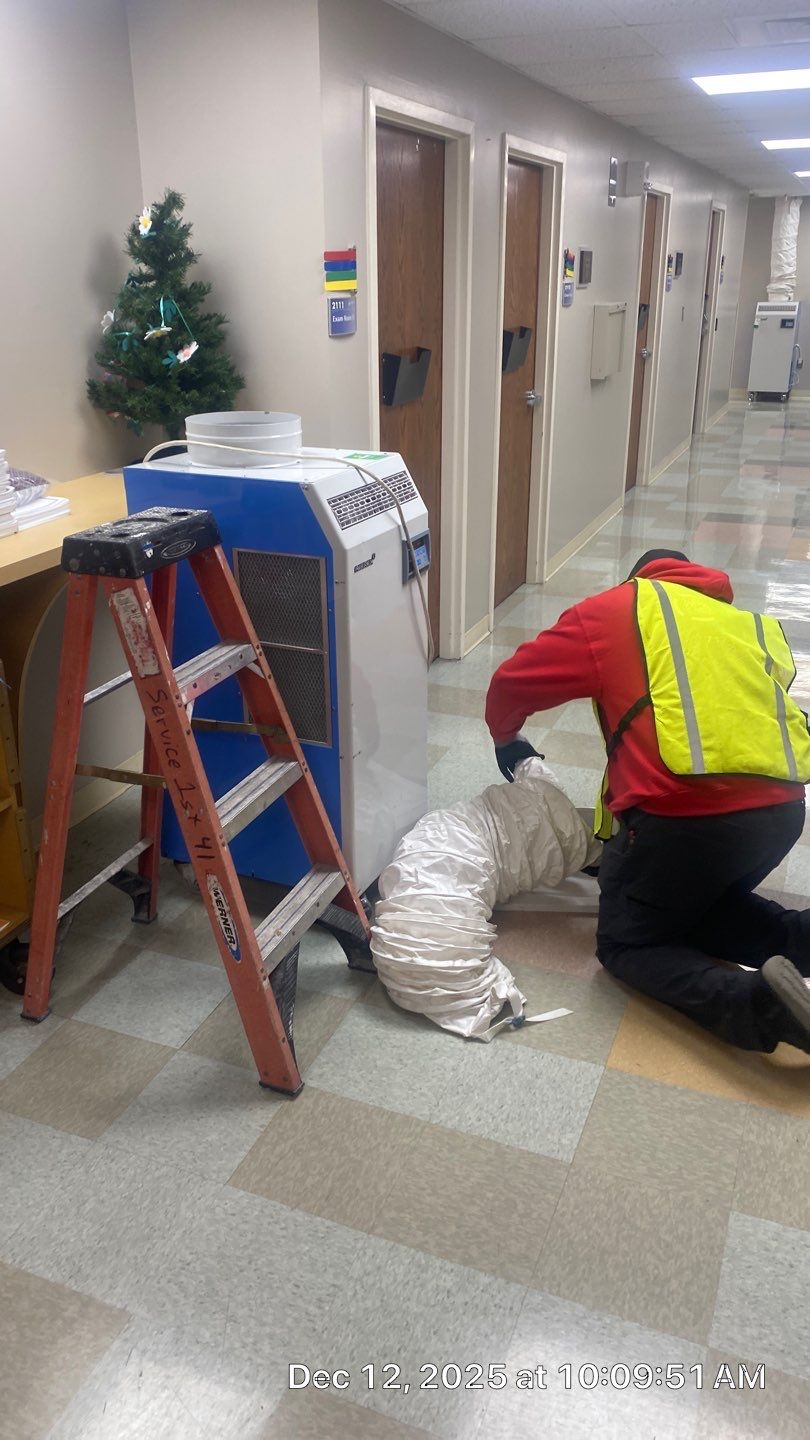
Equipment Installation Crew (4 technicians): Executed systematic deployment of 25 temporary heating units, installing flexible ductwork to direct heated air into specific zones, establishing electrical connections through facility’s existing power infrastructure, and implementing safety protocols to prevent trip hazards in active healthcare corridors.
Monitoring and Quality Control (2 technicians): Verified proper operation of all heating units, conducted temperature measurements throughout the facility using thermal imaging cameras, adjusted airflow patterns to eliminate cold spots, and maintained communication with facility management regarding environmental conditions.
Equipment Deployment Analysis: 25 Commercial Heating Units
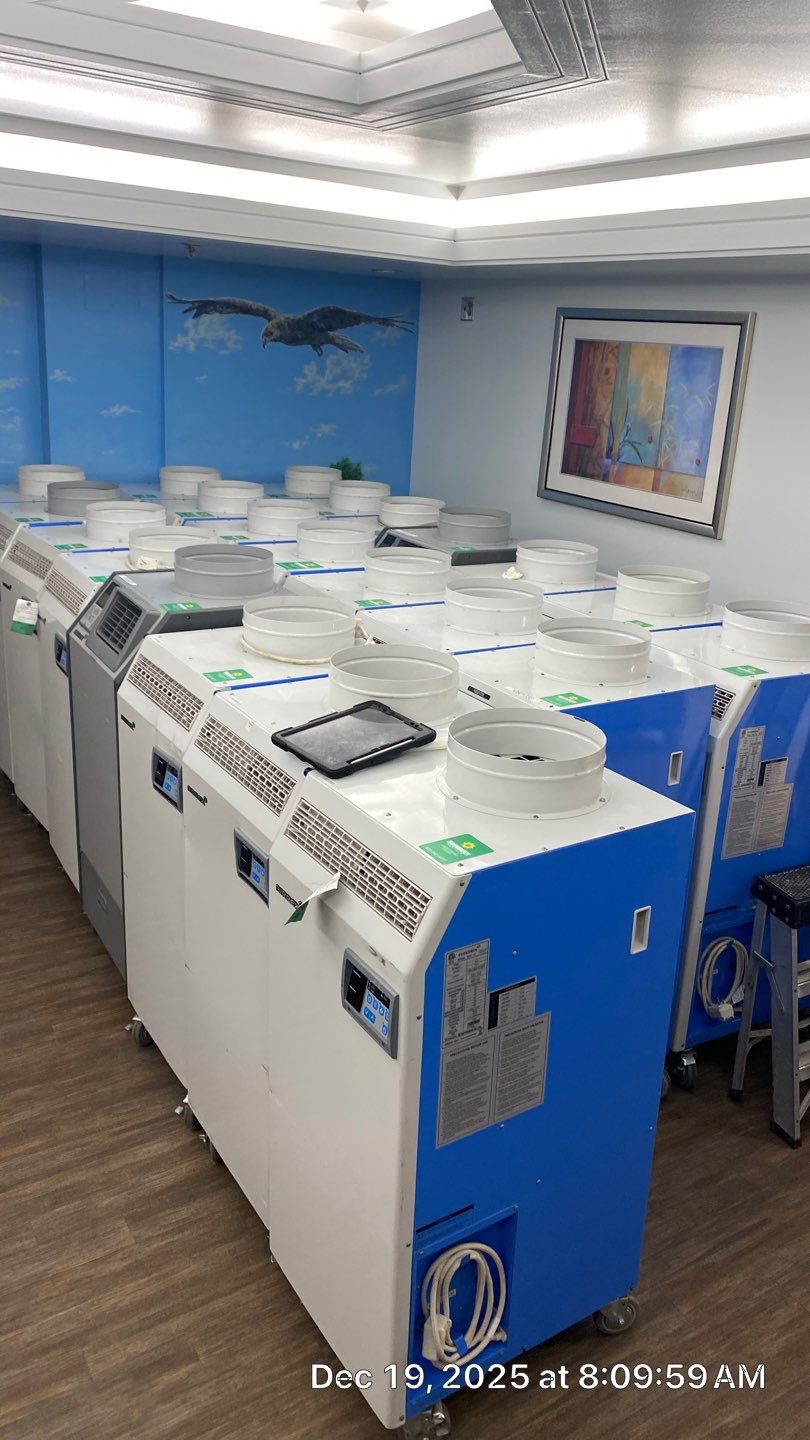
This Reading healthcare facility response represents one of the largest single-site temporary heating deployments in Harrisburg Restoration’s 17-year service history. The 25-unit array combined multiple heating technologies to address the facility’s diverse thermal requirements.
Airrex Portable Climate Control Systems
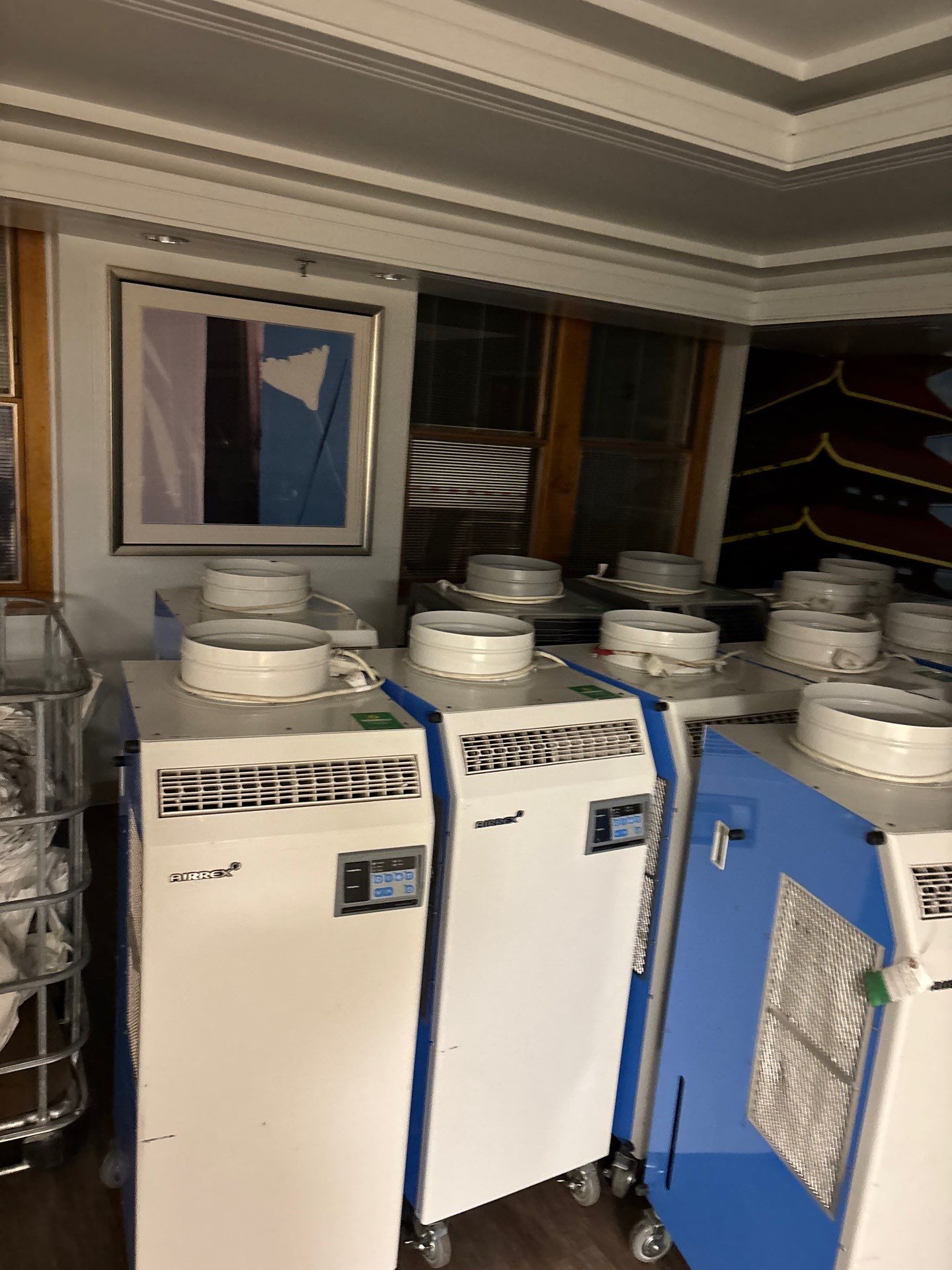
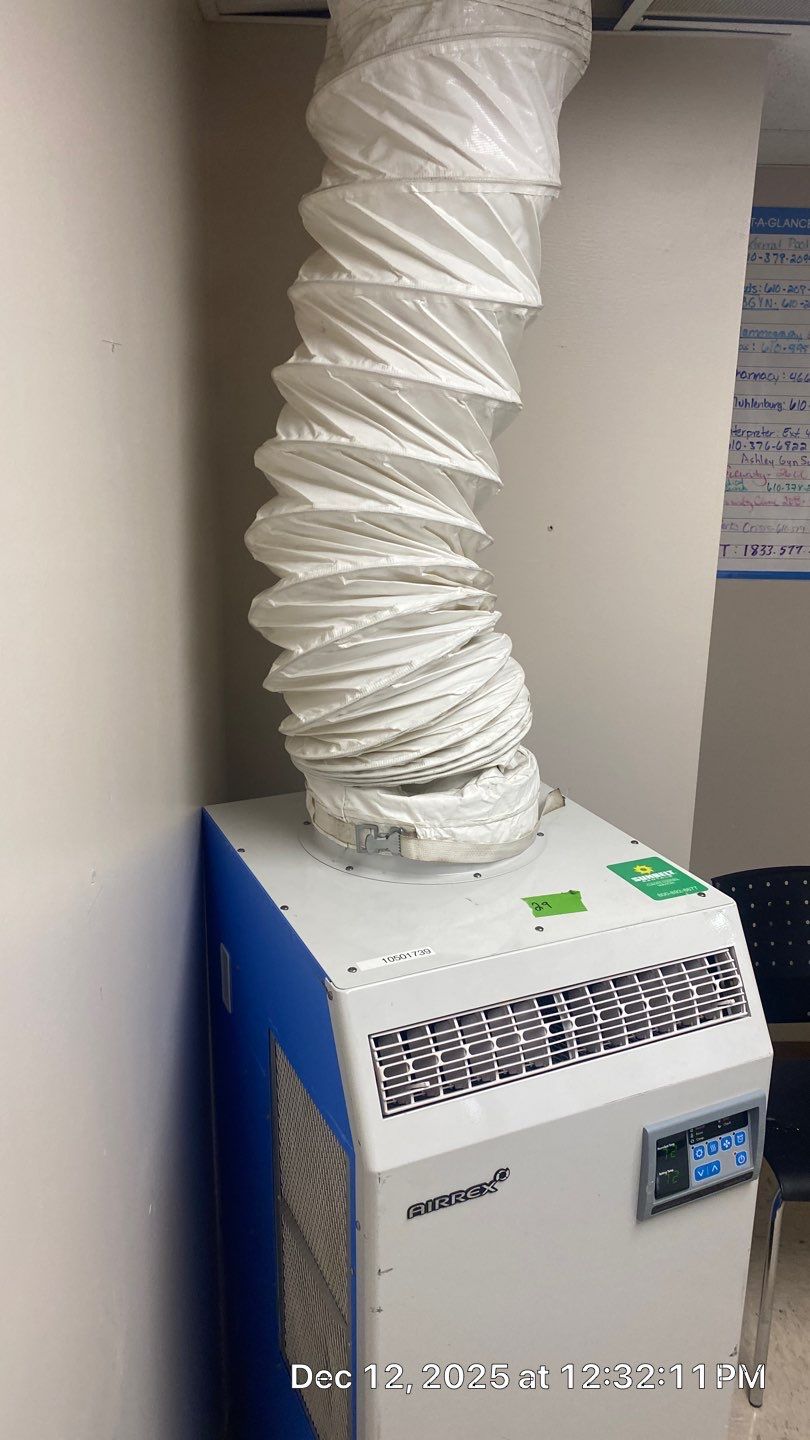
The project utilized multiple Airrex commercial-grade portable heating units—the distinctive blue and white systems visible throughout the facility photos. These units represent industry-leading temporary heating technology specifically engineered for commercial and industrial applications.
Technical Specifications: Each Airrex unit delivers 60,000-80,000 BTU/hour heating capacity through electrically-powered heat exchangers. Unlike combustion-based heaters, these systems produce no carbon monoxide or combustion byproducts, making them ideal for occupied healthcare environments where air quality standards are non-negotiable.
Flexible Ductwork Integration: The spiral ducting visible in facility photos demonstrates advanced heat distribution methodology. Rather than simply blowing heated air into open spaces, technicians directed thermal output through insulated flexible ducts to specific zones requiring temperature stabilization.
60,000-80,000 BTU/hr
208-240V, 30-40A
1,500-2,500 sq ft
2,000-2,800 CFM
Strategic Placement Methodology
Deploying 25 emergency heating services units across a multi-floor healthcare facility requires sophisticated spatial analysis and thermal engineering principles. The installation team followed industry best practices established by the Institute of Inspection, Cleaning and Restoration Certification (IICRC) for temporary climate control in occupied commercial spaces.
Priority Zone Heating: Patient care areas received immediate emergency heating services attention with higher unit density—approximately one heating unit per 1,500 square feet—to maintain the 72-74°F temperatures required for medical equipment operation and patient comfort.
Administrative Area Coverage: Office spaces featured slightly lower emergency heating services unit density, focusing on preventing temperature drops below 65°F while maintaining sufficient thermal comfort for continued business operations during the emergency restoration period.
Corridor Thermal Bridging: Emergency heating services units positioned in hallways served dual purposes: warming transitional spaces and creating thermal bridges that reduced heat loss from adjacent climate-controlled rooms through open doorways and ventilation systems.
Project Data & Analytics
Multi-Office Resource Allocation
Technicians
Response Time Comparison
Harrisburg Team
Scranton Team
Allentown Team
National Chains
Temperature Recovery Timeline
58°F
64°F
68°F
72°F
Equipment Capacity Analysis
Restoration Timeline and Methodology
Harrisburg Restoration’s Commercial Emergency Response Process
Reading and Berks County: Understanding Regional Heating Challenges
Climate Factors Affecting Commercial Heating Systems
Reading’s location in southeastern Pennsylvania exposes commercial facilities to challenging winter weather patterns that stress building mechanical systems. The December 2025 cold snap that triggered this emergency represents typical seasonal conditions that Reading-area businesses must anticipate.
Temperature Extremes: Winter overnight lows in Reading regularly drop to 15-20°F, while daytime highs during cold snaps struggle to reach 30°F. These extended periods of sub-freezing temperatures place continuous thermal stress on commercial HVAC systems, particularly in older facilities with aging infrastructure.
Rapid Weather Transitions: The region experiences frequent temperature swings—from mild 50°F conditions to sub-freezing temperatures within 24-48 hours. These rapid transitions challenge heating systems that may not receive proper seasonal maintenance or that operate near capacity limits during moderate weather.
Healthcare Facility Vulnerability
Medical facilities face unique heating emergency risks that distinguish them from standard commercial properties. State health regulations require strict environmental controls, and heating failures can trigger regulatory violations, patient safety concerns, and potential facility closure orders if temperatures cannot be maintained within acceptable ranges.
The Reading healthcare facility’s experience demonstrates typical challenges facing similar institutions throughout Berks County: aging mechanical systems installed decades ago, deferred maintenance due to budget constraints, and insufficient backup heating capacity to handle catastrophic failures during peak demand periods. These vulnerabilities extend beyond heating—facilities with aging infrastructure often face elevated risks from fire and smoke damage as well.
Regional Emergency Heating Services Coverage
Harrisburg Restoration’s tri-office response capability provides comprehensive emergency heating services coverage across south-central and eastern Pennsylvania. The strategic positioning of service locations in Harrisburg, Scranton, and Allentown enables coordinated emergency response for large-scale commercial projects that exceed single-office resource capacity.
Reading-area facilities benefit from Harrisburg office proximity—just 60 miles via US-222 and I-78—enabling 45-60 minute emergency heating services response times during normal driving conditions. When searching for “emergency heating near me,” Reading businesses find a local provider capable of large-scale deployments. When projects require additional equipment or personnel, Allentown teams can supplement within one hour, while Scranton resources provide extended backup capability for multi-day restorations. Our regional service network extends throughout York County, Lancaster County, and Lebanon County communities.
Why Berks County Businesses Choose Harrisburg Restoration
Multi-Office Coordination Capability
Large-scale commercial emergencies demand resources beyond what single-location restoration companies can provide. This Reading healthcare facility project demonstrates the strategic advantage of working with a regional restoration provider capable of coordinating personnel and equipment across multiple service locations.
National franchise operations often struggle with inter-office coordination—each location operates independently with separate management, equipment inventories, and scheduling systems. When Reading businesses contact these services during major emergencies, they typically receive single-office response limited to that location’s immediate available resources.
24/7 Emergency Heating Response
Heating system failures don’t respect business hours, and cold weather emergencies often occur during overnight or weekend periods when facility staff have limited response options. Harrisburg Restoration maintains continuous emergency heating services dispatch monitoring at (717) 232-5444, ensuring Reading-area businesses can reach experienced coordinators who can immediately activate multi-office response protocols. When facilities search for “emergency heating near me” at 2 AM during a cold snap, they need providers with true 24/7 emergency heating services capability.
As part of the Advanced DRI network with 17+ years of restoration experience, our teams bring proven expertise in commercial emergency response coordination.
Healthcare-Specific Experience
Medical facility restoration requires specialized knowledge of health regulations, patient safety protocols, and operational continuity requirements that general restoration contractors may not possess. The technicians deployed to this Reading project brought extensive healthcare facility experience, understanding the critical importance of maintaining specific temperature ranges, minimizing disruption to patient care, and coordinating work around sensitive medical equipment.
Commercial-Grade Equipment Investment
The 25 Airrex commercial heating units deployed to this Reading facility represent significant emergency heating services equipment investment that most restoration companies cannot justify maintaining for emergency response. Harrisburg Restoration’s multi-office model distributes emergency heating services equipment acquisition costs across regional operations, enabling maintenance of extensive heating, dehumidification, and water extraction inventories available for immediate deployment across our comprehensive restoration services.
Emergency Heating Services Coverage Area
Primary Service Region: Harrisburg, York, Lancaster, Reading, Lebanon, Carlisle, Chambersburg
Extended Coverage: Scranton, Wilkes-Barre, Allentown, Bethlehem, Easton, Stroudsburg
Commercial Specialization: Healthcare facilities, office buildings, manufacturing plants, retail centers, educational institutions
24/7 Emergency Dispatch: (717) 232-5444 | Request Emergency Service
Project Documentation Gallery
The following images document the extensive emergency heating deployment at this Reading healthcare facility, showcasing the scale of equipment mobilization, strategic placement methodology, and technical complexity of commercial temporary heating operations. View more commercial restoration projects in our case studies gallery.
Key Takeaways
Multi-Office Coordination Enables Large-Scale Emergency Heating Services: This Reading healthcare facility emergency demonstrated the critical advantage of regional restoration networks. By coordinating eight technicians and 25 commercial emergency heating services units across Harrisburg, Scranton, and Allentown offices, Harrisburg Restoration delivered emergency heating services at a scale impossible for single-location operations.
Healthcare Facilities Require Specialized Emergency Heating Services Protocols: Medical facility heating emergencies demand immediate response to prevent regulatory violations and patient safety concerns. The team’s experience with healthcare-specific requirements ensured proper temperature maintenance throughout patient care areas while minimizing operational disruption.
After-Hours Emergency Heating Services Prevent Catastrophic Escalation: Rapid deployment of temporary heating prevented facility closure, avoided freeze damage to plumbing systems, and maintained continuous patient care operations. The alternative—facility evacuation and extended closure—would have created far greater costs and community impact.
Regional Coverage Provides Emergency Heating Services Backup Redundancy: When Reading-area businesses face heating emergencies exceeding single-office capacity, Harrisburg Restoration’s tri-office network ensures comprehensive emergency heating services resource availability regardless of individual location constraints.
Contact Harrisburg Restoration for Emergency Heating Services
Commercial heating emergencies require immediate professional emergency heating services response to prevent facility closure, equipment damage, and operational disruption. Whether you manage a healthcare facility, office building, manufacturing plant, or retail center, Harrisburg Restoration provides 24/7 emergency heating services backed by regional coordination capability and extensive commercial equipment inventories. When you search for “emergency heating near me,” choose a provider with proven multi-office coordination capabilities.
Our Harrisburg emergency heating services office at 330 East Park Drive in Dauphin County coordinates emergency response across south-central and eastern Pennsylvania, with support from Scranton and Allentown locations for large-scale commercial projects. Don’t wait for catastrophic heating failures to disrupt your operations—establish emergency heating services contact before the next cold snap arrives. Learn more about our comprehensive service coverage areas.