Project at a Glance
Days to Dry Standard
Sq Ft Affected
Clean Water Loss
Final Moisture Content
Executive Summary
When a clean-water loss soaked the lower level of a Harrisburg, Pennsylvania home, our Central PA restoration team responded with a textbook Category 1 water mitigation plan. Over four days, technicians extracted standing water, removed saturated carpet padding, opened wall cavities for drying, and established a controlled drying environment that returned every affected material to dry standard — with no microbial growth and no secondary damage.
This project is a clean example of why prompt, methodical water mitigation matters: by following IICRC S500 protocols and monitoring moisture daily, the basement was cleared for reconstruction in a tight, predictable timeline.
Understanding the Incident
The Source: A Category 1 Clean Water Loss
The water that entered the lower level was classified as Category 1 (clean water) under the IICRC S500 standard. While Category 1 water poses the lowest contamination risk, it migrates quickly — wicking into carpet padding, drywall, and baseboards within hours. Left untreated, even clean water can degrade into a higher category and create the conditions for mold growth.
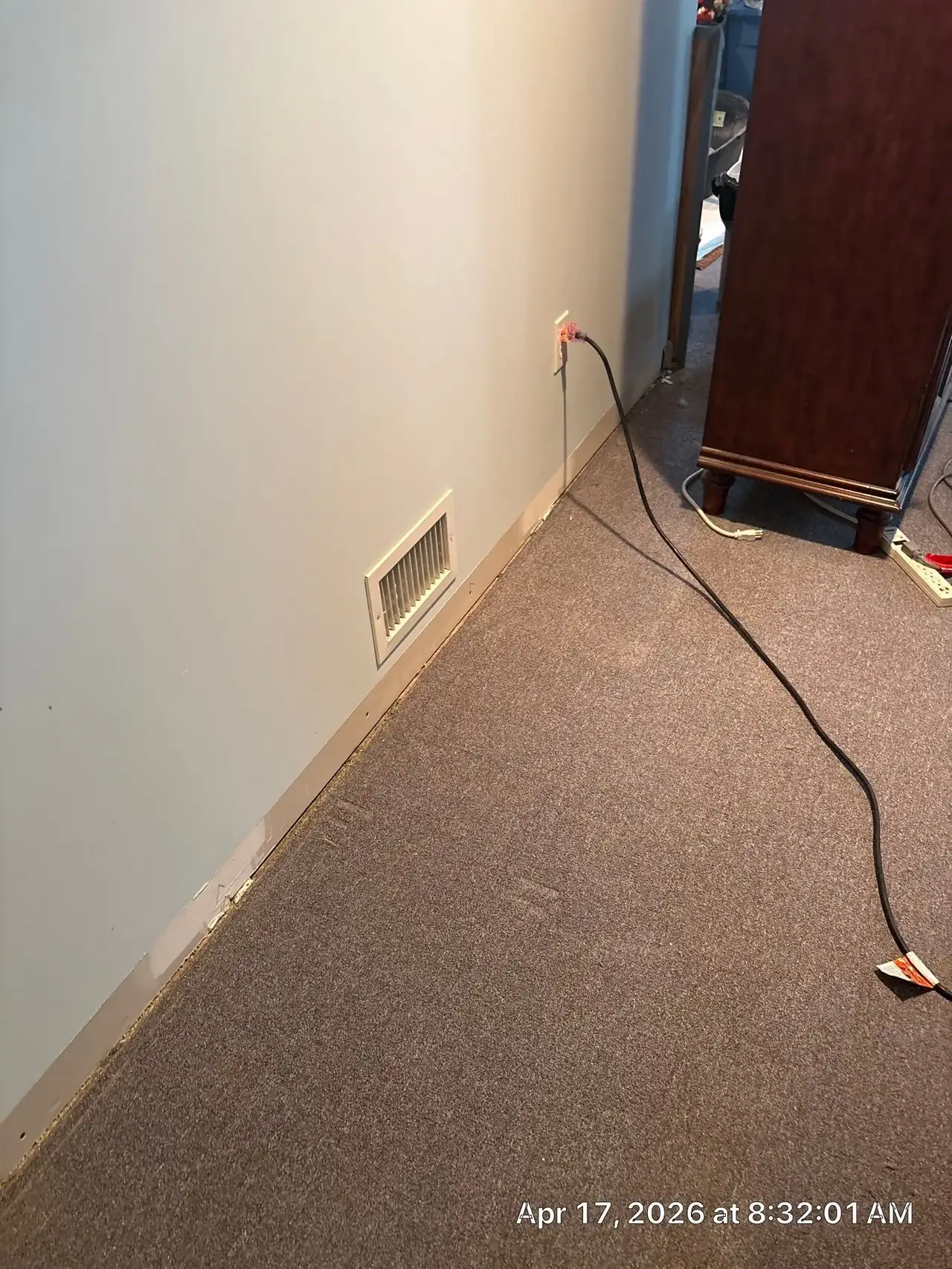
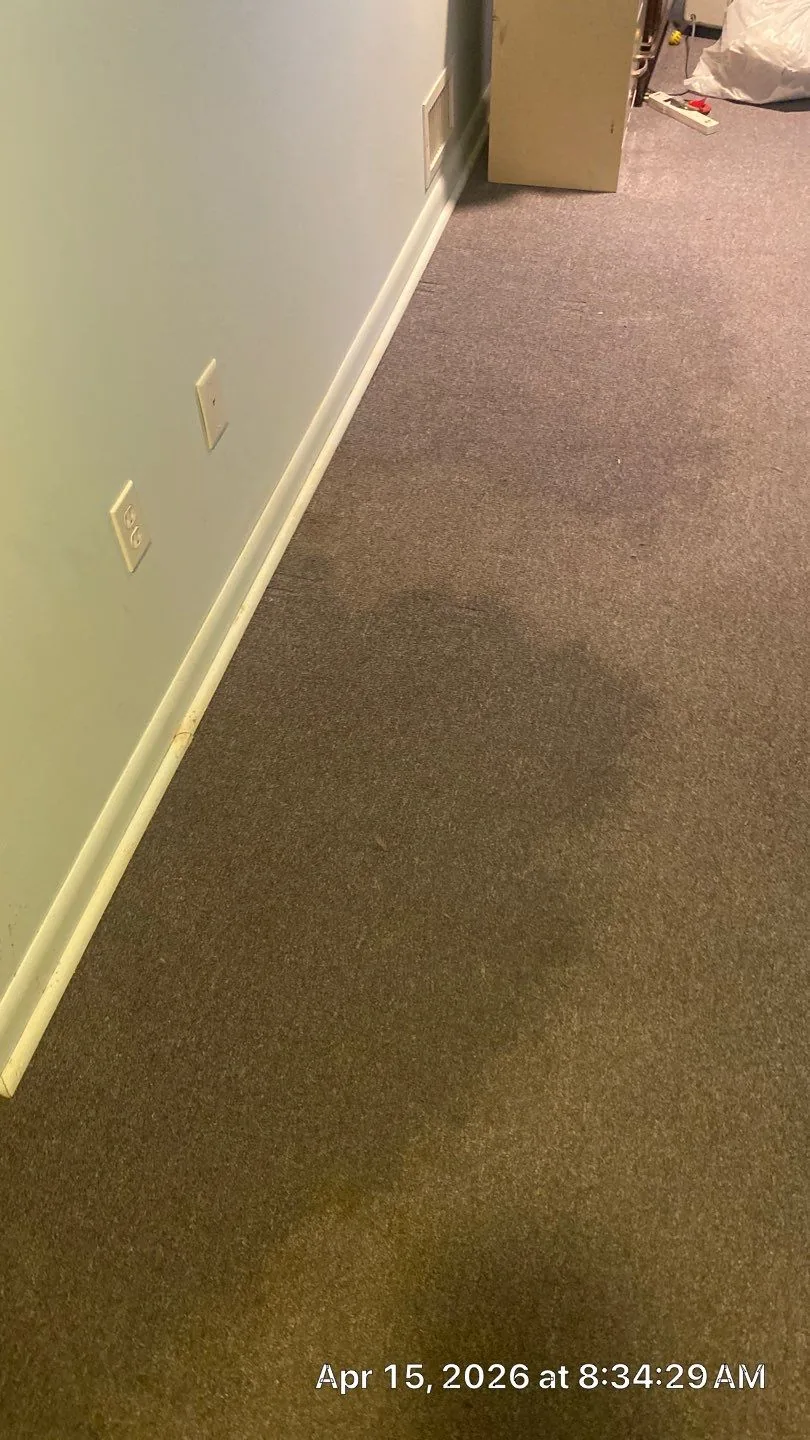
Affected materials included the basement carpet and padding, the base of the drywall, and the baseboards along the perimeter walls — covering roughly 250 square feet of finished basement space.
“Clean water doesn’t stay clean. The longer it sits in carpet and drywall, the faster a simple mitigation job turns into a mold remediation job.”
Property Assessment and Scope of Damage
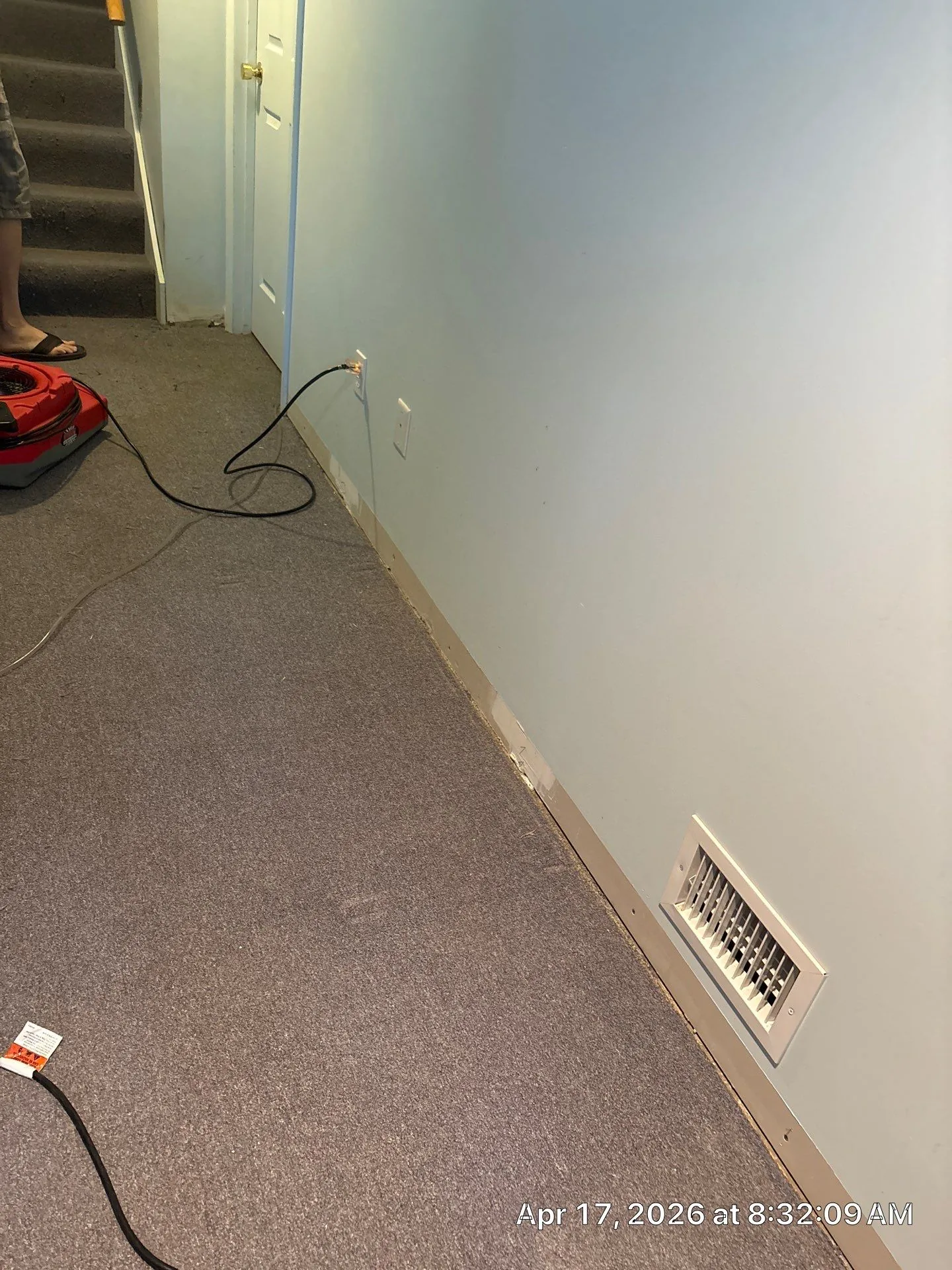
On arrival, technicians used a penetrating moisture meter to map the extent of saturation across the carpet, padding, and lower wall assemblies. The footprint was concentrated along the perimeter walls where water had pooled and wicked upward.
| Zone | Condition Found | Action Taken |
|---|---|---|
| Carpet & padding | Saturated | Extraction; wet padding removed |
| Baseboards | Wet at base | Detached to open wall cavity |
| Drywall (lower) | 80%+ humidity | Targeted airflow + dehumidification |
| Ambient air | 85 GPP (humid) | LGR dehumidification |
Response Strategy
The mitigation followed a standard, proven sequence: remove the water, remove unsalvageable wet materials, open the structure so trapped moisture can escape, and create an aggressive drying environment that is measured and adjusted every day.
Working Around Obstructions
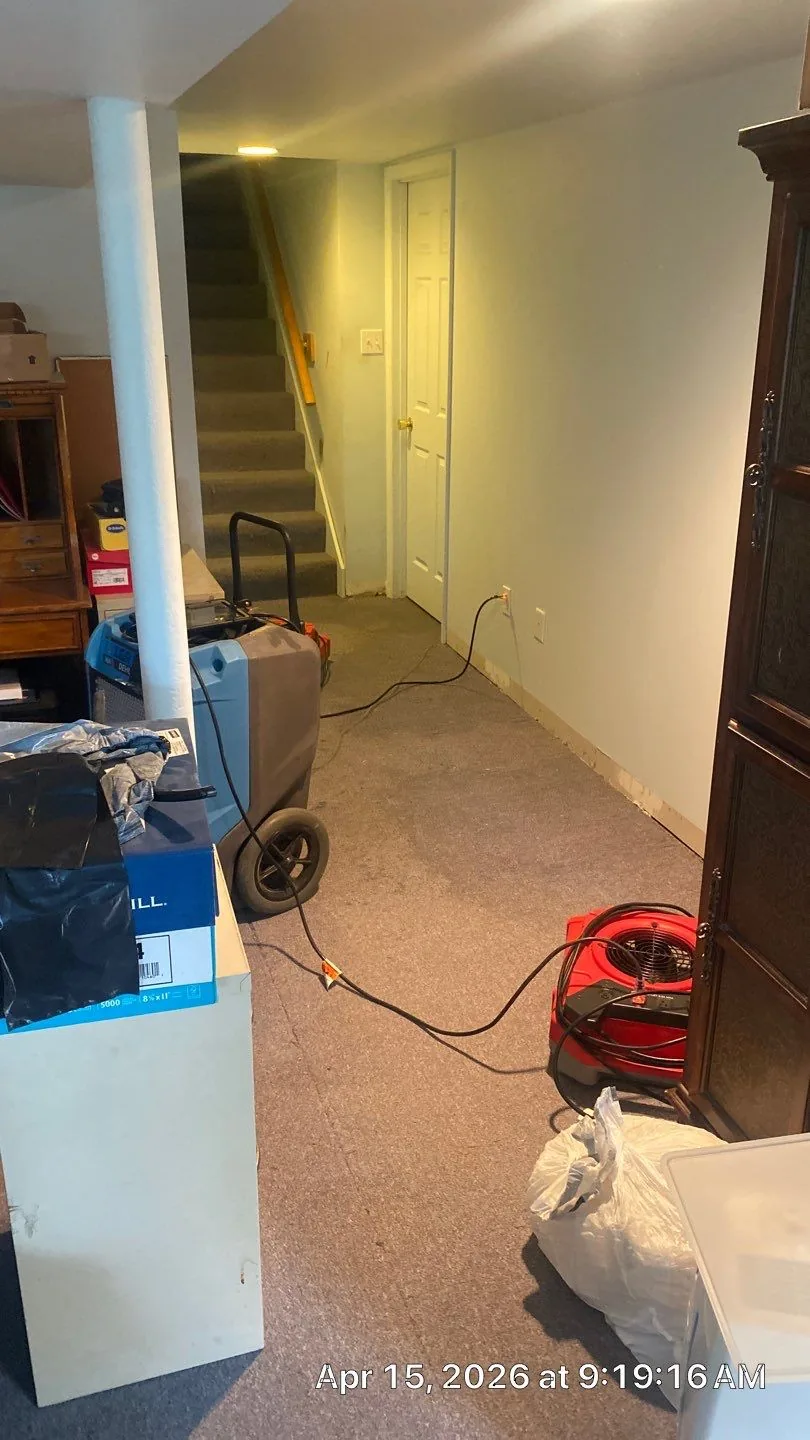
The basement’s layout complicated equipment placement. A central support pillar, a staircase, and adjacent furniture (a hutch and a filing cabinet) blocked direct airflow to several wall sections. Technicians strategically positioned the air mover to push air behind these obstructions and around structural corners, ensuring no damp pocket was left to dry on its own.
Equipment Deployment Analysis
A compact, correctly matched drying system did the work here — proof that the right equipment in the right position beats simply adding more machines.
LGR Dehumidifier (1 unit)
A wheeled, industrial Low-Grain Refrigerant dehumidifier pulled moisture from both the air and the structural materials, driving the ambient grains-per-pound (GPP) down day over day.
High-Velocity Air Mover (1 unit)
A low-profile centrifugal air mover directed high-velocity airflow across wet surfaces and into the opened wall cavities to accelerate evaporation.
Penetrating Moisture Meter
Used for initial mapping and daily monitoring of drywall and carpet, confirming objective progress toward the dry-standard goal.
Drying Progress: Day by Day
Ambient humidity tracked the same downward path: 85 GPP on Day 1, 55 GPP on Day 2, and a normalized 40 GPP by Day 4.
Restoration Timeline and Methodology
Why This Approach Worked
Standard protocols, properly executed: this was a by-the-book IICRC S500 Category 1 response — no shortcuts, no over-drying, and objective daily readings to prove the result.
Airflow placement over equipment count: a single, well-positioned air mover reached every damp pocket behind the pillar, staircase, and furniture.
Water Damage Response Across Central Pennsylvania
Based in Harrisburg, Advanced DRI provides 24/7 water damage mitigation throughout Central PA — including Dauphin, Cumberland, Perry, York, Lancaster, Lebanon, Schuylkill, Northumberland, and Snyder counties.
Why Local Response Matters
Basement and lower-level water losses are among the most common claims in the region. Because clean water can begin breaking down into a contaminated category within 24–48 hours, a fast, local response is the single biggest factor in keeping a project a simple mitigation rather than a full remediation and rebuild.
Key Takeaways
A Category 1 basement loss in Harrisburg was returned to dry standard in four days with disciplined extraction, targeted material removal, and a compact drying system monitored daily. No mold, no secondary damage — just a clean handoff for reconstruction.
Water in your basement? Advanced DRI’s Central PA team is available 24/7. Call (717) 232-5444 for emergency water damage mitigation in Harrisburg and the surrounding communities.