Project at a Glance
Remediation Cycle
Sq Ft Attic Remediated
Final Moisture Content
Negative-Air Containment
Executive Summary
When a suspected roof leak and persistent condensation seeded mold across an attic and threatened the master bedroom below in Harrisburg, Pennsylvania, our Central PA restoration team designed a remediation plan built around precision and containment. Over four days, technicians mapped the moisture intrusion without cutting into the finished ceiling, removed contaminated cellulose insulation under negative air pressure, dried the structural timber to standard, and verified a clean result with a post-remediation inspection.
The defining decision on this project was a surgical one: rather than demolishing the bedroom ceiling, our team used non-invasive moisture mapping to locate the saturation and remove the affected insulation from the attic side — protecting the living quarters and shortening the path to repair.
Understanding the Incident
The Source: Roof Leak and Attic Condensation
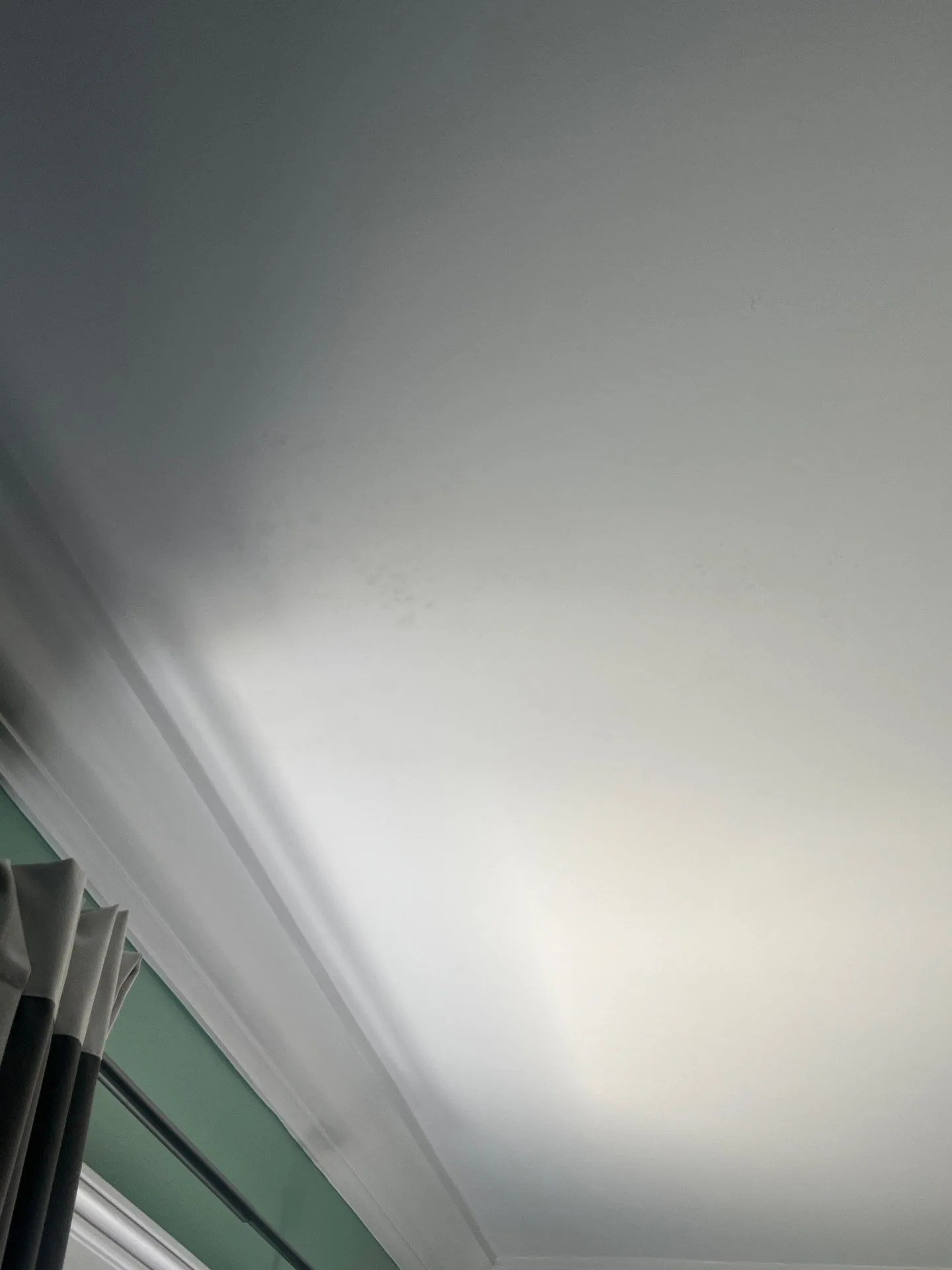
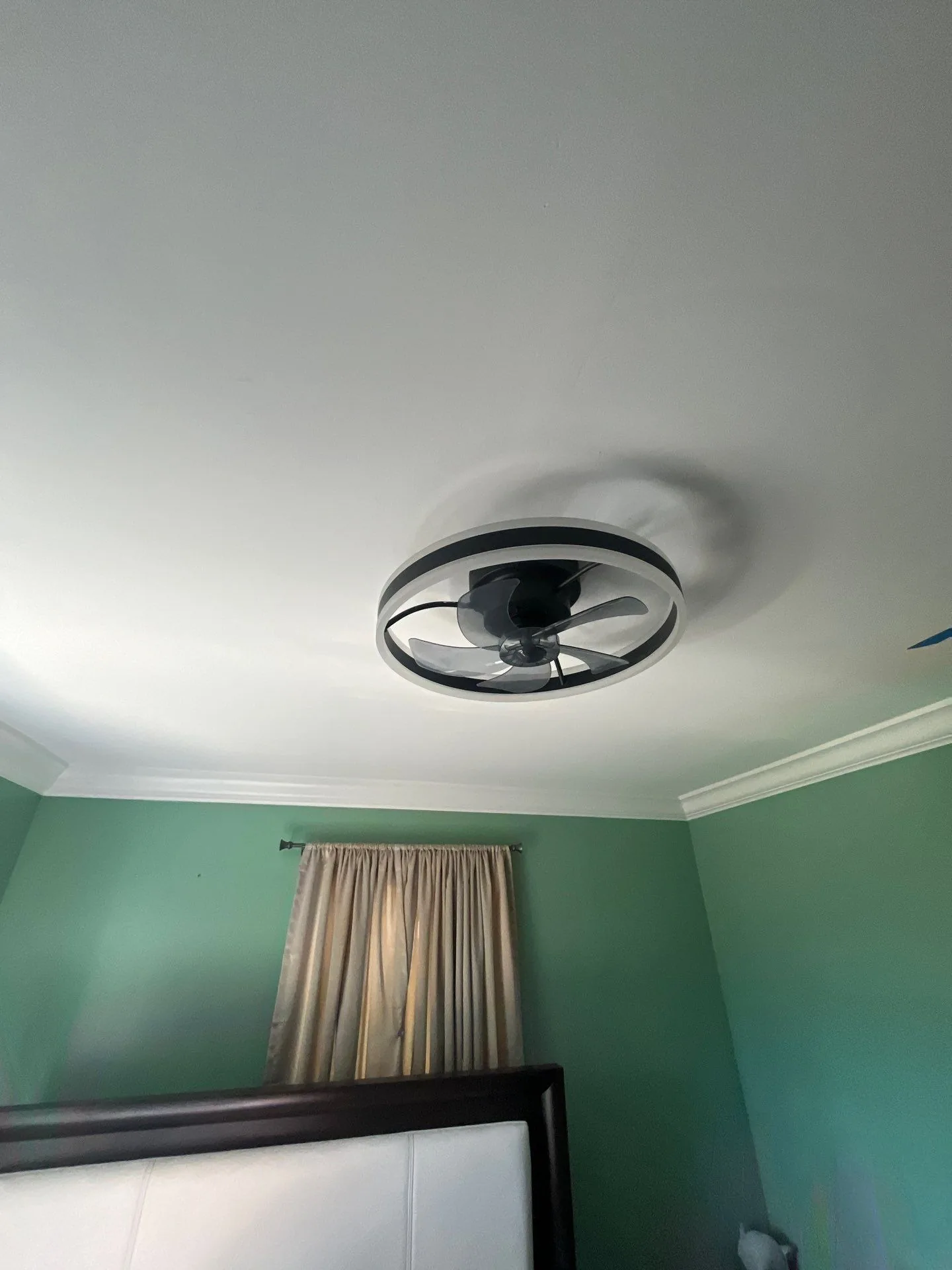
The mold growth traced back to a combination of a suspected roof leak and ongoing condensation in a poorly ventilated attic. Moisture had migrated down into the cellulose insulation and into the wood rafters and roof decking, while a tell-tale stain bloomed on the master bedroom ceiling directly below — the first visible sign to the homeowner that something was wrong overhead.
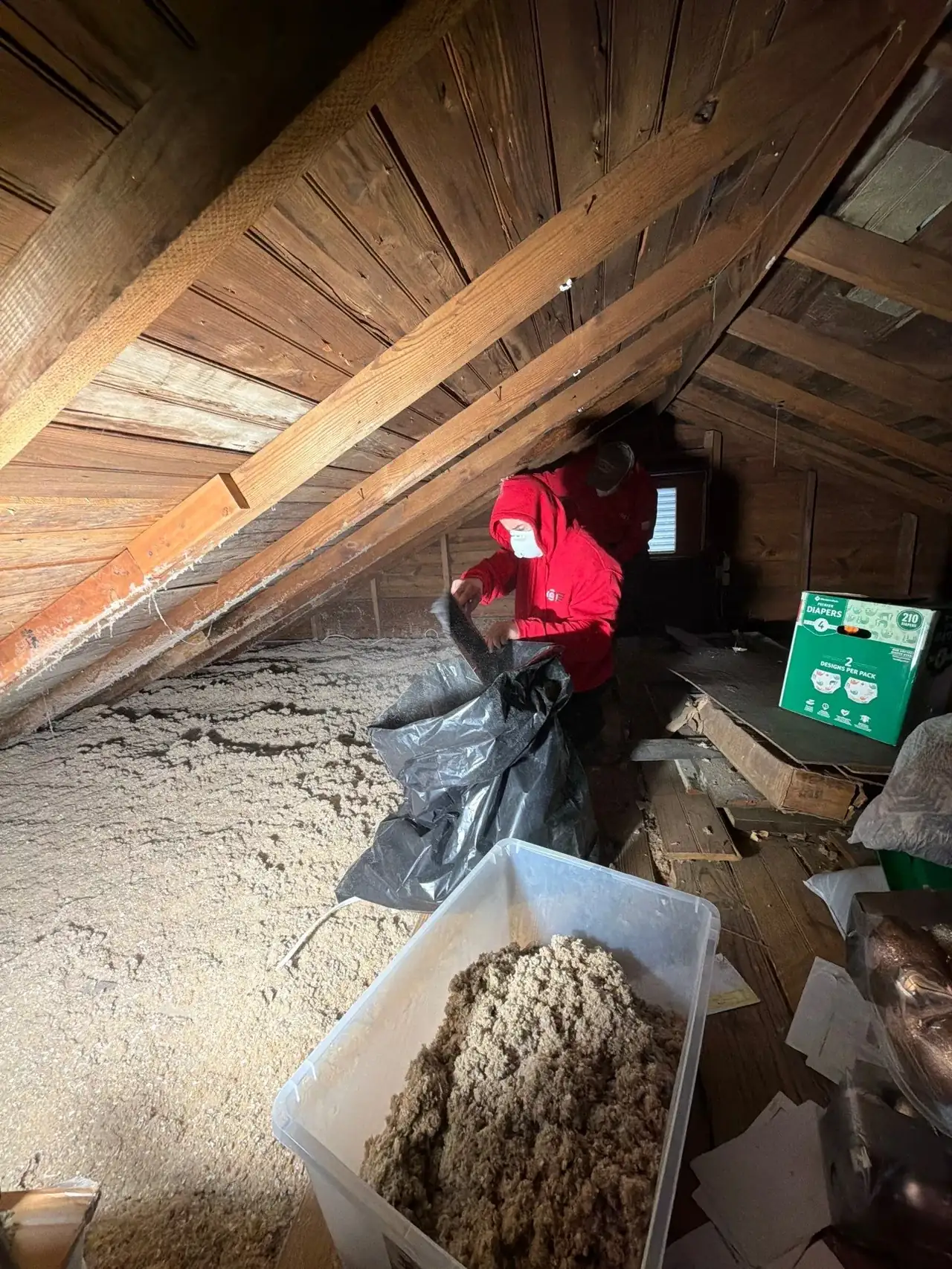
Affected materials included roughly 400 square feet of contaminated attic insulation and structural framing, plus approximately 150 square feet of impacted bedroom ceiling. Mold colonizes damp cellulose and organic building materials quickly, so isolating and removing the moisture source was the first priority.
“A stain on the bedroom ceiling is rarely just a stain. It’s the bottom of a problem that started in the attic — and the longer it sits, the further the mold spreads through the insulation and framing.”
Property Assessment and Scope of Damage
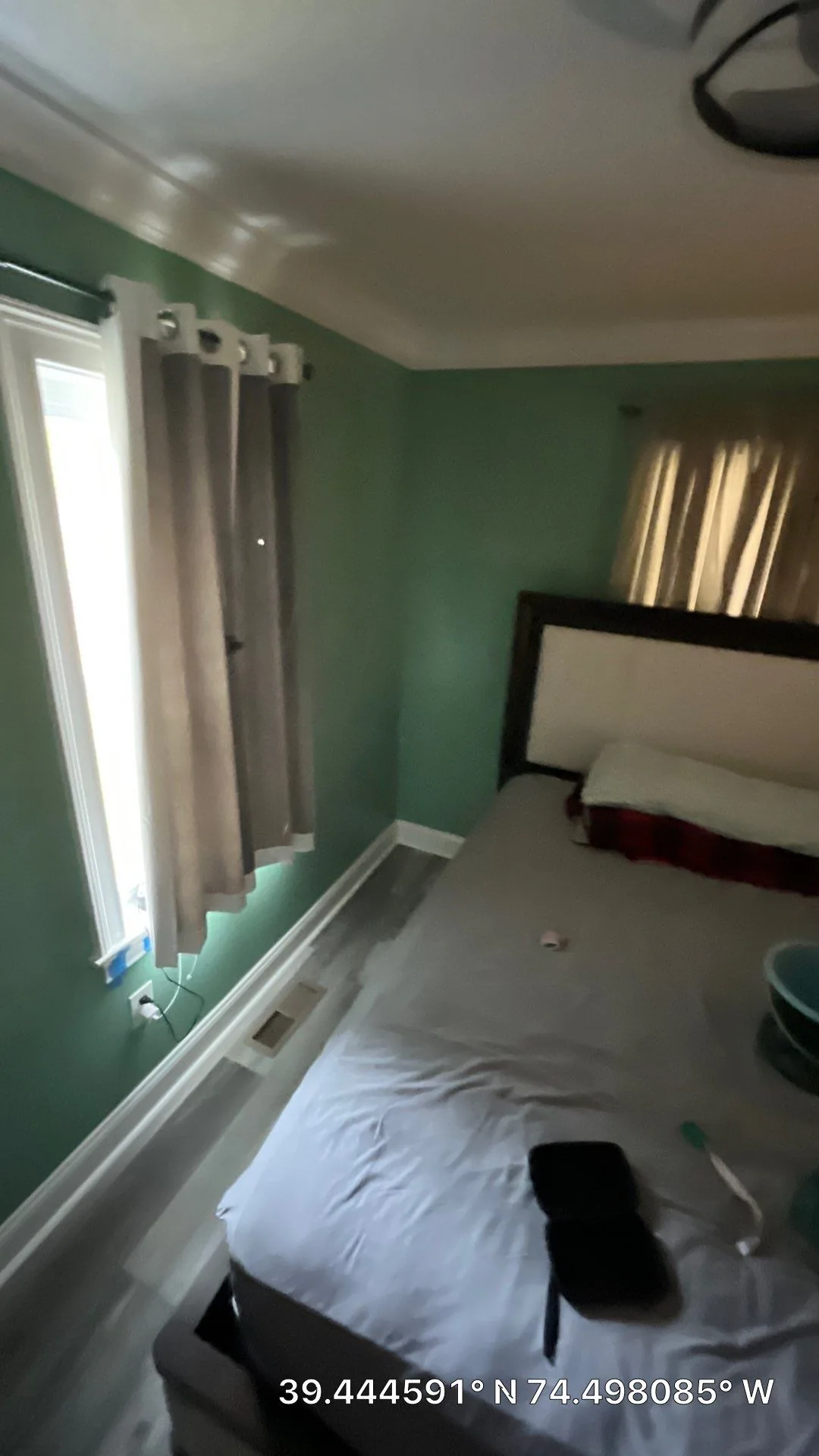
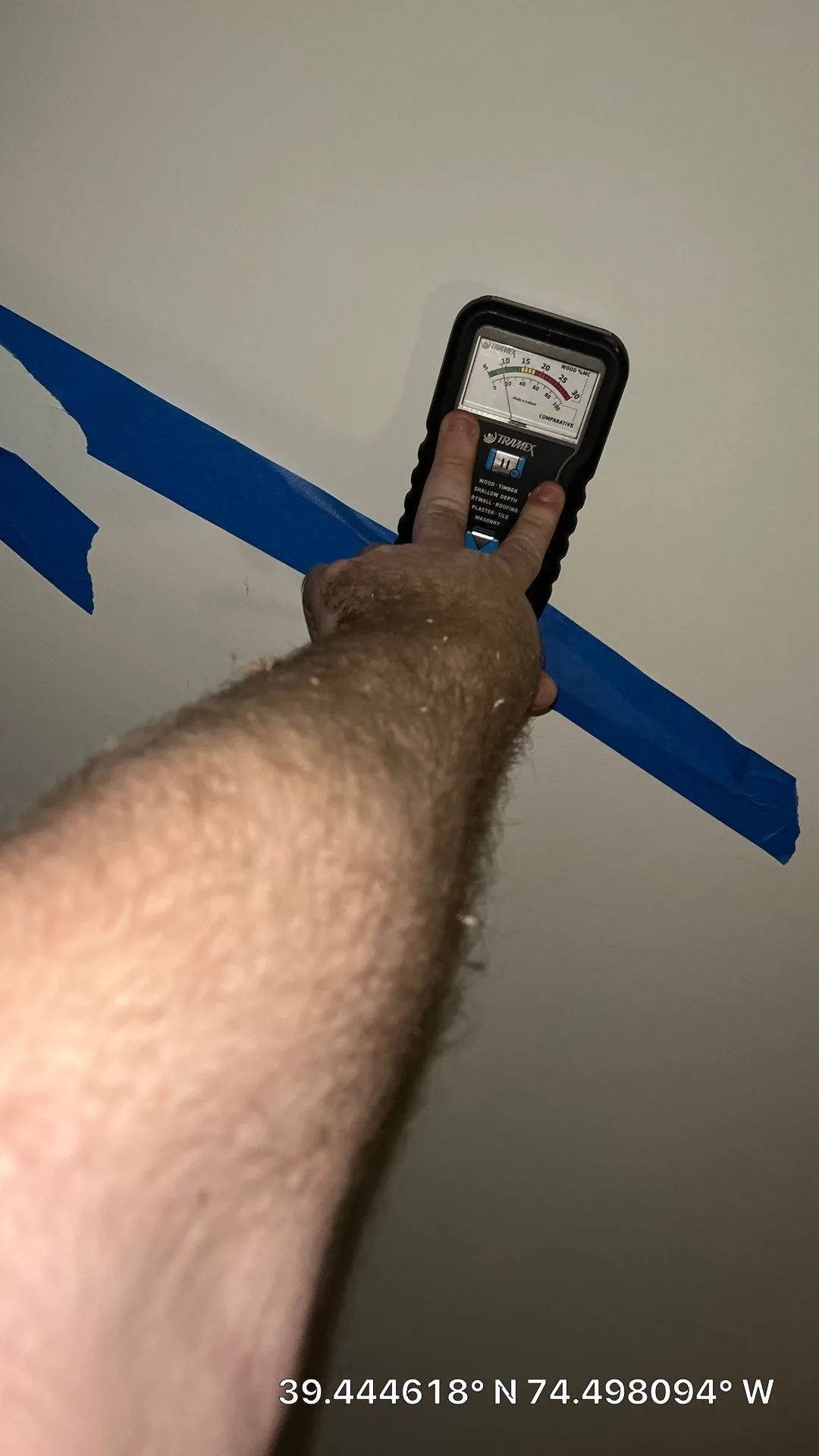
On arrival, technicians inspected the master bedroom ceiling and walls, then used a non-invasive impedance moisture meter to map saturation through the finished ceiling without puncturing it. Readings confirmed an elevated moisture footprint concentrated where the roof intrusion had wicked into the assembly, with the attic insulation and rafters reading well above dry standard.
| Zone | Condition Found | Action Taken |
|---|---|---|
| Bedroom ceiling | >25% MC (saturated) | Non-invasive mapping; protected under containment |
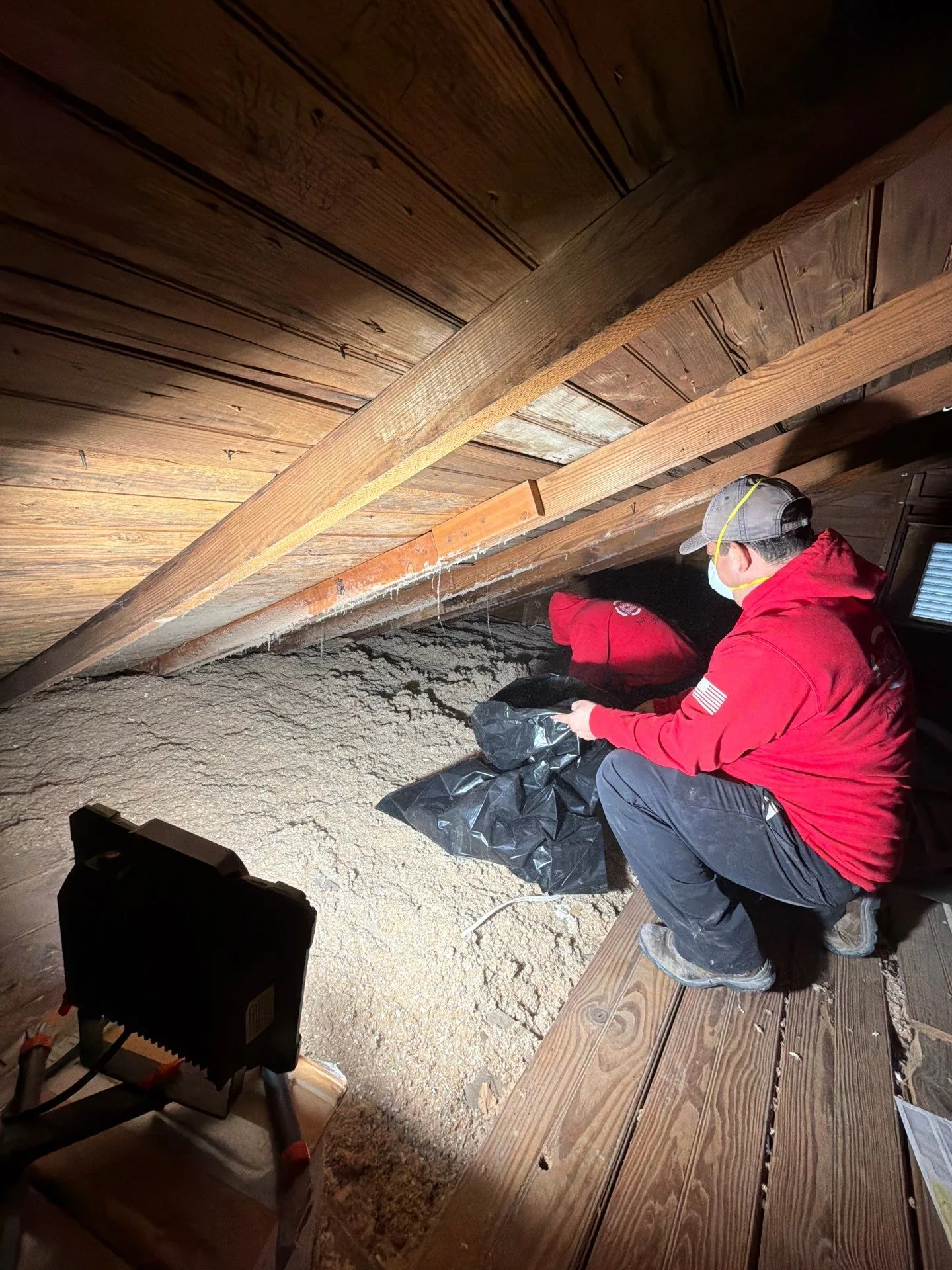
| Attic cellulose insulation | Contaminated | Manual removal under negative air |
| Rafters & roof decking | 18% MC (elevated) | High-velocity structural drying |
| Living quarters | At risk of cross-contamination | Critical containment barriers |
Response Strategy
The remediation followed a controlled sequence: isolate the work area, establish negative air pressure, locate the moisture source without unnecessary demolition, remove the contaminated materials, dry the structure, and verify the result. Containment came first — critical barriers sealed the attic access and work zone so that no insulation debris or mold spores could drift into the sleeping area below.
Working in a Confined, Low-Pitched Attic
The attic’s low-pitched roofline forced technicians to work prone or crouched throughout the removal, slowing every pass across the 400-square-foot space. Because a finished bedroom sat directly beneath the work area, dust control had to be meticulous: every handful of contaminated cellulose was bagged and HEPA-managed so that nothing reached the room below.
The Surgical Alternative to Ceiling Demolition
The non-invasive moisture mapping paid off here. By pinpointing exactly where the ceiling assembly was saturated, technicians could remove the affected insulation from the attic side — a surgical approach that avoided tearing out a finished bedroom ceiling and the larger reconstruction that would have followed.
Equipment Deployment Analysis
This project was won with containment and verification, not brute force — the right machine in the right role kept the work clean and the result measurable.
HEPA Air Scrubber (1 unit)
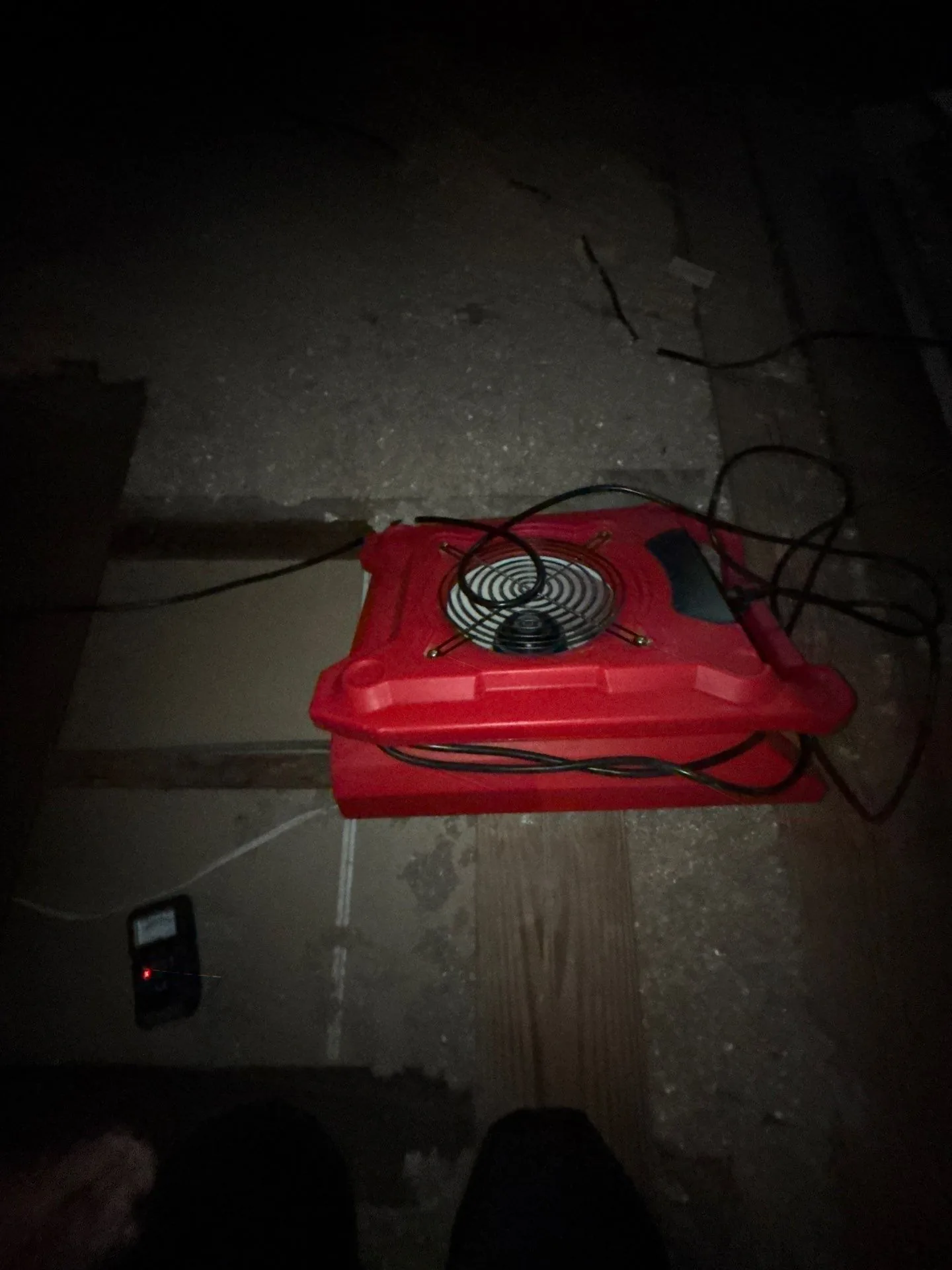
The air scrubber maintained negative air pressure inside the containment, continuously filtering airborne mold spores from the attic so contaminated air was captured rather than pushed toward the living space.
Industrial High-Velocity Air Movers
High-velocity air movers directed concentrated airflow across the wood rafters and roof decking to accelerate evaporation and bring the structural timber back to dry standard.
Tramex Non-Invasive Moisture Meter
A Tramex impedance moisture meter mapped ceiling saturation through the finished surface without puncturing it, then verified daily drying progress across the assembly.
Personal Protective Equipment (PPE)
Technicians worked in N-95 respirators, Tyvek suits, and gloves throughout removal — protecting workers from mold exposure and preventing contaminants from being tracked out of the containment.
Moisture Content: Before & After
Both the saturated bedroom ceiling and the elevated attic framing were dried below the 12% dry-standard threshold before containment was removed.
Restoration Timeline and Methodology
Why This Approach Worked
Map before you demolish: non-invasive moisture mapping pinpointed the saturation so the affected insulation could be removed surgically from the attic — no full ceiling tear-out required.
Containment protects the home: HEPA negative-air containment and meticulous dust control kept mold spores and insulation debris out of the bedroom directly below the work area.
Mold Remediation Across Central Pennsylvania
Based in Harrisburg, Advanced DRI provides professional mold remediation and moisture control throughout Central PA — including Dauphin, Cumberland, Perry, York, Lancaster, Lebanon, Schuylkill, Northumberland, and Snyder counties.
Why Local Response Matters
Attic mold from roof leaks and condensation is a recurring problem in the region’s older and tightly built homes. Because mold spreads through damp insulation and framing and can affect the living space below, an experienced local team that contains the work area and verifies a dry result is the difference between a targeted remediation and a far larger structural repair.
Key Takeaways
An attic mold problem in Harrisburg was resolved in four days through non-invasive moisture mapping, HEPA negative-air containment, surgical insulation removal, and verified structural drying to below 12% moisture content. The finished bedroom ceiling was spared a full demolition, the living space stayed protected, and the area passed a post-remediation inspection — cleared for re-insulation and minor repair.
Mold or moisture in your attic? Advanced DRI’s Central PA team is ready to help. Call (717) 232-5444 for professional mold remediation and moisture control in Harrisburg and the surrounding communities.